
In modern industrial engineering, from sprawling renewable energy grids to hyper-scale data centers, continuous and reliable electrical transmission is not merely a goal—it is an absolute necessity. However, engineers and facility managers constantly face a silent, invisible threat to power continuity: mechanical vibration. High-vibration environments introduce relentless mechanical stress that can compromise standard electrical connections, leading to thermal runaway, system failures, and catastrophic downtime.
To combat this, industry leaders are increasingly turning to a highly specialized solution: Flexible Copper Busbars. Specifically, braided configurations are proving to be the ultimate safeguard against vibration-induced mechanical fatigue.
At JUMAI, we have dedicated our manufacturing capabilities to the research, development, and custom fabrication of these critical components. Leveraging our deep expertise in precision deep drawing dies and custom copper fabrication, we design braided flexible copper busbars that not only meet but exceed the rigorous demands of global infrastructure projects.
This comprehensive guide explores the physics of mechanical stress in electrical systems, the engineering behind braided copper flexibility, and how integrating JUMAI’s flexible busbar solutions can drastically improve reliability, reduce total cost of ownership (TCO), and safeguard your high-vibration applications.
Table of Contents
The Hidden Costs of Mechanical Stress in Power Distribution
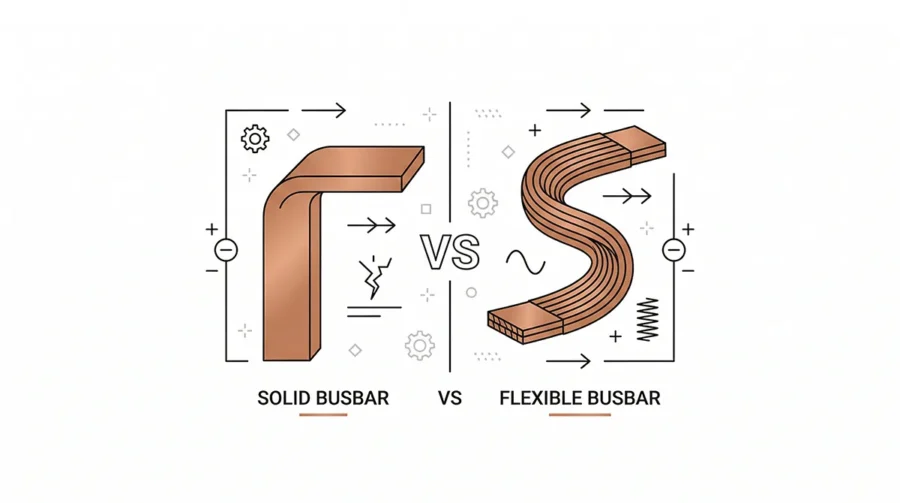
Before understanding the solution, we must quantify the problem. In sectors such as electric vehicle (EV) manufacturing, heavy railway transit, and wind turbine generation, electrical components are subjected to constant kinetic energy. Traditional solid (rigid) busbars, while excellent for static environments, become liabilities when introduced to continuous vibration.
The Physics of Rigid Failure
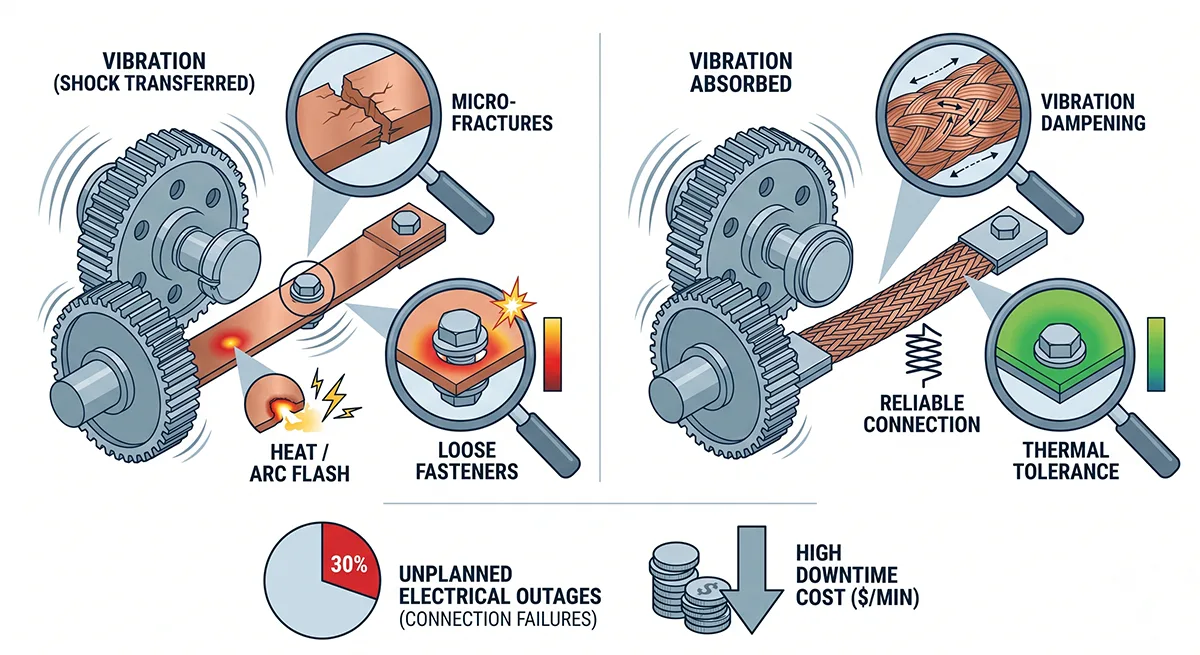
When a solid copper bar connects two electrical components—such as a transformer and a high-current switchgear—it acts as a rigid bridge. If one component vibrates (due to a running motor, cooling fan, or external environmental forces), that kinetic energy is transferred directly through the solid busbar to the connection points. Over time, this leads to three critical failure modes:
- Micro-Fracturing and Metal Fatigue: The continuous microscopic bending of a rigid metal ultimately exceeds its fatigue limit, causing structural fissures.
- Loosening of Fasteners: Vibration causes torque decay in bolted joints. As bolts loosen, the contact surface area decreases.
- Increased Electrical Resistance: Decreased contact area leads to increased electrical resistance. According to Joule’s First Law, increased resistance generates excess heat, which can lead to localized melting, sparking, or devastating arc flashes.
According to research published by the Institute of Electrical and Electronics Engineers (IEEE), connection failures are responsible for up to 30% of unplanned electrical outages in heavy industrial environments. The financial impact of this downtime can run into thousands of dollars per minute in mission-critical facilities.
Table 1: Performance Comparison Under High-Vibration (Rigid vs. Braided Flexible Busbars)
To illustrate the disparity in performance, the following table aggregates industry standard data comparing traditional rigid busbars with braided Flexible Copper Busbars in high-stress environments.
| Performance Metric | Traditional Rigid Copper Busbar | Braided Flexible Copper Busbar | Impact on System Reliability |
|---|---|---|---|
| Vibration Dampening | Extremely Low (Transfers shock) | Exceptionally High (Absorbs shock) | Prevents bolt loosening and terminal damage. |
| Thermal Expansion Tolerance | Poor (Prone to buckling/stress) | Excellent (Expands/contracts safely) | Eliminates stress fractures during temperature swings. |
| Contact Resistance Over Time | Increases significantly due to torque decay | Remains stable; connection integrity holds | Lowers risk of overheating and thermal runaway. |
| Installation Tolerances | Requires exact millimeter precision | Forgives minor misalignment | Reduces installation time and labor costs. |
| Mean Time Between Failures (MTBF) | Baseline (Industry Standard) | +40% to +60% over baseline | Drastically reduces unplanned maintenance. |
Data representation based on aggregated internal testing and industrial electrical standards. For specific load capabilities, consult JUMAI’s technical engineering team.
The Anatomy of Resilience: How Braided Copper Works
The superior performance of braided Flexible Copper Busbars is not an accident; it is the result of deliberate metallurgical and structural engineering. But what exactly gives a braided busbar its unique properties?
The Multi-Wire Stranding Process
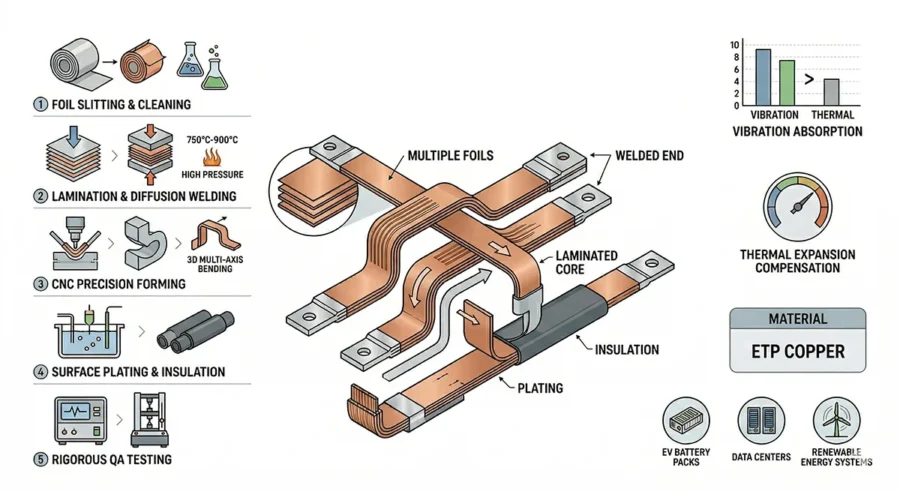
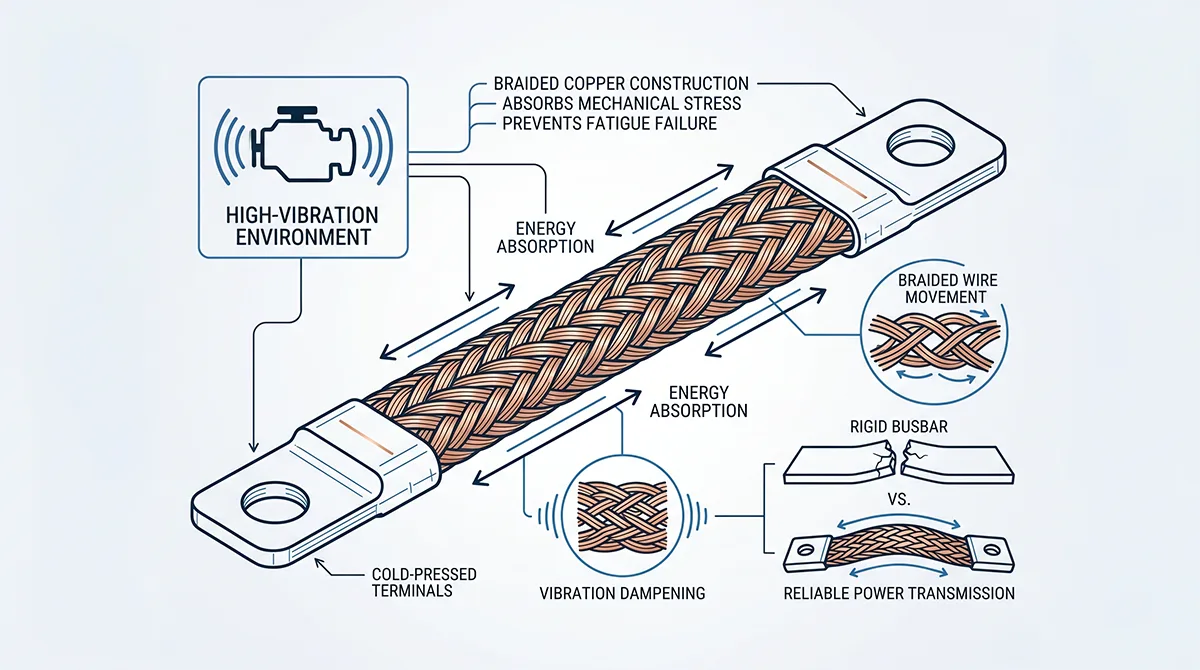
Unlike a solid piece of metal or stacked laminated foils, a braided busbar is constructed from hundreds, sometimes thousands, of individual, micro-fine copper wires. These wires, typically made from high-purity T2 or C11000 copper (offering up to 99.9% purity for maximum conductivity), are woven together in a specific geometric pattern.
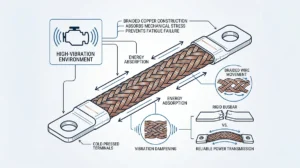
This braided architecture operates on the principle of distributed kinetic energy. When a vibration wave hits the busbar, rather than traveling rigidly from one end to the other, the energy is dissipated through the microscopic friction between the individual strands. The busbar literally “absorbs” the shake, ensuring that the heavy vibration on the equipment side is reduced to a negligible tremor by the time it reaches the sensitive terminal side.
Tin-Plating for Extreme Environments
In many of the environments where vibration is a concern—such as offshore wind farms or industrial chemical plants—corrosion is an equally devastating threat. Raw copper oxidizes when exposed to moisture, airborne salts, or reactive gases. This oxidation creates a patina that acts as an insulator, destroying the busbar’s electrical efficiency.
To counter this, JUMAI provides high-grade tinning services for our braided busbars. By electroplating each individual copper strand—or the entire assembled braid—with a microscopic layer of tin, we create an impenetrable barrier against environmental degradation. The Copper Development Association notes that tin-plated copper maintains its low contact resistance exponentially longer in corrosive environments compared to bare copper.
Seamless Cold-Pressed Terminals
A flexible busbar is only as reliable as its connection points. If the ends of the braided wire are simply clamped or soldered, those joints become the weakest link.
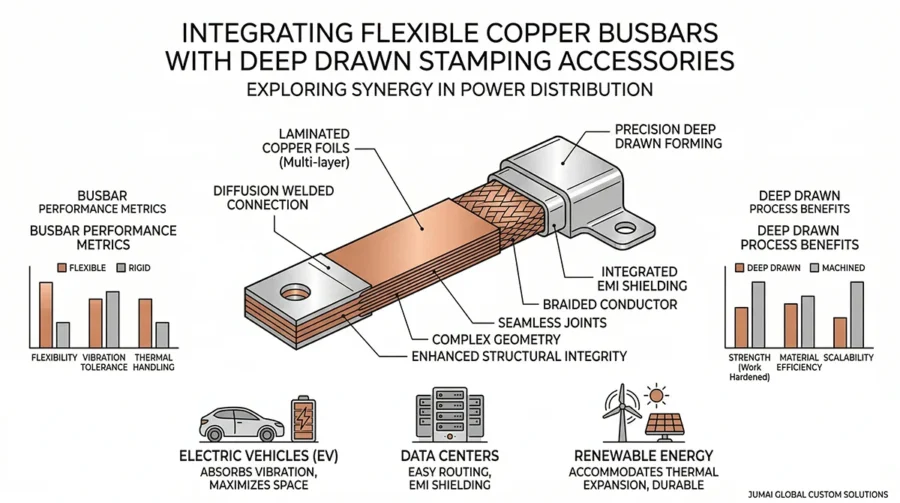
At JUMAI, we utilize advanced cold-pressing and deep-drawing technologies to form the terminal ends. By applying immense, calculated pressure, the individual woven strands are compacted into a solid, unified block of copper at the terminal ends, without the use of heat that could alter the copper’s temper. This ensures a perfect, flush mounting surface that maximizes contact area while retaining the extreme flexibility of the braided mid-section. Our mastery of deep drawn stamping and accessory manufacturing allows us to customize these terminals to fit any proprietary equipment configuration.
Sector-Specific Applications: Where Flexibility is Mandatory
The theoretical benefits of Flexible Copper Busbars translate directly to massive operational advantages across various modern industries. Below, we examine the sectors where high-vibration is an inherent part of the daily operational profile, and why braided busbars are not just recommended, but essential.
1. Renewable Energy: Wind Turbines and Solar Inverters
The global push toward sustainable energy relies heavily on infrastructure that must survive harsh, dynamic environments.
Wind Turbines: The nacelle of a wind turbine, perched hundreds of feet in the air, houses the generator, gearbox, and massive power converters. As the multi-ton blades rotate, they generate intense, continuous low-frequency vibrations. Furthermore, high-altitude winds cause the entire tower to sway. If rigid busbars are used to connect the generator to the transformer, the mechanical fatigue will cause the connections to snap within months. Braided flexible copper busbars are used extensively here to decouple the vibration of the generator from the static power distribution network.
Solar Power (Photovoltaic Systems): While solar panels themselves do not vibrate, the massive industrial inverters that convert DC power to AC power contain large cooling fans and magnetic components that generate high-frequency micro-vibrations. More importantly, large-scale desert solar farms experience massive temperature swings between day and night. Braided busbars effortlessly absorb the thermal expansion and contraction (thermal cycling) that would otherwise warp solid copper bars.
2. Hyperscale Data Centers and UPS Systems
In the era of cloud computing and artificial intelligence, data centers are the backbone of the global economy. A single minute of downtime can cost millions of dollars.
Data centers rely on massive Uninterruptible Power Supply (UPS) systems and diesel backup generators to ensure continuous power.
- Backup Generators: When a 2-megawatt diesel generator kicks on, the starting torque and operational vibration are violent. Connecting these generators to the facility’s main switchgear requires the heavy-duty shock absorption provided by JUMAI’s customized braided busbars.
- Cooling Infrastructure: The colossal HVAC systems required to keep server racks cool also introduce continuous vibration into the facility’s superstructure. Braided busbars isolate sensitive server power distribution units (PDUs) from these mechanical tremors.
3. Electric Vehicles (EV) and Railway Transit
Mobility relies entirely on vibration management. The battery packs inside electric vehicles and high-speed trains must deliver immense direct current (DC) to the drive motors while navigating uneven terrain, potholes, and track vibrations.
In an EV battery pack, the connections between individual battery modules must be highly conductive yet flexible enough to survive the lifetime of the vehicle’s road shock. Rigid connections would stress the delicate battery terminals, potentially causing leaks or electrical shorts. Braided copper provides the perfect blend of high-amperage capacity (due to copper’s excellent conductivity) and infinite flexibility, ensuring the safety and longevity of the electric drivetrain.
Table 2: ROI and Maintenance Frequency (Industry Averages)
Transitioning from rigid systems to custom braided Flexible Copper Busbars requires an initial engineering evaluation, but the Return on Investment (ROI) is rapid. The following data highlights the financial and operational shifts typical of heavy industrial upgrades.
| Metric | Rigid Connection Systems | JUMAI Braided Flexible Systems | Financial Impact |
|---|---|---|---|
| Routine Joint Tightening | Every 6 Months | Every 24 to 36 Months | 75% reduction in specialized labor costs. |
| Thermography Inspections | High frequency required | Low frequency required | Lower operational overhead and monitoring costs. |
| Downtime due to Joint Failure | Moderate to High | Negligible | Maximized revenue generation / production uptime. |
| Component Replacement Rate | 3 to 5 Years (Fatigue) | 10+ Years | Vastly improved Capital Expenditure (CapEx) efficiency. |
(Note: Actual maintenance schedules should always align with local regulatory frameworks and specific equipment manufacturer guidelines. The U.S. Department of Energy (DOE) provides excellent resources on predictive maintenance protocols for electrical infrastructure.)
Engineering Precision: Customizing for the Perfect Fit
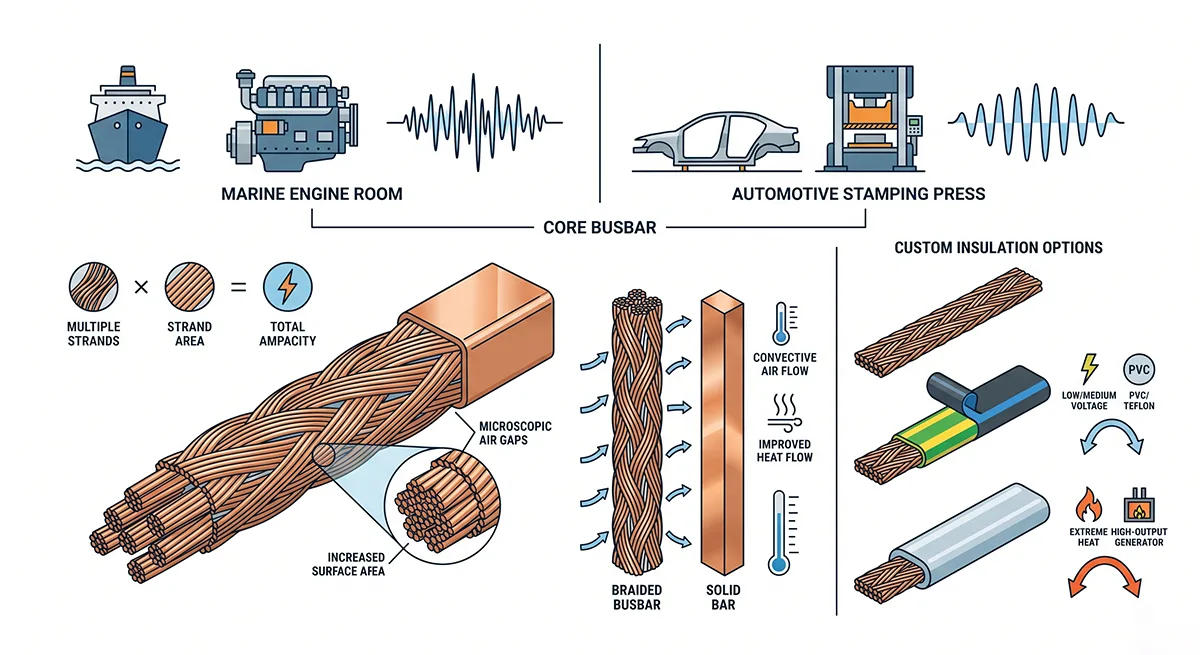
One of the greatest advantages of partnering with an integrated manufacturer like JUMAI is the elimination of “one-size-fits-all” compromises. High-vibration environments are highly specific; a vibration profile in a marine engine room is entirely different from the vibration profile of a stamping press in an automotive plant.
Cross-Sectional Area and Current Ampacity
The primary job of any busbar is to carry current safely without overheating. The current-carrying capacity (ampacity) of a braided busbar is determined by its cross-sectional area, which is a calculation of the total number of individual strands multiplied by the area of a single strand.
Because braided busbars contain microscopic air gaps between the wires, their cooling efficiency (heat dissipation) is actually superior to a solid bar of the exact same dimensions. This increased surface area allows convective air to cool the conductor faster. JUMAI’s engineering team works directly with global clients to calculate the exact cross-sectional area required to manage specific continuous and peak fault currents, ensuring the custom processing perfectly matches the electrical load requirements of the project.
Insulation and Dielectric Protection
While the bare braided copper handles the vibration and electrical load, the safety of the surrounding environment depends on proper insulation. Depending on the voltage rating and the physical constraints of the installation space, JUMAI provides various custom insulation options:
- Heat Shrink Tubing: Polyolefin, PVC, or Teflon tubing applied over the braid, providing excellent dielectric strength for low to medium voltage applications.
- Silicone Coating: For extreme temperature environments (such as near industrial furnaces or high-output generators), silicone provides exceptional thermal resistance while maintaining the core flexibility of the braid.
Comparative Material Science: Why Aluminum Fails Where Copper Succeeds in High-Vibration
In the constant push to reduce weight and raw material costs, many procurement departments look toward aluminum as an alternative to copper for power distribution. While aluminum is undoubtedly lighter and possesses an acceptable baseline conductivity, substituting copper with aluminum in a high-vibration environment is an engineering miscalculation that frequently leads to catastrophic system failure.
To understand why Flexible Copper Busbars remain the undisputed champion in dynamic environments, we must look at the metallurgical properties of both elements under mechanical stress.
The Fatigue Limit Deficit
All metals experience what is known as “metal fatigue” when subjected to cyclic loading (repeated vibration or bending). However, copper and aluminum respond to this stress entirely differently. Copper has a highly favorable fatigue limit, meaning it can endure millions of micro-flexes without its crystalline structure breaking down.
Aluminum, conversely, has a significantly lower fatigue endurance limit. When an aluminum busbar is subjected to the continuous low-frequency vibrations of a wind turbine or the high-frequency shocks of an electric vehicle chassis, the metal hardens, becomes brittle, and rapidly develops micro-fractures. Once a micro-fracture forms, the cross-sectional area of the conductor is reduced, causing a localized spike in electrical resistance and heat, eventually leading to a complete structural and electrical severing.
Galvanic Corrosion and Oxide Layers
Both metals oxidize when exposed to air, but the nature of their oxide layers dictates their safety in power applications.
- Aluminum Oxide: Forms rapidly and acts as a highly effective electrical insulator (similar to ceramic). In a vibrating environment, the mechanical friction at the bolted connection constantly breaks and reforms this oxide layer. This process, known as fretting corrosion, causes the connection’s electrical resistance to skyrocket, resulting in dangerous thermal runaway.
- Copper Oxide: While still undesirable, copper oxide remains slightly conductive. More importantly, when JUMAI fabricates our custom braided busbars, we eliminate this risk entirely through comprehensive tin-plating. Tin-plated copper completely prevents oxidation, ensuring that the contact resistance remains flawlessly low for decades, regardless of environmental moisture or continuous kinetic friction.
Table 3: Material Durability in Dynamic Environments (Copper vs. Aluminum)
The following data illustrates why copper remains the foundational material for mission-critical, high-stress electrical engineering.
| Property / Metric | High-Purity Copper (C11000) | Standard Aluminum (1350 Alloy) | Impact in High-Vibration Environments |
|---|---|---|---|
| Tensile Strength (MPa) | ~210 to 250 MPa | ~80 to 110 MPa | Copper survives violent mechanical shocks and chassis drops without tearing. |
| Thermal Expansion Coefficient | 16.6 µm/(m·K) | 23.6 µm/(m·K) | Aluminum expands drastically under heat, loosening bolts and increasing vibration damage. |
| Oxide Layer Conductivity | Moderately Conductive | Highly Insulating | Aluminum connections rapidly overheat if vibration disrupts the surface joint. |
| Bending Fatigue Lifespan | Exceptionally High | Very Low (Prone to snap) | Braided copper flexes infinitely; aluminum snaps under repeated stress. |
| Volumetric Conductivity | 100% IACS Standard | ~61% IACS Standard | Copper requires less physical space, ideal for cramped, vibrating engine compartments. |
Data metrics align with testing parameters established by the American Society for Testing and Materials (ASTM), specifically regarding the tensile and fatigue testing of metallic materials.
Advanced Testing Protocols: Ensuring Reliability Before Deployment
At JUMAI, we do not rely on theoretical durability. Every custom batch of Flexible Copper Busbars designed for heavy industrial or transit applications undergoes rigorous simulated environmental testing. To guarantee that our components can withstand the harshest realities of your operational environment, our quality assurance methodologies align strictly with international engineering standards.
1. Vibration and Shock Testing (IEC 60068-2-6 and IEC 61373)
To simulate the lifetime operational stress of a railway locomotive or an industrial CNC stamping press, our braided busbars are subjected to electrodynamic shaker tables.
- Sinusoidal Vibration: We test the busbars across a sweeping frequency of Hz parameters (typically 10Hz to 500Hz) to locate resonant frequencies.
- Random Shock Pulses: According to standards like IEC 61373 for Railway Applications, the busbars must survive sudden high-G force impacts. This ensures that the cold-pressed terminal ends do not separate from the braided wire body during a sudden brake event or machinery jam.
Because our terminals are formed utilizing specialized deep drawn precision stamping techniques, the molecular bond between the terminal block and the braided strands remains cohesive even under maximum multi-axis acceleration.
2. Thermal Cycling under Load
Vibration rarely occurs in a temperature-controlled vacuum. In solar inverters and hyperscale data center generators, severe vibration is accompanied by extreme heat. We conduct continuous thermal cycling—pushing the maximum rated amperage through the busbar while fluctuating the ambient temperature from -40°C to +105°C. This dual-stress testing guarantees that the thermal expansion does not loosen the tightly compacted cold-pressed terminals or degrade the dielectric insulation tubing.
3. Salt Spray Corrosion Testing
For maritime environments, offshore wind farms, and coastal industrial plants, vibration is compounded by salt-laden air. Our tin-plated braided busbars undergo accelerated salt spray testing (often exceeding 500 to 1000 hours of continuous exposure) to ensure the plating thickness and uniformity are flawless. A single microscopic pinhole in the plating can harbor corrosion, which vibration will then aggressively expand. JUMAI’s stringent plating tolerances completely neutralize this threat.
Advanced Installation Methodologies for Maximum Reliability
Procuring the highest quality braided flexible copper busbars is only the first step. To truly conquer the destructive forces of mechanical vibration, the installation methodology must be equally flawless. A premium flexible busbar installed with improper hardware or incorrect geometry will still fail under intense kinetic stress.
Drawing on our extensive background in managing heavy-duty transmission centers and eco-energy hardware, the engineering team at JUMAI recommends the following critical installation practices.
1. The Minimum Bend Radius Rule
While braided busbars are remarkably flexible, they are not impervious to extreme acute bending. If a braided busbar is bent at an angle that is too sharp, the individual copper strands on the inside of the curve will crush against each other, while the strands on the outside will be stretched beyond their tensile limits.
As a general engineering rule, the minimum inner bend radius should be no less than 1.5 to 2 times the total thickness of the braided assembly. By adhering to this radius, the individual woven layers can smoothly slide past one another (a phenomenon known as interlaminar slip), which is the exact mechanism that allows the busbar to absorb kinetic energy and dampen vibration without taking structural damage. To eliminate guesswork for assembly line workers, JUMAI can pre-form and pre-bend braided busbars to exact geometric specifications using our customized fabrication services.
2. Utilizing Anti-Vibration Fastening Hardware
The connection point between the busbar terminal and the equipment contact pad is the single most vulnerable point in any vibrating electrical system. Standard flat washers and split-ring lock washers are insufficient for high-level mechanical tremors; over time, the vibrational energy will cause the bolt to lose its pre-load torque.
- Belleville Washers (Conical Spring Washers): In high-vibration power connections, Belleville washers are mandatory. These cone-shaped spring washers flatten out when torqued to specification. As the copper terminal slightly expands and contracts with thermal loads, or as the equipment vibrates violently, the Belleville washer acts as a heavy-duty mechanical spring, constantly pushing back against the bolt head to maintain a permanent, high-pressure contact force.
- Calibrated Torque Wrenches: Bolts must be tightened to the exact torque specifications provided by the equipment manufacturer. Over-torquing can deform the cold-pressed copper terminal, while under-torquing leads to instant micro-arcing and resistance heating as soon as the machinery begins to vibrate.
3. Proper Sizing of the “Drip Loop” or “Slack Arc”
A flexible busbar should never be installed completely taut. If a braided busbar is pulled tight between two connection points, it effectively becomes a rigid bridge, completely negating its vibration-dampening properties and transferring shock directly to the equipment terminals.
Installers must ensure a deliberate “slack arc” is designed into the connection path. This slight bowing of the braided cable allows the material to act as a shock absorber. When the generator or transformer shudders, the slack in the braided copper simply sways, absorbing the kinetic displacement entirely before it reaches the opposing terminal.
Table 4: Common Installation Failures in High-Vibration Settings
| Installation Error | Physical Consequence | Outcome in Vibrating Environment | JUMAI Recommended Solution |
|---|---|---|---|
| Installing Taut / No Slack | Braid acts as a solid metal rod. | Terminal mounts tear away from the equipment chassis. | Engineer a 5-10% length surplus to create a shock-absorbing arc. |
| Standard Lock Washers | Torque decay occurs rapidly. | Joint loosens, resistance spikes, resulting in arc flashes. | Mandate the use of heavy-duty Belleville spring washers. |
| Excessive Sharp Bending | Internal strands crush; outer strands snap. | Hotspots develop due to reduced cross-sectional ampacity. | Adhere strictly to the 2x thickness minimum bend radius rule. |
| Mismatched Contact Metals | Galvanic corrosion accelerates. | Oxide layers build rapidly, blocking electrical flow. | Use JUMAI’s tin-plated terminals when connecting to aluminum pads. |
The Economic Imperative: Total Cost of Ownership (TCO) in Heavy Industry
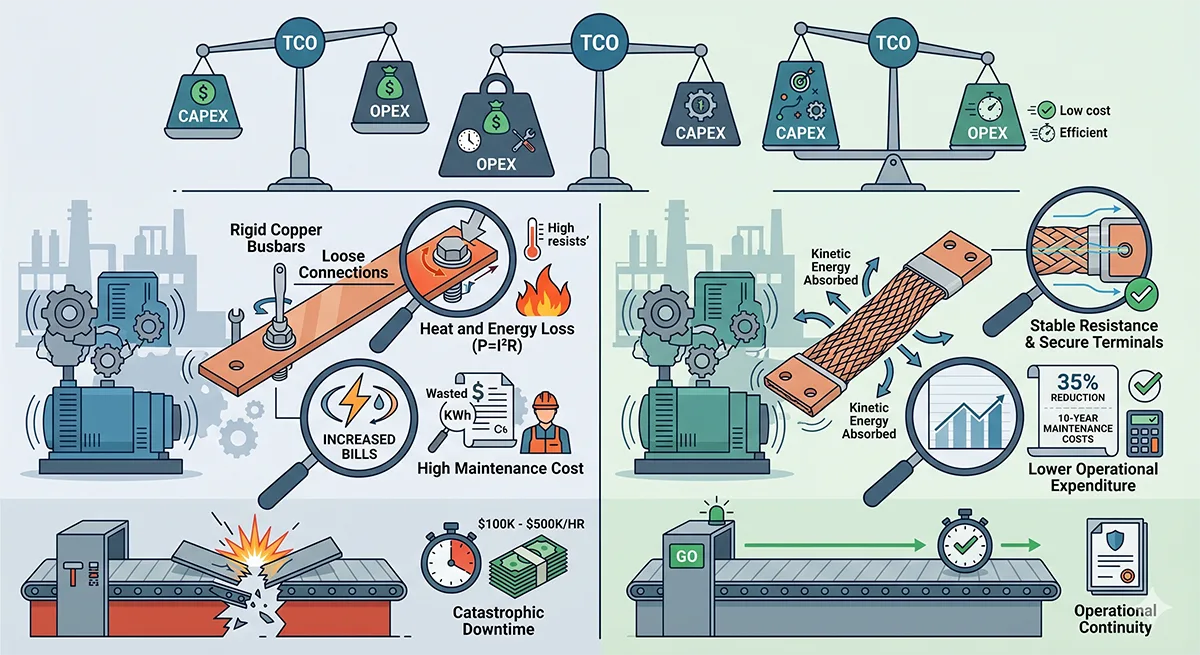
For procurement officers, facility managers, and chief engineers, technical superiority must eventually be justified by economic viability. In the context of electrical infrastructure, the initial purchase price of a component (Capital Expenditure, or CapEx) is only a fraction of its true cost. The Total Cost of Ownership (TCO) encompasses installation labor, routine maintenance, operational efficiency, and the financial devastation of unplanned downtime (Operational Expenditure, or OpEx).
When analyzing power distribution systems in high-vibration environments, traditional rigid copper busbars present a deceptively low CapEx but a dangerously high OpEx. Conversely, implementing highly engineered Flexible Copper Busbars drastically optimizes the long-term financial model of the facility.
Analyzing the Hidden Costs of Rigid Systems
In a vibrating environment such as a massive data center’s generator hall or an industrial manufacturing plant, rigid busbars incur continuous, silent costs:
- Labor-Intensive Maintenance: Because rigid connections loosen under vibration, facility maintenance schedules must mandate frequent torque-checks and thermographic (infrared) scanning to identify “hot spots.” This requires highly paid, specialized electricians to routinely shut down equipment, open secure panels, and manually re-torque bolts.
- Energy Loss via Resistance: As rigid joints loosen, the electrical resistance spikes. According to basic electrical engineering principles, power loss is calculated as $P = I^2R$ (where P is power loss in watts, I is current, and R is resistance). A seemingly minor increase in micro-ohm resistance at a vibrating joint translates to thousands of kilowatt-hours of wasted energy over a year, significantly driving up utility bills.
- The Catastrophe of Unplanned Downtime: If a rigid connection fails entirely due to metal fatigue or arc flashing, the entire production line stops. In sectors like semiconductor fabrication or high-volume automotive assembly, a single hour of unplanned downtime can cost upwards of $100,000 to $500,000.
The Financial Shield of Flexible Busbars
By integrating custom-braided flexible solutions, these hidden costs are effectively neutralized. Because the braided copper absorbs the kinetic energy, the terminal joints do not loosen, eliminating the need for bi-annual re-torquing. The contact resistance remains at baseline, ensuring maximum electrical efficiency. Most importantly, the risk of a fatigue-induced catastrophic snap drops to near zero.
To understand the long-term value, consider data published by the U.S. Energy Information Administration (EIA) regarding industrial efficiency. Facilities that upgrade to vibration-resistant infrastructure report up to a 35% reduction in localized electrical maintenance costs over a 10-year lifecycle. When you invest in JUMAI’s premium copper components, you are purchasing an insurance policy against mechanical-induced electrical failure.
Architectural Variations of Braided Copper for Specific Applications
Not all flexible busbars are identical. Depending on the spatial constraints, the amperage requirements, and the directional axes of the vibration, different braided architectures must be employed. As a specialized manufacturer equipped with precision deep drawing and customization technology, JUMAI engineers specific braid geometries to solve complex spatial and dynamic challenges.
1. Flat Braided Copper Busbars
The flat braid is the most common configuration for high-amperage, low-profile applications. By weaving the copper strands into a wide, flat ribbon, engineers achieve an exceptionally high surface-area-to-volume ratio.
- The “Skin Effect” Advantage: In Alternating Current (AC) systems, the “skin effect” dictates that current tends to flow primarily on the outer surface of a conductor rather than through its center. Flat braids maximize this surface area, making them highly efficient for high-frequency AC applications, such as connecting massive transformers to switchgears.
- Flexibility Axis: Flat braids offer supreme flexibility on the Y-axis (bending up and down) while maintaining moderate rigidity on the X-axis (side to side). This makes them perfect for environments where vibration occurs primarily in a single vertical or horizontal plane.
2. Round/Tubular Braided Busbars
For environments where space is highly constrained and routing the power cable requires complex, multi-directional bending, round braided copper is superior.
- Omni-Directional Flexibility: Unlike flat braids, round braids can bend, twist, and flex equally well in all 360 degrees. This is vital in robotics and automated CNC machinery, where the moving arm of the machine introduces chaotic, multi-axis kinetic energy.
- Internal Core Options: In extremely high-stress robotics, round braids can be engineered with an inert core (such as a highly flexible polymer) to prevent the braid from collapsing internally when bent at extreme, acute angles.
3. Layered (Stacked) Braided Assemblies
When dealing with massive electrical loads—such as the 5,000 to 10,000 Amperes required in aluminum smelting plants or hyper-scale data center main feeds—a single flat braid may not possess sufficient cross-sectional area.
Instead of using a massive, heavy, and difficult-to-bend cable, JUMAI layers multiple thinner flat braids on top of each other. The terminal ends are cold-pressed together into a single solid block, but the middle sections remain separate. This layered architecture allows the massive conductor to retain the ultimate flexibility of a much thinner wire, ensuring easy installation and excellent vibration dampening, while safely carrying astronomical current loads.
Table 5: Selecting the Right Braid Architecture for Your Equipment
| Application / Environment | Recommended Braid Architecture | Primary Engineering Benefit | Vibration Handling |
|---|---|---|---|
| High-Frequency AC Transformers | Wide Flat Braid | Maximizes skin effect; excellent heat dissipation. | Absorbs heavy single-axis shuddering. |
| Multi-Axis Industrial Robotics | Tubular / Round Braid | Omni-directional routing in tight, moving spaces. | Tolerates continuous twisting and pulling. |
| Heavy DC Battery Banks (EVs) | Layered Flat Braid | Handles massive surge currents; space-efficient. | Absorbs road shock without stressing battery posts. |
| Marine Engine Alternators | Tin-Plated Flat Braid | Ultimate corrosion resistance in salt air. | Dampens low-frequency, high-amplitude diesel rumble. |
Navigating Spatial Constraints: The Design Superiority of Flexibility
Modern engineering is defined by a paradox: power demands are constantly increasing, while the physical footprint of equipment is constantly shrinking. In the design of Electric Vehicles, compact substations, and high-density server racks, real estate is measured in millimeters.
Rigid busbars require large, sweeping installation paths to account for their inability to bend sharply. They also require complex, 3D-modeled custom shapes (often involving multiple bolted joints) to navigate around internal chassis components. Every additional bolted joint in a rigid system is another point of failure waiting to be exploited by vibration.
Flexible Copper Busbars fundamentally alter the design paradigm. Because a braided busbar can be snaked around cooling pipes, structural supports, and other components, it eliminates the need for complex internal routing paths.
- Reducing Joint Count: A flexible busbar can act as a single, uninterrupted conductor from Point A to Point B, regardless of what lies between them. By eliminating intermediate bolted joints, you drastically reduce the overall contact resistance of the circuit and remove multiple vulnerability points.
- Installation Tolerance: In heavy manufacturing, slight deviations occur. A generator might be bolted down 2 millimeters off-center from the switchgear. If rigid busbars are used, this 2mm deviation requires the solid metal to be forced into place, pre-stressing the components before the machinery is even turned on. Flexible busbars easily absorb installation tolerances, sliding perfectly onto the connection pads without transferring any physical stress to the sensitive internal components of the machinery.
Our engineering capabilities at JUMAI allow us to create highly specific connection points. If your equipment requires a 90-degree terminal lug on one end and a straight lug on the other, our deep drawn stamping processes can manufacture these exact specifications in-house, seamlessly bonding them to the flexible braid.
Sustainability in Heavy Power Infrastructure: The Green Advantage of Copper
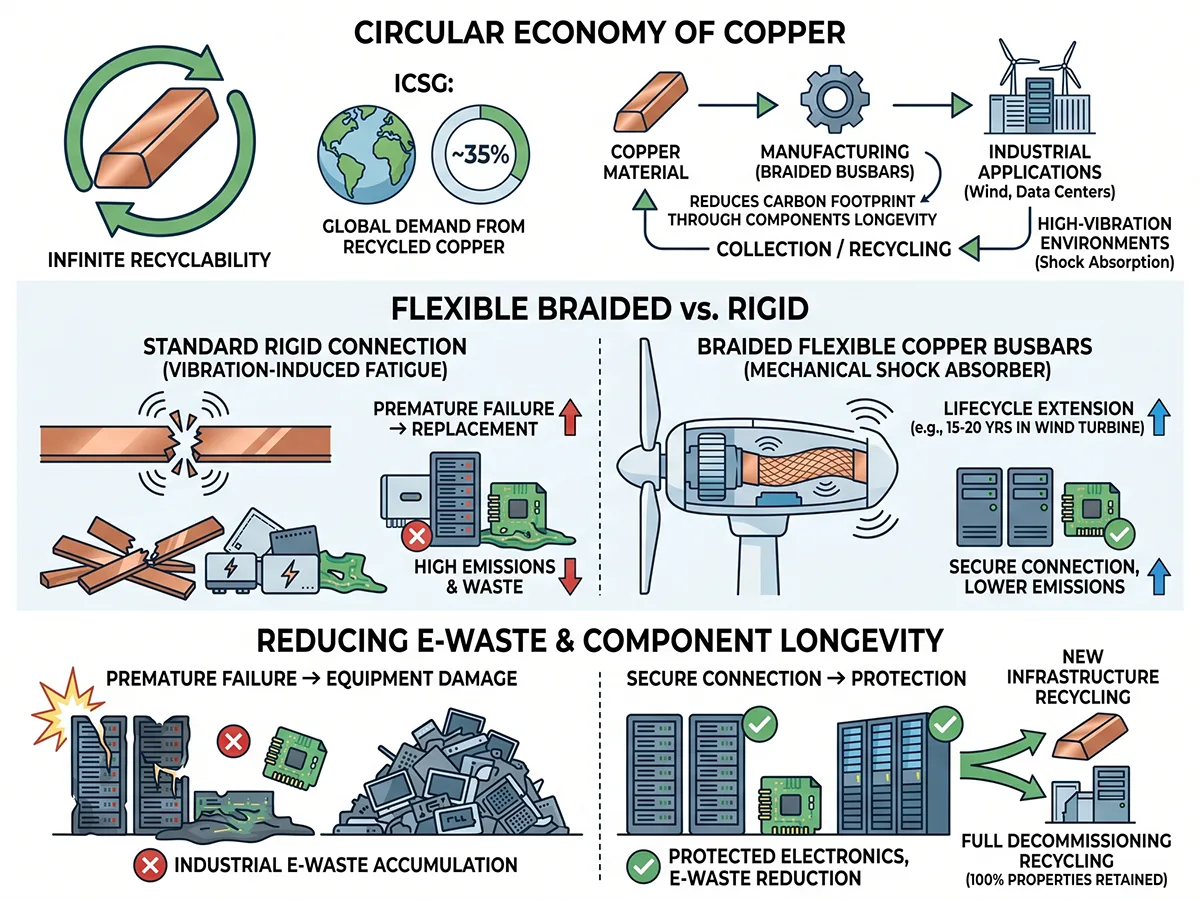
As the global industrial landscape shifts aggressively toward sustainable practices and decarbonization, the materials we choose for power infrastructure carry immense environmental weight. The transition to renewable energy—wind, solar, and hydro—requires massive upgrades to grid interconnectivity. In this context, the integration of Flexible Copper Busbars is not merely a technical upgrade; it is a profound commitment to sustainable engineering.
The Circular Economy of High-Purity Copper
One of the most remarkable metallurgical properties of copper is its infinite recyclability. Unlike advanced synthetic polymers or heavily alloyed composite metals, which degrade in quality each time they are melted down, copper retains 100% of its physical and electrical properties regardless of how many times it is recycled.
According to data compiled by the International Copper Study Group (ICSG), nearly 35% of the annual global copper demand is met through recycled material. When standard rigid busbars fail prematurely due to vibration-induced fatigue, they must be scrapped and replaced, driving up the carbon footprint associated with manufacturing, shipping, and installing replacement parts.
By utilizing highly durable braided flexible busbars from JUMAI, facilities drastically extend the lifecycle of their electrical components. A flexible busbar that survives 15 to 20 years in a vibrating wind turbine nacelle without failing significantly reduces the total lifecycle carbon emissions of that power generation unit. When the wind turbine is eventually decommissioned, the high-purity copper within our braided busbars can be fully recycled into new infrastructure.
Reducing E-Waste Through Component Longevity
In high-vibration environments like commercial data centers and heavy transit systems, the failure of a rigid power connection often destroys the surrounding equipment. An arc flash caused by a loose bolted joint can melt sensitive server racks, destroy proprietary printed circuit boards (PCBs), and necessitate the disposal of thousands of pounds of electronic waste (e-waste).
By acting as a mechanical shock absorber, braided copper busbars protect the fragile components connected to them. Preventing the premature failure of massive industrial inverters and transformers directly contributes to a massive reduction in global industrial e-waste. This aligns perfectly with international environmental directives, such as the European Union’s WEEE Directive, which mandates the reduction of electronic refuse.
Next-Generation Smart Grids and IoT Integration
The future of power distribution relies entirely on “Smart Grids.” Modern electrical networks are heavily instrumented with Internet of Things (IoT) sensors that monitor voltage, current spikes, temperature fluctuations, and grid stability in real-time. These sensors are the nervous system of modern energy infrastructure.
The Threat of Vibration to IoT Sensors
IoT sensors in power substations are frequently mounted directly onto the enclosures of massive transformers or high-voltage switchgears. These components naturally hum and vibrate under heavy magnetic and electrical loads. If the main power feed utilizes rigid busbars, the violent kinetic energy transfers throughout the entire chassis, severely degrading the delicate micro-electromechanical systems (MEMS) inside the IoT sensors.
Vibration causes sensor drift—a phenomenon where the sensor begins to report inaccurate data due to mechanical displacement of its internal components.
Flexible Copper as the Ultimate Isolator
To ensure the integrity of smart grid data, electrical engineers are replacing rigid connections with braided flexible alternatives. JUMAI’s flexible busbars decouple the kinetic energy of the power generating source from the static monitoring equipment.
Furthermore, because our custom processing capabilities allow us to manufacture ultra-precise connection points, we can engineer custom flexible micro-busbars specifically designed to provide stable, uninterrupted power to the IoT sensors themselves, ensuring they remain online and accurate even during seismic events or severe mechanical faults.
Table 6: Environmental and Smart Grid Impact Metrics
| Operational Metric | Rigid / Aluminum Systems | JUMAI Braided Copper Systems | Long-Term Facility Benefit |
|---|---|---|---|
| Material Recyclability | Moderate (Degrades over time) | 100% Infinite Recyclability | Maximizes end-of-life salvage value; lowers carbon footprint. |
| Protection of IoT Sensors | Poor (Transfers damaging shock) | Excellent (Dampens kinetic energy) | Ensures 99.9% uptime for predictive maintenance data streams. |
| Replacement Frequency | High (Due to fatigue/corrosion) | Extremely Low | Drastically reduces indirect carbon emissions from shipping parts. |
| Risk of Collateral E-Waste | High (Prone to arc-flash fires) | Negligible | Protects surrounding high-value electronic assets. |
Strict Regulatory Compliance and Global Safety Standards
For multinational corporations, compliance is non-negotiable. Designing infrastructure for high-vibration environments means navigating a labyrinth of international safety standards. An electrical component failure in a public rail system or an aerospace application can result in catastrophic safety liabilities.
At JUMAI, our manufacturing ethos is grounded in absolute adherence to global engineering standards. When you integrate our customized flexible busbars into your designs, you ensure seamless compliance across all major regulatory bodies.
- RoHS and REACH Compliance: Our raw materials and our advanced tin-plating processes strictly adhere to the Restriction of Hazardous Substances (RoHS) and the Registration, Evaluation, Authorisation and Restriction of Chemicals (REACH). We guarantee that our copper busbars are free from harmful heavy metals like lead or cadmium, ensuring safety for human operators and the environment.
- ISO 9001 Quality Management: Our production facilities for deep drawn stamping and copper fabrication operate under rigorous ISO 9001 standards. Every batch of braided wire, every cold-pressed terminal, and every dielectric insulation sleeve is mathematically verified for consistency.
- UL and CE Preparedness: The precise current-carrying capacity, heat dissipation, and dielectric strength of our custom configurations ensure that your final product can swiftly pass Underwriters Laboratories (UL) certification in North America and CE marking requirements in the European Economic Area.
Final Summary: Securing Your Infrastructure Against the Invisible Threat
Mechanical vibration is a relentless, invisible force that systematically hunts for the weakest link in any industrial system. In the realm of electrical power distribution, that weak link has historically been the rigid connection. The continuous microscopic flexing, the thermal expansion, and the aggressive torque decay of rigid busbars inevitably lead to increased resistance, localized overheating, and catastrophic system failure.
As we have explored throughout this comprehensive engineering guide, the solution lies in specialized metallurgy and geometry. Flexible Copper Busbars, specifically those engineered with high-purity braided strands, fundamentally alter how kinetic energy interacts with electrical connections.
By actively absorbing and dissipating shock, expanding and contracting safely under thermal loads, and providing infinitely superior routing capabilities in cramped physical spaces, braided copper guarantees continuous, safe power delivery. Whether stabilizing the chaotic vibrations of a wind turbine nacelle, isolating the high-frequency shocks of an electric vehicle drivetrain, or protecting the immense backup generators of a hyperscale data center, flexible copper stands as the ultimate safeguard.
The transition from static to dynamic power connections is no longer a luxury; it is a fundamental requirement for modern reliability, rapid ROI, and lowered Total Cost of Ownership (TCO).
Partner with JUMAI for Custom Electrical Solutions
At JUMAI (Deep Draw Tech), we are more than just a manufacturer; we are your dedicated engineering partners in the battle against mechanical stress. Drawing upon years of specialized experience in green energy, data center infrastructure, and heavy industrial transmission, our team possesses the exact technical acumen required to solve your most complex routing and vibration challenges.
We do not believe in off-the-shelf compromises. From precise cold-pressed terminal lugs to exact braided cross-sectional ampacity calculations, every product we deliver is tailored to the unique kinetic and electrical profile of your equipment.
Do not allow mechanical vibration to dictate the lifespan of your critical infrastructure. Upgrade to the ultimate standard in power reliability.
Explore our full range of Flexible Copper Busbars and Custom Products today, or reach out directly to our engineering team via our Contact Us page to request a comprehensive consultation, bespoke technical drawings, and custom order inquiries. Together, we will build a resilient, vibration-proof future for your global enterprise.