
Welcome to the JUMAI TECH (DeepDrawTech) technical insight series. As a leader in custom Copper Busbars and high-precision metal components, we understand that the foundation of any high-performance electrical system is the quality of its raw materials.
When designing power distribution systems, engineers often face a critical choice: Should they use standard Electrolytic Tough Pitch (ETP) copper, or is it worth upgrading to Oxygen-Free (OF) Copper? While both may look identical to the naked eye, the microscopic differences in their composition can have massive implications for the efficiency, longevity, and safety of your electrical infrastructure.
In this comprehensive guide, we will dive deep into why Oxygen-Free Copper is becoming the gold standard for high-end Copper Busbar applications and how JUMAI TECH leverages this material to deliver superior results for our global clients.
Understanding the Fundamentals of Copper Grades
To understand why Oxygen-Free Copper matters, we first need to look at how copper is refined and categorized in the industrial world. Not all copper is created equal, and the “purity” of the metal is defined by more than just the percentage of copper atoms.
What is Electrolytic Tough Pitch (ETP) Copper?
ETP copper, often classified as C11000, is the most common grade used for general electrical applications. It has a minimum copper content of 99.90%. During the refining process, oxygen is intentionally left in the melt (usually around 200 to 400 parts per million) to help “clean” out other impurities.
While ETP is excellent for many standard applications, the lingering oxygen can become a liability in high-temperature environments or when specialized joining techniques like brazing or welding are required.
The Rise of Oxygen-Free (OF) and Oxygen-Free High Conductivity (OFHC) Copper
Oxygen-Free copper (C10200) and Oxygen-Free High Conductivity copper (C10100) are produced by melting copper in a non-oxidizing atmosphere. This process reduces the oxygen content to less than 10 ppm (parts per million).
By eliminating the oxygen, the material gains unique physical properties that make it far more stable under thermal stress. For a Copper Busbar, this means better conductivity, better ductility, and complete immunity to hydrogen embrittlement.
The Superior Conductivity of Oxygen-Free Copper Busbars
The primary function of a busbar is to conduct electricity with as little resistance as possible. Even a 1% difference in conductivity can result in significant energy losses over the lifespan of a data center or an electric vehicle (EV) charging station.
IACS Standards and Electrical Efficiency
The International Annealed Copper Standard (IACS) is the benchmark used to measure electrical conductivity. While ETP copper typically hovers around 100% or 101% IACS, high-purity Oxygen-Free copper can consistently reach 101% to 102% IACS.
| Property | ETP Copper (C11000) | Oxygen-Free (C10200) | OFHC (C10100) |
| Copper Purity (Min) | 99.90% | 99.95% | 99.99% |
| Oxygen Content | 200–400 ppm | < 10 ppm | < 5 ppm |
| Conductivity (IACS) | 100% – 101% | 101% | 101% – 102% |
| Thermal Conductivity | 388 W/m·K | 391 W/m·K | 391+ W/m·K |
Reducing Heat Dissipation in High-Power Systems
When electricity flows through a Copper Busbar, resistance generates heat. Because Oxygen-Free copper has fewer internal barriers (like copper-oxide precipitates) to electron flow, it generates less heat. This is crucial for modern power electronics, where cooling space is limited.
Lower heat generation doesn’t just save energy; it protects the surrounding insulation and sensitive electronic components from thermal degradation, effectively extending the MTBF (Mean Time Between Failure) of the entire system.
Hydrogen Embrittlement: The Silent Killer of Busbars
Perhaps the most technical—and vital—reason to choose Oxygen-Free copper for your busbars is to avoid a phenomenon known as Hydrogen Embrittlement.
How Embrittlement Occurs
When copper containing oxygen (like ETP) is heated in an atmosphere containing hydrogen (such as during certain welding, brazing, or annealing processes), the hydrogen atoms diffuse into the metal. These atoms react with the cuprous oxide (Cu2O) at the grain boundaries to form steam (H2O).
The pressure from this internal steam creates microscopic voids and cracks. Over time, these cracks propagate, leading to sudden, catastrophic mechanical failure of the Copper Busbar.
Why Oxygen-Free Copper is Immune
Since Oxygen-Free copper has virtually no oxygen content, there is no Cu2O for the hydrogen to react with. This makes it the only safe choice for busbars that will undergo:
- High-temperature vacuum brazing.
- Precision TIG or Laser welding.
- Operation in high-hydrogen environments (such as certain chemical processing plants).
At JUMAI TECH, we strictly recommend Oxygen-Free grades for any project involving complex assembly or structural welding to ensure the integrity of the power path.
Superior Workability and Deep-Drawing Capabilities

As a specialist in Deep-Drawn Components and Precision Stamping, JUMAI TECH understands that material science directly impacts manufacturing feasibility.
Enhanced Ductility and Formability
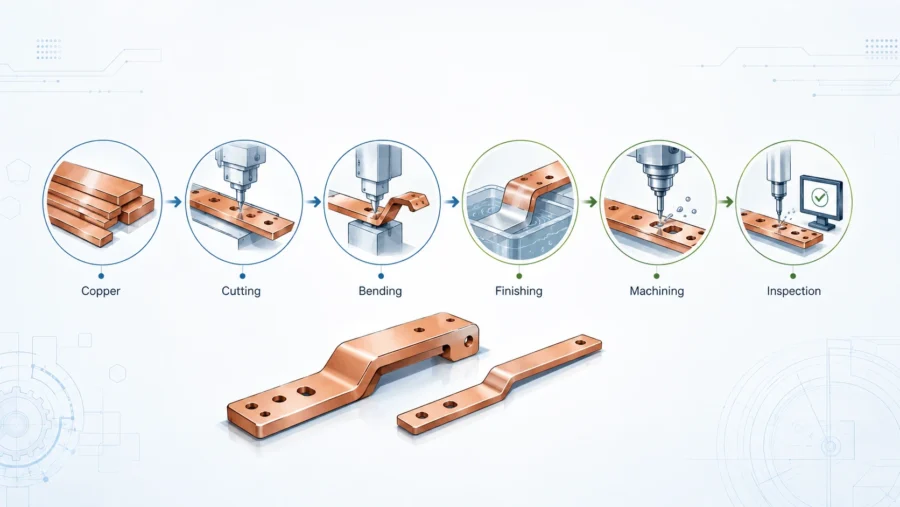
Oxygen-Free copper is significantly more ductile than ETP copper. This means it can be bent, twisted, and drawn into complex shapes without developing surface “orange peel” or micro-cracks. For custom Copper Busbars that require tight-radius bends to fit into compact enclosures, OF copper provides a much higher safety margin during the fabrication process.
Precision in Deep-Drawn Components
When we manufacture deep-drawn housings or connectors that integrate with busbar systems, the uniformity of Oxygen-Free copper is unmatched. The lack of oxide inclusions ensures that the metal flows evenly within the Precision Stamping Dies, resulting in consistent wall thickness and superior surface finish.
“The consistency of Oxygen-Free copper allows us to achieve tolerances that are simply not possible with lower-grade materials. It’s about more than just conductivity; it’s about mechanical reliability.” — Lead Engineer at JUMAI TECH
Environmental and Long-Term Reliability Factors
In today’s market, sustainability and “Total Cost of Ownership” (TCO) are more important than the initial purchase price.
Corrosion Resistance in Harsh Environments
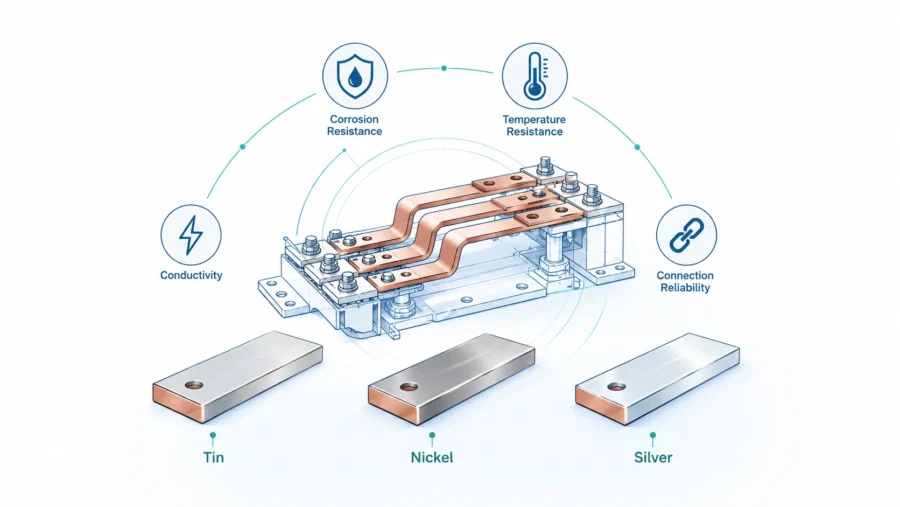
Oxygen-Free copper exhibits better resistance to corrosion in certain atmospheric conditions. Because the grain boundaries are cleaner and free of oxides, there are fewer sites for localized galvanic corrosion to begin. This is particularly important for renewable energy installations like offshore wind farms or solar arrays, where busbars are exposed to high humidity and salt air.
Sustainability and Recyclability
High-purity copper is 100% recyclable without any loss of quality. By utilizing Oxygen-Free copper in your Copper Busbar designs, you are ensuring that at the end of the product’s 30-year lifecycle, the material remains a high-value asset that can be returned to the circular economy with minimal processing.
Applications Where Oxygen-Free Copper is Non-Negotiable
While standard copper is fine for house wiring, certain industries demand the unique properties of OF copper.
Electric Vehicles (EV) and Battery Storage
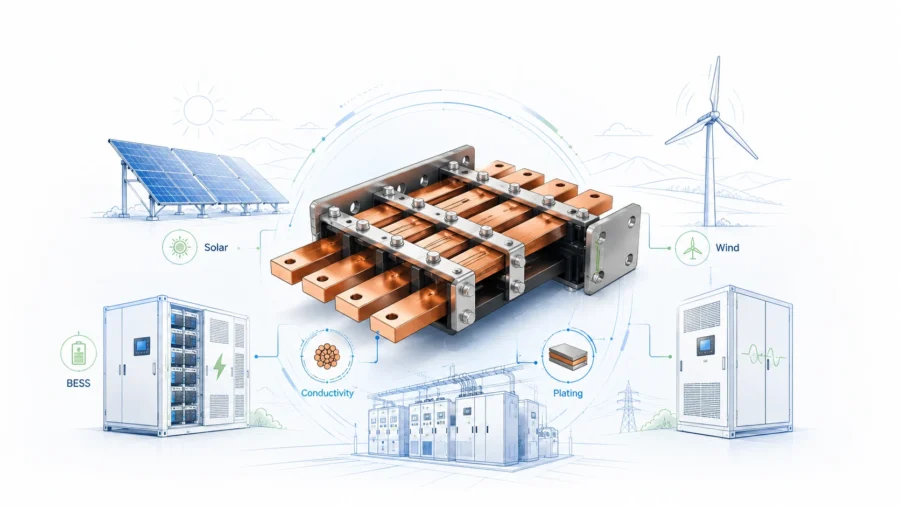
In the EV sector, every gram of weight and every milliwatt of power counts. Oxygen-Free Copper Busbars are used in battery packs and inverters to handle massive current surges during acceleration and rapid charging. Their ability to handle thermal cycling without cracking is essential for vehicle safety.
Telecommunications and Data Centers
With the rollout of 6G and the expansion of AI-driven data centers, power densities are reaching record highs. OFHC copper helps maintain signal integrity and reduces the cooling load on these massive facilities, directly lowering the Power Usage Effectiveness (PUE) ratio.
Medical Imaging (MRI and CT)
Superconducting magnets and high-frequency medical equipment require materials with absolute purity. Any impurity in the busbar can cause magnetic interference or “hot spots” that ruin image quality or damage the equipment.
How JUMAI TECH Ensures Excellence in Busbar Fabrication
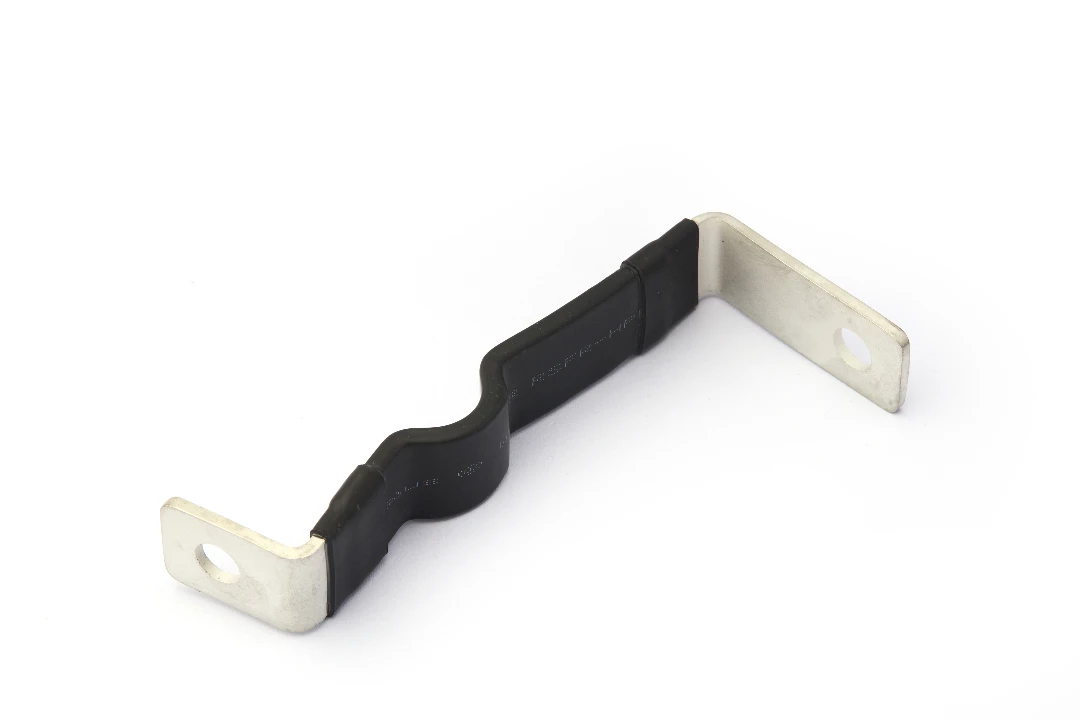
At JUMAI TECH, we don’t just supply parts; we provide engineered solutions. Our expertise in Precision Stamping Dies and Deep-Drawn Components allows us to take full advantage of Oxygen-Free copper’s properties.
Rigorous Material Sourcing
We partner with world-class refineries to ensure every batch of Oxygen-Free copper meets ASTM B170 and other international standards. We provide full material traceability and COA (Certificate of Analysis) for every shipment.
Custom Die Design for Copper
Working with high-purity copper requires a deep understanding of the material’s “spring-back” and flow characteristics. Our team designs and maintains in-house Precision Stamping Dies specifically tuned for the unique behavior of OF and OFHC copper, ensuring that your custom Copper Busbars meet exacting tolerances every time.
Investing in Quality for Future-Proof Systems
Choosing Oxygen-Free copper for your busbar project isn’t just a technical preference—it’s a strategic business decision. It reduces energy waste, eliminates the risk of hydrogen-induced failures, and allows for more compact, efficient designs.
Whether you are developing the next generation of aerospace power systems or upgrading a municipal power grid, the material you choose today will define the reliability of your system for decades to come.
Would you like me to provide a custom quote or a technical material comparison for your specific Copper Busbar project? Our team at JUMAI TECH is ready to help you optimize your design for both performance and cost-efficiency.
FAQ
Oxygen-Free Copper (OFC) Busbars
Why is “Hydrogen Embrittlement” resistance important for busbar applications? When
How does using OFC busbars improve the efficiency of electrical systems? Because
Are OFC busbars suitable for complex shapes and tight bending? Yes. Oxygen-Free
In which industries is it most beneficial to switch to Oxygen-Free Copper busbars? OFC busbars are essential for industries requiring maximum reliability and performance, including:
Electric Vehicles (EVs): Battery modules and drivetrain power distribution.
Aerospace & Vacuum Electronics: Where material outgassing and high-temperature stability are critical.
High-End Audio: To ensure signal purity and minimal distortion.