
In the modern landscape of electrical engineering, the demand for efficiency, compactness, and reliability has never been higher. Engineers are constantly faced with a critical decision when designing power distribution systems: Should I use traditional round cables or switch to flexible busbars?
At JUMAI TECH, we specialize in the precision manufacturing of deep-drawn components and high-conductivity copper solutions. We understand that this choice isn’t just about carrying current—it’s about optimizing the entire lifecycle of the system, from installation to long-term thermal stability. This article provides an in-depth technical comparison to help you determine which solution suits your high-power application.
Table of Contents
Understanding the Core Technology: What Sets Them Apart?
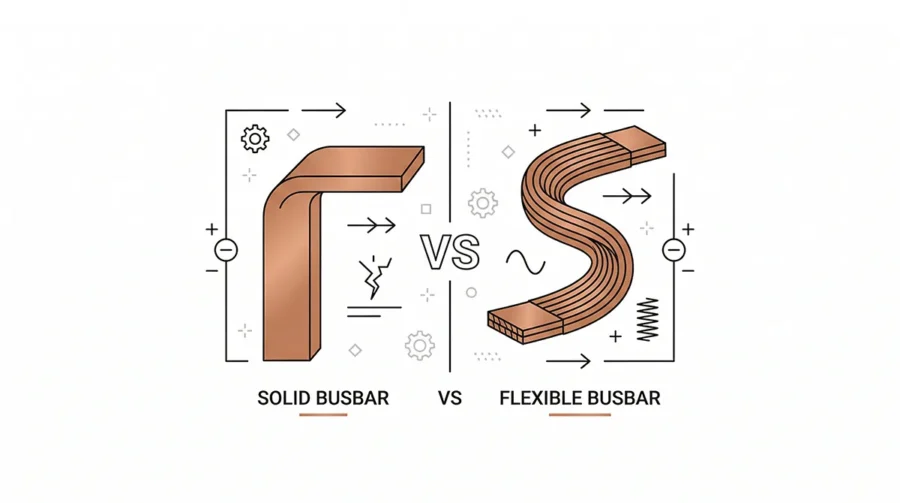
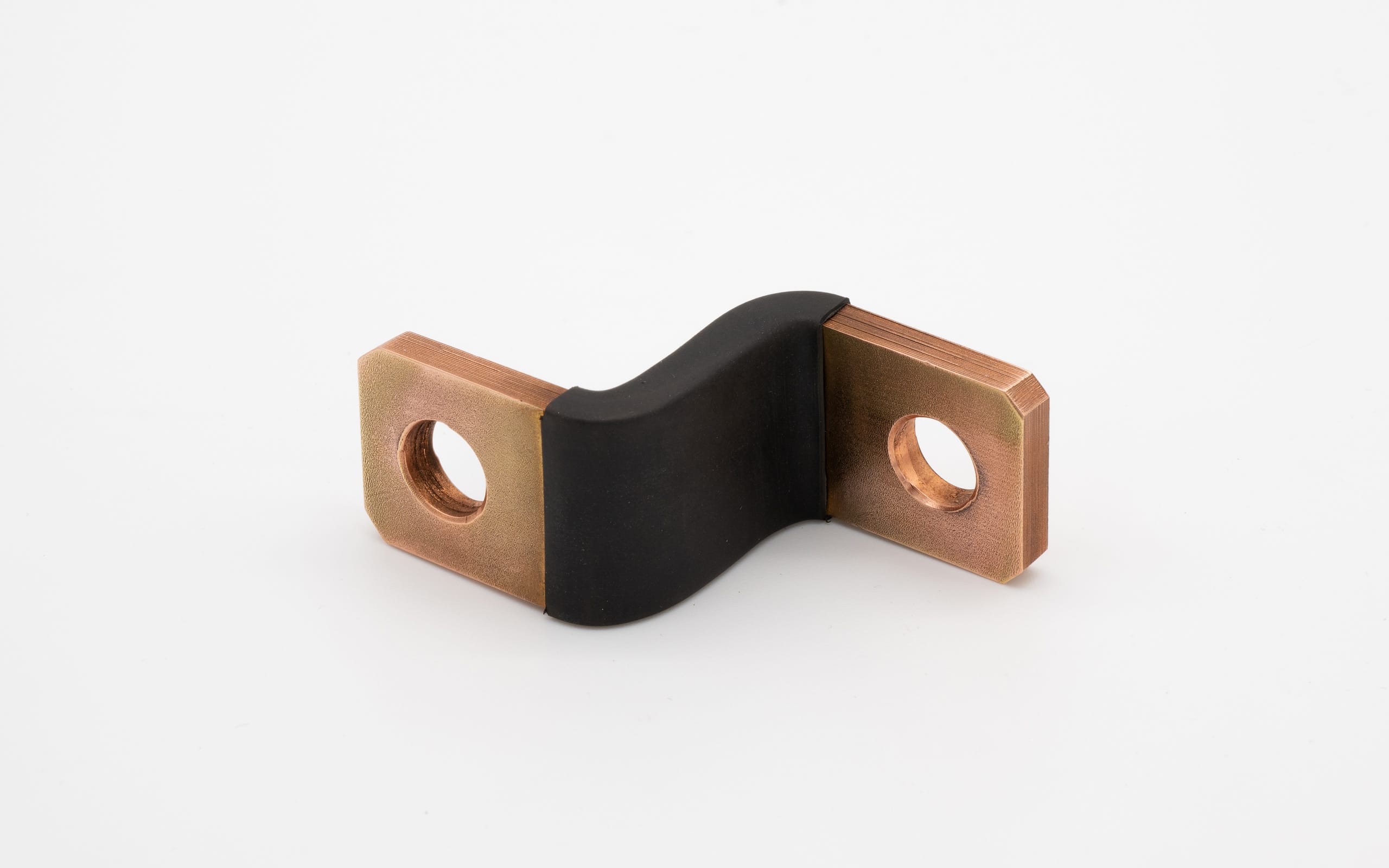
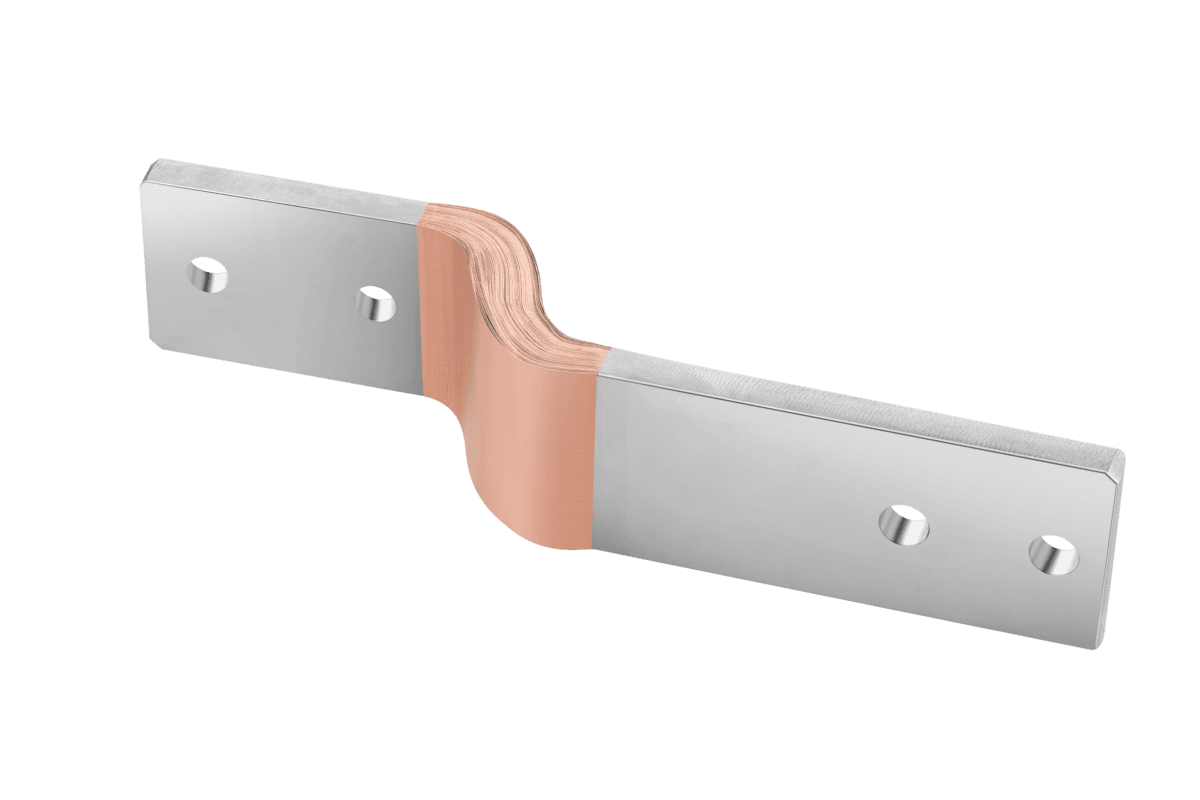
Before diving into the performance metrics, it is essential to define what a flexible busbar actually is. Unlike a standard cable, which consists of stranded wire bundles encased in a thick jacket, a flexible busbar (often called an insulated flexible copper bar) is constructed from multiple layers of thin electrolytic copper foils.
The Construction of Flexible Busbars
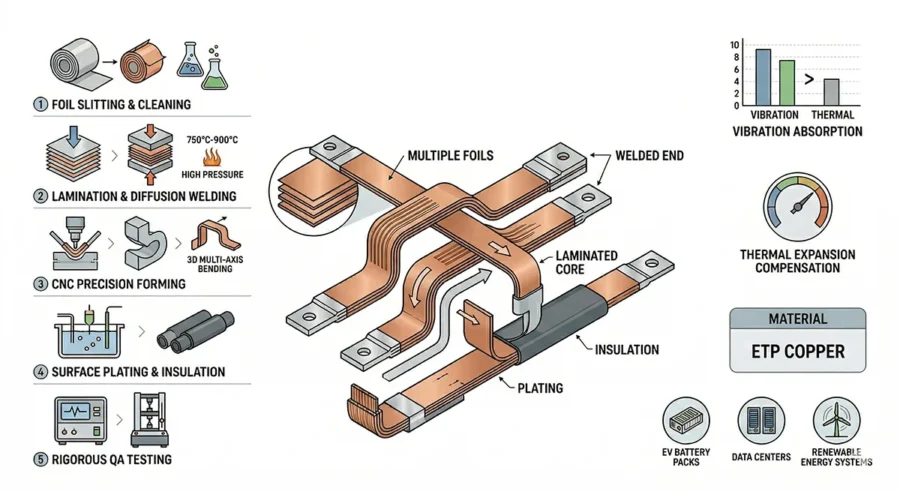
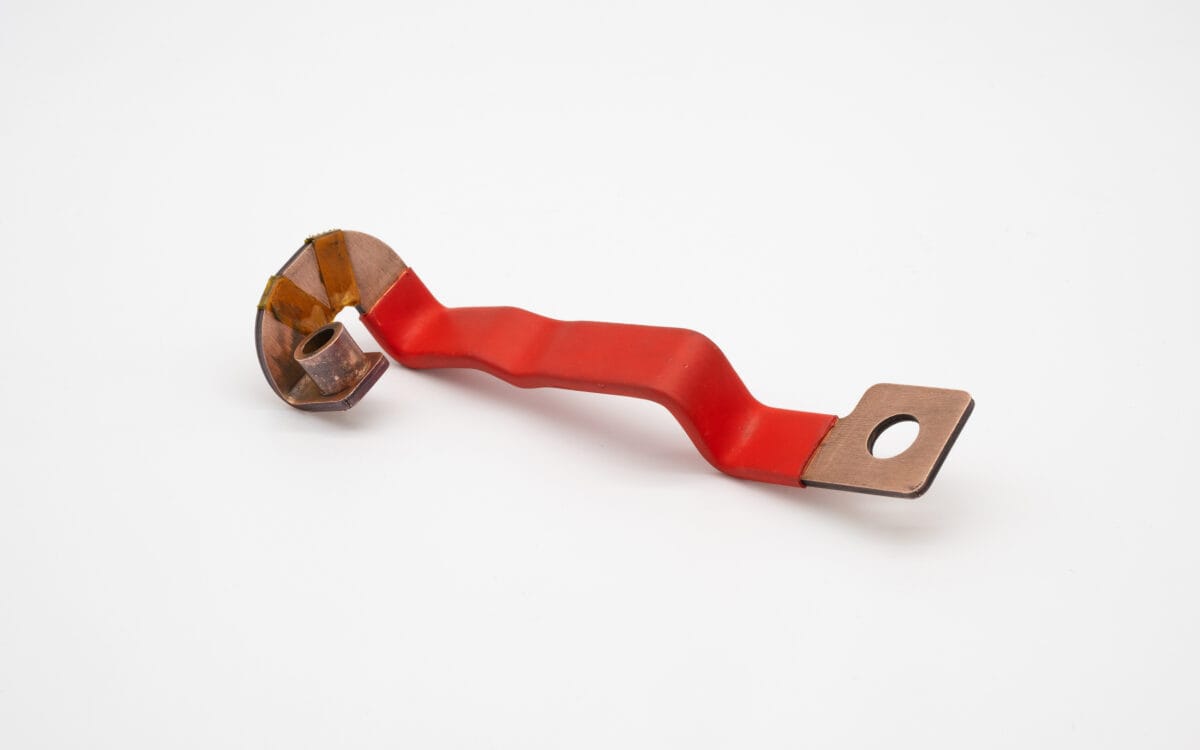
Flexible busbars are manufactured by stacking multiple thin copper strips (usually 0.1mm to 0.3mm thick) and protecting them with a high-resistance PVC, TPE, or Silicone insulation. Because the individual layers are free to slide against each other, the entire bar can be bent, twisted, or folded with minimal effort. This “lamination” technique is the secret behind their superior flexibility compared to heavy-gauge cables.
The Architecture of High-Ampacity Cables
Traditional power cables utilize Class 5 or Class 6 fine-stranded copper conductors. While these are flexible to an extent, as the cross-sectional area increases to handle higher currents (e.g., 250mm² or above), the cable becomes increasingly rigid. The circular geometry and thick insulation required for mechanical protection create a significant “bend radius” limitation that often complicates tight-space installations.
Space Efficiency and Design Flexibility
In modern switchgear, battery packs, and inverter housings, space is a premium commodity. This is where the geometric difference between flat busbars and round cables becomes a game-changer.
Reducing the “Footprint” in Enclosures
Cables are inherently bulky due to their circular cross-section. When you need to route high current, you often require multiple parallel runs of thick cable. This creates “cable spaghetti,” which blocks airflow and consumes vast amounts of internal volume. Flexible busbars, with their rectangular profile, can be stacked or routed tightly along the walls of an enclosure, reclaiming up to 40% of the space previously occupied by cables.
Achieving a Tighter Bend Radius
One of the most significant advantages of the flexible busbar is its ability to make sharp, 90-degree turns.
- Cables: Generally require a bend radius of at least 6 to 10 times their outer diameter. For a thick power cable, this could mean needing 150mm of clearance just to make a turn.
- Flexible Busbars: Can be folded over themselves. Since the layers slide, there is virtually no internal stress on the copper, allowing for extremely compact routing in corners where a cable simply wouldn’t fit.
Custom Shaping for Complex Geometries
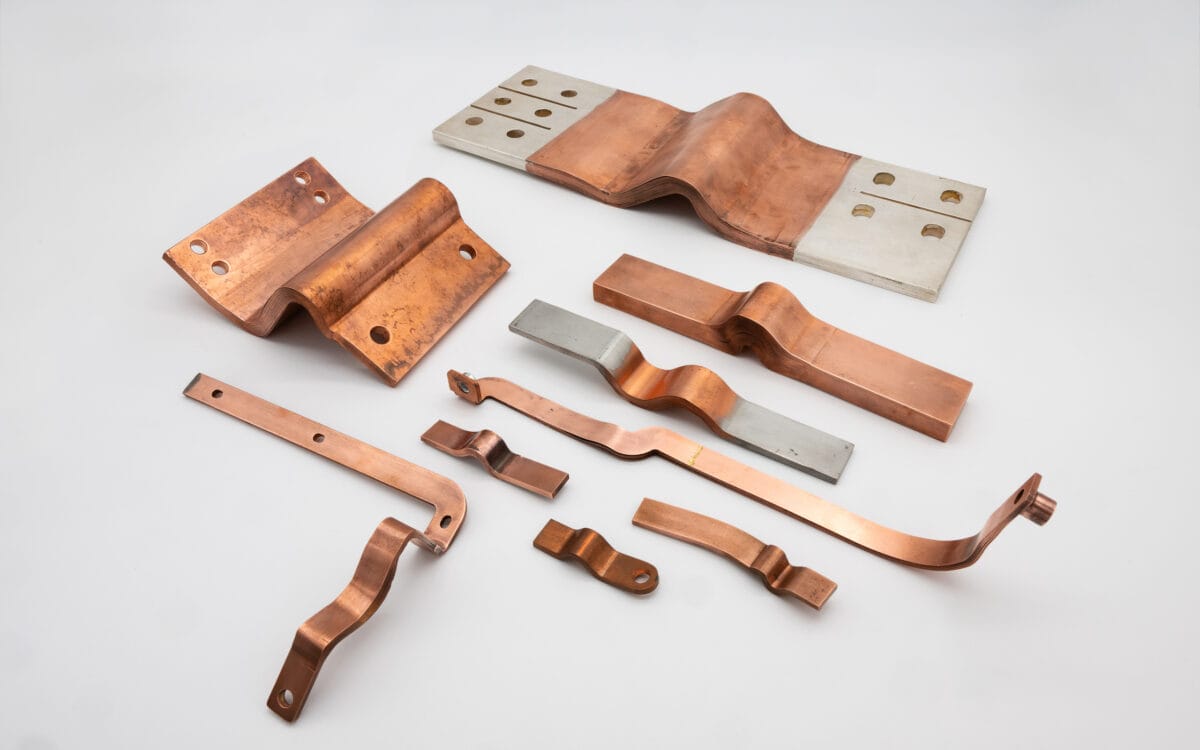
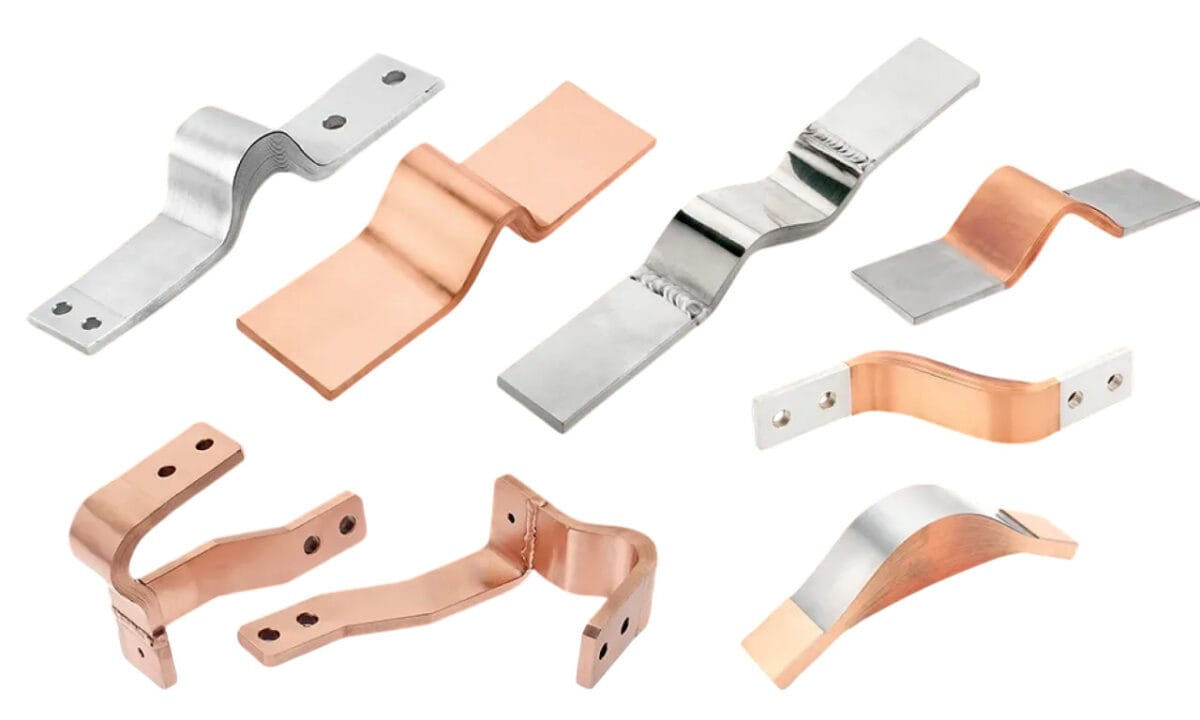
At JUMAI TECH, we often see clients struggling with connecting misaligned terminals. A cable requires a specific path and lug orientation. A flexible busbar, however, can be “pre-formed” or twisted mid-run to bridge the gap between two different planes of connection. This adaptability reduces the need for complex mounting brackets and specialized connectors.
Thermal Performance and Current Carrying Capacity
Heat is the enemy of any electrical system. Excessive heat leads to voltage drops, insulation degradation, and increased energy costs. The way a conductor dissipates heat is directly related to its surface area.
The “Skin Effect” and Surface Area Advantage
In AC applications, current tends to flow on the outer surface of a conductor—a phenomenon known as the Skin Effect.
- Cables: Have a lower surface-area-to-volume ratio because of their circular shape.
- Flexible Busbars: The flat, rectangular shape provides a much larger surface area for the same cross-section of copper. This allows for better natural convection and radiant cooling.
Comparison Table: Thermal & Physical Characteristics
| Feature | Flexible Busbar (JUMAI TECH) | Standard Power Cable |
| Geometry | Flat / Rectangular | Round / Circular |
| Surface Area | High (Excellent Heat Dissipation) | Low (Retains Heat) |
| Bend Radius | Very Small (Foldable) | Large (Requires Space) |
| Skin Effect | Minimized | Pronounced in Large Gauges |
| Installation Time | Fast (No Lugs Needed) | Slow (Stripping/Crimping) |
| Vibration Resistance | Excellent (Absorbs Stress) | Moderate |
Operating Temperatures and Ampacity Derating
Because flexible busbars dissipate heat more effectively, they can often carry more current than a cable of the same cross-sectional area without exceeding safe operating temperatures. According to IEC 60439-1 standards, the temperature rise in a busbar system is more predictable. In many cases, an engineer can downsize the copper cross-section by switching to a busbar, resulting in both weight and cost savings.
Vibration Resistance and Long-term Reliability
In industries like electric vehicle manufacturing or marine engineering, vibration is a constant threat to electrical integrity.
Absorbing Mechanical Stress
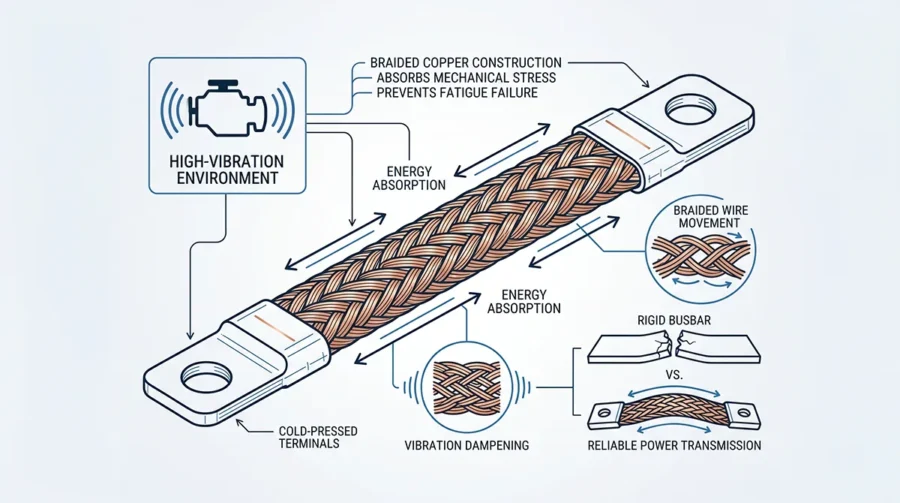
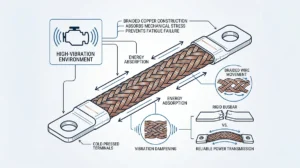
Cables are heavy. When a vehicle or machine vibrates, that mass puts significant strain on the terminal lugs and bolts. Over time, this can lead to “creep” or loosening of the connection, which causes arcing. Flexible busbars act like a structural leaf spring. The laminated layers absorb the mechanical energy of vibration, protecting the delicate ceramic insulators or plastic housings of the components they are connected to.
Eliminating the “Weak Link”: Crimped Lugs
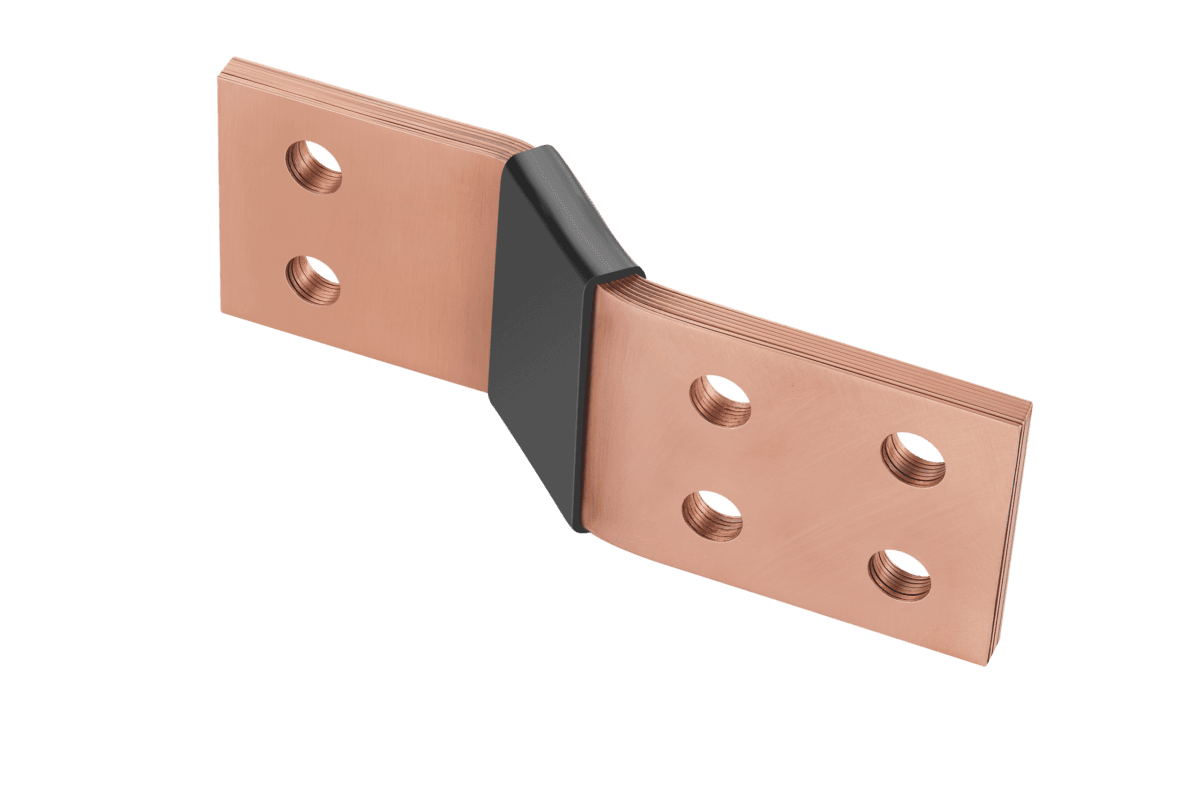
The most common point of failure in a cable system is the crimped connection between the cable and the lug. If the crimp is not perfect, resistance increases at that junction. Flexible busbars eliminate this. You simply punch a hole directly through the laminated copper ends. The contact is copper-to-copper across the entire surface of the bar, providing a significantly lower contact resistance.
Cost Analysis: Initial Investment vs. Total Cost of Ownership (TCO)
While the raw material cost of copper remains consistent, the installed cost is where the comparison shifts in favor of JUMAI TECH’s flexible solutions.
Labor Savings During Assembly
Installing large cables involves heavy-duty stripping tools, expensive hydraulic crimpers, and significant physical effort to “wrestle” the cables into position. Flexible busbars arrive ready to install or can be easily shaped by hand on the assembly line. Studies in industrial panel building suggest that using flexible busbars can reduce assembly labor time by up to 50%.
Inventory Simplification
Instead of stocking dozens of different lengths of pre-terminated cables or various sizes of lugs and heat-shrink tubing, a single size of flexible busbar can often be used for multiple applications within the same project. Its ability to be cut and punched on-site (or pre-fabricated by JUMAI TECH) simplifies the supply chain significantly.
Short-Circuit Resilience and Electrodynamic Forces
In high-power distribution, a short-circuit event isn’t just an electrical failure—it is a violent mechanical event. When a massive surge of current flows through parallel conductors, it generates intense magnetic fields that result in electrodynamic forces, literally trying to rip the conductors apart or crush them together.
Comparison of Mechanical Stability
Traditional cables, especially when bundled in trays, are subject to significant “whipping” actions during a fault. This can damage cable ties, trays, and the insulation itself.
- Cables: Because they are usually rounded and have a smaller moment of inertia in their cross-section, they are prone to displacement.
- Flexible Busbars: The flat, wide geometry of a flexible busbar provides a much higher resistance to bending in the direction of the magnetic force. Furthermore, the laminated structure acts as a natural dampener. At JUMAI TECH, our precision-layered foils allow for a minute amount of internal shift that absorbs the kinetic energy of a fault, preventing the catastrophic “snap” often seen in rigid busbars or heavy cables.
Calculating Fault Current Capacity
According to IEC 61439-1, the ability of a busbar system to withstand short-circuit currents is a critical safety rating. Flexible busbars typically offer a higher “Short-Time Withstand Current” ($I_{cw}$) relative to their mass. This is because the heat generated during the millisecond-long fault is more evenly distributed across the multiple copper layers, preventing localized melting at the contact points.
Electromagnetic Compatibility (EMC) and Inductance
As we move toward high-switching-frequency power electronics (like SiC and GaN inverters), the “cleanliness” of power delivery becomes paramount. This is an area where the geometry of the flexible busbar offers a distinct technical edge over traditional cabling.
Low Inductance Design
Inductance in a power circuit leads to voltage spikes during high-speed switching, which can destroy sensitive semiconductor components.
- Loop Area: Inductance is directly proportional to the area of the loop formed by the “go” and “return” conductors.
- Flexible Busbar Advantage: Because flexible busbars are flat, they can be “sandwiched” together (positive and negative layers separated only by a thin layer of high-dielectric insulation). This minimizes the loop area to almost zero, drastically reducing parasitic inductance.
- Cables: Even when twisted, cables maintain a much larger distance between centers, resulting in higher inductance and potential EMI issues.
Reducing Electromagnetic Radiation
Flat conductors produce a more controlled magnetic field compared to round cables. In sensitive environments like data centers or medical imaging rooms, the use of JUMAI TECH flexible busbars helps in meeting stringent EMC directives without the need for heavy, expensive lead or steel shielding.
Environmental Durability and Insulation Technology
At JUMAI TECH, we don’t just focus on the copper; the “skin” of the busbar is equally important. The insulation materials used in flexible busbars are engineered for industrial longevity.
Advanced Insulation Materials
While cables often use standard PVC or XLPE, flexible busbars utilize specialized high-temperature, high-dielectric compounds:
- High-Flex PVC: Standard for most switchgear, providing a balance of cost and flexibility.
- TPE (Thermoplastic Elastomer): Halogen-free and low-smoke, ideal for public transport and tunnels.
- Silicone: Used in extreme environments where temperatures exceed 150°C.
Resistance to Chemical and UV Exposure
In many deep-drawn component applications, such as outdoor solar inverters, the conductors are exposed to harsh UV rays and chemical vapors. The insulation on our flexible busbars is co-extruded to ensure there are no air gaps (voids) between the copper and the jacket. This prevents the “chimney effect” where moisture or corrosive gases travel down the length of a cable, causing internal oxidation.
Industry-Specific Applications: Why the Shift is Happening
1. Electric Vehicle (EV) Battery Packs
The modern EV battery is a marvel of space optimization. There is no room for the large bend radii of 4/0 AWG cables. Flexible busbars are used to connect battery modules to the High Voltage (HV) distribution unit. Their ability to handle the high-frequency vibrations of a moving vehicle while maintaining an ultra-low profile makes them irreplaceable in the Tesla-style “structural battery” designs.
2. Renewable Energy: Wind and Solar Inverters
Wind turbine nacelles are constantly moving and vibrating. Traditional cables can suffer from “work hardening” at the termination points, eventually snapping. Flexible busbars provide the necessary “give” to handle this movement. Furthermore, in large-scale solar inverters, the thermal efficiency of busbars allows for smaller cooling fans, increasing the overall efficiency of the system.
3. Data Centers and UPS Systems
With the rise of AI, data center power density has skyrocketed. Modern “Busway” systems in data centers rely on the quick-connect capabilities of flexible bars to allow for rapid scaling and maintenance without shutting down entire server racks.
Detailed Comparison Table: Technical Specs at a Glance
| Parameter | Flexible Busbar (Laminated) | Standard Power Cable (Stranded) |
| Current Density | Up to 4-5 A/mm2 (Air cooled) | Approx 2.5-3 A/mm2 |
| Max Operating Voltage | Up to 1000V AC / 1500V DC | Varies by Insulation |
| Dielectric Strength | 20 kV/mm | 10-15 kV/mm |
| Flammability Rating | UL 94 V-0 Available | Varies (often VW-1) |
| Connection Method | Direct Bolt-on (Low Resistance) | Crimp Lug (Higher Resistance) |
Making the Strategic Choice for Your Project
The debate of Flexible Busbar vs. Cable is no longer just about which is cheaper per meter. It is about which component allows for a smaller, cooler, and more reliable final product.
For engineers working on the next generation of power electronics, the flexible busbar offers a level of design freedom that round cables simply cannot match. From the significantly reduced installation time to the superior thermal and electromagnetic performance, the transition to busbars is a hallmark of “design for manufacturability.”
At JUMAI TECH, our years of experience in Deep-Drawn Components and Precision Copper Busbars have taught us that every millimeter and every milliohm counts. Whether you are designing a compact EV inverter or a massive industrial switchboard, choosing the right conductor is the foundation of your system’s success.
Contact our engineering team at deepdrawtech.com for a custom busbar prototype.
FAQ
What is the primary advantage of using a flexible busbar over traditional power cables?
The main advantage is space efficiency and design flexibility. Flexible busbars consist of stacked copper laminates that can be easily bent and folded into tight spaces or complex geometries. Unlike cables, which have a large minimum bending radius, flexible busbars allow for much sharper turns, significantly reducing the footprint of electrical cabinets and switchgear.
How does the thermal performance of flexible busbars compare to cables?
Flexible busbars generally offer superior thermal management. Due to their flat, rectangular cross-section, they have a larger surface area relative to their volume compared to round cables. This geometry facilitates better heat dissipation through convection and radiation, allowing them to carry higher currents (ampacity) than cables of a similar cross-sectional area.
Is a flexible busbar more difficult to install than a cable system?
Actually, flexible busbars often simplify the installation process. While cables require time-consuming stripping, crimping of lugs, and cable management (to avoid “spaghetti” wiring), flexible busbars can be pre-formed to fit specific layouts. They require fewer connection points and hardware, which reduces labor costs and minimizes the risk of human error during assembly.
Which option is better for environments with high vibration, such as EV battery packs?
Flexible busbars are specifically engineered to handle vibration and thermal expansion. The laminated or braided construction allows the busbar to absorb mechanical stresses and vibrations without compromising the electrical connection. In contrast, rigid cables or solid bars may experience fatigue or loosening at terminal points under the same conditions.
Are flexible busbars more cost-effective than cables?
While the initial material cost of a flexible busbar might be higher than a standard cable, the total installed cost is often lower. This is due to the significant reduction in installation time, the elimination of expensive cable lugs/terminals, and the ability to use smaller enclosures. Additionally, their long-term reliability and lower maintenance requirements provide better overall value for high-performance applications.