
The digital landscape is undergoing a tectonic shift. With the exponential rise of artificial intelligence, machine learning, edge computing, and ultra-high-definition streaming, the backbone of our digital world—the data center—is under more pressure than ever before. As the Editor-in-Chief here at JUMAI (hosted at DeepDrawTech.com), I have spent years overseeing the design, research, development, and production of specialized copper busbars for eco-friendly new energy projects, hyper-scale data centers, and massive power transmission hubs.
Through decades of industry experience, one truth has become abundantly clear: the efficiency, safety, and longevity of a modern data center do not just rely on the silicon inside the servers, but on the power distribution infrastructure that feeds them. At the very heart of this infrastructure lies an often-overlooked hero: the Flexible Copper Busbar.
In this comprehensive guide, we will explore why the world’s most advanced data centers are moving away from traditional cabling and rigid busbars, opting instead for highly engineered, high-quality flexible copper busbars. We will dive deep into the technical specifications, the physics of power distribution, and why customized solutions—like the deep-drawn stamping molds and custom-fabricated busbars we engineer at JUMAI—are essential for the future of digital infrastructure.
Table of Contents
The Escalating Power Demands of Modern Data Centers
To understand why flexible copper busbars are critical, we must first understand the environment they operate in. Data centers are no longer just large rooms filled with blinking lights; they are high-density, mission-critical power plants.
The Shift to High-Density Racks
A decade ago, a standard server rack consumed between 3 to 5 kilowatts (kW) of power. Today, fueled by the computational demands of AI and advanced graphics processing units (GPUs), rack power densities are skyrocketing. According to research published by the Uptime Institute, a significant percentage of modern enterprise data centers now routinely operate racks exceeding 20 kW, with specialized AI and high-performance computing (HPC) racks pushing past 50 kW to even 100 kW per rack.
The Global Energy Footprint
The sheer volume of electricity coursing through these facilities is staggering. The International Energy Agency (IEA) reports that data centers and data transmission networks account for roughly 1% to 1.5% of global electricity use. As facilities scale up to multi-megawatt campuses, efficiently routing this power from the uninterruptible power supply (UPS) to the power distribution units (PDUs) and ultimately to the servers becomes a monumental engineering challenge.
Every single watt lost to resistance (heat) is a watt that not only fails to compute data but also requires additional energy from the HVAC systems to cool down. In this high-stakes environment, the materials and form factors used for power distribution are critical.
What Are Flexible Copper Busbars?
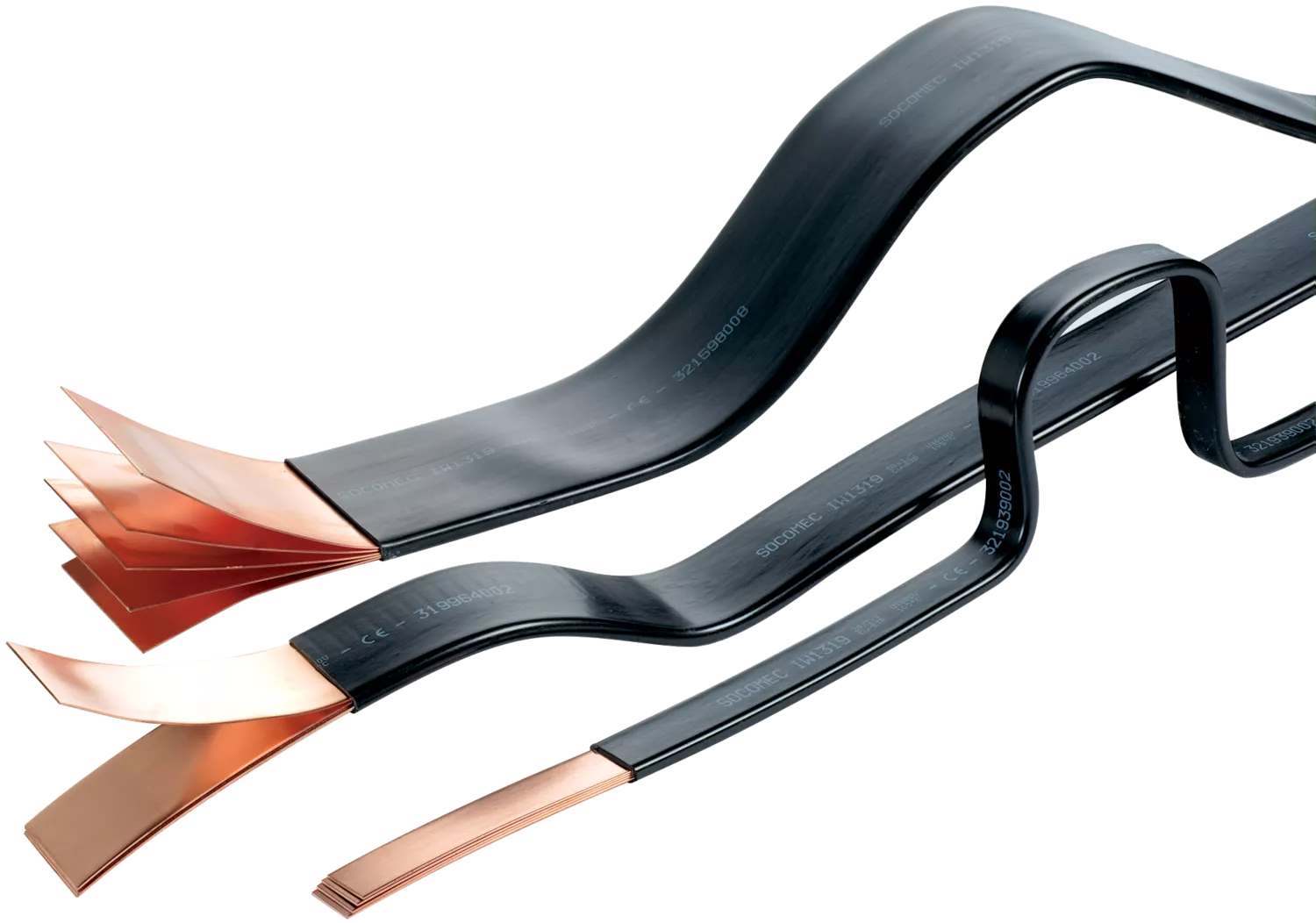
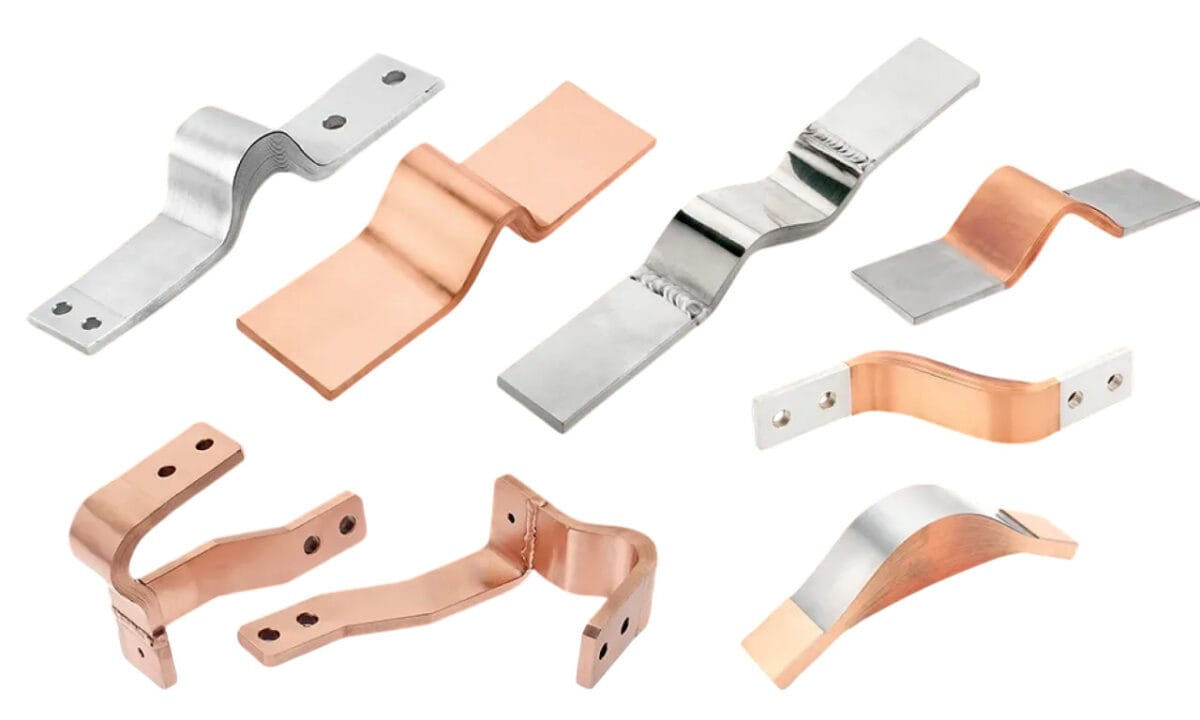
Before diving into the “why,” we must establish the “what.” A busbar is, fundamentally, a metallic strip or bar used for high-current power distribution. While traditional busbars are solid, rigid pieces of extruded copper or aluminum, flexible copper busbars are engineered for motion, tight spaces, and complex routing.
At JUMAI, our specialized production lines handle several variations of copper busbars, but the flexible categories generally fall into two main types:
- Braided Copper Busbars: Constructed from tightly woven strands of fine, highly conductive copper wire. The ends are typically press-welded or heavily crimped into solid terminals. This design offers maximum flexibility across all three dimensions, making them ideal for complex, twisted installations.
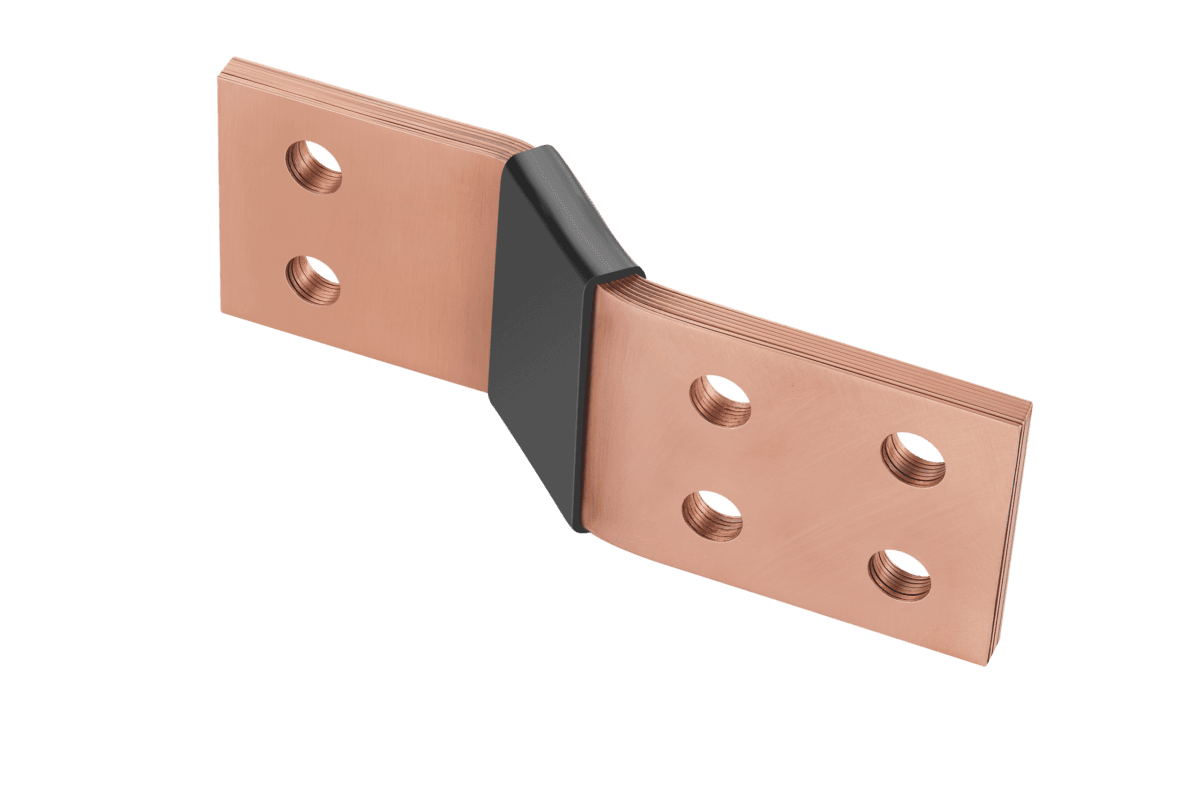
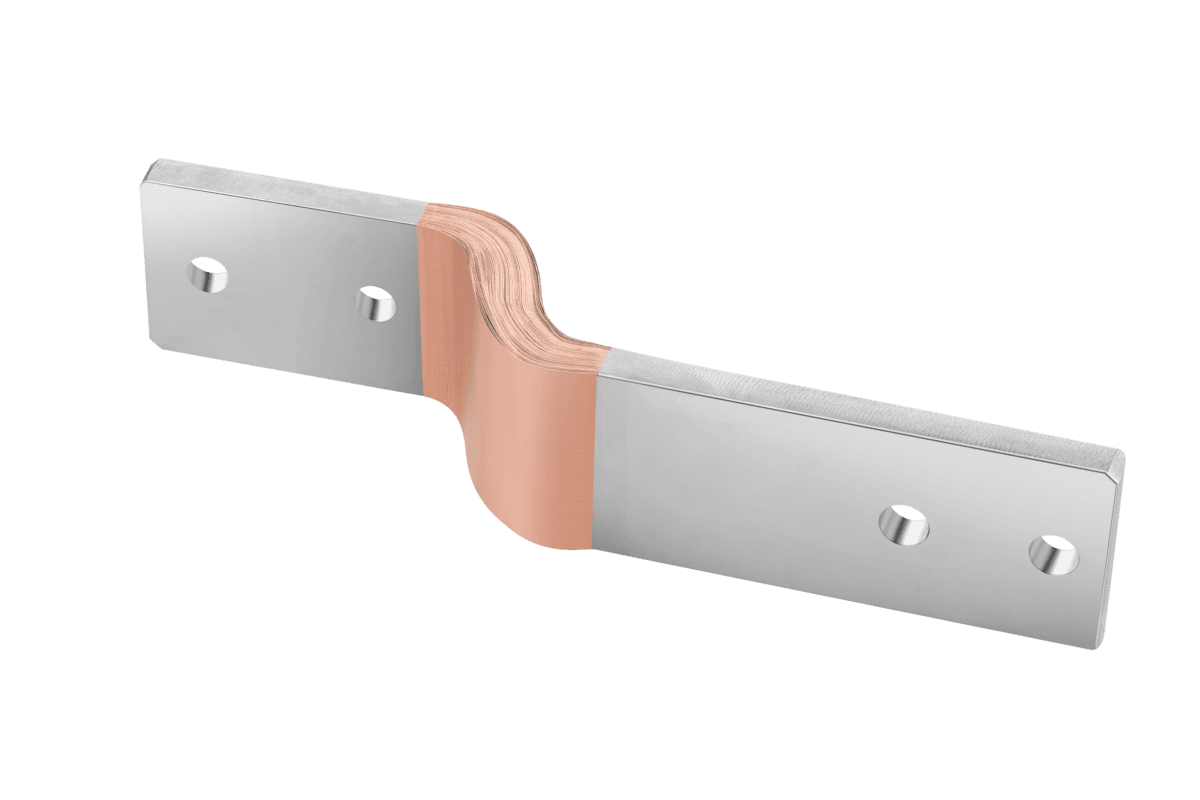
- Laminated (Foil) Copper Busbars: Made by stacking multiple layers of extremely thin, highly purified copper foils. The ends are fused together using diffusion welding or electron beam welding to create a solid connection point, while the middle remains free to slide and bend. These are incredibly resilient to repetitive back-and-forth motion.
The Core Metric: Electrical Conductivity
Not all copper is created equal. High-quality flexible copper busbars, like the ones customized through our DeepDrawTech platform, are typically manufactured using T2 or T1 grade oxygen-free high thermal conductivity (OFHC) copper. This ensures a minimum electrical conductivity of 99.9%, minimizing resistance and maximizing the safe flow of thousands of amperes of current.
The Critical Flaws of Traditional Power Routing
To appreciate the necessity of flexible copper busbars, we must examine the shortcomings of the legacy systems they replace: thick electrical cables and rigid copper busbars.
The Problem with Thick Electrical Cables
Historically, heavy-duty insulated cables were the standard for connecting UPS systems to PDUs. However, as power demands have grown, so has the required thickness of these cables.
- Space Inefficiency: Thick cables have a massive bend radius. They cannot be bent at sharp 90-degree angles, leading to “cable spaghetti” that blocks critical airflow in raised floors or overhead raceways.
- Heat Dissipation: Cables are insulated with thick layers of polymer, which acts as a thermal blanket, trapping the heat generated by electrical resistance.
- The Skin Effect: In alternating current (AC) systems, high-frequency currents tend to travel on the outer surface (the “skin”) of the conductor. Solid cables suffer heavily from this, reducing their effective conductive cross-section.
The Problem with Rigid Busbars
Rigid busbars solved the neatness and high-current capacity issues of cables, but they introduced a host of mechanical problems:
- Zero Tolerance for Alignment Issues: If a rigid busbar is misaligned by even a few millimeters during installation, bolting it down introduces severe mechanical stress onto the equipment chassis or the electrical breakers.
- Vulnerability to Vibration: Data centers are vibrating environments. Massive cooling fans, standby diesel generators, and HVAC systems create continuous micro-vibrations. Over time, these vibrations travel through rigid busbars, loosening bolts and creating micro-arcs—a massive fire hazard.
- Thermal Expansion: When electrical load increases, copper heats up and expands. A rigid, bolted system has nowhere to push this expansion, leading to structural bowing and cracked insulators.
7 Reasons Modern Data Centers Rely on Flexible Copper Busbars
As power architecture transitions toward high-density and modular designs, flexible copper busbars have become the industry standard for bridging the gap between rigid power spines and sensitive electronic equipment. Here is why.
1. Superior Vibration Absorption and Seismic Resilience
In a mission-critical data center, uninterrupted uptime is the only acceptable metric. The mechanical isolation provided by flexible copper busbars is paramount. By acting as a shock absorber, a braided or laminated busbar prevents the transmission of mechanical vibrations from transformers, generators, and industrial cooling systems into the delicate switchgear and server racks.
Furthermore, in seismically active regions, data centers must be engineered to withstand earthquakes. Rigid busbars will shear or snap under seismic stress. Flexible busbars naturally articulate, absorbing the kinetic energy of a seismic event and keeping the power connection intact.
2. Management of Thermal Expansion and Contraction (The Joule Effect)
When current flows through a conductor, it generates heat (I²R loss). In a data center, power loads fluctuate wildly throughout the day based on network traffic and computational demand. As the copper heats up during peak load, it expands; as it cools down during off-peak hours, it contracts.
Flexible copper busbars are designed to absorb these micro-movements. The layers of foil in a laminated busbar, or the woven strands in a braided busbar, effortlessly expand and contract without transferring linear stress to the connection terminals. This prevents the dangerous loosening of bolts and the subsequent risk of high-resistance heating and electrical fires.
3. Space Optimization in High-Density Environments
Real estate inside a modern data center rack is incredibly expensive. Every cubic inch dedicated to power distribution is an inch taken away from revenue-generating servers. Flexible copper busbars require an exceptionally tight bend radius. They can be engineered to fold over themselves, navigate complex 90-degree and 180-degree turns, and fit into the incredibly tight tolerances of modern blade server enclosures and zero-U PDU configurations.
4. Mitigating the Skin Effect for Better Efficiency
Because flexible braided busbars are made of thousands of individual fine wires, they inherently feature a massive surface area compared to a solid bar or cable of the same mass. This dramatically mitigates the “Skin Effect” in high-frequency AC power systems, ensuring that a higher percentage of the copper is actually utilized for electron transport. This results in lower resistance, cooler operating temperatures, and better overall energy efficiency.
5. Simplified Installation and Modular Upgrades
Time is money during data center commissioning. Rigid busbars require exact mathematical precision, 3D modeling, and zero margin for error during installation. If a wall is slightly uneven or a rack is slightly off-center, a rigid busbar simply will not fit.
Flexible copper busbars eliminate this headache. They provide a vital margin of error, allowing technicians to easily maneuver and bolt the connections into place without mechanical strain. Furthermore, as data centers embrace modular, hot-swappable architectures, flexible busbars allow for rapid disconnection and reconnection of power modules without disturbing the main power spine.
6. Enhanced Customization with Deep Drawn Stamping Molds
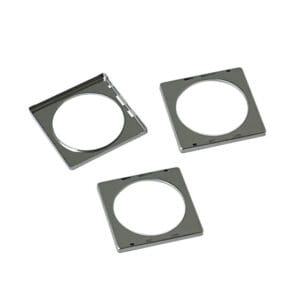
This is where JUMAI’s specific expertise comes into play. Off-the-shelf busbars rarely fit the exact needs of a custom hyper-scale data center. At DeepDrawTech, we utilize advanced deep drawn stamping molds to create highly precise, custom-shaped terminals and mounting accessories for our flexible busbars.
Deep drawing allows us to create seamless, structurally robust connection points that perfectly mate with specific server power supplies or switchgear terminals. By combining highly flexible braided copper with precision-stamped, deep-drawn connection plates, we provide data centers with a bespoke power delivery solution that maximizes surface area contact and minimizes voltage drop.
7. Superior Insulation and Safety Profiles
Modern flexible busbars are not left bare. They are seamlessly integrated with advanced insulation materials designed specifically for the thermal and chemical realities of a data center. Whether it is heat-shrinkable PVC, halogen-free polyurethane, or high-temperature silicone dipping, the insulation is custom-extruded or molded to ensure maximum dielectric strength while maintaining the core flexibility of the copper beneath.
Comparative Data Analysis: Choosing the Right Power Conductor
To provide a concrete perspective, we have compiled an industry-standard comparative analysis. This table illustrates why engineers consistently specify flexible copper busbars for critical data center applications over legacy alternatives.
| Feature / Metric | Traditional Copper Cables (e.g., THHN/THWN) | Rigid Solid Copper Busbars | JUMAI Custom Flexible Copper Busbars |
|---|---|---|---|
| Current Carrying Capacity (Ampacity) per Volume | Low (Thick insulation traps heat) | High (Excellent thermal dissipation) | Very High (High surface area, active cooling friendly) |
| Bend Radius & Space Requirements | Large (Requires wide sweeping curves) | None (Requires engineered right-angle joints) | Minimal (Can bend sharply without structural failure) |
| Vibration Resistance | Good (Naturally dampens vibration) | Poor (Transmits stress to terminals) | Excellent (Acts as a mechanical shock absorber) |
| Thermal Expansion Handling | Good (Cable droop absorbs expansion) | Poor (Causes structural bowing/stress) | Excellent (Expands/contracts safely in place) |
| Installation Tolerance (Margin of Error) | High (Highly forgiving) | Zero (Requires exact millimeter precision) | High (Forgives minor misalignments effortlessly) |
| Skin Effect Mitigation (AC Power) | Poor (Solid heavy cores lose efficiency) | Moderate (Flat profile helps, but core is solid) | Excellent (Thousands of individual strands maximize surface area) |
| Aesthetic & Airflow Impact | Poor (“Spaghetti” blocks cooling airflow) | Excellent (Clean, low-profile routing) | Excellent (Clean, low-profile routing with custom routing paths) |
| Total Cost of Ownership (TCO) & Maintenance | High (Requires frequent retorquing, difficult to trace) | Moderate (Durable, but susceptible to vibration loosening) | Low (Install and forget; no vibration loosening, highly durable) |
Data reflects generalized industry benchmarks for high-current (1000A+) distribution in data center environments. Specific performance varies based on exact cross-sectional area and environmental ambient temperatures.
The Intersection of Deep Drawn Stamping and Busbar Manufacturing
A flexible copper busbar is only as strong as its connection points. The braided wire or laminated foil must transition into a solid state to be bolted onto a PDU or switchgear. This transition zone is the most critical point of failure in power distribution. If the press-welding is weak, or if the terminal is not perfectly flat, micro-gaps occur. These gaps cause electrical arcing and massive heat generation.
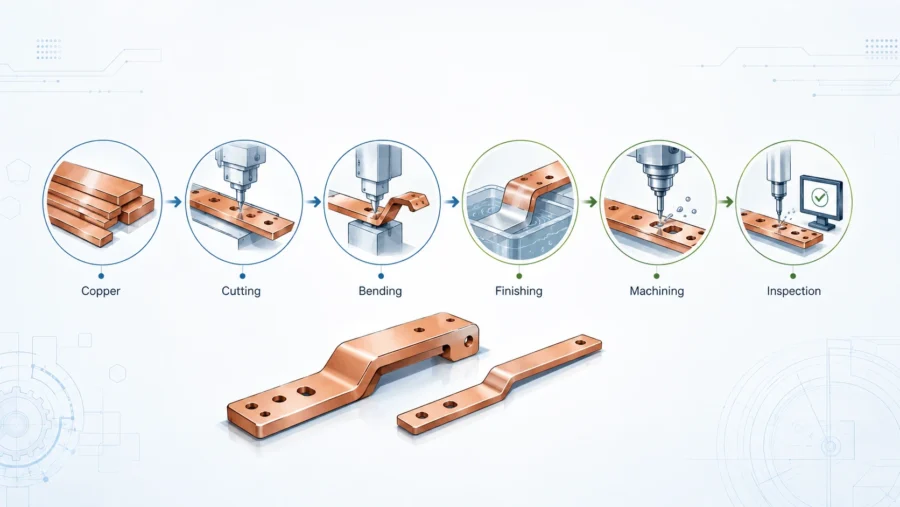
At JUMAI, accessed via DeepDrawTech.com, we have revolutionized this process by integrating our expertise in deep drawn stamping molds and accessories directly into our copper busbar production pipeline.
What is Deep Drawn Stamping?
Deep drawing is a sheet metal forming process in which a flat copper blank is radially drawn into a forming die by the mechanical action of a punch. It is “deep” drawing when the depth of the drawn part exceeds its diameter.
Why Does It Matter for Busbars?
- Seamless Terminals: Instead of soldering or bolting a flat plate onto a braided wire, deep drawn stamping allows us to create custom-shaped, multi-dimensional terminal caps that perfectly encapsulate the flexible copper strands.
- Structural Integrity: The deep drawing process cold-works the copper, significantly increasing the tensile strength of the terminal end without sacrificing the electrical conductivity.
- Perfect Mating Surfaces: In high-amperage connections, surface flatness is critical. A perfectly flat, deep-drawn terminal ensures 100% surface area contact with the server or PDU, lowering contact resistance to near zero.
- Custom Accessories: Data centers often require unique mounting brackets, shielding caps, and spacer accessories. Our in-house mold capabilities mean we can design, prototype, and mass-produce these custom accessories specifically tailored to the flexible busbar architecture.
Engineering the Perfect Connection: Technical Considerations for Procurement
For the facility engineers and procurement specialists reading this, sourcing flexible copper busbars is not a matter of browsing a catalog and picking a standard size. The exact specifications must be meticulously calculated based on your data center’s unique topology.
Here are the critical engineering factors we evaluate at JUMAI when consulting with global clients:
1. Ampacity and Cross-Sectional Area
Ampacity is the maximum amount of electrical current a conductor can carry continuously under the conditions of use without exceeding its temperature rating. To determine the correct cross-sectional area (usually measured in $mm^2$ or MCM), we must look beyond just the expected load.
We factor in:
- Ambient Temperature: A busbar operating in a cold-aisle containment system will have a higher ampacity rating than one operating near a hot-aisle exhaust.
- Permissible Temperature Rise: How hot can the busbar safely get above ambient temperature? Common standards dictate a max temperature rise of 30K, 40K, or 50K.
2. Insulation Material Selection
The choice of insulation drastically affects the performance and safety of the flexible busbar.
- Extruded PVC: Cost-effective, highly durable, standard for standard indoor power distribution. Flame retardant and highly flexible.
- Silicone Dipping: Ideal for extremely high-temperature environments. It remains highly flexible even in frigid or scorching conditions and possesses excellent dielectric strength.
- Heat-Shrink Tubing: Often used for laminated foil busbars, providing a tight, conforming layer of protection that adds minimal bulk to the profile.
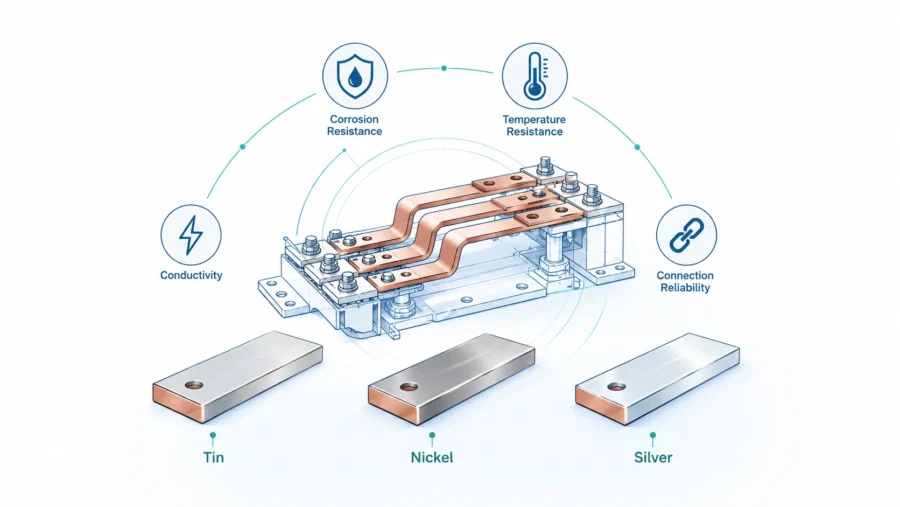
3. Surface Plating (Tin, Silver, or Nickel)
While the core of the busbar is pure oxygen-free copper, the connection terminals are almost always plated to prevent oxidation and galvanic corrosion.
- Tin Plating: The industry standard. Cost-effective, prevents oxidation, and provides a stable, low-resistance connection for standard environments.
- Silver Plating: Used in ultra-high-current applications where the absolute lowest contact resistance is required. Silver oxide is conductive, unlike copper oxide, making it incredibly reliable over decades.
- Nickel Plating: Chosen for highly corrosive environments, providing a hard, durable shield against harsh atmospheric conditions.
Navigating Global Standards and Compliance
When building a hyper-scale data center, compliance is non-negotiable. Using non-certified power distribution equipment can void facility insurance, fail building inspections, and put human lives at risk.
At JUMAI, we ensure that our custom flexible copper busbars and deep-drawn accessories adhere to, or exceed, the strictest international standards, including:
- IEC 61439 (International Electrotechnical Commission): The overarching standard for low-voltage switchgear and controlgear assemblies, dictating strict requirements for temperature rise limits, dielectric properties, and short-circuit withstand strength.
- UL Standard (Underwriters Laboratories): Essential for the North American market, ensuring materials meet strict fire safety, flammability (such as UL94 V-0 for insulation), and electrical safety standards.
- RoHS Directive (Restriction of Hazardous Substances): Ensuring our manufacturing processes, including the solders, plating, and insulations, are completely free of hazardous materials like lead, mercury, and cadmium.
- ISO 9001 & ISO 14001: Demonstrating our commitment to rigorous quality control management and environmentally responsible manufacturing processes.
For any data center operator, demanding documentation of these compliances from your busbar manufacturer is the first step in risk mitigation.
Sustainability and the Green Data Center Revolution
The environmental impact of data centers is under intense global scrutiny. Operators are relentlessly pursuing lower PUE (Power Usage Effectiveness) scores. PUE is the ratio of total amount of energy used by a computer data center facility to the energy delivered to computing equipment. A perfect PUE is 1.0.
Flexible copper busbars play a direct role in improving a data center’s sustainability profile:
- Energy Efficiency via Resistance Reduction: As previously discussed, the superior conductivity and skin-effect mitigation of braided flexible busbars reduce I²R losses. Less heat generated means less electricity wasted on transmission, and subsequently, less electricity required by the HVAC systems to remove that heat.
- 100% Recyclability: Copper is infinitely recyclable without any loss of its physical or electrical properties. Unlike complex multi-layer insulated cables that are difficult to recycle, bare or lightly insulated copper busbars represent a highly circular economic asset.
- Longevity and E-Waste Reduction: Traditional cables degrade, and rigid busbars can crack under vibration. The mechanical resilience of flexible copper busbars ensures they often outlast the IT equipment they power, reducing the volume of e-waste generated during facility refits and upgrades.
Future-Proofing: AI, Edge Computing, and Liquid Cooling
The data center of 2030 will look vastly different from the data center of today. As an Editor-in-Chief deeply embedded in the R&D side of power distribution, I closely track three mega-trends that are cementing the role of flexible copper busbars:
1. AI and GPU Clusters
AI training models require massive, sustained power draws. A single NVIDIA DGX system cluster demands extraordinary amperage. Delivering this power directly to the rack level requires incredibly thick, yet flexible, conductors that can navigate the densely packed GPU arrays without disrupting the massive cooling fans required to keep them operational. Flexible braided busbars are the only viable solution for this extreme power density.
2. The Rise of Liquid Cooling
To combat the heat of AI servers, the industry is rapidly adopting Direct-to-Chip (D2C) and Immersion liquid cooling technologies. This introduces water and dielectric fluids into the server rack. Flexible busbars, combined with highly engineered, customized deep-drawn waterproof shielding accessories from companies like JUMAI, allow power to be safely routed through and around complex liquid cooling manifolds where rigid bars simply could not fit.
3. Modular Edge Computing
Edge data centers—small, highly autonomous facilities placed close to population centers to reduce latency—are built inside shipping containers or prefabricated pods. Space is at an absolute premium, and the environments are subject to transport vibrations and harsher ambient conditions. The space-saving, vibration-absorbing properties of flexible copper busbars make them the default power architecture for the Edge.
Frequently Asked Questions (FAQ) for Procurement and Engineering Teams
To further assist our global clients in their decision-making process, we have compiled the most frequently asked questions regarding the implementation of flexible copper busbars in data center environments.
Q1: How do I calculate the correct flexibility requirement for my busbar?
A: Flexibility is determined by the size of the individual copper strands in a braided busbar (often 0.10mm to 0.20mm diameter per wire) or the thickness of the foil in a laminated busbar (usually 0.1mm to 1.0mm per layer). At JUMAI, our engineering team works directly with your 3D CAD models to determine the exact dynamic movement requirements and specifies the strand/foil thickness accordingly.
Q2: Can flexible busbars handle short-circuit faults as well as rigid busbars?
A: Yes. However, during a massive short-circuit event, electromagnetic forces will cause a flexible busbar to “whip” or violently contract. To mitigate this, flexible busbars in high-fault zones must be engineered with appropriate lengths, and JUMAI can provide custom deep-drawn bracing accessories to constrain the movement during a fault, ensuring the terminals are not ripped from the switchgear.
Q3: Is custom tooling for deep-drawn accessories expensive?
A: While there is an initial tooling cost for custom deep-drawn molds, the return on investment (ROI) at scale is massive. Deep drawing produces parts rapidly with minimal material waste and unparalleled structural consistency. For hyper-scale rollouts, the cost per unit plummets, making it highly economical.
Q4: How does JUMAI ensure the quality of the press-welded terminals?
A: We utilize advanced molecular diffusion welding and precision press-welding technologies. This melts the individual strands or foils together into a solid, homogeneous block of copper without the need for filler metals (like solder), ensuring the terminal has the exact same electrical resistance as the flexible body.
Q5: Can you provide busbars for DC (Direct Current) data center architectures?
A: Absolutely. While most data centers use AC power distribution, the industry is exploring high-voltage DC (HVDC) distribution to eliminate conversion losses. Flexible copper busbars are excellent for DC applications. Without the AC “skin effect” to worry about, the entire cross-section of the copper is utilized, making them even more efficient.
Q6: What is the typical lead time for a custom flexible busbar order from DeepDrawTech?
A: Because we maintain comprehensive in-house capabilities—from copper processing to deep drawn stamping and insulation coating—our lead times are highly competitive. Prototyping can often be completed in weeks, with mass production scaling immediately after design approval. We recommend utilizing our online preview and order consultation portal at DeepDrawTech.com for accurate timelines based on your specific volume.
Partnering for Power Reliability
The era of treating data center power distribution as an afterthought is over. As rack densities push the boundaries of physics, and as the global demand for uninterrupted digital services reaches fever pitch, the physical infrastructure that carries the current must be flawless.
High-quality flexible copper busbars are not just components; they are highly engineered solutions to the modern challenges of thermal expansion, mechanical vibration, space constraints, and energy efficiency. They are the invisible, flexible spine that allows the rigid, unyielding demands of the digital age to function smoothly.
At JUMAI, we do more than just manufacture copper. We combine decades of metallurgical expertise with advanced deep drawn stamping capabilities to create bespoke, highly reliable power distribution solutions. Whether you are outfitting a massive AI training cluster, retrofitting a legacy facility for higher density, or designing the next generation of modular edge data centers, off-the-shelf solutions will no longer suffice.
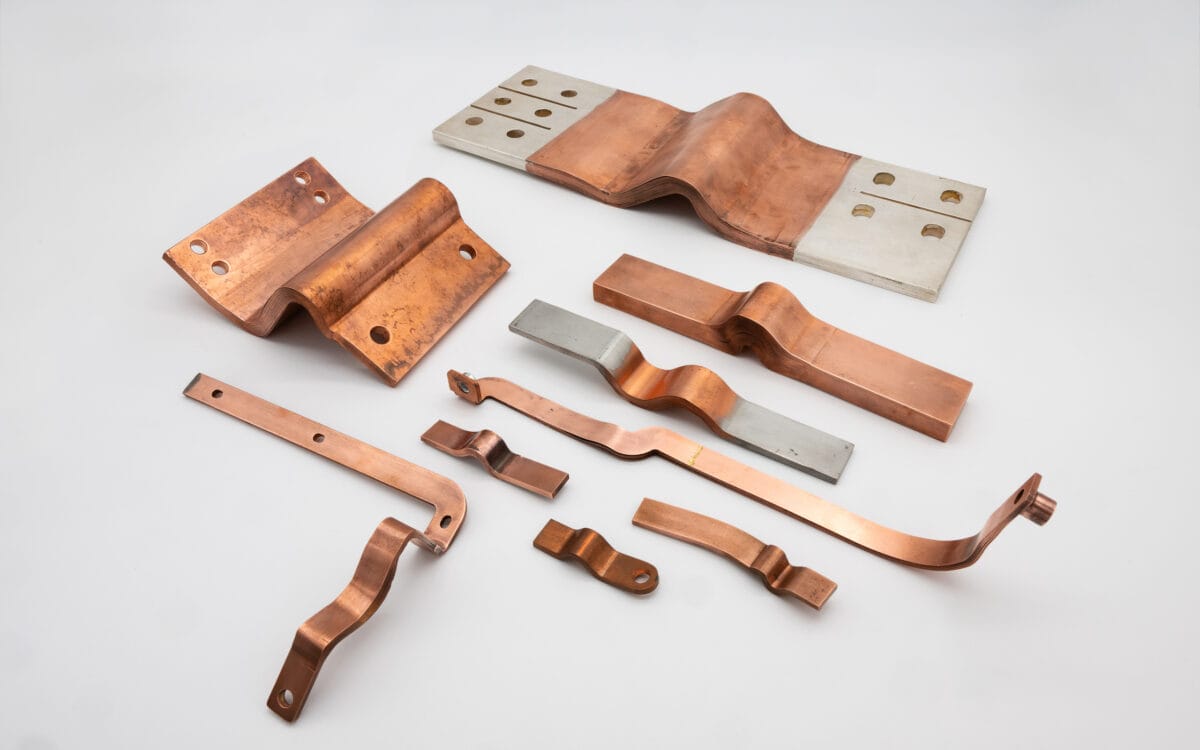
We invite procurement managers, facility engineers, and data center architects to visit DeepDrawTech.com. Utilize our online preview tools, explore our extensive catalog of soft, hard, and braided copper busbars, and consult with our engineering team to design the custom deep-drawn molds and accessories your facility requires.
Power the future with flexibility. Power the future with JUMAI.