
The global transition toward sustainable power is accelerating at an unprecedented pace. According to recent data from the International Energy Agency (IEA), renewable capacity expansion is breaking records year after year, fundamentally reshaping how we generate, store, and distribute electricity. However, the efficiency and reliability of these macro-level energy systems are entirely dependent on micro-level components. Among the most critical, yet often overlooked, components in this ecosystem are Flexible Copper Busbars.
As the Editor-in-Chief here at JUMAI (Deep Draw Tech), a premier global provider of custom hard, braided, and flexible copper busbars, as well as deep drawing stamping dies and accessories, I have spent years entrenched in the design, R&D, and manufacturing of power transmission components. From utility-scale solar farms and offshore wind turbines to massive data centers and high-capacity Energy Storage Systems (ESS), I have seen firsthand how the right connectivity solutions prevent catastrophic failures, reduce energy loss, and maximize Return on Investment (ROI) for global clients.
This comprehensive guide is designed for engineers, procurement managers, and project developers in the renewable energy sector. We will dive deep into the engineering principles, manufacturing processes, customization options, and the undeniable business value of integrating high-quality flexible copper busbars into your next green energy project.
Table of Contents
The Core Challenge: Power Transmission in Dynamic Environments
In traditional fossil-fuel power plants, power transmission environments are relatively static. Rigid copper or aluminum busbars are often sufficient because the infrastructural environment is controlled and stationary. Renewable energy systems, however, are inherently dynamic.
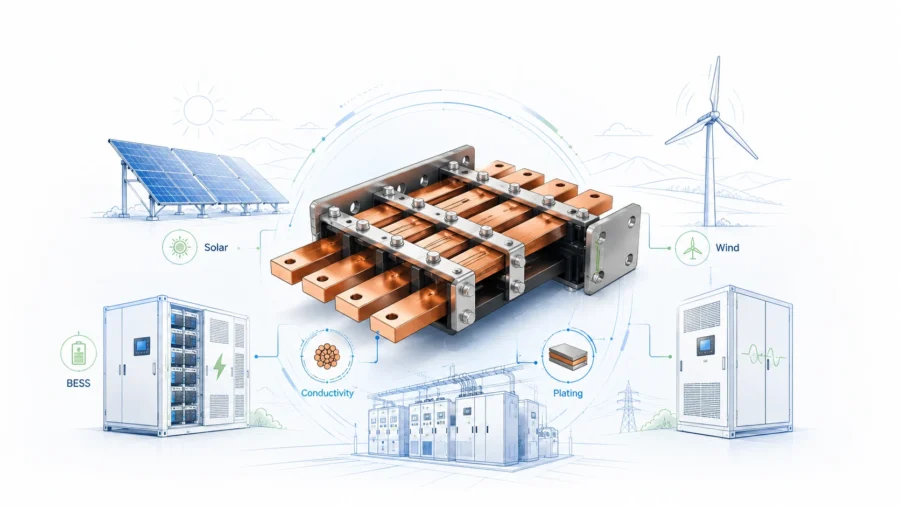
Wind turbines are subjected to constant aerodynamic vibrations and extreme weather conditions. Solar inverters experience significant thermal cycling—expanding in the heat of the midday sun and contracting during cold nights. Energy Storage Systems (ESS) require compact, high-density battery rack connections that must withstand micro-movements and potential seismic activity without compromising electrical integrity.
When rigid busbars are deployed in these dynamic environments, the persistent mechanical stress leads to material fatigue, loose connections, electrical arcing, and ultimately, system failure. This is where the flexible copper busbar becomes not just an option, but an absolute engineering necessity.
What is a Flexible Copper Busbar?
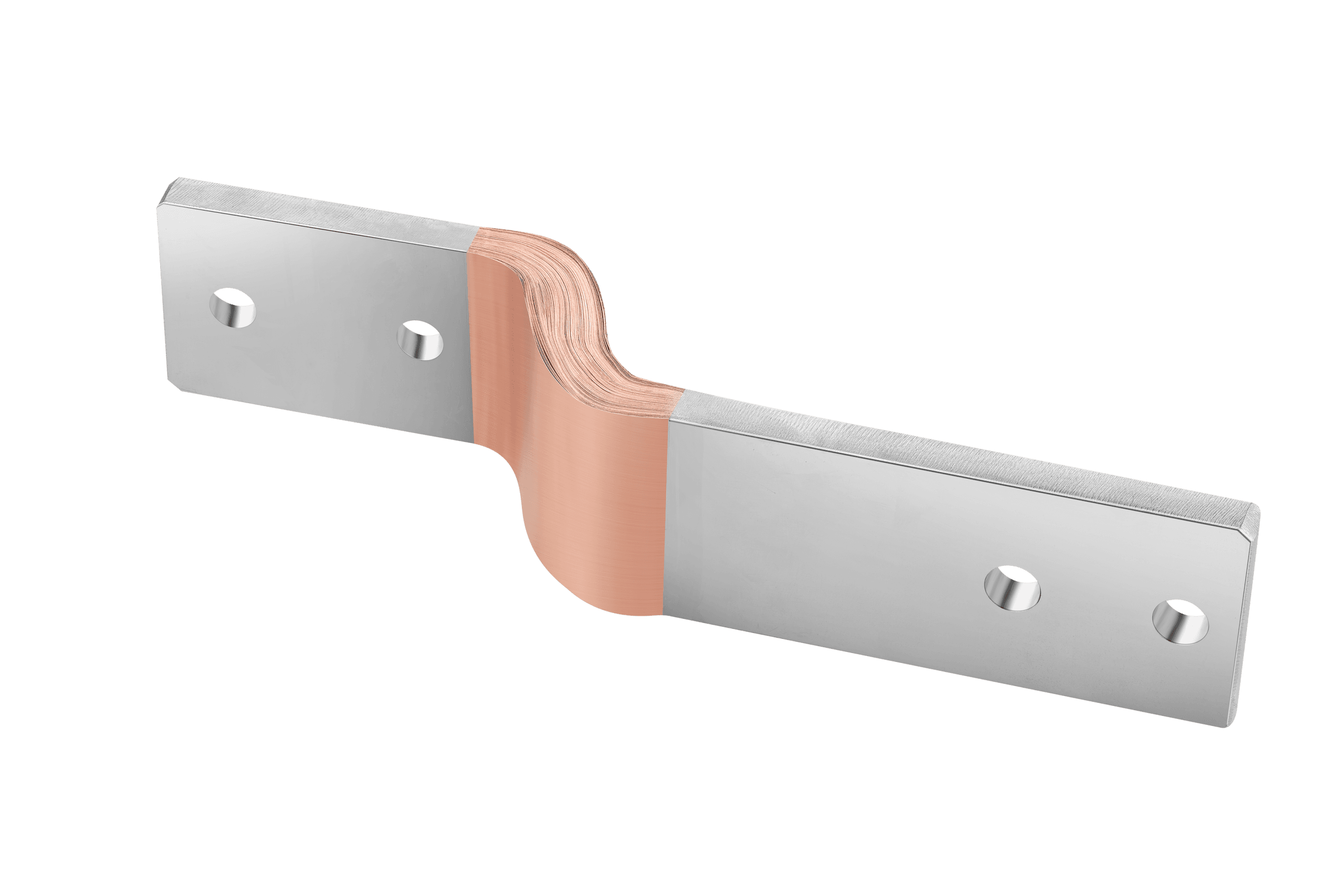
A flexible copper busbar is a high-current power transmission component designed to accommodate structural movement, thermal expansion, and vibration while maintaining optimal electrical conductivity. Unlike a solid block of extruded copper, flexible busbars are engineered using multiple thin layers of highly conductive copper foil (laminated busbars) or interwoven copper wires (braided busbars), which are then fused or pressed at the contact areas (terminals).
At JUMAI, our flexible copper busbars are manufactured from premium-grade T2 (C11000) or oxygen-free (C10200) copper, boasting a minimum conductivity of 99.9%. This ensures that while the busbar bends and flexes to accommodate the mechanical demands of the system, it never compromises on its primary duty: transmitting power with minimal resistance and heat generation.
Why Renewable Energy Systems Demand Flexibility
To truly understand the value of custom flexible copper busbars, we must examine the specific environmental and operational demands of modern renewable energy infrastructure.
1. Wind Power Generation: Battling Vibration and Torsion
Inside the nacelle of a wind turbine, components are subjected to continuous, high-frequency vibrations caused by the rotation of the massive blades and the operation of the gearbox and generator. Furthermore, as the nacelle rotates to face the wind (yawing), the internal cabling and connections undergo torsional stress.
Rigid connections in this environment are prone to cracking and loosening. Flexible braided copper busbars absorb these vibrations, acting as an electrical shock absorber. By utilizing flexible busbars to connect the generator to the transformer or the power converter, engineers can drastically reduce maintenance intervals and prevent downtime. According to reports from the National Renewable Energy Laboratory (NREL), reducing component failure in wind turbines can improve overall energy capture efficiency by up to 5% annually, a massive financial boon for utility-scale operators.
2. Solar Photovoltaic (PV) Systems: Managing Thermal Expansion
Solar inverters and combiner boxes are typically installed outdoors, exposed to the harshest elements. In desert environments, where solar irradiance is highest, ambient temperatures can fluctuate by 30°C to 40°C within a single 24-hour period.
These extreme temperature swings cause the metal components within the system to expand and contract—a phenomenon known as thermal cycling. If rigid busbars are bolted between two fixed points (such as high-power insulated-gate bipolar transistors (IGBTs) and capacitors), thermal expansion can physically rip the components off their mounts or fracture the busbar itself. Custom flexible laminated copper busbars from JUMAI easily absorb this dimensional change. The thin layers of copper foil glide micro-millimeters past each other, neutralizing the mechanical stress while maintaining a continuous electrical path.
3. Energy Storage Systems (ESS): High Density and Safety
As the world transitions to intermittent renewable energy (the sun doesn’t always shine, and the wind doesn’t always blow), Energy Storage Systems utilizing large-scale lithium-ion battery banks are becoming critical infrastructure.
In an ESS, thousands of battery cells are connected in series and parallel. Space is at a premium, requiring complex, tight-radius bends that thick, rigid cables simply cannot achieve. Flexible copper busbars can be custom-bent and routed through tight enclosures, maximizing space efficiency. More importantly, during charging and discharging cycles, batteries heat up and slightly expand. Flexible connections prevent the transfer of mechanical stress to the fragile battery terminals, mitigating the risk of structural damage and potential thermal runaway—a critical safety standard outlined by organizations like the International Electrotechnical Commission (IEC).
Technical Superiority: Material Science and Specifications
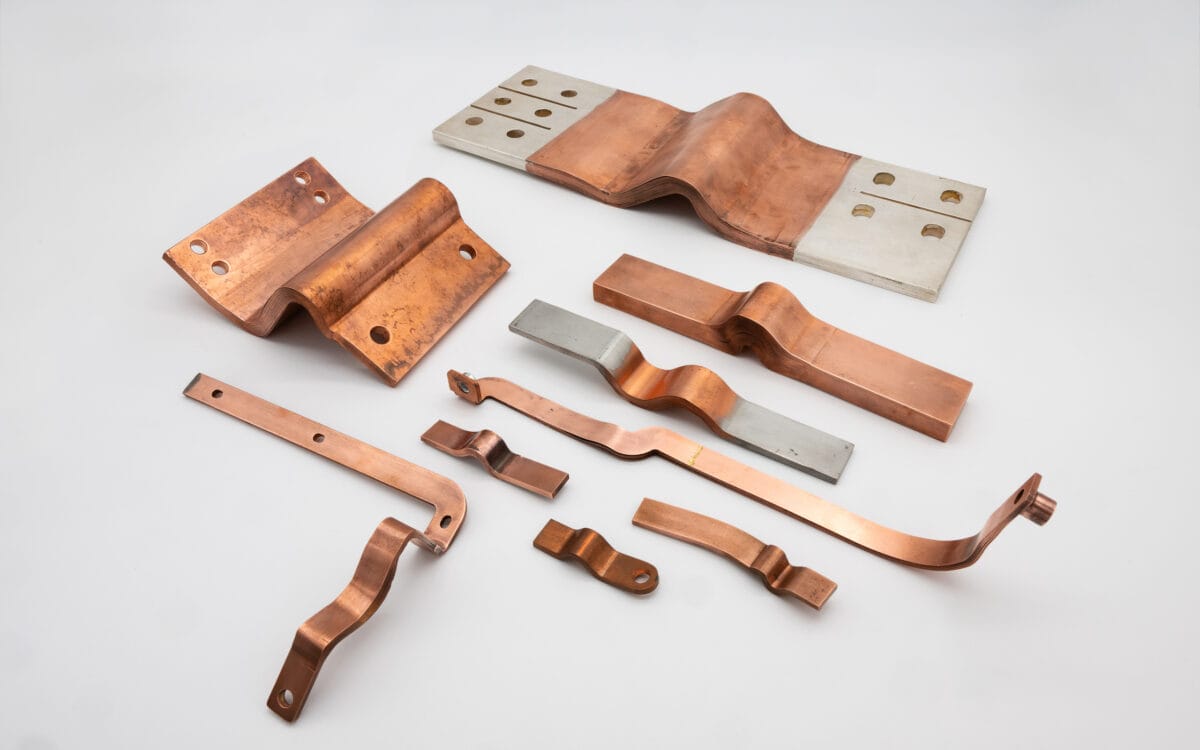
When sourcing components for high-stakes energy infrastructure, data and specifications are paramount. Not all copper is created equal, and the manufacturing processes dictate the ultimate performance of the busbar. At JUMAI, we rely on stringent metallurgical standards to ensure our products exceed global benchmarks.
Copper Grade and Purity
The foundation of a high-performance flexible copper busbar is the raw material. We predominantly utilize T2 Copper (Electrolytic Tough Pitch Copper – ETP) or TU1/TU2 (Oxygen-Free High Thermal Conductivity Copper – OFHC).
The purity of the copper directly correlates to its electrical conductivity, measured in the International Annealed Copper Standard (IACS).
Table 1: Comparative Material Properties of Busbar Metals
| Material Grade | Copper Purity (%) | Oxygen Content (PPM) | Conductivity (% IACS) | Tensile Strength (MPa) | Primary Application Scenario |
| T2 (C11000) ETP | ≥ 99.90% | < 400 | ≥ 100% | 200 – 400 | General renewable applications, inverters, standard ESS. |
| TU1 (C10200) OFHC | ≥ 99.97% | < 10 | ≥ 101% | 220 – 400 | High-frequency data centers, extreme temp variation environments, aerospace. |
| Aluminum (1350) | N/A | N/A | ~ 61% | 60 – 110 | Low-cost utility transmission (Rigid only, not suitable for high-flex). |
| Standard Brass | ~ 60-70% | N/A | ~ 28% | 300 – 550 | Structural components, not recommended for primary power transmission. |
Data sourced from standard metallurgical guidelines and JUMAI internal testing protocols.
As the table illustrates, utilizing high-purity copper guarantees maximum conductivity. Every percentage drop in IACS conductivity translates to increased electrical resistance. In a high-amperage renewable energy system (often carrying thousands of amps), increased resistance results in $I^2R$ power losses (heat generation). By choosing JUMAI’s premium flexible copper busbars, project developers literally save megawatt-hours of energy over the lifespan of the facility that would otherwise be lost as waste heat.
Ampacity and Thermal Dynamics
Ampacity, or the maximum current-carrying capacity of a conductor before it exceeds its safe operating temperature, is a critical design metric. Flexible copper busbars generally possess superior heat dissipation characteristics compared to rigid bars or round cables of the same cross-sectional area.
Because flexible laminated busbars are rectangular and often wider, they have a larger surface area-to-volume ratio. This increased surface area allows for superior convective cooling.
Table 2: Estimated Ampacity of JUMAI Flexible Laminated Copper Busbars (Ambient Temp 30°C)
| Cross-Sectional Area (mm²) | Dimensions (Width x Thickness) | Allowable Ampacity (ΔT = 30°C) | Allowable Ampacity (ΔT = 50°C) |
| 50 | 20mm x 2.5mm | ~ 240 A | ~ 310 A |
| 100 | 32mm x 3.1mm | ~ 380 A | ~ 500 A |
| 200 | 40mm x 5.0mm | ~ 600 A | ~ 780 A |
| 400 | 80mm x 5.0mm | ~ 950 A | ~ 1250 A |
| 800 | 100mm x 8.0mm | ~ 1500 A | ~ 1950 A |
(Note: Actual ampacity depends on specific installation conditions, forced air cooling vs. natural convection, and insulation type. Our engineering team at JUMAI uses advanced finite element analysis (FEA) to calculate exact ampacity for custom client designs.)
The JUMAI Manufacturing Advantage: Precision and Reliability
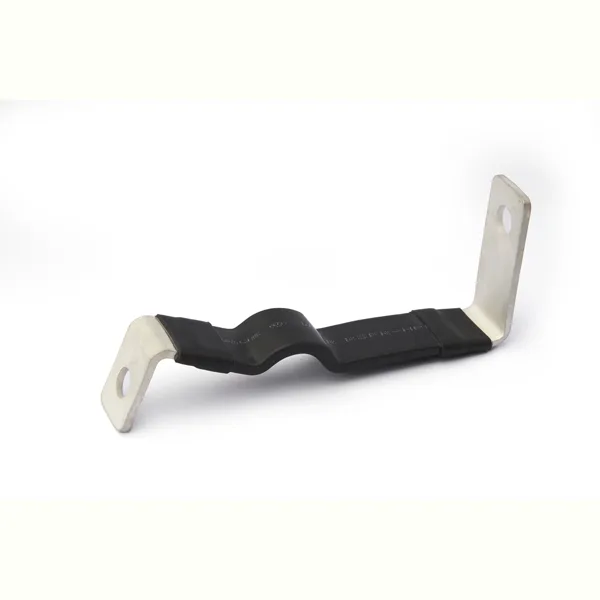
At JUMAI, we are not just a supplier; we are a fully integrated R&D and manufacturing powerhouse. Our extensive background in deep drawing stamping dies, hardware accessories, and precision processing gives us a unique, holistic view of power connectivity. We understand that a busbar must fit seamlessly into an intricate electromechanical ecosystem.
Our manufacturing processes are designed to produce flexible copper busbars that offer zero-compromise performance.
1. Polymer Diffusion Welding (Press Welding)
For flexible laminated copper busbars, the contact areas (terminals) must be consolidated into a solid block so they can be drilled, punched, and bolted securely to equipment. Traditional soldering or bolting introduces resistance and potential points of failure.
At JUMAI, we utilize advanced Molecular Diffusion Welding. Under extreme heat and high mechanical pressure, the individual copper foils fuse at a molecular level without the need for filler metals or brazing alloys. This results in a terminal that acts exactly like a solid piece of copper, ensuring a perfectly continuous electrical path and maximum pull-strength.
2. High-Speed Braiding Technology
For multi-directional flexibility, braided copper busbars are the gold standard. We utilize high-speed automated braiding machines that weave ultra-fine copper wires (ranging from 0.05mm to 0.15mm in diameter) into a dense, flat, or tubular configuration. The finer the wire, the greater the flexibility and vibration-absorption capacity.
Once braided, the ends are placed into custom copper tubes (ferrules) and cold-pressed using massive hydraulic pressure, creating a mechanically robust and highly conductive termination.
3. Deep Drawing Stamping and Custom Tooling
A major bottleneck for many OEMs is the lead time required for custom connection points. Because JUMAI natively specializes in deep drawing stamping dies and custom hardware processing, we keep all tooling in-house.
If your renewable energy inverter requires a busbar with a highly specific 3D-stamped terminal shape to fit within a tight enclosure, our deep draw stamping capabilities allow us to prototype and mass-produce these custom fittings with micrometer precision, cutting weeks off standard industry lead times.
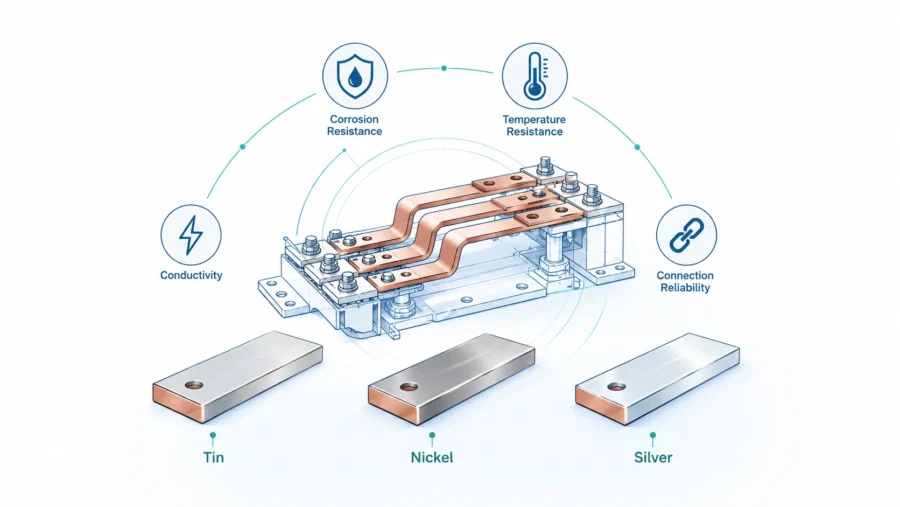
4. Surface Plating for Longevity
Bare copper is highly susceptible to oxidation and galvanic corrosion, particularly in harsh environments like offshore wind farms or humid tropical solar installations. To guarantee longevity, JUMAI offers comprehensive surface plating options:
- Tin Plating: The industry standard for preventing oxidation and improving solderability. Excellent for general renewable applications.
- Silver Plating: Used for high-frequency applications or where contact resistance must be absolutely minimized. Frequently used in high-end data centers and critical ESS linkages.
- Nickel Plating: Offers superior hardness and resistance to harsh chemical environments, ideal for industrial battery plants.
Advanced Insulation Strategies for Safety and Compliance
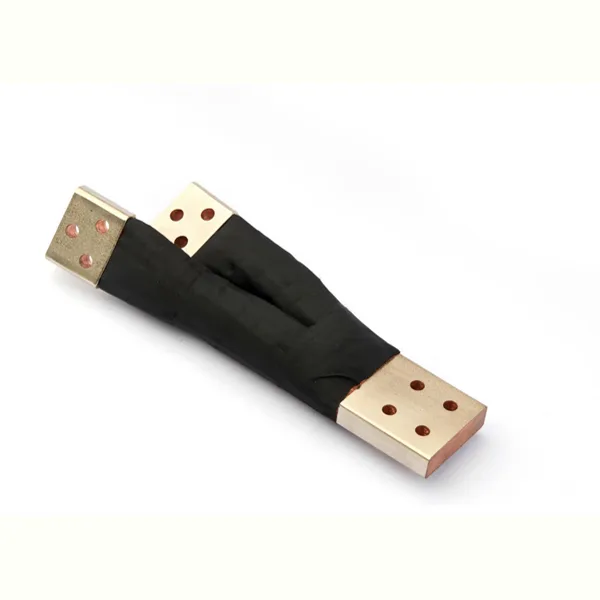
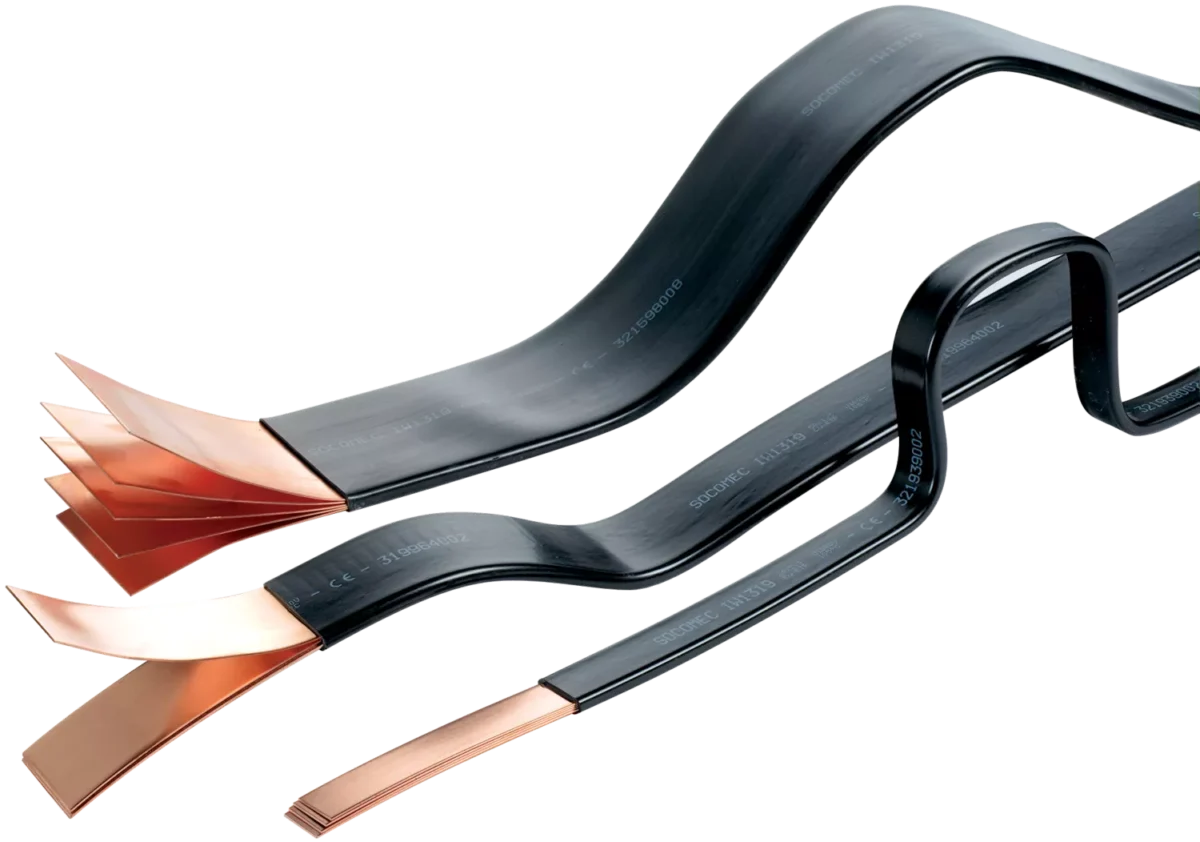
A bare flexible busbar is highly conductive, making it a severe short-circuit hazard if installed in tight proximity to grounded metal chassis or other live components. Proper insulation is not an afterthought; it is a critical safety parameter regulated by international bodies such as Underwriters Laboratories (UL) and the Institute of Electrical and Electronics Engineers (IEEE).
At JUMAI, we offer tailored insulation solutions to meet the specific dielectric strength and thermal requirements of your project:
Heat Shrink Tubing (Polyolefin)
The most common and cost-effective insulation. We utilize heavy-wall, flame-retardant cross-linked polyolefin tubing. It shrinks tightly around the flexible busbar, providing excellent abrasion resistance and dielectric protection up to 1kV to 35kV, depending on the thickness.
PVC Dipping (Plastisol)
For flexible busbars with complex geometries, tight bends, or varying widths, applying heat shrink tubing can result in wrinkling or air pockets. JUMAI employs a proprietary liquid PVC dipping process. The busbar is submerged in liquid plastisol, creating a seamless, conformal, and highly flexible dielectric barrier. This method is exceptionally popular in Electric Vehicle (EV) battery packs and compact solar combiner boxes where space constraints are severe.
Epoxy Powder Coating
For environments requiring maximum thermal conductivity combined with high dielectric strength (such as high-voltage switchgears inside wind turbines), we utilize fluidized bed epoxy powder coating. This creates a hard, durable, yet surprisingly resilient coating that transfers heat away from the copper much more efficiently than thick plastic wraps.
Table 3: Insulation Material Comparison for Flexible Busbars
| Insulation Type | Operating Temp Range | Dielectric Strength | Flexibility | Ideal Application |
| Polyolefin Heat Shrink | -55°C to +125°C | ~ 20 kV/mm | Good | Standard inverters, ESS battery racks. |
| PVC Dipping | -40°C to +105°C | ~ 15 kV/mm | Excellent | Complex geometries, automotive EVs, tight spaces. |
| Epoxy Powder Coating | -40°C to +130°C | ~ 30 kV/mm | Moderate | High-voltage switchgears, environments needing high heat dissipation. |
| Silicone Tubing | -60°C to +200°C | ~ 18 kV/mm | Superior | Extreme high-temp environments, aerospace, high-load industrial. |
Strategic Customization: Tailoring Solutions for Your Project
No two renewable energy projects are identical. An offshore wind project in the North Sea faces entirely different operational challenges than a utility-scale solar farm in the Mojave Desert. Therefore, “off-the-shelf” busbars frequently lead to compromised engineering designs.
At JUMAI, we operate on a deeply collaborative Custom Processing Service model. Our engineering team works directly with your procurement and design departments to tailor every aspect of the flexible copper busbar.
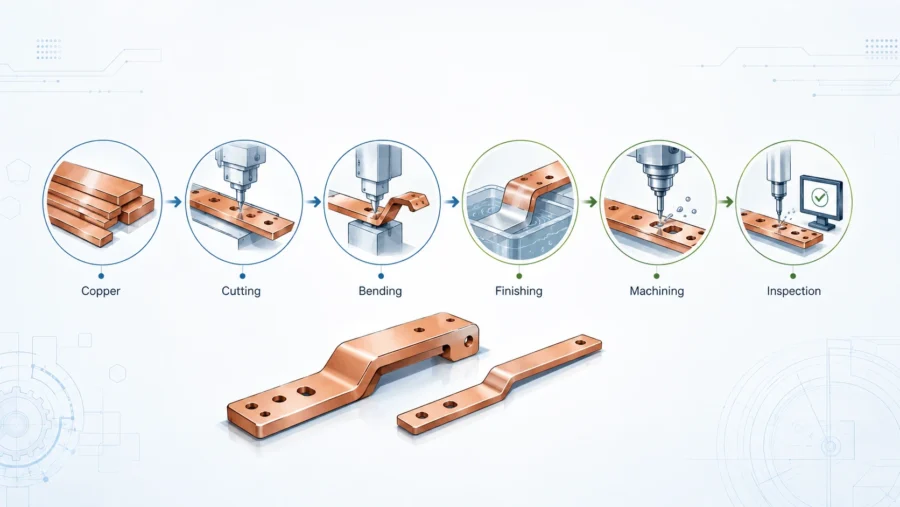
Step-by-Step Customization Workflow at JUMAI:
- Needs Assessment and Application Analysis: We begin by understanding your system. What is the peak current load? What is the continuous current? What are the ambient temperature parameters? Is there vibration, thermal cycling, or both?
- Dimensional and Spatial Design: Clients often send us their 3D CAD models of the enclosure (using software like SolidWorks or AutoCAD). We design the flexible busbar to navigate the exact spatial constraints, ensuring proper clearance and creepage distances as required by safety standards.
- Material and Insulation Selection: Based on the electrical and environmental data, we recommend the optimal copper grade, foil/wire thickness, plating (Tin vs. Silver), and insulation method.
- Prototyping via In-House Deep Drawing and Tooling: Because JUMAI manufactures its own deep drawing stamping dies and accessories, we can rapidly produce custom terminal ends without relying on third-party toolmakers. This drastically accelerates the prototyping phase.
- Rigorous Testing and QA: Before full-scale production, prototypes undergo severe testing. This includes dielectric withstand tests (Hi-Pot), micro-ohm resistance testing at the contact points, temperature rise tests under full load, and mechanical flex-fatigue testing.
- Mass Production and Global Logistics: Once approved, we leverage our high-capacity manufacturing lines to produce bulk orders with flawless consistency, delivering precisely to your project timeline anywhere in the world.
ROI and Cost-Benefit Analysis: Why Premium Components Matter
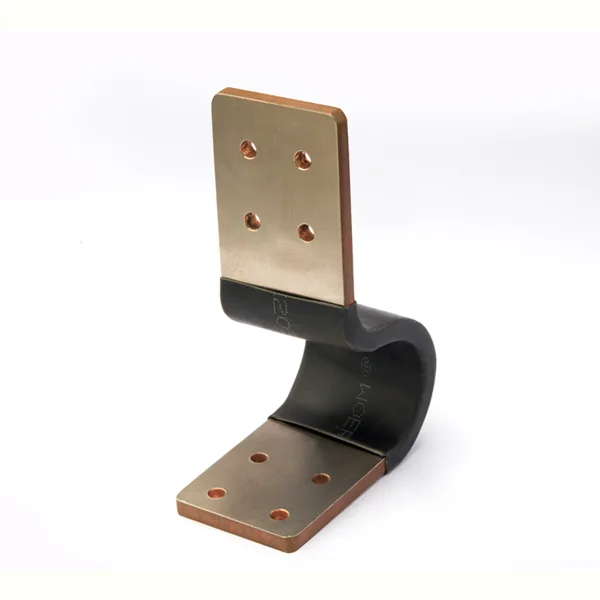
In large-scale renewable energy infrastructure and data centers, the initial Capital Expenditure (CapEx) is intensely scrutinized. Procurement teams are often under pressure to find the cheapest components. However, opting for sub-standard or rigid connections in dynamic environments is a false economy that inevitably leads to disastrous Operational Expenditures (OpEx).
Let’s break down the tangible Return on Investment (ROI) of utilizing JUMAI’s custom flexible copper busbars:
1. Drastic Reduction in Maintenance and Downtime
If a rigid busbar fractures due to vibration inside a wind turbine, the turbine must be taken offline. Dispatching a specialized maintenance crew to an offshore wind turbine can cost upwards of $10,000 to $20,000 per day in logistics alone, not counting the lost revenue from ungenerated electricity. By utilizing flexible braided busbars that absorb vibration and never fracture, the mean time between failures (MTBF) extends significantly, practically eliminating component-related downtime.
2. Lowering System Resistance = Generating More Sellable Power
As established earlier, JUMAI’s use of ultra-pure T2 and OFHC copper combined with diffusion welding eliminates micro-resistances at connection points. In a 100 MW solar plant, even a fraction of a milliohm of excess resistance across hundreds of connections can result in kilowatts of continuous power loss due to heat. Over a 25-year lifespan of a solar farm, mitigating these power losses translates directly into hundreds of thousands of dollars in additional sellable electricity.
3. Simplified Assembly and Reduced Labor Costs
Rigid busbars require absolute millimeter-perfect alignment during installation. If an enclosure frame is slightly warped, technicians struggle to bolt the rigid bars into place, often forcing them, which pre-loads the system with mechanical stress. Flexible copper busbars, by their very nature, possess high tolerance for misalignment. They can be easily manipulated by hand into their terminal blocks. This greatly accelerates the assembly process on the factory floor or in the field, reducing expensive manual labor hours.
4. Maximizing Space and Reducing Enclosure Costs
Because flexible busbars can be routed tightly over one another and bent at sharp angles without cracking, engineers can design smaller, more compact inverters and battery racks. Smaller enclosures mean less steel, lower shipping weights, and a smaller real estate footprint for the final installation—driving down overall project CapEx.
Broadening the Horizon: Flexible Busbars in Data Centers and EV Infrastructure
While the core focus of this guide is renewable energy systems, the technologies developed by JUMAI are equally critical to adjacent high-growth industries that share similar power demands.
Hyperscale Data Centers
The rise of Artificial Intelligence (AI) and cloud computing has led to the proliferation of hyperscale data centers. These facilities consume massive amounts of power, requiring heavy-duty Uninterruptible Power Supplies (UPS) and battery backup racks. The dense nature of server racks demands extremely compact, high-current power distribution solutions. JUMAI’s flexible laminated busbars are heavily utilized to connect UPS battery banks and distribute power from step-down transformers to server racks, accommodating the tight spatial constraints and managing the intense heat generated by modern data centers.
Electric Vehicle (EV) Supercharging Networks
As the world transitions away from internal combustion engines, the infrastructure for EV fast-charging is expanding rapidly. Level 3 DC Fast Chargers process immense amounts of power (often 350kW and above). Inside these charging pedestals, flexible copper busbars are essential for connecting the AC/DC rectifier modules to the output cables, absorbing the thermal expansion generated during the rapid charging process and ensuring safe, reliable operation in varying outdoor climates.
Quality Assurance: The JUMAI Promise
In the realm of high-voltage power transmission, there is absolutely zero margin for error. A single faulty busbar can compromise a multi-million dollar renewable energy installation.
At JUMAI, our commitment to quality is uncompromising. Every batch of custom flexible copper busbars undergoes a rigorous suite of Quality Assurance (QA) protocols before leaving our facility:
- Conductivity Testing: We utilize digital micro-ohmmeters to verify that the resistance across the diffusion-welded terminals and the flexible body remains well within specified limits, ensuring maximum energy transfer efficiency.
- Tensile and Pull Testing: The terminal connections are subjected to extreme mechanical pull tests to ensure the molecular bond of the press welding or the mechanical crimp of the braiding will never fail under operational stress.
- Dielectric Breakdown Testing (Hi-Pot Testing): For insulated busbars, we apply high voltages (often multiples of the intended operating voltage) to verify that the PVC dipping, heat shrink, or epoxy coating provides an impenetrable dielectric barrier, ensuring absolute safety for operators and surrounding equipment.
- Dimensional Verification: Utilizing advanced optical measurement tools, we verify that the geometry, hole placements, and bending angles conform perfectly to the client’s CAD models, guaranteeing a drop-in fit during assembly.
Partnering with Deep Draw Tech (JUMAI) for the Future of Energy
The transition to a sustainable, renewable energy grid is the greatest engineering challenge of our generation. Meeting this challenge requires reliable, efficient, and perfectly engineered components at every level of the power distribution chain.
Flexible copper busbars are not mere commodities; they are highly specialized, mission-critical arteries that keep the heart of renewable energy systems beating. Whether you are dealing with the intense vibrations of an offshore wind nacelle, the thermal cycling of a desert solar farm, or the compact density of an industrial battery storage array, standard rigid connections will inevitably fall short.
By choosing to partner with JUMAI, you are not just buying a piece of copper. You are gaining access to decades of expertise in custom hard, braided, and flexible copper busbar manufacturing. You are leveraging our extensive capabilities in deep drawing stamping dies, accessory production, and precision custom processing. You are ensuring that your project is built on a foundation of unyielding reliability, optimized for maximum energy efficiency, and designed for a long, maintenance-free operational life.
Ready to optimize the connectivity of your next renewable energy or high-power project? Our engineering team is standing by to review your specifications, provide technical consultations, and deliver prototypes that will exceed your expectations.
Visit our official website at https://www.deepdrawtech.com/ to explore our full product catalog, view our custom processing capabilities, and initiate an online order consultation today. Together, we can build a more resilient, efficient, and sustainable power infrastructure for tomorrow.
FAQ
What are flexible copper busbars?
Flexible copper busbars are special parts used in electrical systems to transfer power. They are made of thin layers of copper that can bend and twist without breaking. This flexibility is very important for renewable energy systems like wind turbines and solar panels because they face vibrations and temperature changes. These busbars help ensure that electricity flows smoothly.
Why do renewable energy systems need flexible connections?
Renewable energy systems, like wind turbines and solar panels, experience a lot of movement and temperature changes. For example, wind turbines shake due to wind, and solar panels heat up in the sun. Flexible copper busbars can adjust to these changes, preventing damage and helping the system work better. This flexibility helps avoid problems and keeps energy flowing efficiently.
How does JUMAI ensure the quality of their busbars?
At JUMAI, we take quality very seriously. Every flexible copper busbar goes through several tests to make sure it works perfectly. We check for conductivity, strength, and safety. This means that our busbars can handle a lot of power without breaking or causing problems, making them reliable for energy systems.
What is the advantage of using high-purity copper?
High-purity copper, like the T2 and OFHC types used by JUMAI, has a better ability to conduct electricity compared to lower-quality options. This means that when we use it in our busbars, there’s less resistance to the flow of electricity. This helps save energy and reduces heat losses, which is especially important in big energy systems.
Can JUMAI customize busbars for specific projects?
Yes, JUMAI specializes in making custom flexible copper busbars that fit specific project needs. Our team works closely with clients to understand their requirements. Whether it’s the size, shape, or other special features, we can create busbars that meet the exact needs of each renewable energy project.
What makes flexible busbars safer than rigid ones?
Flexible busbars can move and bend, which helps them absorb vibrations and changes in temperature. Rigid busbars can crack or break under stress, leading to potential safety hazards. By using flexible designs, we can reduce the risk of electrical failures and ensure that the systems operate safely for longer periods.
Why is it important to consider insulation for busbars?
Insulation is critical for busbars because it prevents electrical short-circuits, which can lead to fires or equipment damage. At JUMAI, we use high-quality insulation methods to ensure that our busbars are safe for use in various environments. This keeps both the equipment and the people working with it safe.
How do flexible busbars improve energy efficiency?
Flexible copper busbars reduce electrical resistance, which means that less energy is wasted as heat. They can also handle high currents without overheating. This is especially important in large renewable energy projects, where every bit of energy counts toward generating power, ultimately leading to more efficiency and cost savings.
What types of projects can benefit from JUMAI’s busbars?
JUMAI’s flexible copper busbars are perfect for a variety of projects, including wind farms, solar energy systems, energy storage units, data centers, and electric vehicle charging stations. Essentially, any project that requires reliable and efficient power transmission can benefit from our customized solutions.
How can I learn more about JUMAI’s products?
To learn more about our flexible copper busbars and other products, visit our official website at https://www.deepdrawtech.com/. You can explore our full product catalog, contact our engineering team for help, and even start the process for a custom order.