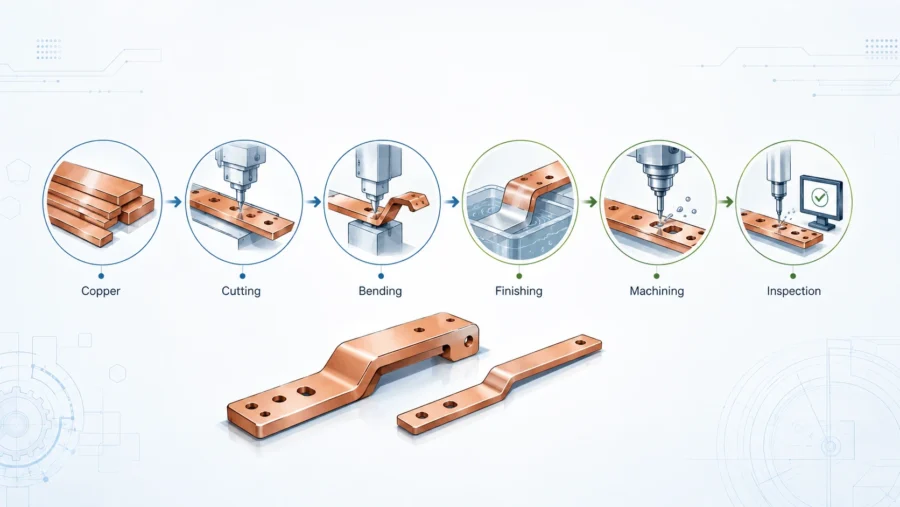

Welcome to the official JUMAI engineering and insights blog. As the Editor-in-Chief and a veteran engineer with decades of hands-on experience in green energy, hyperscale data centers, and massive power transmission networks, I have witnessed firsthand the evolution of electrical infrastructure. At JUMAI, we specialize in providing global clients with custom flexible, rigid, and braided copper busbars, alongside specialized deep drawing molds and accessories.
In heavy industry, the margin for error is zero. The components that carry the lifeblood of these operations—electricity—must be flawless. At the core of this infrastructure are Precision Copper Busbars. Whether you are managing an offshore wind farm, a high-density data center, or a national power grid, the reliability of your electrical distribution relies heavily on the stringent testing standards applied to these critical components.
This comprehensive guide breaks down the essential testing standards for custom precision copper busbars, explaining the science, the methodologies, and the industry regulations that ensure safe, efficient, and uninterrupted power delivery.
Table of Contents
The Foundational Role of Precision Copper Busbars
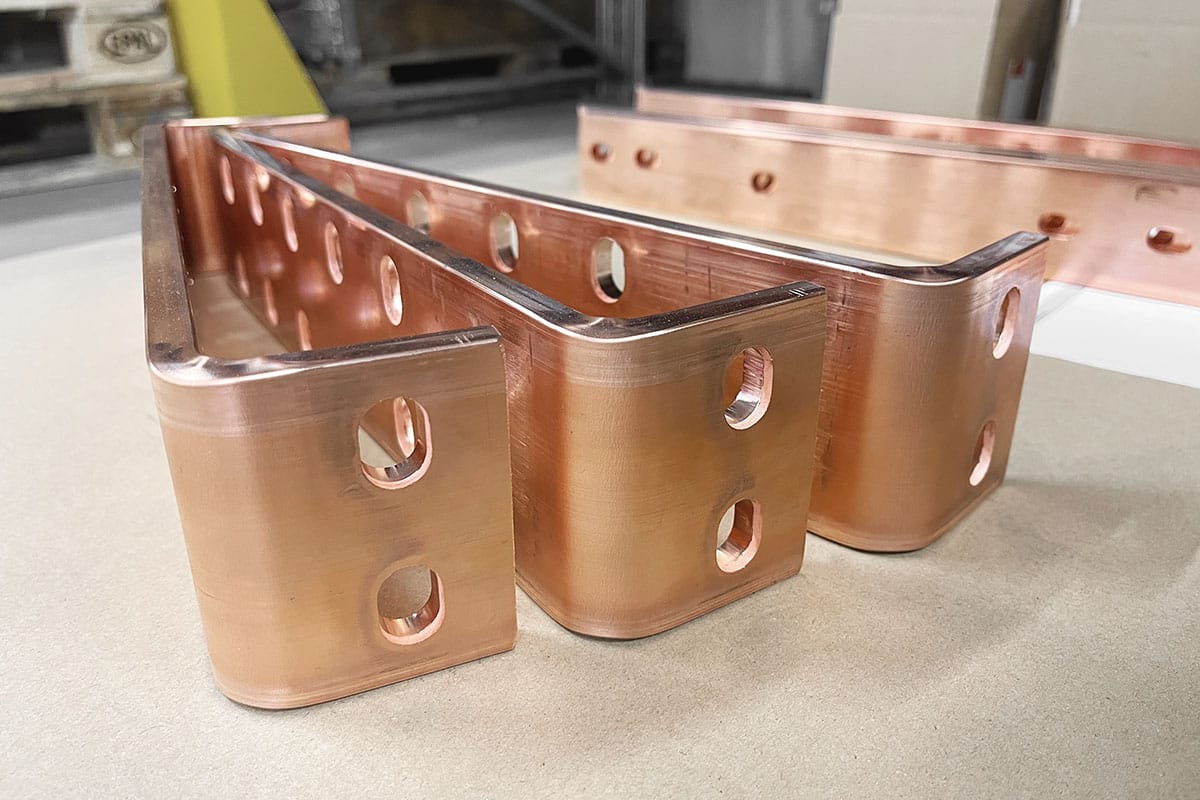
Before we dive into the complex world of industrial testing, we must establish what makes a busbar “precision.” A busbar is not merely a piece of metal; it is an engineered electrical conduit designed to carry large currents. Precision Copper Busbars take this a step further. They are custom-engineered to exact dimensional tolerances, optimized for specific environmental conditions, and fabricated to minimize energy loss.
At JUMAI, our production lines handle a vast array of custom OEM processing services, including:
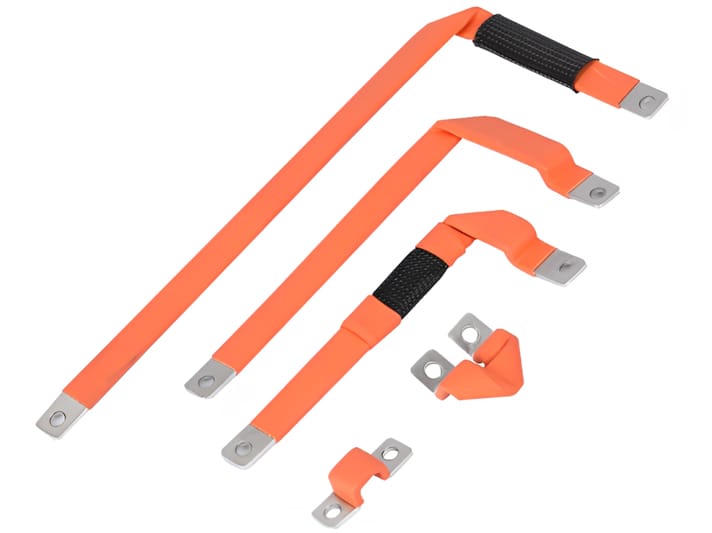
- Rigid Copper Busbars: Solid copper bars utilized in switchgears and main power distribution panels where structural integrity is just as important as electrical conductivity.
- Flexible Copper Busbars: Constructed from stacked copper foils, these are essential in environments subject to vibration or thermal expansion, such as electric vehicle (EV) battery packs and transformers.
- Braided Copper Busbars: Woven copper wires designed for maximum flexibility, often used as grounding straps or in machinery with continuous dynamic movement.
In heavy industry, these busbars are subjected to extreme thermal loads, physical stress, and corrosive environments. To guarantee they perform without catastrophic failure, they must undergo a gauntlet of rigorous testing.
Material Science: The Starting Point of Quality
The foundation of any high-quality busbar is the raw material. The copper used must possess exceptional purity. The global benchmark for copper electrical conductivity is established by the Copper Development Association and measured against the International Annealed Copper Standard (IACS).
For heavy industry, the baseline material is typically C11000 (Electrolytic Tough Pitch Copper) or C10100 (Oxygen-Free Electronic Copper). Testing the raw material before fabrication is the crucial first step.
Table 1: Common Copper Grades and Baseline Properties
| Copper Grade | Common Name | Minimum Purity (%) | IACS Conductivity (%) | Primary Application in Heavy Industry |
|---|---|---|---|---|
| C11000 | Electrolytic Tough Pitch (ETP) | 99.90% | 100% – 101% | General switchgear, rigid busbars, standard power distribution. |
| C10100 | Oxygen-Free Electronic (OFE) | 99.99% | 101% | High-end electronics, vacuum environments, extreme precision components. |
| C10200 | Oxygen-Free (OF) | 99.95% | 100% | Flexible busbars, environments requiring high weldability and brazing. |
Data sourced from industry-standard metallurgical baselines.
If the raw copper fails to meet these foundational purity and conductivity standards, no amount of precision manufacturing can compensate for the resulting power loss and heat generation.
Navigating Global Regulatory Frameworks
When JUMAI engineers design a custom busbar system, we do not operate in a vacuum. Heavy industries are heavily regulated to prevent fires, equipment damage, and fatal accidents. The testing of Precision Copper Busbars is governed by a network of international organizations.
Understanding these standards is vital for any procurement officer or electrical engineer. The primary bodies include:
- IEC (International Electrotechnical Commission): Specifically, IEC 61439, which dictates the rules for low-voltage switchgear and controlgear assemblies. It is the gold standard for temperature rise and short-circuit withstand tests.
- UL (Underwriters Laboratories): The UL 891 standard applies to switchboards and heavily scrutinizes the insulation, spacing, and thermal capacity of busbars in the North American market.
- ASTM (American Society for Testing and Materials): ASTM International provides the precise methodologies for testing the physical and chemical properties of the copper itself, such as ASTM B187 for copper bar, bus bar, rod, and shapes.
- ISO (International Organization for Standardization): ISO 9001 dictates the quality management systems that manufacturers like JUMAI must follow to ensure every deep drawn mold and stamped busbar is consistent.
Electrical Performance Testing: Ensuring Flawless Transmission
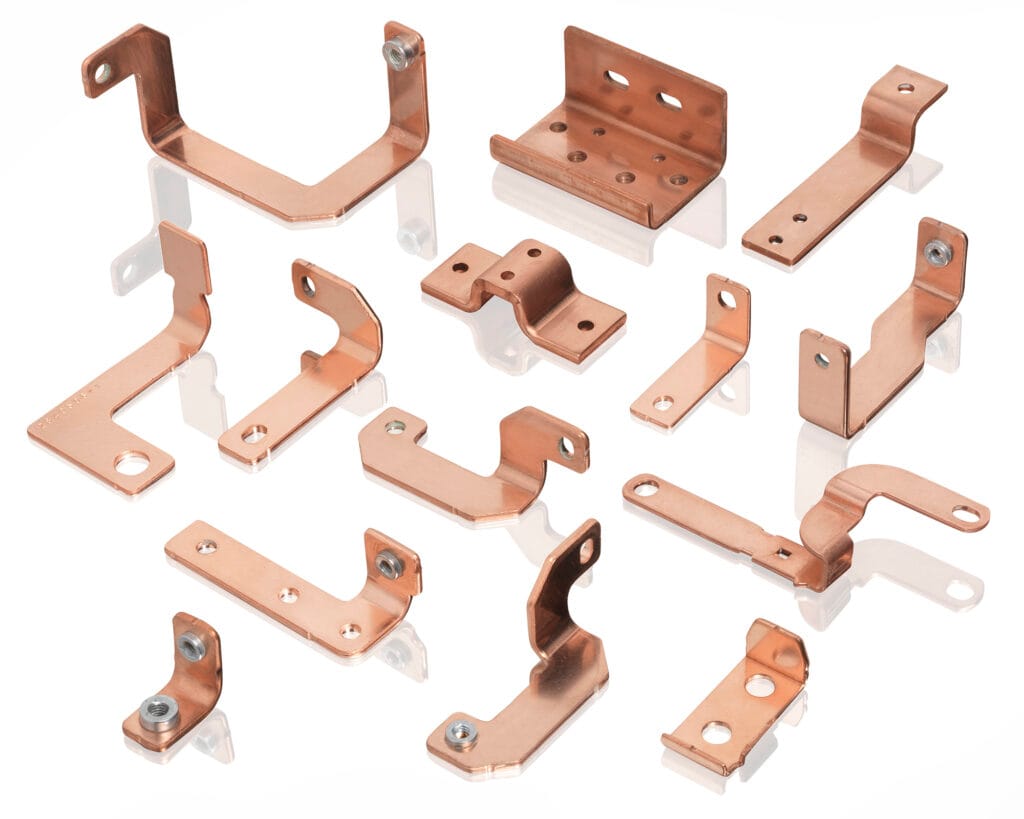
The primary job of a busbar is to conduct electricity efficiently. Resistance within the busbar generates heat, leading to energy loss and potential system failure. Therefore, electrical testing is the most critical phase of quality control.
1. Micro-Ohm Resistance Testing
Even a fraction of an ohm of resistance can be disastrous when dealing with thousands of amperes. We utilize specialized micro-ohmmeters employing the four-terminal sensing (Kelvin measurement) method to measure the exact resistance of the busbar.
This test is particularly crucial for Flexible and Braided Copper Busbars. Because these busbars are made of multiple layers of foil or woven wires, the connection points (where the ends are press-welded or crimped) are potential sources of resistance. The test ensures that the contact resistance at the terminals is virtually zero, guaranteeing seamless integration into data center server racks or renewable energy inverters.
2. High-Voltage (Hipot) Dielectric Testing
Precision Copper Busbars are often coated with insulating materials (like epoxy powder coating, heat shrink tubing, or PVC dipping) to prevent arcing between adjacent phases. The Hipot (High Potential) test involves applying a massive voltage—often much higher than the busbar’s rated operating voltage—across the insulation to ensure it does not break down.
If a busbar is designed for a 1,000V system, the Hipot test might hit it with 2,500V or more for a sustained period. If the insulation holds without current leaking through, it passes. This is non-negotiable for compact, modern switchgears where space is limited and busbars are packed tightly together.
Thermal Dynamics: Managing Heat in High-Power Systems
Electricity creates heat. In heavy industries like aluminum smelting, large-scale data centers, or EV fast-charging networks, the current density is extreme. If a busbar cannot dissipate heat effectively, it will melt its insulation, damage surrounding components, and potentially start a fire.
1. The Temperature Rise Test
This is arguably the most stringent test defined by IEC 61439. The busbar is placed inside a simulated enclosure, and its maximum rated continuous current is passed through it.
Thermocouples are attached to multiple points along the busbar, especially at the joints and connection terminals. The current flows until the temperature of the busbar stabilizes (meaning it is dissipating heat at the same rate it is generating it). The standard dictates a maximum allowable temperature rise (Delta-T) above the ambient room temperature.
For instance, standard bare copper busbars might have a maximum allowable temperature of 105°C. By utilizing precision deep drawing to optimize the surface area, and ensuring high-pressure contact points, JUMAI’s custom busbars routinely perform well below the maximum temperature thresholds, ensuring a longer lifespan and better energy efficiency.
2. Thermal Cycling Resistance
Heavy industrial equipment rarely operates at a constant load. A solar power inverter, for example, handles massive loads during peak daylight and zero load at night. This causes the busbars to repeatedly heat up and cool down, leading to thermal expansion and contraction.
Thermal cycling tests artificially simulate years of these fluctuations in a matter of weeks inside environmental chambers. We test to ensure that Rigid Copper Busbars do not warp, and that the press-welded joints of Flexible Copper Busbars do not delaminate or crack under continuous mechanical stress caused by temperature shifts.
Mechanical Integrity Testing: Surviving the Harsh Reality of Heavy Industry
While they are electrical components, busbars in heavy industry are subjected to brutal physical forces. They must be structurally sound. This is where our expertise in deep drawing stamping and mold design becomes a distinct advantage.
1. Short-Circuit Withstand Testing
When a short circuit occurs in a massive power grid, the electrical current can spike to tens of thousands of amperes for a fraction of a second before the breakers trip. This massive surge of current creates extreme electromagnetic forces that literally try to rip the busbars apart.
During a short-circuit withstand test, a test laboratory intentionally subjects the busbar assembly to these massive fault currents. The busbars must not permanently deform, the supports must not break, and the insulation must remain intact. JUMAI’s robust deep-drawn structural accessories and precision-machined rigid busbars are engineered specifically to withstand these violent electromagnetic stresses.
2. Tensile Strength and Elongation
Copper must strike a balance between conductivity and strength. If it is too soft, it will deform under the weight of the cables attached to it. If it is too hard, it may crack when bent during installation.
Using a Universal Testing Machine (UTM), we pull copper samples until they snap. This allows us to measure:
- Tensile Strength (MPa): The maximum stress the busbar can handle before breaking.
- Yield Strength (MPa): The point at which the busbar permanently bends and will not return to its original shape.
- Elongation (%): How much the material stretches before breaking, an indicator of its ductility.
This testing is absolutely vital for Braided Copper Busbars, which must maintain their physical integrity while constantly flexing and vibrating in heavy machinery or automotive applications.
Environmental Resilience: Fighting Corrosion and Degradation
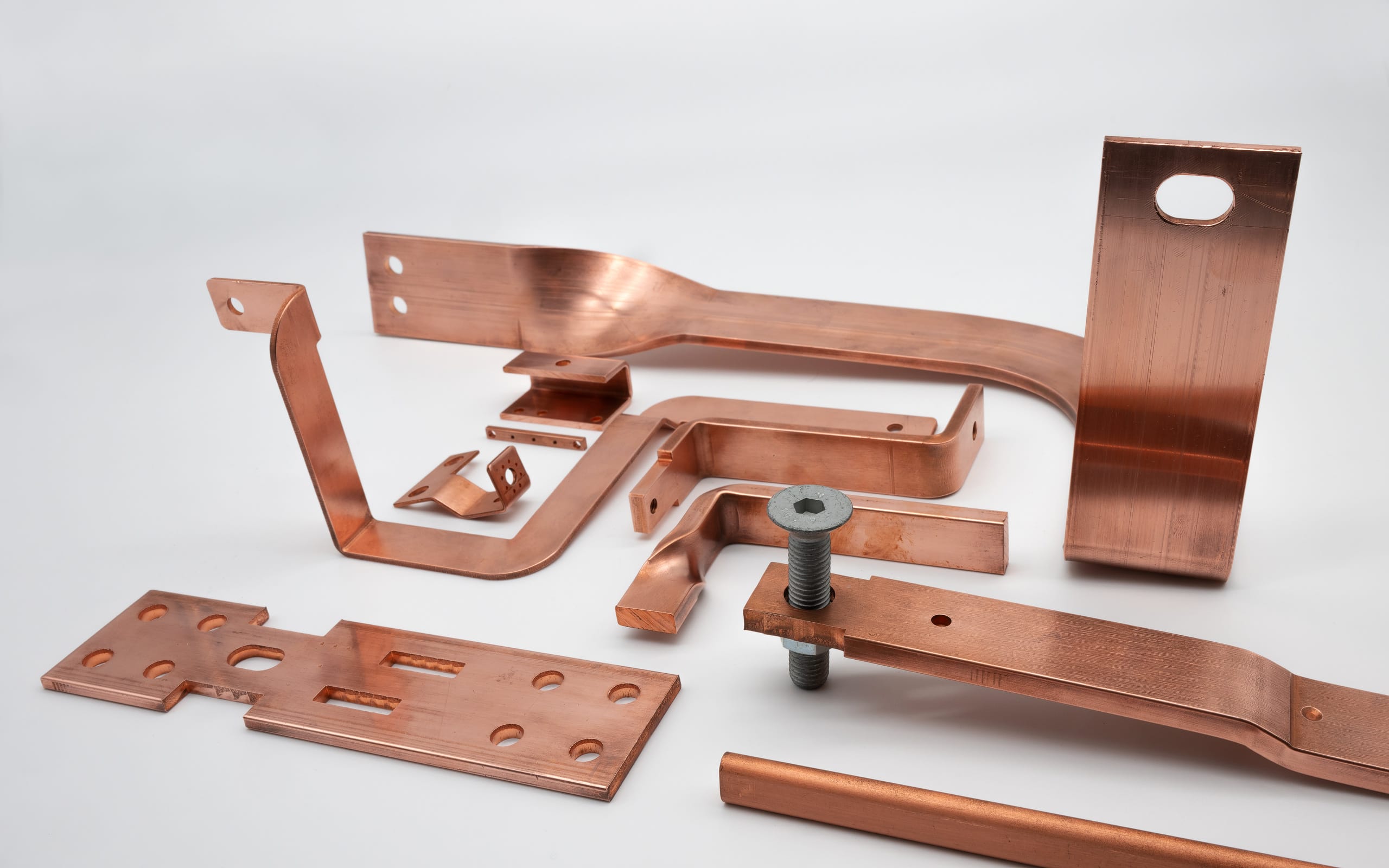
A busbar in a climate-controlled data center faces different challenges than a busbar in an offshore wind turbine. Environmental testing guarantees longevity regardless of the deployment location.
1. Salt Spray (Fog) Corrosion Testing
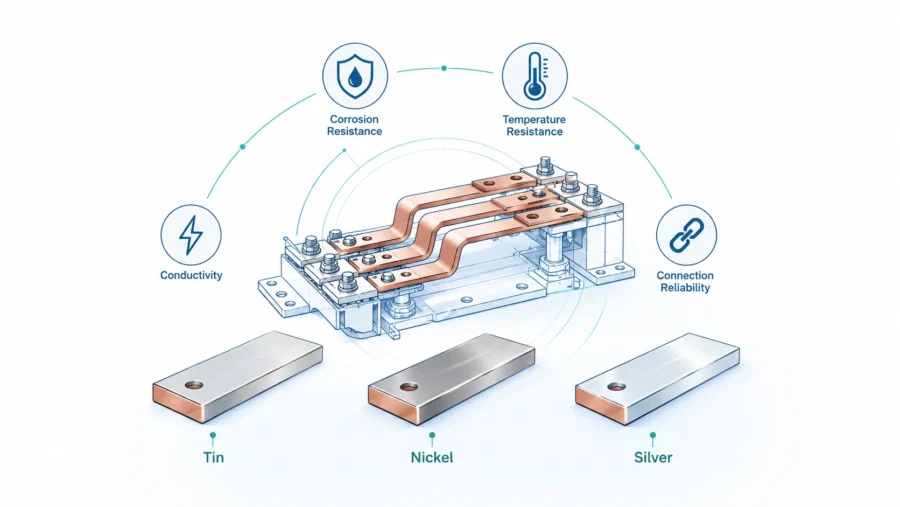
For marine environments, offshore wind, and coastal heavy industry, salt is the ultimate enemy of bare copper. Salt spray testing involves placing the busbar (usually plated with tin, nickel, or silver) into a closed chamber where it is continuously bombarded with a corrosive salt fog.
We monitor how many hours the busbar can withstand the environment before red rust or severe pitting occurs. A high-quality Tin-Plated Precision Copper Busbar from JUMAI will easily exceed standard baseline hours, ensuring decades of reliable service in harsh offshore conditions without the conductivity dropping due to surface oxidation.
2. Humidity and Ingress Protection
Electrical systems in tropical climates or subterranean mining operations deal with extreme humidity. High humidity can cause condensation, which in turn leads to tracking (electrical current leaking across the surface of damp insulation). Our custom insulating sleeves and epoxy coatings are rigorously tested in high-humidity chambers to ensure they remain hydrophobic and electrically secure.
Customization Meets Quality Control: The JUMAI Approach
At JUMAI, we understand that standard, off-the-shelf busbars rarely meet the nuanced demands of modern heavy industry. That is why our core competency lies in customization and precision fabrication.
The Synergy of Deep Drawing and Busbar Manufacturing
Our deep drawing stamping mold processing isn’t just an auxiliary service; it directly enhances our busbar production. Deep drawing allows us to create custom copper shapes, seamless enclosures, and complex multi-plane bends without the need for welding multiple pieces together.
- Why does this matter? Every weld or joint is a potential point of electrical resistance and mechanical failure. By utilizing custom deep drawing molds, we create continuous, single-piece Precision Copper Busbars that flow perfectly within the tight geometric confines of modern switchgears, reducing voltage drops and maximizing structural integrity.
Our online preview and order consultation system allows global clients to submit complex CAD designs. Our engineers review these designs against the testing standards discussed above, ensuring that what looks good on a screen will actually survive a short-circuit fault in reality.
Industry-Specific Requirements and Case Studies
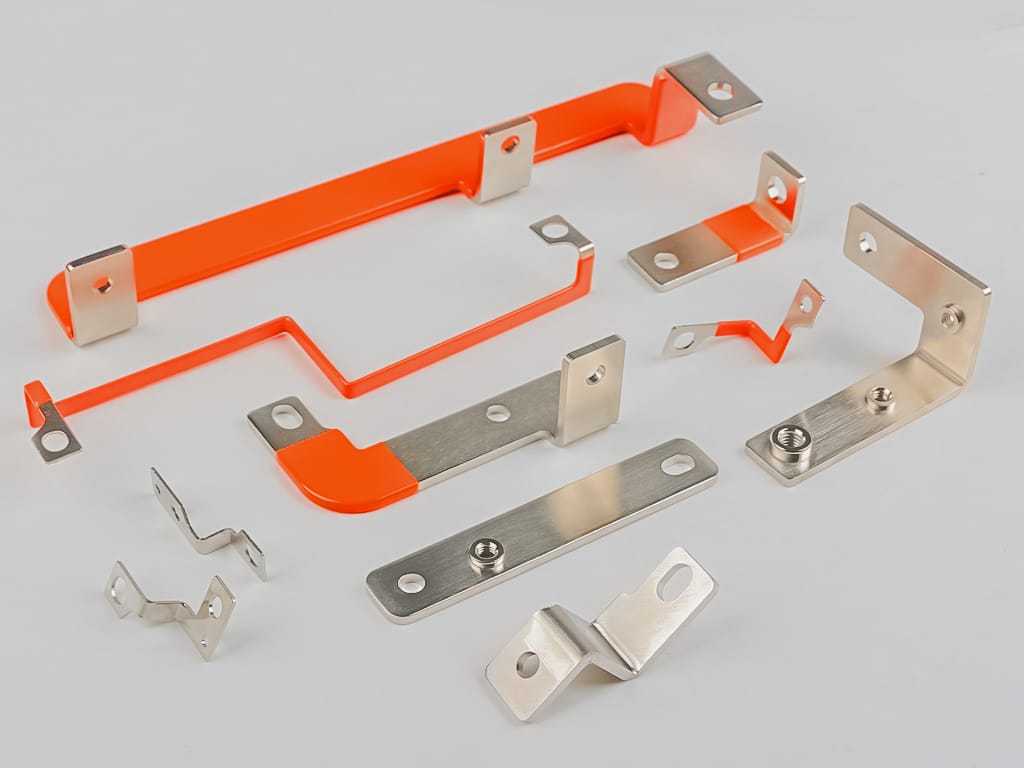
To truly understand the importance of these testing standards, we must look at how they apply to the specific heavy industries JUMAI serves daily.
1. Hyperscale Data Centers
Data centers are transitioning to higher power densities to support AI and machine learning workloads. They require massive amounts of power delivered in very tight spaces.
- The Challenge: Heat dissipation and space constraints.
- The Solution: JUMAI’s custom insulated Rigid Copper Busbars. We rely heavily on Temperature Rise Testing and Micro-Ohm Resistance Testing here. By guaranteeing ultra-low resistance, we help data centers reduce their PUE (Power Usage Effectiveness), saving millions of dollars in cooling costs over the lifespan of the facility.
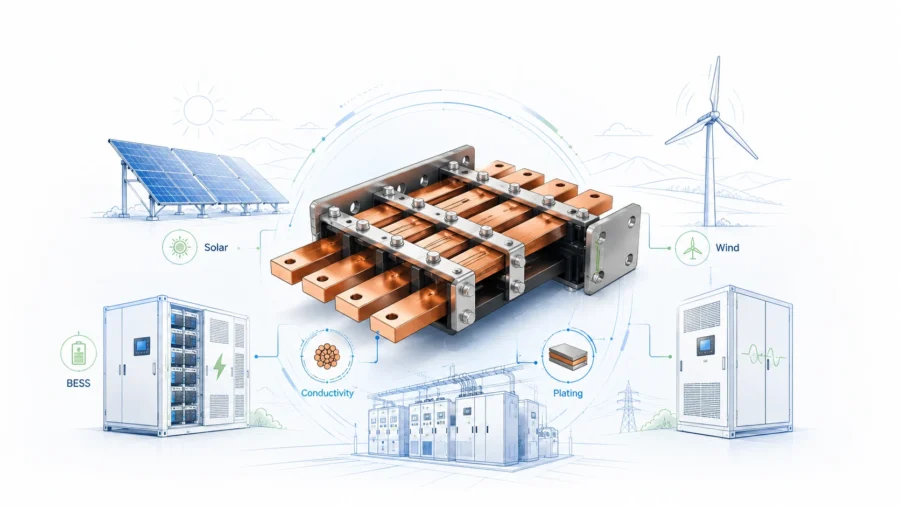
2. Renewable Energy (Wind and Solar Power)
Renewable energy involves taking power generated in harsh, remote environments and stepping it up for grid transmission.
- The Challenge: Vibration, thermal cycling, and corrosion.
- The Solution: JUMAI’s Flexible and Braided Copper Busbars. In a wind turbine nacelle, constant vibration will shatter a rigid connection. Our braided busbars, rigorously tested for Tensile Strength and Salt Spray Resilience, provide the necessary flex to absorb vibration while maintaining perfect electrical conductivity, even in offshore oceanic installations.
3. Electric Vehicle (EV) Infrastructure
The rapid charging stations for heavy-duty commercial EVs process massive DC currents.
- The Challenge: Thermal management during rapid charging spikes.
- The Solution: Water-cooled precision copper busbars or highly customized flexible foils. The Thermal Cycling and Short-Circuit Withstand tests are paramount here to ensure safety for the consumer and reliability for the infrastructure operator.
The Economic Impact of Adhering to Rigorous Standards
Why should a company invest in premium, rigorously tested custom busbars rather than cheaper, untested alternatives? It comes down to basic economics and risk mitigation.
Table 2: The Cost of Failure vs. The Value of Testing
| Failure Mode | Root Cause (Failed Standard) | Potential Financial/Operational Impact | The JUMAI Preventive Testing Solution |
|---|---|---|---|
| Overheating/Fire | Poor conductivity, failed Temperature Rise limit. | Complete facility shutdown, destroyed equipment, severe safety hazards. Millions in losses. | Strict Micro-ohm testing, guaranteed IACS purity, optimized thermal design. |
| Mechanical Fracture | Failed Tensile/Vibration test, improper alloy. | Intermittent power loss, arcing, maintenance downtime. | Structural testing, precise deep drawing to eliminate weak joints. |
| Insulation Breakdown | Failed Hipot test, degraded coating. | Lethal shock hazard, phase-to-phase short circuits. | High-voltage dielectric testing and premium insulation materials. |
| Corrosion/Oxidation | Failed Salt Spray/Environmental test. | Gradual increase in resistance, leading to slow thermal failure. | Advanced plating techniques (Tin/Silver/Nickel) verified by fog chambers. |
This table illustrates that the upfront cost of precision engineering is negligible compared to the catastrophic costs of component failure in heavy industry.
Using inferior busbars introduces a massive weak link into an otherwise multi-million-dollar system. By insisting on customized components that meet IEC, ASTM, and UL standards, companies are buying an insurance policy on their infrastructure’s uptime.
Future Trends in Busbar Manufacturing and Testing
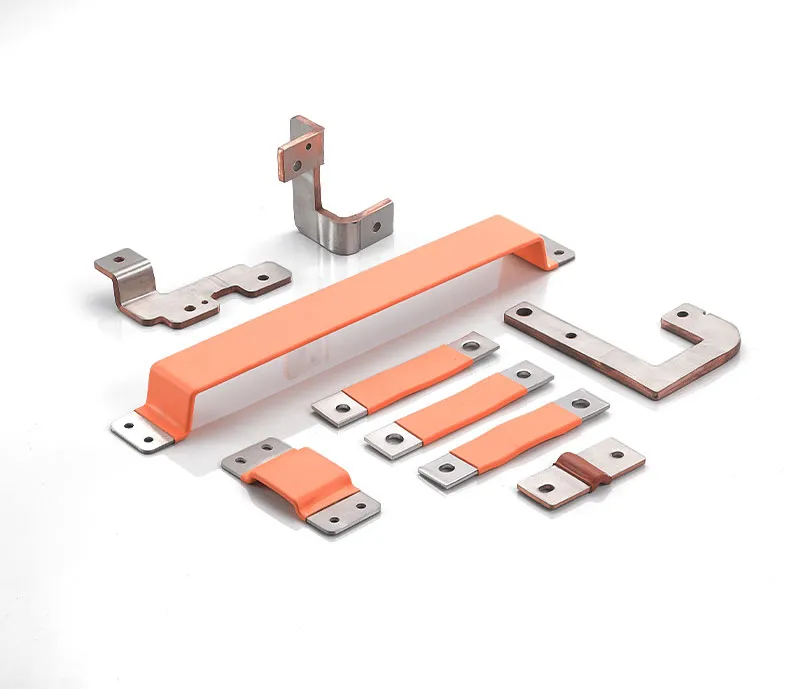
As an Editor-in-Chief deeply embedded in the R&D of power transmission, I track the horizon of this industry closely. The standards of today will evolve to meet the demands of tomorrow.
- AI-Assisted Quality Control: We are moving toward utilizing machine learning to analyze the micro-structures of copper during the deep drawing process, predicting potential failure points before the busbar even reaches the physical testing phase.
- Higher Voltage Direct Current (HVDC): As grids shift towards HVDC for long-distance renewable transmission, Hipot testing standards are being rewritten to accommodate much higher baseline voltages. Busbar insulation technology is rapidly advancing to meet these new thresholds.
- Eco-Friendly Insulations: The industry is moving away from traditional PVC dipping due to environmental concerns, leaning towards highly durable, recyclable powder coatings. These new materials require completely new baselines for thermal and dielectric testing.
At JUMAI, our R&D department is already adapting our deep stamping molds and fabrication techniques to accommodate these future realities.
Partnering for Precision and Power
The engineering behind Precision Copper Busbars is a complex interplay of metallurgy, electrical physics, and mechanical design. In heavy industry, whether you are building the next generation of eco-friendly power grids or the data centers that will power the future of artificial intelligence, you cannot afford to compromise on your electrical distribution.
Testing is not merely a hurdle to clear; it is the ultimate proof of design. From rigid mainframes to flexible battery connectors and vibration-proof braided straps, every component must be validated through rigorous electrical, mechanical, and environmental standards.
At JUMAI, we combine decades of industry expertise with state-of-the-art manufacturing capabilities. We don’t just supply busbars; we provide custom, fully tested, deep-drawn precision solutions engineered to conquer the toughest challenges in heavy industry.
When your power infrastructure demands absolute reliability, trust the experts who understand that true performance is proven in the testing lab long before it is installed in the field. Reach out to JUMAI today through our online portal to consult with our engineering team on your custom copper busbar and deep drawing mold requirements. Let us build the foundation of your power system together.
FAQ
What are Copper Busbars and why are they important?
Copper busbars are metal bars that conduct electricity. They are important because they help distribute electrical power safely and efficiently in places like data centers, wind farms, and factories. By ensuring that the busbars are made with high-quality copper and tested for various conditions, we can avoid electrical failures and keep everything running smoothly.
What testing processes do Copper Busbars go through?
Copper busbars are put through several testing processes to ensure they work well. These tests check for electrical resistance, how they handle heat, and how strong they are. Additionally, they are tested for their ability to resist corrosion and environmental damage. This ensures they will last a long time even in tough conditions.
Why is the quality of copper used important?
The quality of the copper used in busbars is crucial because it affects how well they conduct electricity. Higher purity copper is better because it leads to less energy loss and heat generation. This means that the systems can work more efficiently and safely, preventing problems like overheating.
What standards do Copper Busbars need to meet?
Copper busbars must meet specific standards set by various international bodies like IEC and UL. These standards ensure that the busbars perform safely and efficiently, minimizing risks like electrical fires or failures. Meeting these standards is essential for companies to keep their electrical systems reliable.
How can I make sure my busbars are safe to use?
To make sure your busbars are safe, you should purchase them from manufacturers who test their products thoroughly. Look for busbars that have passed rigorous testing standards for electrical performance, mechanical integrity, and environmental resilience. This way, you reduce the risk of accidents and ensure reliable operation.
What happens if a busbar fails?
If a busbar fails, it can lead to serious problems, including equipment damage or even electrical fires. This is why it’s important to use high-quality, well-tested busbars. Regular maintenance and inspections also help in identifying and addressing potential issues before they become major problems.
Can you customize Copper Busbars?
You can reach out to JUMAI through their official website. They have a portal where you can consult with their engineering team for information about custom copper busbars and testing standards. They are there to help you understand your needs and provide the best solutions.
What are the future trends in busbar manufacturing?
Future trends in busbar manufacturing include using advanced technologies, like AI, to improve quality control. There is also a move towards more eco-friendly materials for insulation and adapting to higher voltage requirements for renewable energy systems. Keeping up with these trends ensures that busbars are efficient and compliant with future standards.
How does JUMAI ensure the quality of their busbars?
JUMAI ensures the quality of their busbars through rigorous testing that complies with international standards. By focusing on high-quality materials and extensive testing methods, they guarantee that their busbars are reliable and safe for demanding applications, ultimately providing peace of mind to their clients.