
In the rapidly evolving landscape of global engineering, the demand for efficient, reliable, and adaptable power distribution systems has never been higher. From the sprawling hyperscale data centers powering artificial intelligence to the harsh, unforgiving environments of offshore wind farms and the tightly packaged drivetrains of modern Electric Vehicles (EVs), the infrastructure of tomorrow requires components that can handle immense electrical loads without compromising on spatial efficiency. At the heart of this electrical revolution lies a critical component: the Flexible Copper Busbar.
As the Editor-in-Chief at JUMAI, a premier global provider of custom soft, hard, and braided copper busbars, as well as deep drawing molds and accessories, I have witnessed firsthand the transformative impact these components have on large-scale projects. Traditional rigid busbars and bulky cable assemblies are increasingly being replaced by custom-engineered flexible solutions.
This comprehensive guide explores the core technical and commercial advantages of integrating OEM custom flexible copper busbars into your global projects, backed by industry data, material science, and decades of manufacturing expertise.
Table of Contents
The Paradigm Shift in Power Distribution
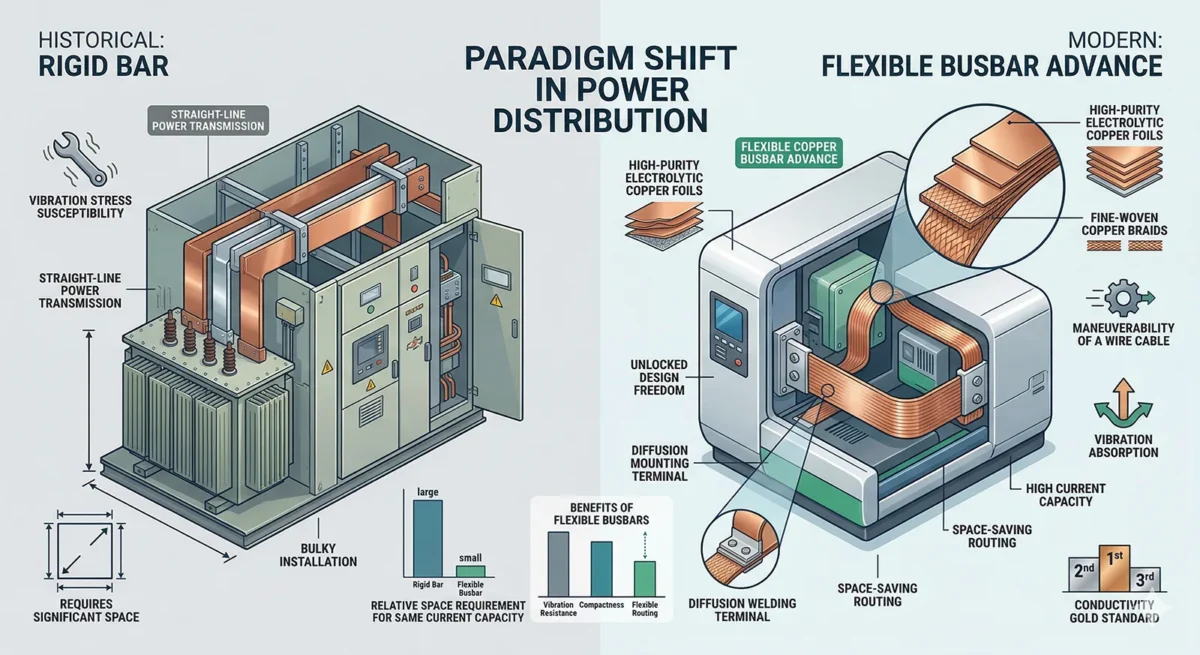
Historically, power distribution within industrial machinery, switchgears, and transformers relied heavily on rigid copper or aluminum bars. While effective for static, straight-line power transmission in spacious environments, rigid busbars present significant challenges in modern applications. They are highly susceptible to mechanical stress from vibrations, require significant space for installation, and demand complex, labor-intensive routing.
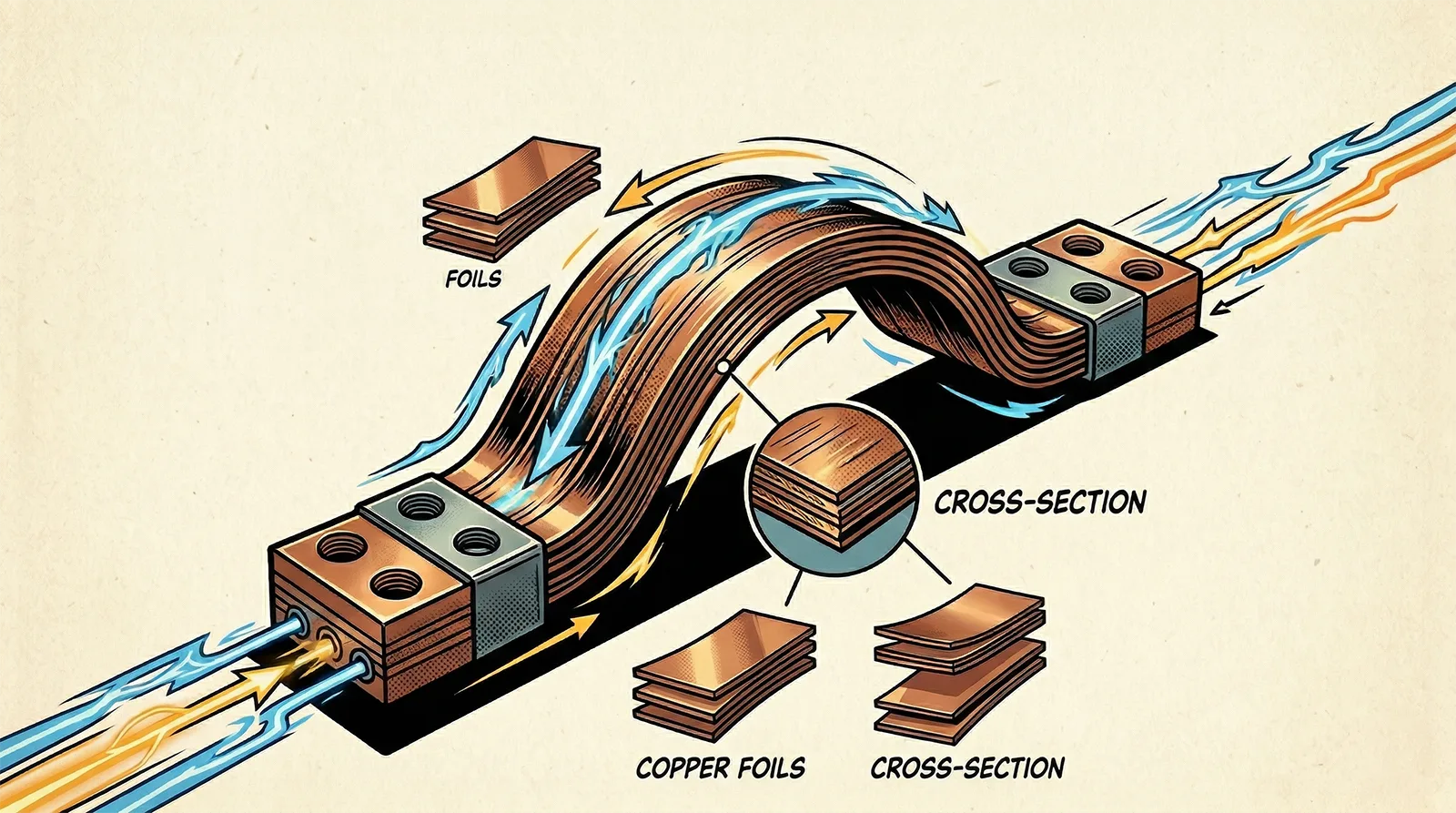
The transition to flexible copper busbars—constructed from multiple layers of high-purity electrolytic copper foils or finely woven copper braids—represents a monumental leap in electrical engineering. By bonding these layers at the mounting areas (often through advanced diffusion welding or press welding) while leaving the middle section free to flex, engineers achieve a component that delivers the high current-carrying capacity of a solid bar with the maneuverability of a wire cable.
According to research published by the Copper Development Association, copper remains the gold standard for electrical conductivity, second only to silver. When formatted into a flexible, customized busbar, it unlocks entirely new dimensions of design freedom for global project managers and lead engineers.
What Defines a High-Quality Flexible Copper Busbar?
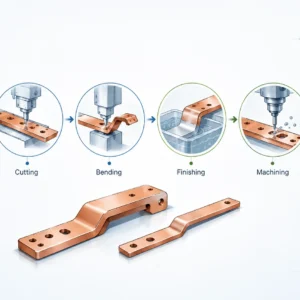
Before diving into the specific benefits, it is crucial to understand the anatomy of a premium flexible copper busbar. At JUMAI, the manufacturing process is an exercise in precision engineering.
A standard high-performance flexible busbar consists of:
- The Conductor: Typically utilizing highly pure (99.9%+) oxygen-free copper (OFC) or Electrolytic Tough Pitch (ETP) copper (e.g., C11000). This ensures maximum electrical conductivity and minimizes energy loss in the form of heat.
- The Laminations: Stacks of ultra-thin copper foils (often between 0.05mm and 0.3mm thick) that allow for multi-directional bending, twisting, and folding without compromising the cross-sectional area.
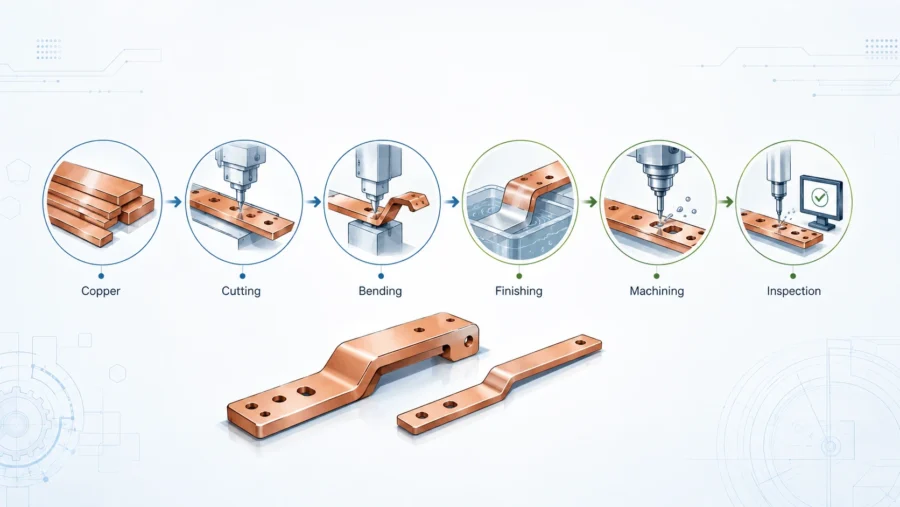
- The Terminals: The ends are consolidated using molecular diffusion welding under high heat and pressure, creating a solid block of copper that can be machined, punched, and plated for perfect contact resistance.
- The Insulation: High-grade extruded PVC, silicone, or heat-shrinkable tubing that provides exceptional dielectric strength, flame retardancy (often rated to UL94 V-0), and environmental protection.
With this foundation established, let us explore the top five benefits of sourcing OEM custom flexible copper busbars for your global electrical projects.
Benefit 1: Unmatched Spatial Optimization and Design Flexibility
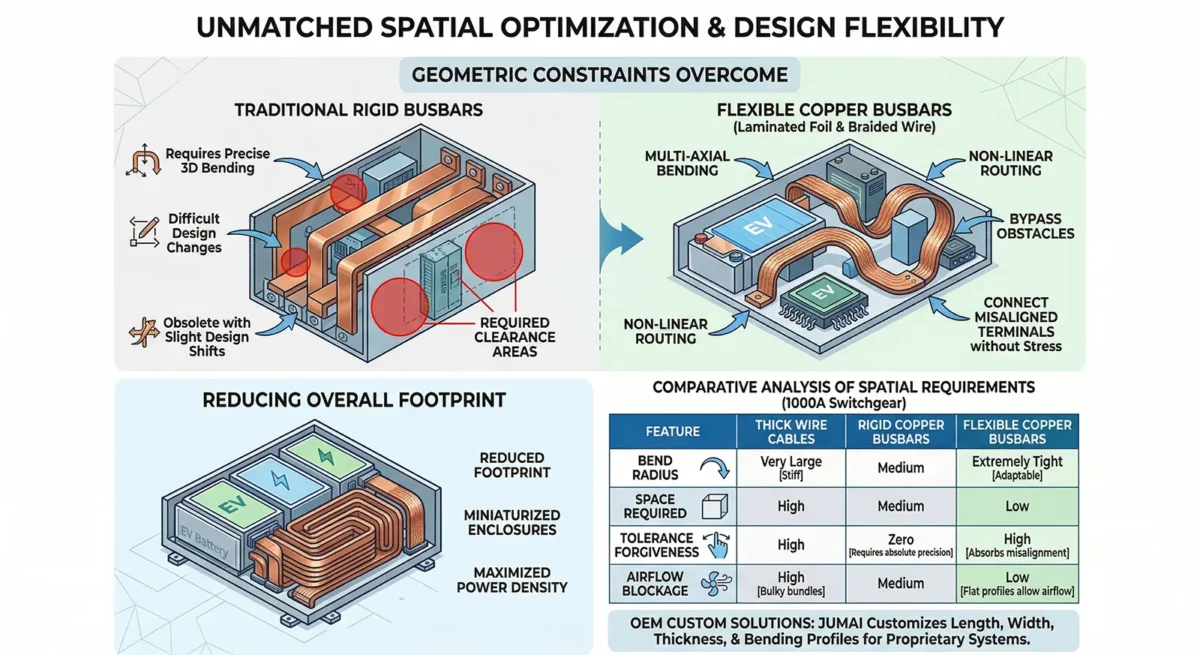
In industries like electric vehicle manufacturing and high-density computing, space is one of the most expensive commodities. Engineers are constantly tasked with fitting more power capacity into smaller, lighter enclosures.
Overcoming Geometric Constraints
Traditional rigid busbars require precise, 3-dimensional bending during manufacturing. If a design change occurs, or if the internal geometry of a battery pack or server rack shifts even slightly, the rigid busbar becomes obsolete. Furthermore, rigid bars require specific clearance areas to accommodate thermal expansion and assembly tolerances.
Flexible copper busbars fundamentally eliminate this bottleneck. Because the laminated foils or braided wires can bend, twist, and fold along multiple axes, they can be routed through complex, non-linear pathways. This capability allows engineers to bypass obstacles, navigate tight corners, and connect misaligned terminals without putting mechanical stress on the connection points.
Reducing the Overall Footprint
By utilizing flexible busbars, design teams can dramatically reduce the required volume of electrical cabinets and battery modules. The ability to fold a flexible busbar tightly against interior walls or loop it compactly between closely situated components means enclosures can be miniaturized.
The table below illustrates a comparative analysis of spatial requirements between traditional cabling, rigid busbars, and flexible copper busbars in a standard 1000A switchgear application:
| Feature | Thick Wire Cables | Rigid Copper Busbars | Flexible Copper Busbars |
|---|---|---|---|
| Bend Radius | Very Large (Stiff) | Requires Machining | Extremely Tight (Adaptable) |
| Space Required | High | Medium | Low |
| Tolerance Forgiveness | High | Zero (Requires absolute precision) | High (Absorbs misalignment) |
| Airflow Blockage | High (Bulky bundles) | Medium | Low (Flat profiles allow airflow) |
As an OEM provider, JUMAI specializes in customizing the exact length, width, thickness, and bending profiles of these busbars, ensuring they fit seamlessly into your proprietary systems, right out of the box.
Benefit 2: Superior Electrical and Thermal Performance
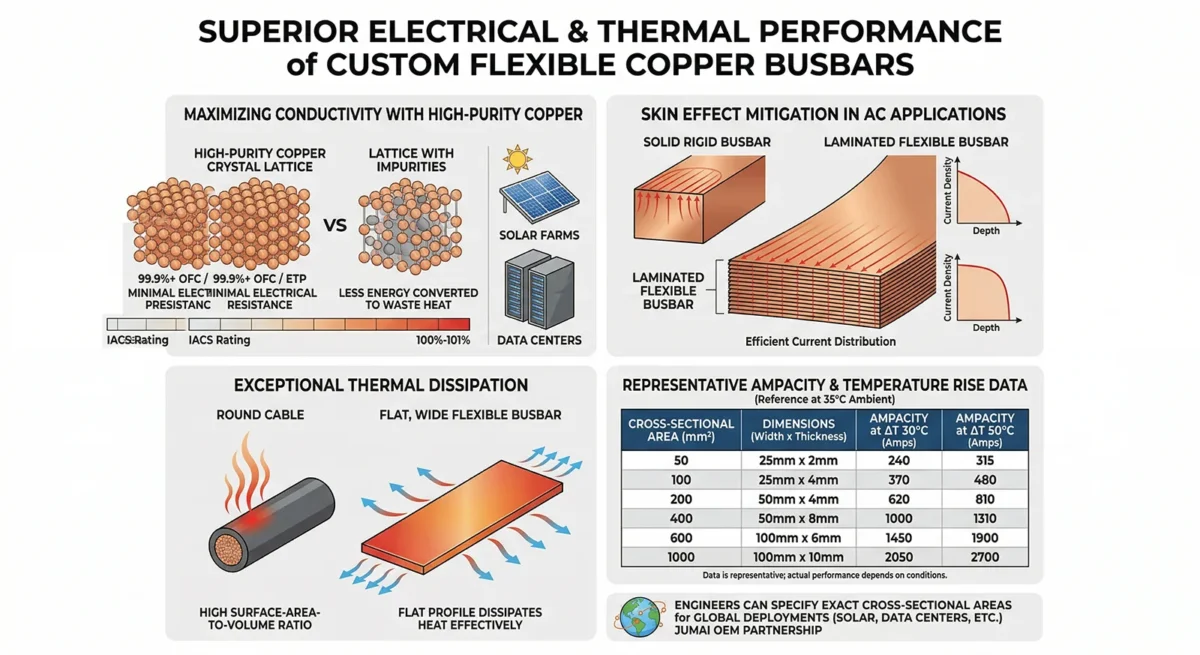
The primary function of any busbar is to transmit high currents safely and efficiently. OEM custom flexible copper busbars excel in both electrical conductivity and thermal management, heavily outperforming standard cable alternatives.
Maximizing Conductivity with High-Purity Copper
At JUMAI, our busbars utilize copper with an International Annealed Copper Standard (IACS) rating of 100% to 101%. This ultra-high purity ensures that electrical resistance is kept to an absolute minimum. Lower resistance means less electrical energy is converted into waste heat, resulting in a more efficient power distribution network.
For massive global projects—such as utility-scale solar farms or gigawatt-capacity data centers—even a fraction of a percent increase in transmission efficiency can translate to millions of dollars in energy savings over the lifespan of the facility. The International Electrotechnical Commission (IEC) sets stringent standards for energy efficiency, and high-purity copper components are essential for meeting these global benchmarks.
Mitigating the “Skin Effect” in AC Applications
In Alternating Current (AC) systems, the “skin effect” causes alternating current to flow primarily near the surface of the conductor, rather than evenly throughout its cross-section. In a solid, thick rigid busbar, the center of the copper is largely unutilized, making the system inefficient and unnecessarily heavy.
Flexible busbars, composed of dozens or hundreds of individual thin laminations, inherently possess a massively increased surface-area-to-volume ratio compared to a solid bar. This geometry significantly mitigates the skin effect, allowing for better current distribution across the entire component.
Exceptional Thermal Dissipation
Heat is the enemy of electrical systems. Excessive heat degrades insulation, increases resistance (creating a negative feedback loop), and can ultimately lead to catastrophic failure.
Because flexible busbars have a flat, wide profile with a high surface area, they dissipate heat into the surrounding environment far more effectively than round cables of the same cross-sectional area.
Ampacity and Temperature Rise Data
To demonstrate the thermal efficiency, below is a sample reference data table showcasing the typical current-carrying capacity (Ampacity) of bare flexible copper busbars at various temperature rises (ΔT), based on standard ambient conditions (35°C):
| Cross-Sectional Area (mm²) | Dimensions (Width x Thickness) | Ampacity at ΔT 30°C (Amps) | Ampacity at ΔT 50°C (Amps) |
|---|---|---|---|
| 50 | 25mm x 2mm | 240 | 315 |
| 100 | 25mm x 4mm | 370 | 480 |
| 200 | 50mm x 4mm | 620 | 810 |
| 400 | 50mm x 8mm | 1000 | 1310 |
| 600 | 100mm x 6mm | 1450 | 1900 |
| 1000 | 100mm x 10mm | 2050 | 2700 |
Data is representative; actual performance depends on specific OEM insulation, environmental airflow, and installation conditions.
By partnering with an OEM like JUMAI, engineers can specify the exact cross-sectional area required to keep temperature rises within safe, optimal limits for their specific global deployments.
Benefit 3: Enhanced Reliability Through Vibration Dampening and Thermal Expansion Absorption
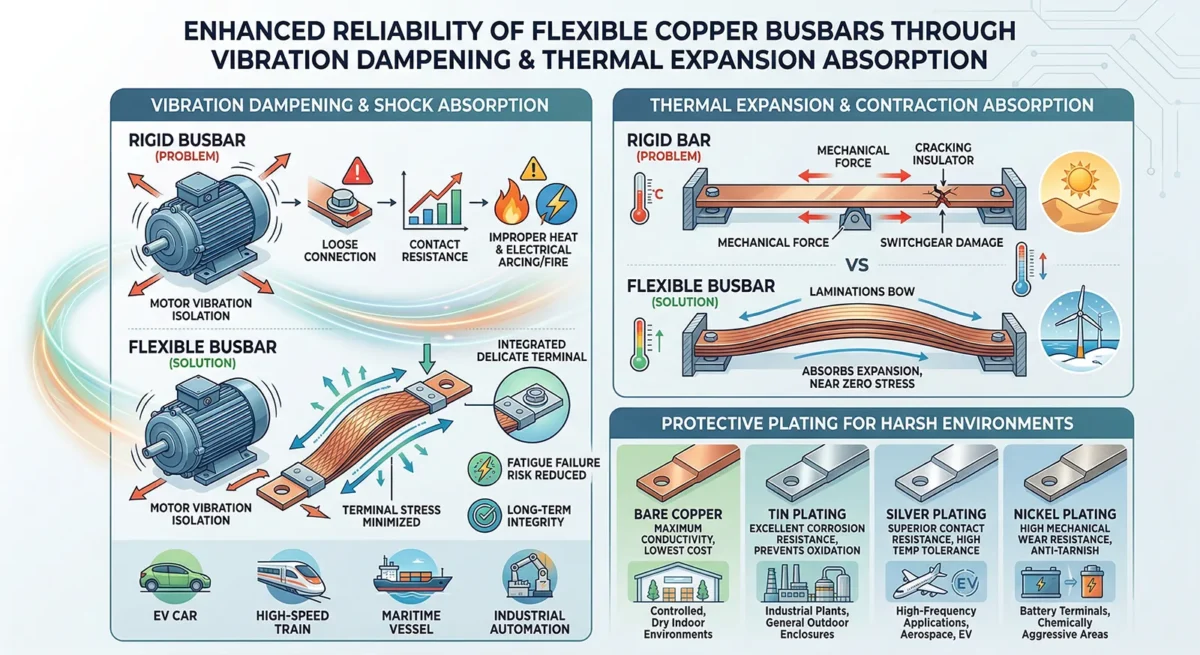
Global projects are rarely deployed in perfect, static environments. Components are subjected to mechanical stress, severe temperature fluctuations, and relentless vibrations. Maintaining connection integrity under these harsh conditions is a critical engineering challenge.
The Threat of Vibration
In applications such as Electric Vehicles, railway traction systems, maritime vessels, and heavy industrial automation, continuous vibration can loosen bolted connections on rigid busbars. A loose connection increases contact resistance, which generates immense heat and can quickly lead to electrical arcing or fire.
Flexible copper busbars act as mechanical shock absorbers. The flexible middle section isolates the vibration generated by motors, transformers, or road surfaces, preventing that kinetic energy from transferring to the delicate terminal connections. This drastically reduces the risk of fatigue failure and ensures long-term connection integrity.
Absorbing Thermal Expansion and Contraction
All metals expand when heated and contract when cooled. In high-power applications, busbars undergo constant thermal cycling as power loads fluctuate. A rigid copper busbar bolted between two fixed points will exert tremendous mechanical force on its mountings as it expands, potentially cracking insulators or damaging switchgear housings.
Flexible busbars seamlessly absorb this thermal expansion. The flexible laminations simply bow slightly as the metal expands, exerting virtually zero stress on the mounting points. This is particularly vital in environments with extreme ambient temperature swings, such as solar inverters deployed in desert climates or wind turbines in the freezing North Sea.
Protective Plating for Harsh Environments
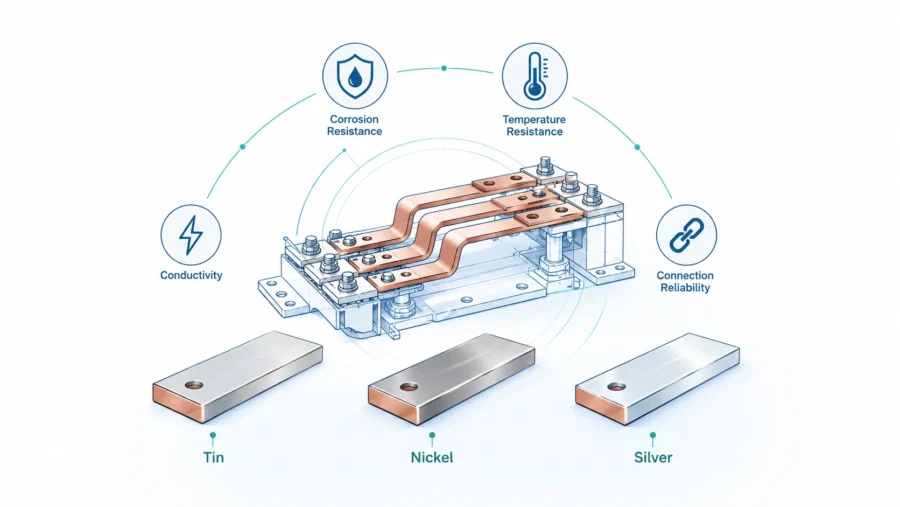
To further enhance reliability in corrosive environments, OEM custom busbars from JUMAI can be treated with specialized surface platings.
| Plating Material | Key Benefit | Typical Application Environment |
|---|---|---|
| Bare Copper | Maximum conductivity, lowest cost | Controlled, dry indoor environments |
| Tin Plating | Excellent corrosion resistance, prevents oxidation | Industrial plants, general outdoor enclosures |
| Silver Plating | Superior contact resistance, high temp tolerance | High-frequency applications, aerospace, EV |
| Nickel Plating | High mechanical wear resistance, anti-tarnish | Battery terminals, chemically aggressive areas |
Benefit 4: Significant Cost-Effectiveness and Total Cost of Ownership (TCO) Reduction
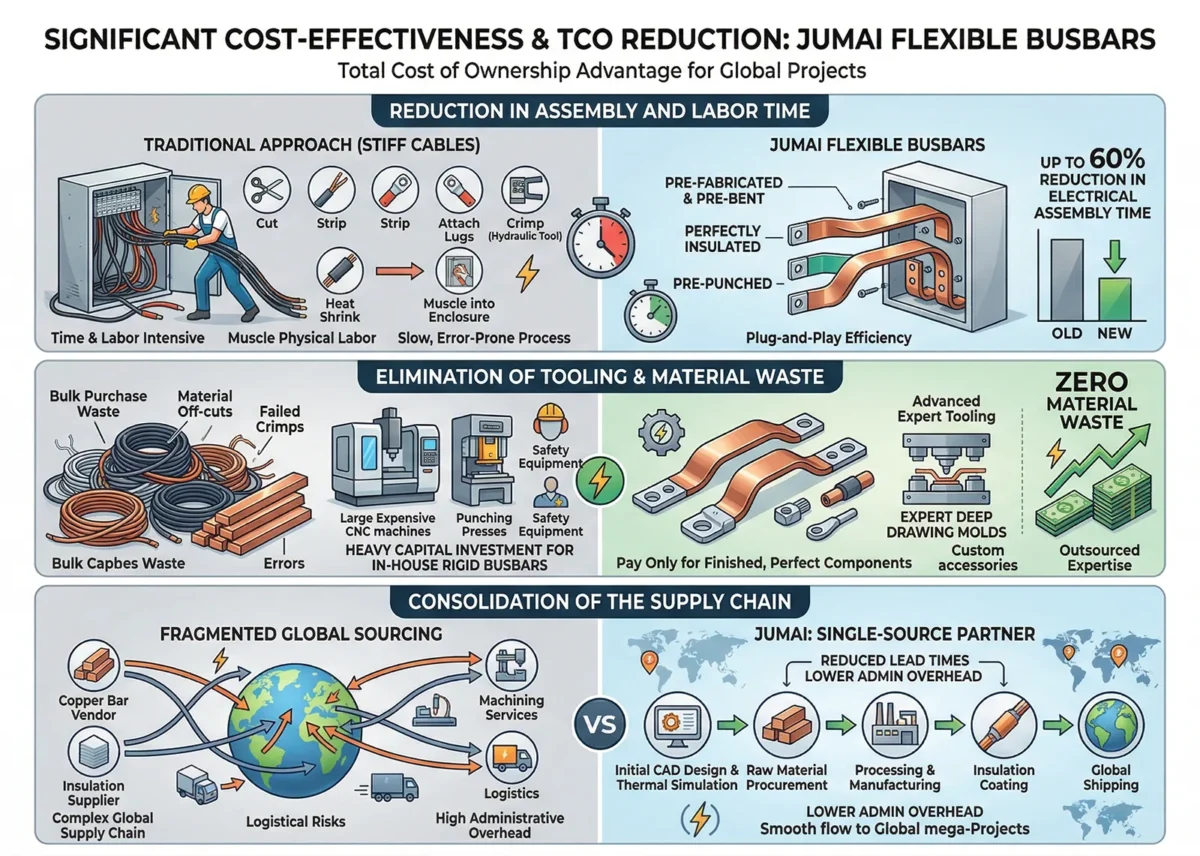
While the initial unit cost of a customized flexible busbar might be slightly higher than a length of standard cable, the Total Cost of Ownership (TCO) heavily favors the flexible busbar approach, especially when scaled across global mega-projects.
Reduction in Assembly and Labor Time
Time is money in global manufacturing. Routing heavy, stiff cables requires immense physical labor. Workers must cut the cable, strip the thick insulation, attach heavy-duty lugs, crimp the lugs with specialized hydraulic tools, heat-shrink the ends, and then physically wrestle the stiff cable into the enclosure. This multi-step process is slow and highly prone to human error (e.g., poor crimps leading to hot spots).
Conversely, OEM custom flexible busbars arrive from JUMAI completely pre-fabricated. They are precision-cut to the exact length, pre-bent to the desired angles, perfectly insulated, and pre-punched with mounting holes. Assembly line workers simply pick up the part, place it into the assembly, and bolt it down. This “plug-and-play” efficiency can reduce electrical assembly time by up to 60%, drastically accelerating production throughput and reducing labor costs.
Elimination of Tooling and Material Waste
When project managers buy bulk cables or raw rigid copper bars, they inherently pay for material waste. Off-cuts, failed crimps, and mistakes eat into the budget. Furthermore, manufacturing rigid busbars in-house requires massive capital investment in CNC bending machines, punching presses, and safety equipment.
By outsourcing to a specialized OEM like JUMAI, you eliminate material waste. You pay only for the finished, perfect component. Furthermore, JUMAI’s extensive expertise in deep drawing molds and tooling means we can create complex, custom-stamped terminal shapes and accessories without the client needing to invest in expensive proprietary tooling.
Consolidation of the Supply Chain
Managing a global supply chain is complex. Sourcing copper bars from one vendor, insulation from another, and machining services from a third introduces massive logistical risks. JUMAI acts as a single-source partner. From the initial CAD design and thermal simulation to raw material procurement, processing, insulation coating, and global shipping, consolidating these steps under one roof reduces lead times and lowers administrative overhead.
Benefit 5: Global Compliance, Safety, and Sustainability
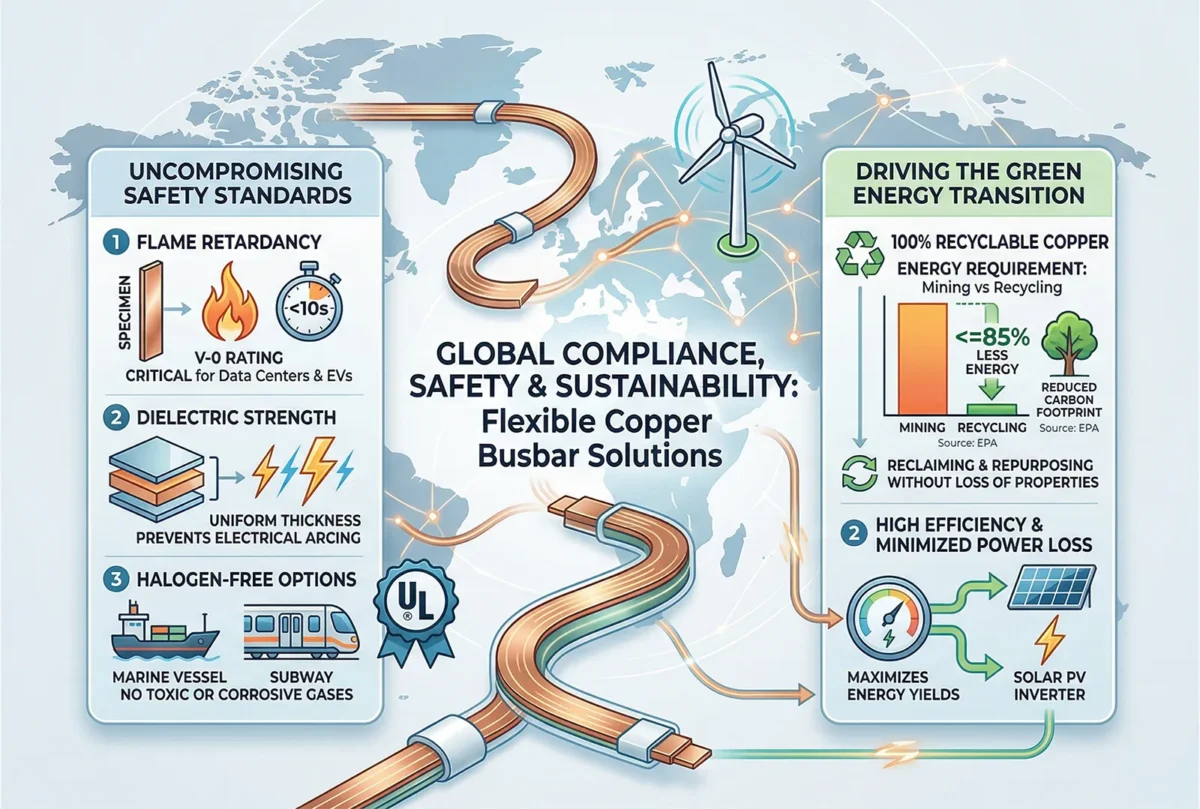
When deploying equipment globally, compliance with international safety and environmental standards is non-negotiable. A power distribution system must pass rigorous testing to be sold in markets across North America, Europe, and Asia.
Uncompromising Safety Standards
Custom OEM flexible busbars can be engineered to meet specific global standards. The insulation materials used by top-tier manufacturers are carefully selected to provide exceptional dielectric strength.
- Flame Retardancy: Busbar insulation is routinely tested against standards like UL 94. Achieving a V-0 rating means that burning stops within 10 seconds on a vertical specimen, and no flaming drips are allowed. This is a critical requirement for data centers and EV battery packs.
- Dielectric Strength: The extrusion or heat-shrink methods ensure uniform insulation thickness, preventing electrical arcing between closely spaced phases.
- Halogen-Free Options: For enclosed spaces (like marine vessels or subways), halogen-free insulation is utilized so that, in the rare event of a fire, the insulation does not release toxic, corrosive gases.
By utilizing components that inherently meet these strict safety guidelines provided by organizations like Underwriters Laboratories (UL), global project managers can ensure their entire system passes regional safety certifications seamlessly.
Driving the Green Energy Transition
Sustainability is a driving force in modern engineering. Flexible copper busbars play a direct role in the global transition to renewable energy.
Copper is a 100% recyclable material. According to the Environmental Protection Agency (EPA), recycling copper requires up to 85% less energy than mining and extracting primary copper, significantly reducing the carbon footprint of the manufacturing process. At the end of a project’s lifecycle, the copper within the busbars can be fully reclaimed and repurposed without any loss of its physical or electrical properties.
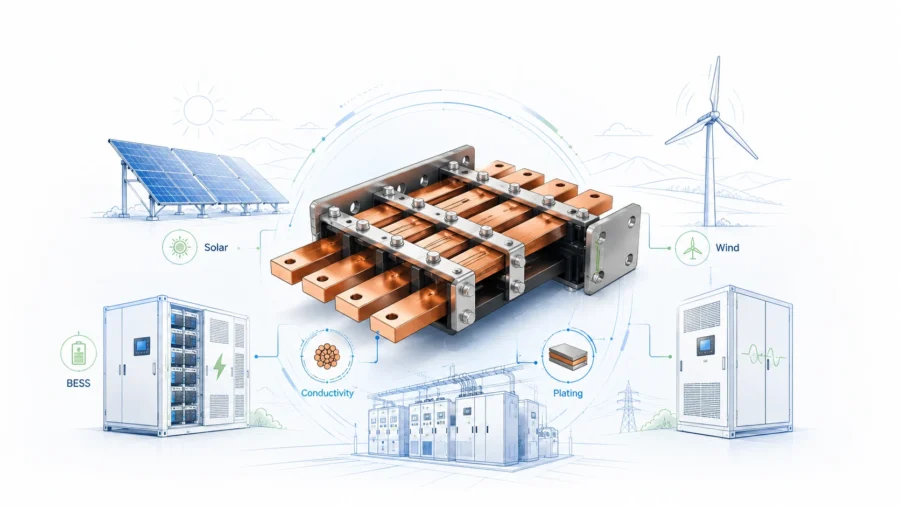
Furthermore, the high efficiency of customized busbars minimizes power loss in green energy generation. In wind turbine nacelles and solar photovoltaic (PV) inverters, capturing and transmitting every possible watt of generated power is essential. Flexible busbars reduce resistance losses, ensuring maximum energy yields from renewable sources.
Industry Deep Dive: Where Flexible Busbars Excel
To truly understand the value of OEM custom flexible copper busbars, we must look at how they solve specific problems across major global industries. As an expert who has designed components for these sectors, I can attest to the specialized requirements of each.
1. Electric Vehicles (EV) and Energy Storage Systems (ESS)
The EV sector is currently the largest driver of flexible busbar innovation. Inside an EV battery pack, hundreds of lithium-ion cells must be connected in series and parallel. Space is virtually non-existent, and the environment is subjected to constant road vibration and rapid thermal cycling during high-speed charging.
Rigid connections between battery modules are dangerous; road vibrations can cause the rigid bars to crack the delicate battery terminals, leading to thermal runaway. Flexible braided or laminated busbars absorb these shocks perfectly. Furthermore, JUMAI’s deep drawing mold capabilities allow us to create ultra-precise, low-profile accessories and terminal caps that fit perfectly within the constrained geometry of modern EV architectures.
2. Hyperscale Data Centers
The AI revolution requires massive amounts of computational power. Modern server racks draw unprecedented levels of current. Traditional power distribution units (PDUs) relying on thick cables are becoming unmanageable; the cables are too thick to bend into the racks, and they block the vital cooling airflow required to keep the servers from overheating.
Flexible copper busbars offer a flat, low-profile alternative. They can be routed neatly along the edges of the server cabinets, saving space and drastically improving internal aerodynamics. This translates directly to lower HVAC cooling costs for the data center operator.
3. Green Energy: Wind and Solar Power
In a wind turbine, the generator sits inside the nacelle, high above the ground. The nacelle vibrates violently, twists with the wind, and is subjected to massive temperature variations. Connecting the generator to the transformer requires a conductor that can handle thousands of amps while flexing continuously. Braided flexible copper busbars are the only viable solution for this dynamic environment.
Similarly, in solar power arrays, string inverters require durable, weather-resistant connections that can handle thermal expansion as the sun beats down on the equipment. Tin-plated flexible busbars with high-grade UV-resistant insulation are the industry standard for these applications.
4. Heavy Industrial Automation and Switchgear
In manufacturing plants, massive switchgears control the flow of electricity to robotic assembly lines and heavy machinery. Upgrading or retrofitting these switchgears often means dealing with outdated, misaligned connection points. Custom flexible busbars can be engineered to bridge these misaligned gaps effortlessly, eliminating the need to completely rebuild the switchgear enclosure.
The JUMAI Advantage: Your Global OEM Partner
Understanding the benefits of flexible copper busbars is only the first step. The true competitive advantage comes from partnering with an OEM capable of delivering precision, scale, and uncompromising quality.
At JUMAI, we are not merely an off-the-shelf supplier. We are an integrated engineering partner. Our core competencies include:
- End-to-End Customization: Whether you require soft foil laminations, tightly woven braided copper, or rigid bars combined with flexible sections, we engineer the product to your exact CAD specifications.
- Advanced Tooling and Deep Drawing: Because we manufacture deep drawing molds and accessories in-house, we can create custom terminal shapes, specialized shielding, and complex geometric housings that other busbar manufacturers must outsource. This integration guarantees perfect fitment and lowers your overall costs.
- Stringent Quality Control: Every batch of copper is tested for purity and conductivity. Every weld is inspected for structural integrity. Every insulated bar undergoes high-voltage dielectric testing to ensure it meets global safety standards before it leaves our facility.
- Global Logistics Support: We understand the complexities of international supply chains. We provide robust, sea-worthy packaging and coordinate seamlessly with global freight networks to ensure your components arrive on time, whether your project is in North America, Europe, Asia, or beyond.
Powering the Future with Flexibility
The era of struggling with heavy, stiff cables and unforgiving rigid copper bars is coming to an end. As global projects become more sophisticated, more compact, and more powerful, the internal electrical architecture must adapt.
OEM custom Flexible Copper Busbars offer an elegant, highly engineered solution to the complex challenges of modern power distribution. By optimizing spatial geometry, maximizing electrical and thermal efficiency, absorbing damaging vibrations, and significantly reducing installation labor, these components directly improve the bottom line of massive global deployments.
Whether you are designing the next generation of electric vehicles, building a gigawatt data center, or engineering a resilient green energy grid, the components you choose define the success of your project.
For industry-leading expertise, precision deep drawing molds, and the highest quality custom copper solutions, look no further than JUMAI. Visit us at https://www.deepdrawtech.com/ to connect with our engineering team and discover how we can customize the perfect flexible power distribution solution for your next global endeavor.