
The rapid acceleration of global electrification, coupled with the exponential growth of data processing demands, has fundamentally shifted the landscape of electrical engineering. At the very heart of this transformation lies an often-overlooked yet incredibly critical component: the busbar. Specifically, as power densities increase and spatial constraints become more rigorous in modern applications, the demand for Precision Copper Busbars has skyrocketed.
As the Editor-in-Chief at JUMAI (officially found at Deep Draw Tech), and drawing from decades of hands-on experience in the design, research, development, and manufacturing of copper busbars for eco-friendly new energy vehicles, hyper-scale data centers, and massive power transmission networks, I have witnessed this evolution firsthand. The transition from bulky, inefficient wiring to streamlined, highly conductive busbar systems is not just a trend—it is a technical necessity.
In this comprehensive guide, we will explore the critical role of Precision Copper Busbars, dissect the various types available, analyze their applications across booming industries, and demonstrate how partnering with JUMAI can permanently streamline your supply chain and elevate your product’s performance.
Table of Contents
The Evolution and Unyielding Demand for Precision Power Distribution
For decades, the standard approach to power distribution in industrial and commercial settings relied heavily on traditional cable routing. While cables are flexible, they suffer from significant drawbacks in high-current applications. They are prone to heat generation, require extensive physical space for safe routing and bending radii, and introduce complexities in wire management that can lead to hazardous short circuits or maintenance nightmares.
Enter the modern busbar. A busbar is a metallic strip or bar, typically housed inside switchgear, panel boards, and busway enclosures for local high-current power distribution. When we talk about Precision Copper Busbars, we are referring to highly engineered, custom-fabricated conductive elements designed to meet exact geometric and electrical specifications.
According to data compiled by the International Energy Agency (IEA), global electricity demand is projected to grow at an accelerated pace, largely driven by the electrification of the transport sector and the immense power requirements of artificial intelligence (AI) and data centers. This surge in power demand requires infrastructure that minimizes energy loss. Copper, known for its exceptional electrical and thermal conductivity—second only to silver among non-precious metals—is the undisputed king of power distribution.
When you source Precision Copper Busbars, you are investing in components that reduce energy loss through lower electrical resistance, manage thermal loads effectively, and fit flawlessly into tight, modern enclosures. At JUMAI, we understand that “precision” is not a buzzword; it is a measurable metric that defines the safety and efficiency of your end product.
Decoding the Core Types of Precision Copper Busbars
Not all power distribution challenges are identical. Therefore, Precision Copper Busbars come in several distinct configurations, each engineered to solve specific environmental and spatial challenges. At JUMAI, our core expertise lies in manufacturing three primary categories: Rigid, Flexible, and Braided copper busbars, alongside specialized deep-drawn accessories.
1. Rigid Copper Busbars
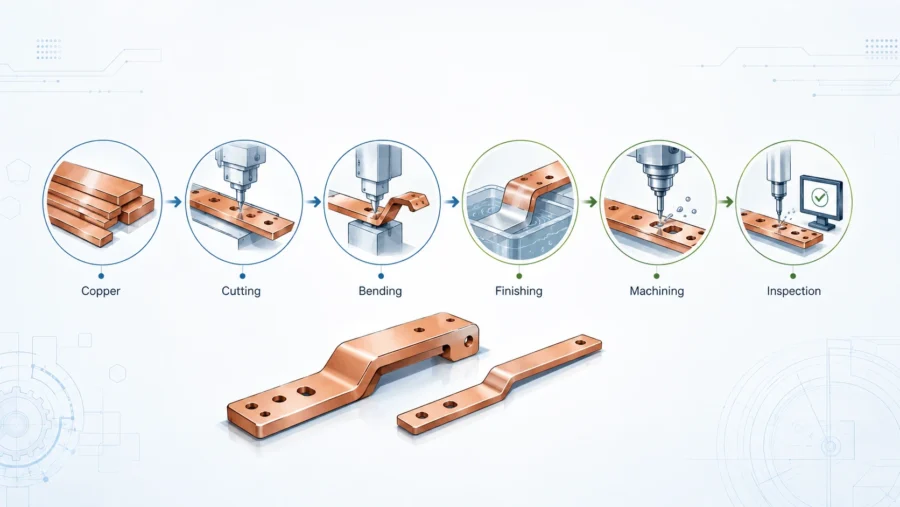
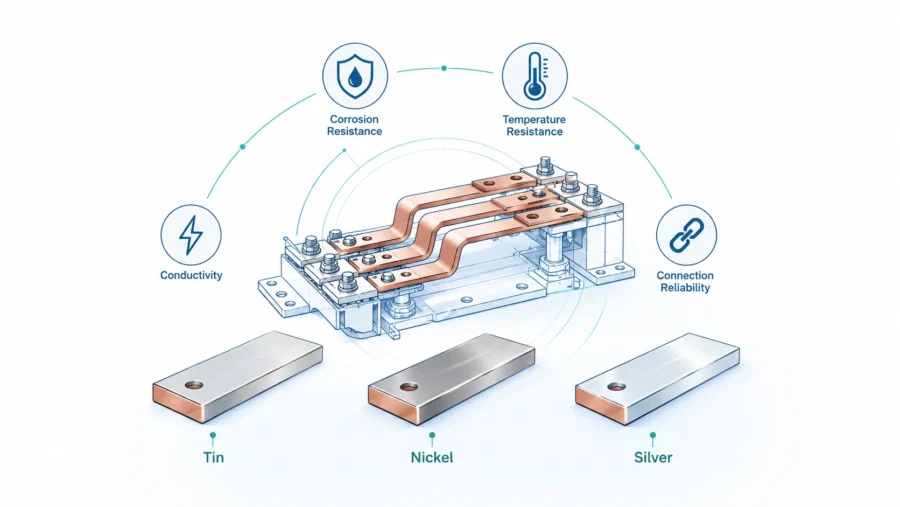
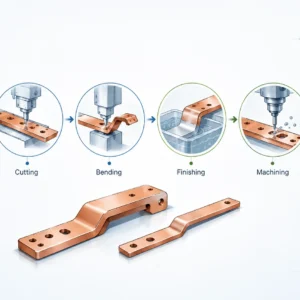
Rigid copper busbars are the backbone of static high-power distribution. Manufactured from solid copper blocks or sheets, these busbars are stamped, punched, bent, and often plated (with tin, nickel, or silver) to precise specifications.
- Primary Characteristics: High ampacity, structural rigidity, and excellent thermal dissipation.
- Ideal Applications: Switchgear, large power transmission centers, transformer connections, and main distribution panels.
- The JUMAI Edge: Our deep drawing and stamping capabilities allow us to create complex, multi-dimensional bends without compromising the cross-sectional integrity of the copper. This ensures that the flow of current remains unimpeded, reducing the risk of localized “hot spots” that plague inferior manufacturing processes.
2. Flexible Copper Busbars (Laminated)
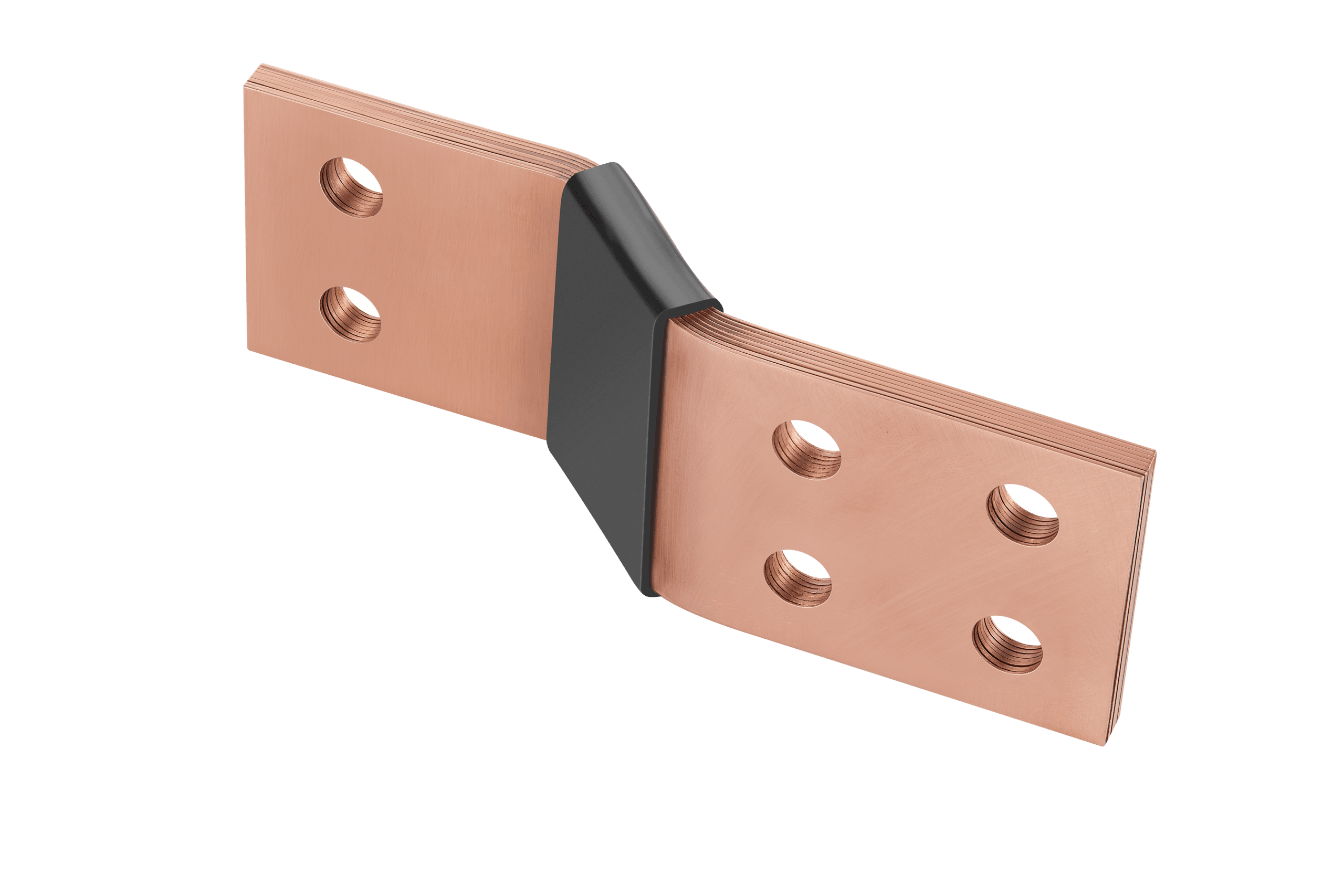
As systems become more compact—such as in electric vehicle (EV) battery packs or tightly packed server racks—the rigidity of solid busbars can become a hindrance. Flexible copper busbars are constructed by stacking multiple layers of thin, highly conductive copper foils. The ends of these stacks are press-welded or diffusion-welded together to create solid connection points, while the middle remains free to flex.
- Primary Characteristics: Exceptional flexibility, vibration resistance, and ability to accommodate thermal expansion and contraction.
- Ideal Applications: EV battery modules, renewable energy inverters, and applications subject to mechanical vibration or seismic activity.
- The Technical Advantage: Flexible busbars mitigate the “skin effect” (the tendency of alternating current to distribute itself within a conductor so that the current density is largest near the surface) better than solid bars of the same cross-section in certain high-frequency applications.
3. Braided Copper Busbars
Braided busbars take flexibility to the maximum level. They are woven from extremely fine copper wires, creating a strap or cable-like component that is highly pliable in all directions. They are often terminated with pressed or soldered copper tubes at the ends for secure bolt-on connections.
- Primary Characteristics: Multi-directional flexibility, high tolerance to extreme vibrations, and excellent grounding capabilities.
- Ideal Applications: Grounding straps, connections between moving parts, and applications where precise alignment during assembly is impossible to guarantee.
Comparative Analysis of Busbar Types
To help our global clients make informed sourcing decisions, the following table breaks down the comparative advantages of each busbar type:
| Feature/Specification | Rigid Copper Busbars | Flexible (Laminated) Busbars | Braided Copper Busbars |
|---|---|---|---|
| Current Carrying Capacity | Extremely High | High | Medium to High |
| Flexibility | None (Static) | Uni-directional (Bending) | Multi-directional |
| Vibration Tolerance | Low | High | Extremely High |
| Space Efficiency | High (Custom shapes) | Very High (Tight routing) | Medium |
| Thermal Expansion Handling | Poor (Requires expansion joints) | Excellent | Excellent |
| Typical JUMAI Application | Data Center Switchgear | EV Battery Packs | Wind Turbine Grounding |
Key Industries Driving the Demand for Custom Busbars
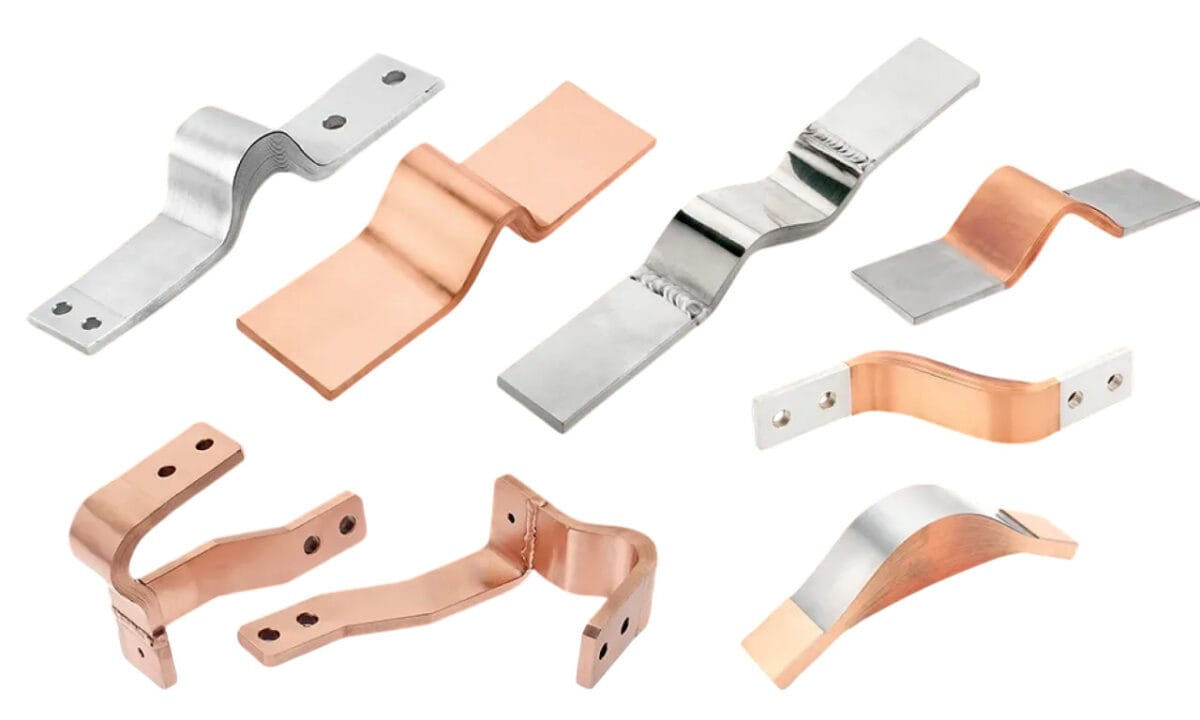
The global push towards sustainability and digital transformation is the primary catalyst for the Precision Copper Busbars market. Drawing from JUMAI’s extensive order history and online consultation data, we see massive surges in demand from the following sectors:
Data Centers and AI Infrastructure
Modern hyper-scale data centers, particularly those outfitted for AI machine learning, consume staggering amounts of power. A single AI server rack can consume upwards of 40kW to 100kW of power. Standard cabling simply cannot deliver this level of current safely or efficiently within the constrained space of a server rack. Precision Copper Busbars provide a low-profile, high-ampacity solution that integrates seamlessly into the rack infrastructure, enabling better airflow and cooling—a critical factor for data center operational expenditure (OpEx).
Eco-Friendly New Energy (EVs and Renewables)
The electric vehicle revolution is entirely dependent on efficient power routing. Inside an EV battery pack, hundreds or thousands of individual lithium-ion cells must be connected. Flexible Precision Copper Busbars are essential here; they handle the massive electrical load during rapid acceleration and fast charging, while their flexibility absorbs the road vibrations that would eventually fracture rigid connections.
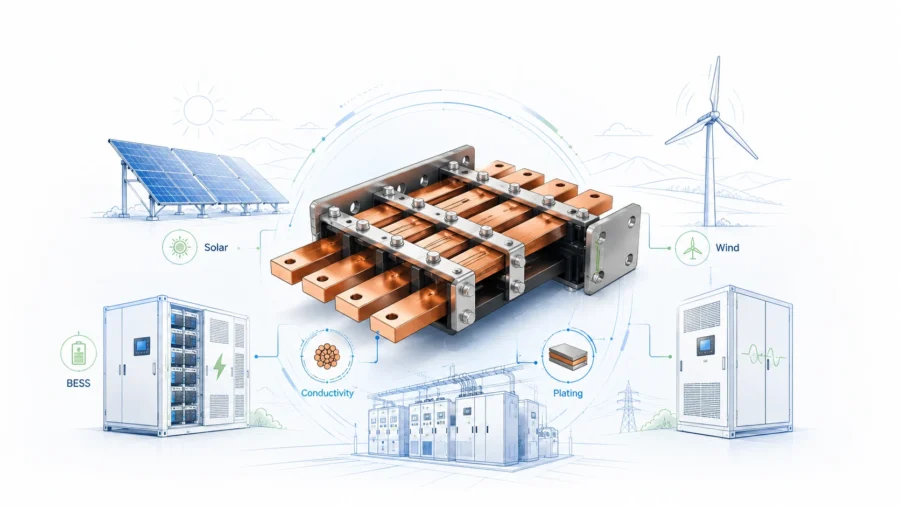
Furthermore, according to the Copper Development Association (CDA), renewable energy systems like wind and solar require up to 12 times more copper than traditional fossil-fuel power generation. Solar inverters and wind turbine nacelles rely on durable, weather-resistant, and precision-engineered busbars to transmit generated electricity to the grid with minimal loss.
Large Power Transmission Centers
High-voltage direct current (HVDC) and large-scale AC transmission centers require massive busbar infrastructure. These components must not only carry thousands of amps but also withstand immense short-circuit mechanical stresses. JUMAI’s robust rigid busbars, combined with our heavy-duty deep-drawn mounting accessories, provide the structural and electrical integrity these mega-projects demand.
The Science of Material: Why Copper Quality is Non-Negotiable
When sourcing Precision Copper Busbars, the raw material specification is the foundation of quality. Not all copper is created equal. In the electrical industry, the standard for conductivity is the International Annealed Copper Standard (IACS).
Pure, unalloyed copper has a conductivity of 100% IACS. However, commercially available high-conductivity copper often exceeds this, reaching 101% or 101.5% IACS due to modern, highly refined manufacturing processes that remove impurities like oxygen, iron, and sulfur.
At JUMAI, we primarily utilize Oxygen-Free Electronic (OFE) Copper (UNS C10100) or Electrolytic Tough Pitch (ETP) Copper (UNS C11000) depending on the specific application requirements.
- ETP Copper (C11000): Contains a minimum of 99.90% copper and a tiny amount of oxygen. It is the most common copper used in electrical applications due to its excellent conductivity and relatively lower cost.
- OFE Copper (C10100): Contains 99.99% pure copper with virtually no oxygen. This grade is critical for applications involving high-temperature manufacturing processes (like brazing or welding), as it is immune to hydrogen embrittlement. It also offers slightly higher conductivity and better deep-drawing characteristics.
| Copper Grade | UNS Designation | Minimum Copper Purity | Electrical Conductivity (IACS) | Best Suited For |
|---|---|---|---|---|
| ETP Copper | C11000 | 99.90% | 100% – 101.5% | General busbars, switchgear, standard power distribution. |
| OFE Copper | C10100 | 99.99% | 101% | High-stress deep drawing, welded flexible busbars, extreme high-vacuum environments. |
Choosing the wrong material grade can lead to disastrous thermal runaways. A drop of just a few percentage points in IACS conductivity equates to higher electrical resistance. In a system carrying 2000 Amps, this increased resistance generates excess heat, which further increases resistance, leading to a compounding effect that can ultimately cause system failure or fire. JUMAI’s rigorous material intake testing guarantees that only the highest purity copper enters our production line.
Deep Drawing and Custom Processing: The JUMAI Value Proposition
What separates JUMAI from a standard metal vendor is our comprehensive manufacturing ecosystem. We do not just supply raw copper bars; we engineer power distribution solutions. A key component of this is our expertise in Deep Drawing and custom die creation.
Deep drawing is a sheet metal forming process where a sheet blank is radially drawn into a forming die by the mechanical action of a punch. It is an intricate process used to create seamless, complex 3D shapes from flat metal.
Why is Deep Drawing important for Busbars?
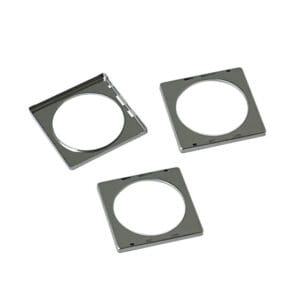
While the busbar carries the current, the busbar must be securely mounted, insulated, and connected to other components. JUMAI designs and manufactures customized deep-drawn accessories—such as specialized connection terminals, seamless housing enclosures, and complex mounting brackets—that integrate perfectly with our Precision Copper Busbars.
By keeping the design of the busbar, the creation of the stamping dies, and the deep drawing of the accessories under one roof, we eliminate the “tolerance stacking” that occurs when sourcing from multiple vendors. If a client needs a completely custom flexible busbar with a highly specific, deep-drawn terminal end to fit into a proprietary EV battery module, JUMAI provides an end-to-end OEM (Original Equipment Manufacturer) service.
Furthermore, the JUMAI platform at Deep Draw Tech features an online preview and order consultation system. Clients globally can submit their CAD drawings, preview potential manufacturing adaptations, and consult directly with our engineering team in real-time. This drastically reduces the lead time from initial concept to physical prototype.
Overcoming Global Supply Chain Bottlenecks
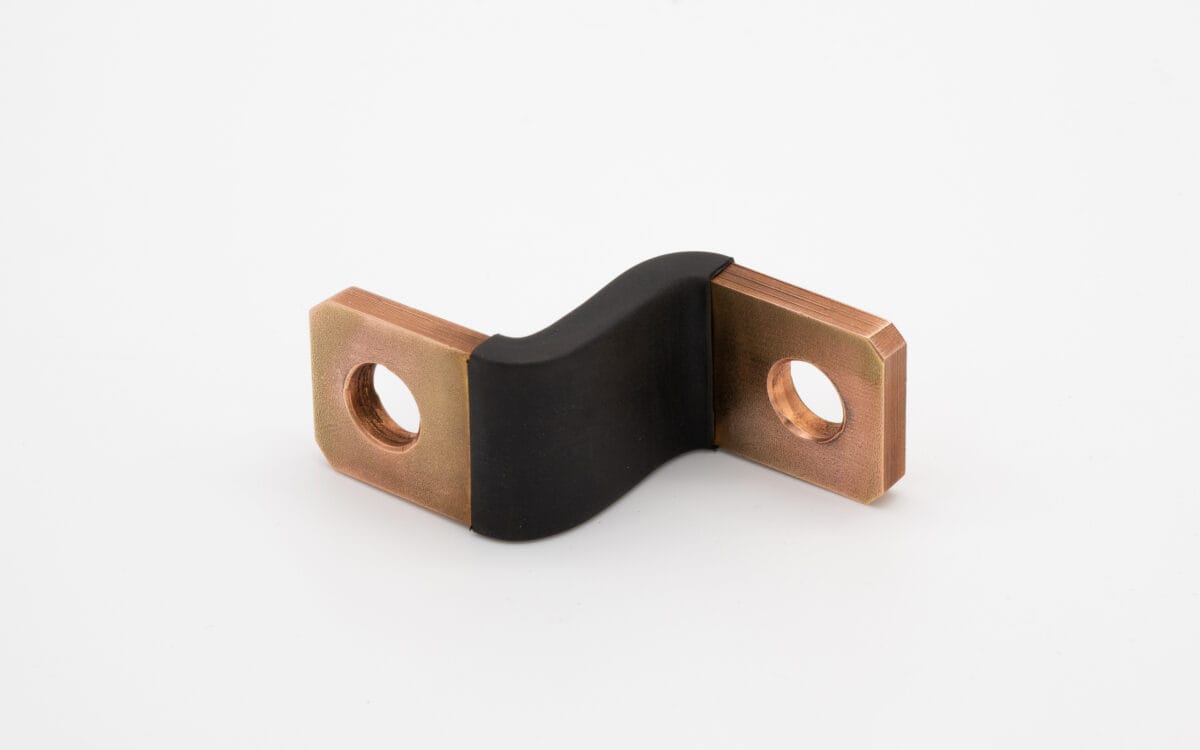
The global supply chain for electrical components has faced unprecedented volatility over the past few years. Fluctuating raw material costs, geopolitical tensions, and logistics delays have made sourcing a nightmare for procurement managers.
Relying on fragmented supply chains—buying copper from one vendor, sending it to another for stamping, and another for plating—introduces unacceptable risks. JUMAI acts as a consolidated partner.
- Vertical Integration: From raw material processing and die-making to deep drawing and final assembly, we control the timeline.
- Agile Manufacturing: Our advanced CNC machinery and rapid die-prototyping capabilities allow us to pivot quickly. If a client needs to modify the bend radius of a batch of Precision Copper Busbars due to a late-stage design change in their data center rack, we can adjust our tooling rapidly.
- Global Logistics Support: We are highly experienced in serving a global clientele, ensuring packaging is optimized to prevent oxidation and physical damage during international freight.
Quality Assurance: Delivering Safety and Reliability
In the realm of high-voltage power distribution, there is zero margin for error. JUMAI’s manufacturing processes are governed by strict quality control protocols that align with international standards, including ISO 9001, RoHS compliance, and various UL (Underwriters Laboratories) standards depending on the specific product configuration.
Our testing regimen for Precision Copper Busbars includes:
- Conductivity Testing: Verifying the IACS rating of the raw material and the finished product.
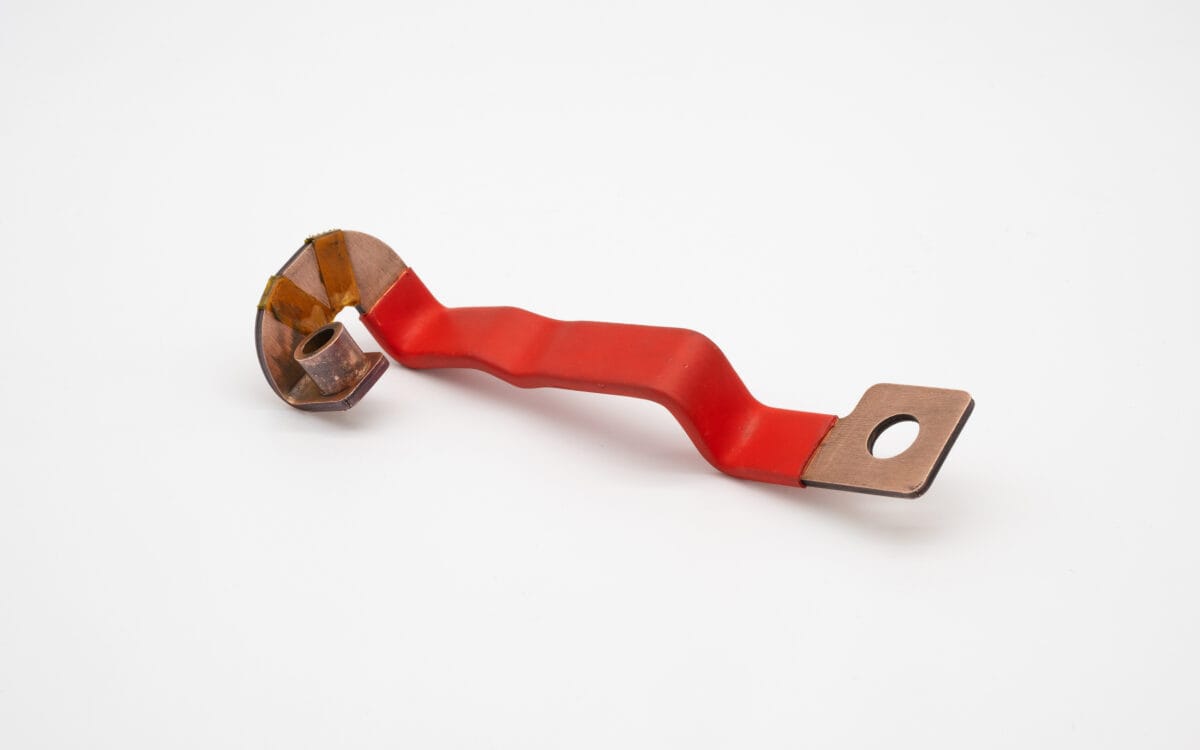
- Dielectric Testing: Ensuring that any applied insulation (such as heat shrink tubing, epoxy coating, or powder coating) can withstand the specified voltage without breaking down.
- Thermal Cycling: Subjecting busbars to extreme temperature variations to ensure that expansion and contraction do not compromise the structural integrity or electrical connections, which is particularly vital for flexible and braided busbars used in outdoor renewable energy applications.
- Pull and Shear Testing: Verifying the mechanical strength of welded joints on flexible busbars.
The Financial Impact: Total Cost of Ownership (TCO)
Procurement teams are often pressured to source the cheapest possible components. However, when evaluating Precision Copper Busbars, looking solely at the unit price is a dangerous metric. The Total Cost of Ownership (TCO) is the only accurate way to measure value.
Investing in highly engineered, precision-manufactured busbars from JUMAI yields significant downstream financial benefits:
| Cost Category | Impact of Inferior Busbars | The JUMAI Precision Advantage |
|---|---|---|
| Energy Efficiency | High resistance leads to continuous power loss (I²R loss), costing thousands in wasted electricity over the lifespan of a data center. | Maximum conductivity ensures minimal power loss, directly reducing ongoing operational utility costs. |
| Assembly Time | Poor dimensional tolerances require manual adjustments, bending, and force-fitting on the assembly line, slowing down production. | Exact dimensional precision means drop-in assembly, drastically reducing labor costs and accelerating time-to-market. |
| Maintenance & Downtime | “Hot spots” from poor connections lead to system failures, requiring expensive emergency maintenance and causing catastrophic downtime. | Reliable, vibration-resistant connections prevent failures, ensuring maximum uptime and reducing warranty claims. |
| Supply Chain Overhead | Managing multiple vendors for raw materials, stamping, plating, and insulation increases administrative costs and logistics fees. | JUMAI’s all-in-one OEM service consolidates vendors, reducing shipping costs and administrative burden. |
Frequently Asked Questions (FAQ) About Custom Busbar Sourcing
To further assist our global clients, we have compiled answers to the most common questions our engineering team receives during online order consultations:
Q: Can JUMAI provide custom insulation for Precision Copper Busbars?
A: Yes. Depending on the voltage requirements and the operating environment, we offer various insulation options including PVC heat shrink tubing, epoxy powder coating, and specialized polyimide films (like Kapton) for high-temperature applications.
Q: What is the typical lead time for a custom busbar prototype?
A: Thanks to our in-house die manufacturing and deep drawing capabilities, we can significantly accelerate prototyping. While complex designs take longer, we frequently deliver initial prototypes within 10 to 15 business days following final CAD approval.
Q: Do you offer plating services to prevent copper oxidation?
A: Absolutely. Bare copper will oxidize over time, which increases contact resistance. We offer precision tin, nickel, and silver plating. Tin is excellent for general corrosion resistance; nickel provides a hard, wear-resistant barrier; and silver is used where absolute minimal contact resistance is required at the joint.
Q: How do I know if I need a rigid, flexible, or braided busbar for my EV battery design?
A: Generally, flexible laminated busbars are the industry standard for connecting battery modules within the pack, as they handle the thermal expansion of the cells and the mechanical vibration of the vehicle perfectly. Braided busbars are typically reserved for grounding applications. Our engineering team can analyze your specific design parameters during an online consultation to recommend the exact configuration.
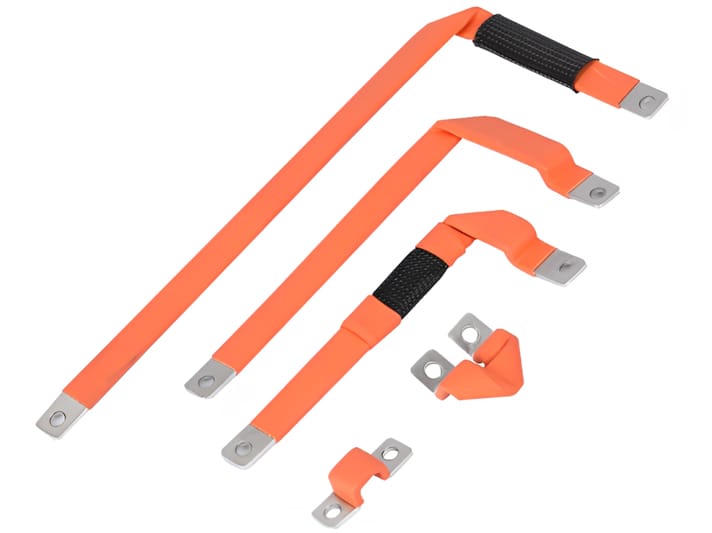
Streamline Your Operations Today
The global transition to advanced, high-power technologies requires supply chain partners who are not merely vendors, but technical collaborators. At JUMAI, our deep-rooted expertise in eco-friendly energy, data centers, and power transmission gives us the insight needed to manufacture Precision Copper Busbars that do more than carry current—they drive innovation.
Whether you require a massive run of heavily plated rigid busbars for a new switchgear lineup, highly engineered flexible busbars for a next-generation electric vehicle, or complex deep-drawn accessories to complete your assembly, JUMAI has the infrastructure, the technology, and the experience to deliver.
Stop letting supply chain fragmentation and inferior component quality dictate your product’s performance. Take control of your power distribution needs today.
Visit our platform at https://www.deepdrawtech.com/ to utilize our online preview tools, submit your schematics, and schedule a consultation with our expert engineering team. Let JUMAI help you streamline your supply chain and build the future of power, one precision busbar at a time.