The relentless march toward global electrification—driven by the exponential growth of hyperscale data centers, the rapid adoption of electric vehicles (EVs), and the indispensable transition to renewable energy—has placed unprecedented demands on power distribution infrastructure. At the heart of this technological revolution lies an often-overlooked yet hyper-critical component: Precision Copper Busbars.
In my years overseeing the design, research, and production of custom power distribution solutions for environmental energy projects, heavy-duty data centers, and large-scale power transmission grids, I have witnessed firsthand how the quality of a busbar can dictate the success or failure of a multi-million-dollar electrical system. A busbar is no longer just a flat piece of conductive metal; it is a highly engineered, precisely manufactured component that must manage intense thermal dynamics, navigate extreme space constraints, and deliver flawless electrical conductivity.
At JUMAI, we have dedicated ourselves to mastering this critical niche. As a premier provider of custom flexible, rigid, and braided copper busbars, alongside specialized deep drawing dies and accessories, we offer online preview, order consulting, and end-to-end custom contract manufacturing for a global clientele.
In this comprehensive guide, we will pull back the curtain on the industry. We will explore the complete manufacturing lifecycle of Precision Copper Busbars, from the metallurgical selection of raw materials and the intricate engineering of deep drawing dies, through to advanced fabrication, surface treatment, and final assembly. Whether you are an electrical engineer designing a next-generation EV battery pack, or a procurement manager sourcing components for a solar inverter array, understanding this process is vital to ensuring the safety, efficiency, and longevity of your equipment.
Table of Contents
The Fundamental Engineering of Precision Copper Busbars
Before delving into the manufacturing process, it is essential to understand what separates standard conductors from Precision Copper Busbars and why the industry relies so heavily on copper.
A busbar (often termed a bus bar or buss bar) is a metallic strip or bar, typically housed inside switchgear, panel boards, and busway enclosures for local high-current power distribution. They are also used to connect high-voltage equipment at electrical switchyards and low-voltage equipment in battery banks.
Why Copper? The Material Science Advantage
While aluminum is sometimes used in power distribution due to its lower cost and weight, copper remains the undisputed king for high-performance, precision applications. According to the Copper Development Association (CDA), copper offers superior electrical and thermal conductivity, exceptional mechanical strength, and unmatched resistance to corrosion and thermal expansion.
When designing for data centers or wind turbines, where space is at a premium and thermal loads are immense, copper allows for a smaller cross-sectional area to carry the same amount of current as a much larger aluminum counterpart.
Table 1: Comparative Data – Copper vs. Aluminum in Busbar Applications
| Property / Characteristic | High-Conductivity Copper (C11000) | Commercial Aluminum (1350) | Industry Impact |
|---|---|---|---|
| Electrical Conductivity | 100% – 101% IACS | 61% IACS | Copper requires less volume to carry the same current, crucial for compact EV and Data Center designs. |
| Thermal Conductivity | 390 W/(m·K) | 230 W/(m·K) | Copper dissipates heat significantly faster, reducing the risk of thermal runaway in battery packs. |
| Tensile Strength | ~250 MPa | ~90 MPa | Copper withstands superior mechanical stress, short-circuit fault forces, and vibrational loads. |
| Coefficient of Thermal Expansion | 16.5 µm/(m·K) | 23.0 µm/(m·K) | Copper expands less under heat, maintaining tighter connections and reducing the risk of joint failure over time. |
| Oxide Characteristics | Conductive and easily pierced | Highly insulative (Al2O3) | Copper joints maintain low contact resistance over decades; aluminum requires aggressive joint compounds. |
Data referenced aligns with global metallurgical standards established by the American Society for Testing and Materials (ASTM).
At JUMAI, we categorize our manufacturing into three primary types of Precision Copper Busbars, each engineered for specific environmental and mechanical realities:
- Rigid Copper Busbars: Solid bars used in static environments like switchgear and major power transmission centers where maximum ampacity and structural integrity are required.
- Flexible Laminated Copper Busbars: Composed of multiple layers of thin copper foil fused at the ends. These are vital for absorbing vibrations and thermal expansion in transformers and heavy machinery.
- Braided Copper Busbars: Woven from ultra-fine copper wires, offering ultimate flexibility across all axes. These are frequently deployed in EV battery modules and seismic-prone data center architectures.
Phase 1: Raw Material Selection and Metallurgical Quality Control
The journey of Precision Copper Busbars begins long before the metal hits the factory floor. The foundation of exceptional electrical performance is the purity of the raw material.
Defining the Copper Grade
For precision electrical applications, 99.9% purity is the baseline, not the goal. The specific grade of copper dictates its oxygen content, which in turn affects its formability, weldability, and susceptibility to hydrogen embrittlement.
- Electrolytic Tough Pitch (ETP) Copper (C11000): This is the industry standard for most rigid busbars. It boasts a minimum of 99.90% copper and exceptional electrical conductivity (101% IACS). However, it contains a small amount of oxygen (typically 0.02% to 0.04%). While excellent for general use, the oxygen content means it cannot be heated in a reducing atmosphere (such as during certain high-temperature brazing processes) without risking hydrogen embrittlement, which causes the metal to crack.
- Oxygen-Free Electronic (OFE) Copper (C10100) & Oxygen-Free High Conductivity (OFHC) Copper (C10200): These grades have oxygen levels reduced to 0.0005% or less. They are entirely immune to hydrogen embrittlement, offer slightly better formability, and are the absolute requirement for ultra-high-vacuum applications and complex deep drawing processes where the metal undergoes severe structural deformation.
At JUMAI, our inbound quality control protocols strictly verify the chemical composition and grain structure of every copper batch. Using optical emission spectrometry, we ensure the material meets the exact specifications required by our clients, ensuring the foundation of the busbar is mathematically and chemically flawless.
Phase 2: Engineering, Modeling, and Ampacity Calculations
A custom busbar is an engineered system. The design phase is where years of industry experience intersect with advanced computational modeling. When clients consult with us via deepdrawtech.com, they don’t just send a drawing; they send an electrical problem that requires a geometric solution.
Thermal Dynamics and Ampacity
The primary function of a busbar is to carry current without exceeding a specified temperature rise. The current-carrying capacity, or ampacity, is not a simple linear equation. It depends heavily on:
- Cross-sectional area: The physical volume of copper.
- Perimeter: A larger perimeter-to-cross-section ratio allows for better radiative and convective cooling. This is why flat, wide bars are preferred over thick, square bars.
- Skin Effect: In alternating current (AC) applications, current tends to flow near the surface of the conductor. At 50Hz or 60Hz, this effect is minimal on thin bars, but on thick busbars, the center of the copper carries very little current, wasting material and adding unnecessary weight.
- Proximity Effect: The magnetic fields of adjacent busbars (e.g., in a 3-phase system) interact, pushing the current to the furthest edges of the conductors and increasing AC resistance.
Our engineers utilize advanced Computer-Aided Design (CAD) and Finite Element Analysis (FEA) software to simulate these electromagnetic and thermal realities before a single piece of copper is cut. We design strictly in accordance with IEEE Standards for Metal-Enclosed Low-Voltage Power Circuit Breaker Switchgear to guarantee that the temperature rise at the joints and along the length of the busbar remains well within safe operational limits.
Phase 3: The Mechanics of Deep Drawing and Stamping
This is where JUMAI’s unique capabilities truly shine. While many manufacturers only bend flat bars, our expertise in deep drawing processing molds and accessories allows us to create highly complex, three-dimensional copper components that standard bending cannot achieve.
What is Deep Drawing in Busbar Manufacturing?
Deep drawing is a sheet metal forming process in which a flat copper blank is radially drawn into a forming die by the mechanical action of a punch. It is considered “deep” drawing when the depth of the drawn part exceeds its diameter.
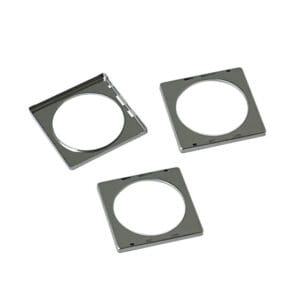
In the context of Precision Copper Busbars, deep drawing is used to manufacture critical integrated accessories:
- Seamless Copper Housings: Used to enclose sensitive electrical junctions, protecting them from electromagnetic interference (EMI) and environmental contaminants.
- Custom Terminal Cups and End Caps: Deep-drawn caps are used to terminate heavy braided busbars, providing a seamless, highly conductive surface area for bolting to switchgear, eliminating the electrical resistance introduced by welded or crimped seams.
- Integrated Standoffs: Pressing structural mounting points directly into the busbar geometry without needing secondary welding operations.
The Tool and Die Advantage
The secret to successful deep drawing lies entirely in the tooling. JUMAI designs and manufactures these deep drawing molds in-house.
Copper is a highly ductile material, but it is prone to work hardening (becoming brittle as it is deformed) and galling (sticking to the steel die). Our tooling engineers meticulously calculate:
- Blank Holder Force: The pressure required to hold the copper sheet flat while the punch pushes it into the die. Too little pressure causes wrinkling; too much causes the copper to tear.
- Clearance: The microscopic gap between the punch and the die cavity must be perfectly calibrated to the exact thickness of the copper sheet to ensure uniform wall thickness.
- Lubrication and Die Material: We utilize specialized drawing lubricants and highly polished, hardened tool steels (and sometimes tungsten carbide inserts) to allow the copper to flow seamlessly into complex shapes without surface scratching.
Table 2: Typical Tolerances in JUMAI Precision Deep Drawing & Stamping
| Dimension / Feature | Standard Tolerance | High-Precision Tolerance | Importance in Electrical Assembly |
|---|---|---|---|
| Hole Diameters (Punched) | ± 0.10 mm | ± 0.05 mm | Ensures perfect alignment with threaded studs, maximizing surface contact area for bolting. |
| Hole to Hole Center Distance | ± 0.15 mm | ± 0.08 mm | Critical for multi-point mounting in rigid switchgear frames. |
| Deep Drawn Wall Thickness | ± 10% of material | ± 5% of material | Prevents “thinning” at the corners which could create localized hot-spots under electrical load. |
| Flatness (over 100mm) | 0.20 mm | 0.10 mm | Vital for bolted joints; non-flat surfaces reduce contact area, drastically increasing joint resistance and heat. |
Phase 4: Machining and Forming Rigid Busbars
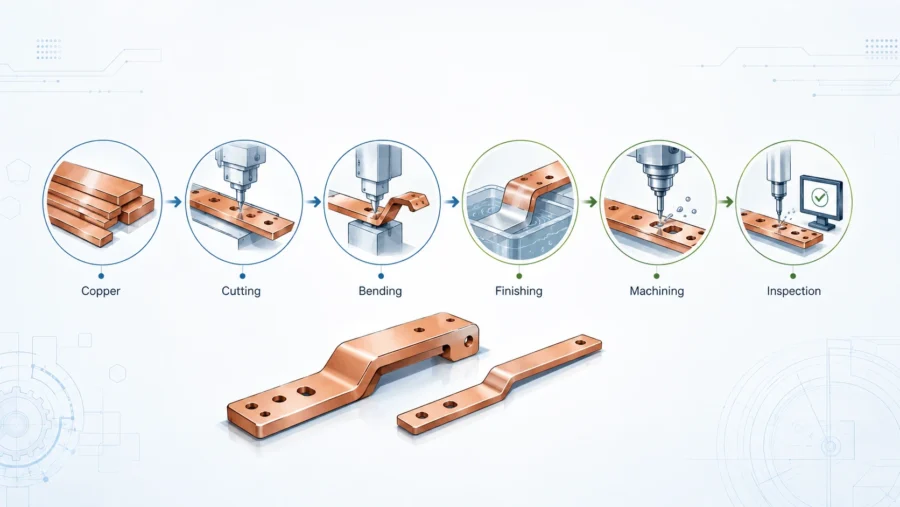
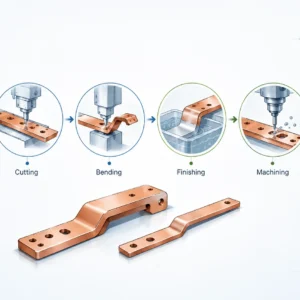
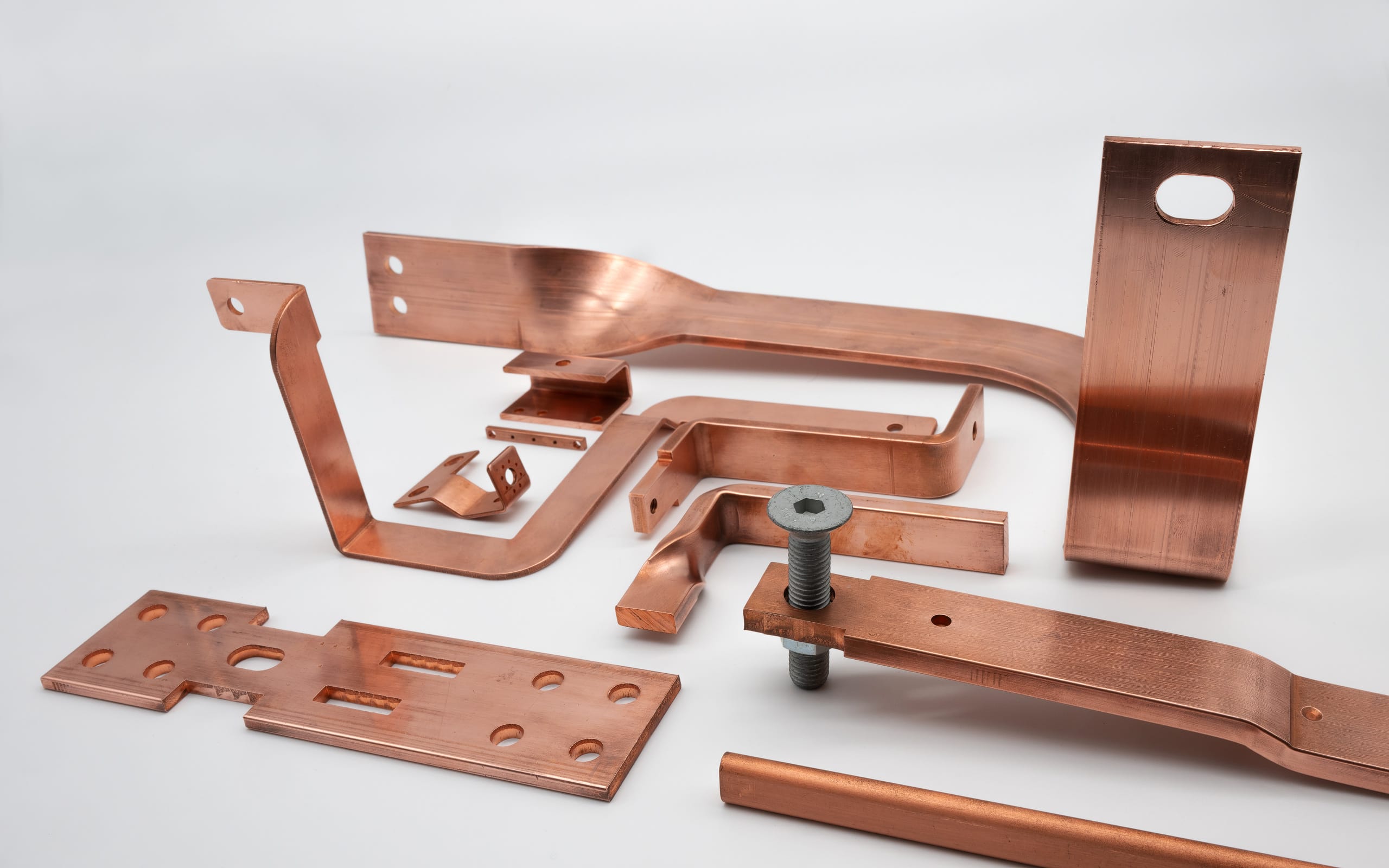
For traditional Precision Copper Busbars, the manufacturing process moves from raw material to a highly customized rigid form factor through a series of precise CNC (Computer Numerical Control) operations.
Extrusion and Cutting
The copper is typically sourced in long, extruded profiles. The first step is cutting it to length. To avoid burrs and structural deformation, we utilize precision shearers, waterjet cutting, or CNC laser cutting. Laser cutting, in particular, allows for the creation of intricate, non-linear busbar shapes that maximize space efficiency inside compact data center server racks or EV battery enclosures.
CNC Punching and Drilling
Connecting the busbar to the wider electrical grid requires precise bolting points. CNC punching machines rapidly stamp out circular, slotted, or square holes. For thicker copper bars (exceeding 10mm), CNC milling and drilling are employed to ensure absolute perpendicularity of the hole walls, which is essential for uniform bolt pressure.
CNC Bending: Mastering the “Springback”
Bending a thick piece of copper requires immense force and microscopic precision. When a copper busbar is bent in a CNC press brake, the material on the outside of the bend is stretched (tension), while the material on the inside is compressed.
The most critical challenge in busbar bending is springback. Because copper has inherent elasticity, once the bending pressure is released, the metal will slightly “spring back” toward its original flat shape.
JUMAI’s advanced CNC press brakes are equipped with intelligent angle measurement systems. The machine bends the copper, slightly releases the pressure to measure the specific springback of that exact batch of material, and then re-applies force to over-bend it by the exact fraction of a degree necessary so that it settles perfectly into the required angle. We execute:
- V-Bending (Flat Bending): The most common, altering the direction of the bar along its flat plane.
- Edge Bending: Bending the bar along its narrow edge. This requires massive tonnage and highly specialized tooling to prevent the copper from buckling or tearing.
- Twisting: Rotating the axis of the busbar (e.g., 90 degrees) to align with different terminal orientations, common in wind turbine generator outputs.
Phase 5: The Art of Flexibility – Braided and Laminated Busbars
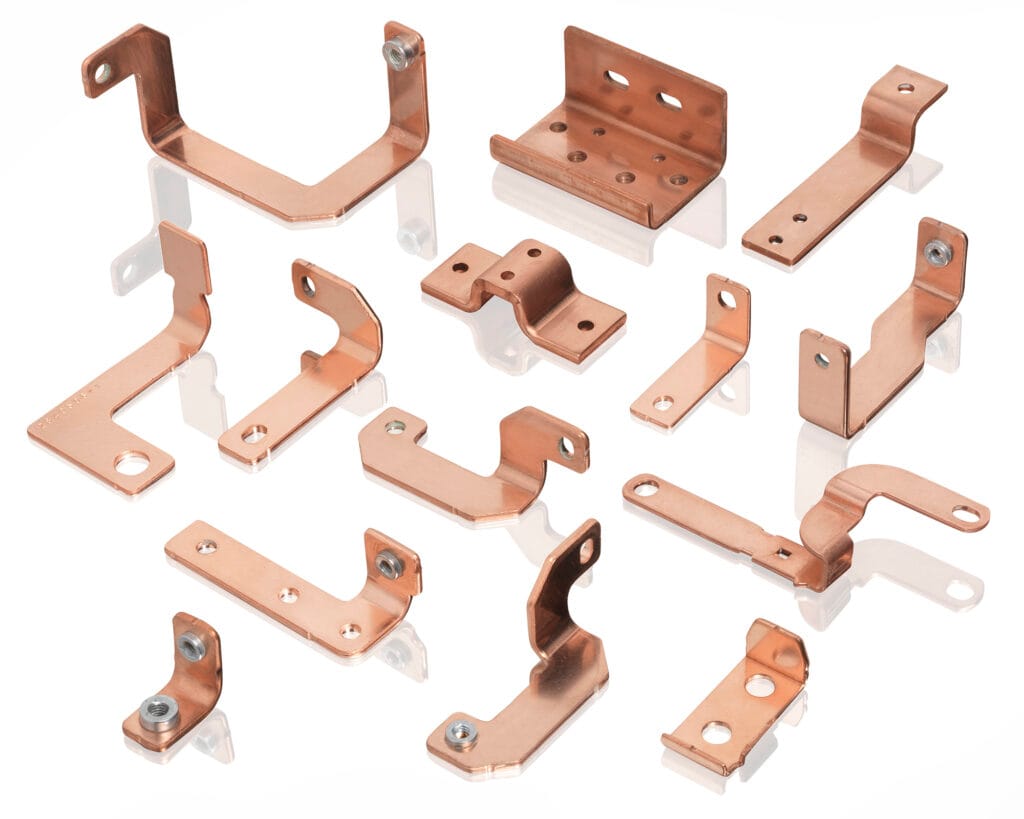
Rigid busbars are robust, but they cannot handle movement. In environments with severe vibration (transformers, generators) or thermal expansion/contraction (heavy-duty battery banks), rigid connections will eventually fatigue and snap, or tear the mounting hardware from the equipment. This is where JUMAI’s flexible solutions are critical.
Manufacturing Flexible Laminated Copper Busbars
Flexible laminated busbars look like solid bars at the ends, but the body is made of dozens of ultra-thin copper foils (typically 0.1mm to 0.3mm thick) stacked together.
The manufacturing magic happens at the contact areas. To ensure these stacked foils act as a single, perfect conductor at the bolted joint, they must be fused together. We do not use solder or filler metal, as these introduce dissimilar metals and increase electrical resistance. Instead, we use Press Welding (Diffusion Bonding).
In diffusion bonding, the ends of the stacked foils are clamped under immense mechanical pressure while high electrical current is passed through them. The extreme localized heat (below the melting point of copper) combined with the pressure causes the atoms of the individual foils to migrate across the microscopic boundaries. The foils literally grow together, forming a solid, homogeneous block of copper at the terminals. This process yields a connection area that has 100% the conductivity of a solid bar, while the main body remains highly flexible.
Manufacturing Braided Copper Busbars
For multi-axis flexibility, braided busbars are the ultimate solution.
- Wire Drawing: The process starts by drawing copper down to ultra-fine wires, sometimes as thin as a human hair (0.05mm).
- Braiding: These wires are loaded onto massive, high-speed braiding machines that weave them into tubular or flat braids. By weaving the wires, the resulting strap can bend, twist, and compress in any direction without fatiguing.
- Terminal Pressing: The ends of the braided strap are inserted into seamless copper tubes (ferrules)—often created using our deep drawing technology. High-tonnage hydraulic presses cold-forge the ferrule and the braided wire together. The force is so immense that all air pockets are squeezed out, creating a “cold weld” that forms a dense, solid terminal block ready for hole punching.
Phase 6: Surface Treatment and Plating
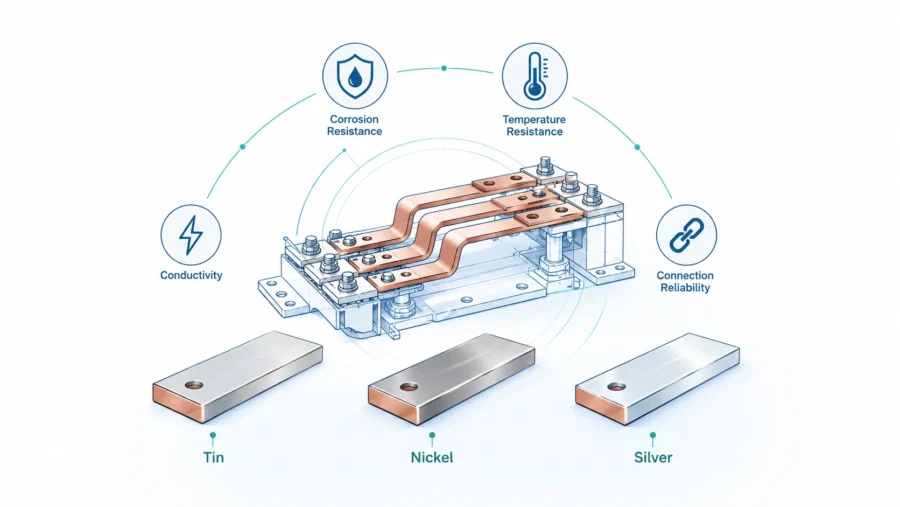
Bare copper, while an excellent conductor, oxidizes rapidly when exposed to air. Copper oxide is a poor conductor and acts as an insulator, drastically increasing contact resistance at bolted joints, which leads to heat generation and potential system failure. To prevent this, Precision Copper Busbars must undergo surface treatment.
At JUMAI, we utilize advanced electroplating facilities to coat our busbars in thin, precise layers of protective metal.
Table 3: Common Busbar Electroplating Options
| Plating Material | Key Characteristics | Ideal Industry Applications |
|---|---|---|
| Tin (Sn) | Highly cost-effective. Excellent corrosion resistance. Prevents copper oxidation. Soft metal allows for good conformity at bolted joints. | Standard switchgear, low-to-medium voltage panels, data center PDUs. Widely used across general commercial applications. |
| Silver (Ag) | The highest electrical conductivity of any metal. Extremely low contact resistance. Capable of withstanding high operating temperatures (up to 200°C). | High-voltage transmission, EV high-current battery nodes, aerospace, and critical military infrastructure. |
| Nickel (Ni) | Exceptional hardness and wear resistance. High resistance to aggressive chemical environments and high temperatures. | Battery energy storage systems (ESS) in harsh environments, heavy marine applications, and specific chemical processing plants. |
The electroplating process is highly controlled. The busbars are meticulously cleaned through a series of acid and alkaline baths (pickling and degreasing) to remove all oils and existing oxides. They are then submerged in electrolyte solutions where electric current deposits the plating metal onto the copper at precise, uniform thicknesses (typically ranging from 3 to 15 microns, depending on client specifications).
Phase 7: Insulation and Dielectric Protection
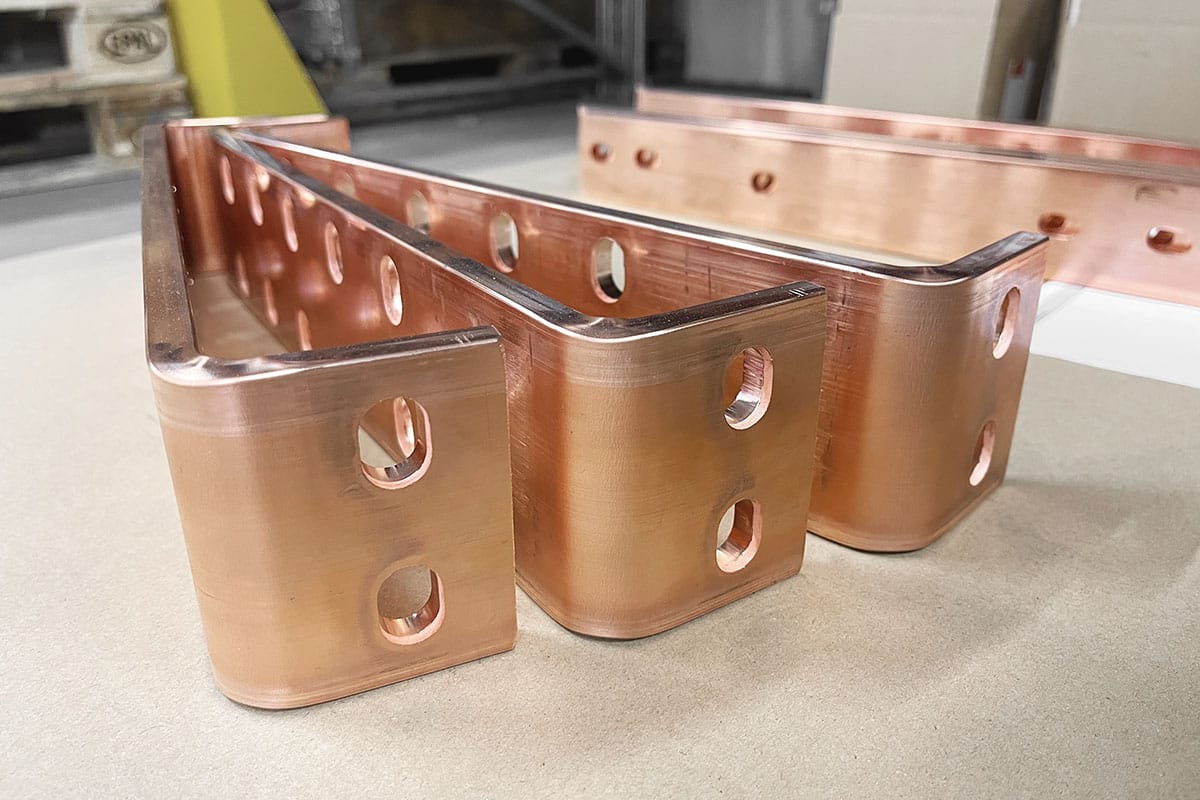
While the contact points of a busbar must remain highly conductive, the main body must often be insulated to protect operators from lethal voltages, prevent short-circuits between closely packed phases, and mitigate arcing in high-voltage environments.
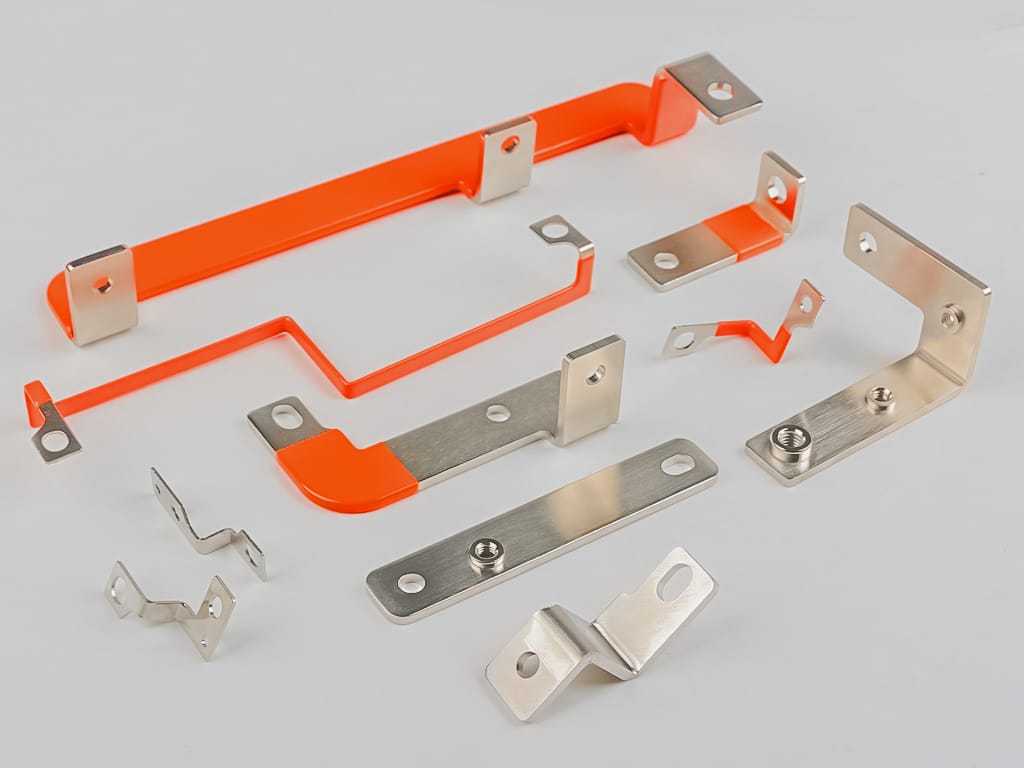
Based on the operational environment (voltage level, temperature range, chemical exposure), we apply various insulation technologies:
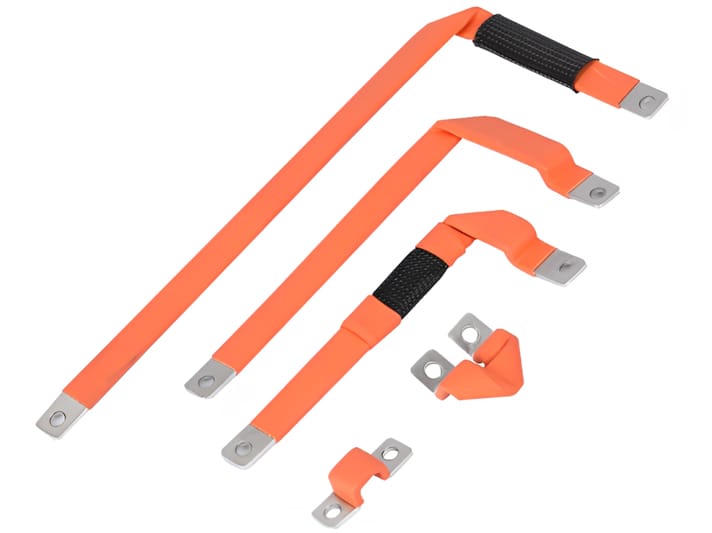
- Heat Shrink Tubing: The most common method. High-dielectric cross-linked polyolefin tubes are slipped over the busbar and shrunk tightly using industrial heat guns or ovens. This is excellent for straight bars and simple bends.
- Epoxy Powder Coating: For complex, deep-drawn geometries or highly convoluted rigid busbars where heat shrink cannot conform, powder coating is ideal. The busbar is heated, and an electrostatically charged epoxy powder is sprayed onto it. The powder melts and cures into a hard, seamless, high-dielectric shell. This process requires meticulous masking of the contact areas.
- PVC Dipping: The busbar is dipped into liquid plastisol (PVC) and cured in an oven. This provides a thick, rugged, flexible insulation layer, highly resistant to moisture and mechanical impact.
All insulation processes at JUMAI are rigorously tested to ensure they meet the flammability and dielectric withstand requirements outlined by international bodies such as Underwriters Laboratories (UL) and the International Electrotechnical Commission (IEC).
Phase 8: Rigorous Quality Assurance and Testing
Manufacturing a precision component is only half the battle; proving its reliability is the other. In industries like renewable energy and data centers, where downtime is measured in millions of dollars per minute, failure is not an option.
Our Quality Assurance (QA) laboratory subjects our Precision Copper Busbars to a battery of grueling tests before they are cleared for global shipping:
- Dimensional Inspection: Utilizing Coordinate Measuring Machines (CMM) and laser scanners to verify that complex bends, punched holes, and deep-drawn profiles match the CAD model to within microns.
- Contact Resistance Testing: Using digital micro-ohm meters, we pass high current through bolted joints and measure the voltage drop to ensure contact resistance is minimized.
- Dielectric Withstand (Hi-Pot) Testing: For insulated busbars, we apply voltages far exceeding their rated operational voltage (e.g., applying 5000V to a 1000V rated bar) to ensure the insulation does not break down or allow current leakage.
- Tensile and Mechanical Testing: Verifying the shear strength of cold-pressed terminals on braided busbars and the structural integrity of diffusion-bonded flexible laminated bars.
- Salt Spray Testing: For clients in marine or harsh industrial environments, we place plated busbars in accelerated corrosion chambers to verify the integrity and longevity of the tin or silver plating over simulated decades of exposure.
Advanced Application Deep Dives
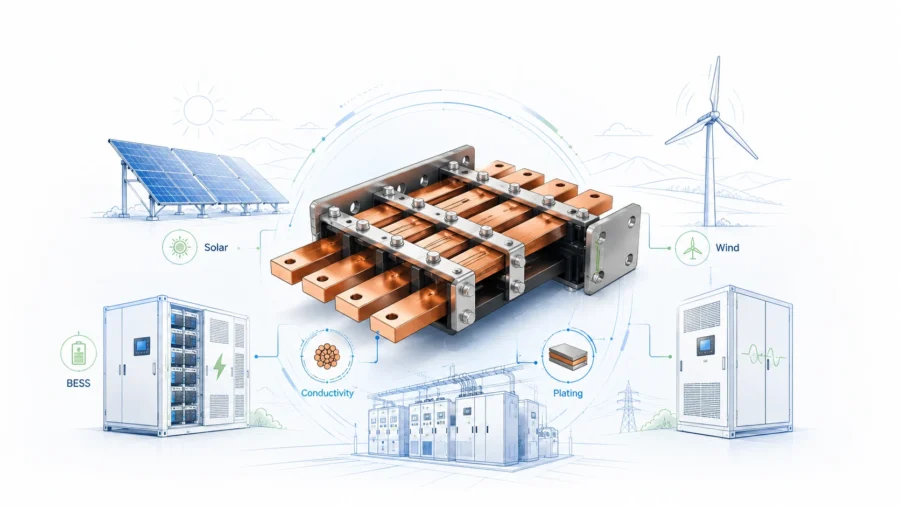
To truly understand the value of Precision Copper Busbars, one must look at how they solve complex engineering problems in the field. Let’s examine three sectors where JUMAI’s customized solutions are making a profound impact.
1. Hyperscale Data Centers and AI Server Farms
The explosion of Artificial Intelligence (AI) has drastically altered data center architecture. Traditional server racks consumed 5kW to 10kW of power. Today’s AI server racks, packed with high-performance GPUs, are pushing 50kW to 100kW per rack. Distributing this massive amount of power safely within the same footprint requires highly customized, compact power distribution units (PDUs).
Our rigid, complex-bent, epoxy-coated busbars navigate the tight confines of these server racks, minimizing electromagnetic interference and ensuring that massive thermal loads are safely dissipated without triggering cooling system overloads.
2. Electric Vehicles (EVs) and Battery Energy Storage Systems (ESS)
An electric vehicle is essentially a massive computer strapped to a high-voltage battery. Inside the battery pack, hundreds of individual lithium-ion cells must be connected in series and parallel.
If a vehicle hits a pothole, the entire chassis violently vibrates. If these battery cells were connected with rigid copper, the vibrations would quickly snap the joints, leading to a loss of power or, worse, thermal runaway and fire.
JUMAI’s flexible braided and laminated copper busbars are the critical link here. They effortlessly absorb the physical shocks of the road and accommodate the microscopic swelling and contracting of the battery cells during intense charging and discharging cycles, ensuring a safe, unbreakable circuit.
3. Renewable Energy: Wind and Solar Inverters
Solar panels generate Direct Current (DC). The power grid operates on Alternating Current (AC). The massive inverters that bridge this gap process megawatts of power. These enclosures are often subjected to extreme environmental conditions—baking in the desert sun or freezing in offshore wind farms.
Our custom, heavy-duty, silver-plated rigid busbars provide the necessary ampacity for these high-power conversions, while our deep-drawn copper end caps ensure that internal connections remain shielded from harsh, corrosive, salt-laden air, guaranteeing decades of uninterrupted green energy production.
Why Partner with JUMAI for Your Busbar Requirements?
The landscape of modern manufacturing requires more than just a supplier; it requires an engineering partner. At deepdrawtech.com, we have tailored our entire operational model to meet the bespoke needs of global enterprise clients.
- True End-to-End Customization: We do not force our clients to build their systems around off-the-shelf components. You design the optimal system; we manufacture the exact busbar to make it reality.
- In-House Tooling Mastery: By designing and machining our own deep drawing dies and stamping molds, we dramatically reduce lead times, cut prototype costs, and maintain absolute control over the quality of complex components like custom housings and specialized terminals.
- Industry-Specific Expertise: With years of hands-on experience in the trenches of eco-friendly new energy, data center power architecture, and heavy power transmission, our engineering team speaks your language. We understand the nuances of clearance and creepage distances, thermal dynamics, and high-frequency AC skin effects.
- Global Reach, Seamless Ordering: Through our platform, international clients can seamlessly consult with our engineering teams, preview designs, and manage custom contract manufacturing orders with total transparency.
Conclusion
From the careful metallurgical selection of C11000 electrolytic copper to the intricate mathematics of CNC springback compensation; from the atomic-level fusion of diffusion bonding to the final dielectric tests, the manufacturing of Precision Copper Busbars is a masterclass in modern industrial engineering.
They are the silent, steadfast arteries of the modern world, carrying the lifeblood of electricity that powers our vehicles, our internet, and our transition to a sustainable future.
As power densities continue to rise and the demand for efficiency becomes more critical than ever, the standards for these components will only become more exacting. At JUMAI, we are not just keeping pace with these demands; we are helping to define them.
If your next project demands uncompromising electrical performance, space-optimized design, and rugged reliability, we invite you to consult with our engineering team today. Visit deepdrawtech.com to explore our online previews, request a custom quote, and discover how our custom contract manufacturing can elevate your power distribution infrastructure.
FAQ
What are Precision Copper Busbars?
Precision Copper Busbars are specially designed metal strips used for conducting electricity in power distribution systems. They help in efficiently managing and distributing electricity, especially in data centers, electric vehicles, and renewable energy systems. Think of them as super highways for electrical currents—they need to be very well designed and made from high-quality materials to work properly.
Why is copper used for busbars instead of aluminum?
Copper is used for busbars because it has better electrical and thermal conductivity than aluminum, meaning it can carry electricity more effectively and doesn’t overheat as easily. While aluminum may be lighter and cheaper, copper provides better performance in critical applications, which is especially important in high-demand environments like battery packs and data centers.
How are busbars made?
The process of making busbars involves several key steps, starting from selecting the best copper material to designing and forming the busbars using advanced machines. After creating the basic shape, the busbars undergo further treatments like surface coating to protect them and ensure they work well in their intended environments. All these steps result in highly engineered and reliable parts that perform their electricity-delivering jobs perfectly.
Why is surface treatment important for busbars?
Surface treatment is essential for busbars because bare copper can quickly oxidize, which would make it a poor conductor of electricity. Coating the busbars with materials like tin or nickel protects them from oxidation, ensuring they maintain great electrical performance and preventing issues like overheating or failure in electrical systems.
What testing is done to ensure busbars are reliable?
Before busbars are shipped out, they’re tested rigorously. This includes checking that they are the right size and shape, ensuring the connections are solid, and testing the insulation to make sure it’s safe. These steps are crucial to confirm that they will work effectively and safely in their intended applications.
Can I customize my busbar design?
Yes! At JUMAI, we offer complete customization for busbars. You can work with our engineers to create a design that fits perfectly with your project’s needs. This ensures that you get exactly what you require for optimal performance.
What industries use Precision Copper Busbars?
Precision Copper Busbars are used in various industries, including renewable energy (like solar and wind), electric vehicles, and data centers. Any place that needs to efficiently and safely distribute electricity can benefit from using these busbars.
What advantages do braided busbars offer?
Braided busbars are highly flexible, able to adapt to movement without wearing out. This makes them ideal for environments with vibrations, such as in electric vehicles where the chassis moves on the road. They ensure a reliable connection even when the surrounding structure shifts.
How can I get more information about busbars for my project?
You can visit our website at deepdrawtech.com for more information. There you can explore our range of products, request a custom quote, or speak with our engineering team to discuss your specific project requirements.