
In the world of precision manufacturing, engineers and procurement managers often stand at a crossroads when designing metal enclosures. The choice usually boils down to two distinct manufacturing philosophies: constructing a housing through cutting, folding, and welding (fabrication), or forming the housing from a single sheet of metal using a punch and die (deep drawing). At JUMAI TECH, we have spent years mastering the art of Precision Copper Busbars, Deep-Drawn Components, and Precision Stamping Dies. Through our extensive experience serving global clients, we have seen firsthand that choosing the wrong method can lead to ballooning costs or catastrophic field failures.
The deep drawn box represents the pinnacle of high-volume efficiency and structural integrity, yet it is often misunderstood regarding its initial investment. Conversely, fabricated shells offer incredible flexibility but often hide insidious costs in labor and quality control. This guide serves as a definitive resource for our clients to understand the nuances of these processes. Whether you are designing a shielded housing for automotive electronics or a robust casing for industrial machinery, understanding the cost and performance trade-offs between a deep drawn box and a fabricated shell is essential for your product’s success.
Table of Contents
The Mechanics of Manufacturing: Defining the Processes

To truly evaluate the cost and performance metrics, we must first establish a technical baseline for how these two distinct products are created on the shop floor.
The Science Behind the Deep Drawn Box
Deep drawing is a cold-forming process that converts a flat sheet metal blank into a hollow vessel. The term “deep” refers to the depth of the part being equal to or greater than its diameter (or width). At JUMAI TECH, we utilize high-tonnage transfer presses to force a metal punch against a flat blank, pushing it into a shaped die.
The magic of the deep drawn box lies in plastic deformation. The metal is not cut; it is rearranged. Under immense pressure, the grain structure of the copper, aluminum, or steel flows over the die radius. This process requires precise calculations regarding radial tension and tangential compression to prevent the material from wrinkling or tearing. The result is a seamless container with no mechanical joints. According to ASM International, the leading authority on materials, this cold working process significantly increases the yield strength of the material, making the final box stronger than the raw sheet it was made from.
The Process of Fabricated Shells
Fabrication is a subtractive and additive process. It typically begins with a laser cutter or turret punch press creating a flat pattern. This flat piece is then moved to a press brake, where an operator or robot bends the sides up to form a box shape.
However, bending a flat sheet into a box leaves open seams at the corners. To seal the enclosure, these corners must be welded (TIG, MIG, or Laser welding). Following the welding process, the part usually requires significant manual labor: grinding down the weld beads to make the surface flat, and polishing the discoloration caused by the heat-affected zone (HAZ). While effective for prototypes, this method introduces multiple variables—human error in welding, heat distortion, and dimensional inconsistencies—that are virtually non-existent in the production of a deep drawn box.
Cost Analysis: The Economics of Scale
The most frequent question we receive at JUMAI TECH is regarding price. The answer is rarely a simple number; it is a curve dependent on volume. The economic dynamics of a deep drawn box versus a fabricated shell are opposed.
Tooling Investment: The Barrier to Entry
Fabrication is often attractive to startups because the tooling costs are negligible. Laser cutters require only a digital file (DXF/DWG), and standard press brake tooling is universal. You can order ten fabricated boxes today and have them shipped tomorrow with almost zero upfront capital (NRE).
In contrast, a deep drawn box requires a dedicated tool and die set. For complex rectangular boxes with tight corner radii, this might involve a progressive die or a transfer die station. The design and machining of these hardened steel tools represent a significant upfront investment, ranging from $5,000 to over $50,000 depending on complexity. However, this investment is the gateway to ultra-low unit costs.
Unit Cost and The Break-Even Point
Once the tooling is paid for, the deep drawn box becomes incredibly cheap to produce. A transfer press can stroke at rates of 20 to 60 parts per minute. There is no welding, no manual grinding, and no seam sealing required. The labor cost per part drops to pennies.
Conversely, a fabricated box acts as a linear cost accumulation. Whether you make one or one thousand, the laser takes the same amount of time to cut, and the welder takes the same amount of time to weld. There are no significant economies of scale in the manual labor portion of fabrication.
Below is a comparative data table illustrating a typical cost scenario for a standard 100mm x 100mm x 50mm Stainless Steel Enclosure:
| Production Volume | Fabrication (Unit Cost) | Deep Draw (Unit Cost) | Deep Draw Tooling | Fabrication Tooling | Total Cost (Fab) | Total Cost (Deep Draw) |
| 50 Units | $45.00 | $2.50 | $12,000 | $0 | $2,250 | $12,125 |
| 500 Units | $42.00 | $2.50 | $12,000 | $0 | $21,000 | $13,250 |
| 5,000 Units | $38.00 | $2.00 | $12,000 | $0 | $190,000 | $22,000 |
| 50,000 Units | $35.00 | $1.80 | $12,000 | $0 | $1,750,000 | $102,000 |
Data Note: Costs are estimated based on standard industry rates for 2024 and are for illustrative purposes. Actual quotes from JUMAI TECH may vary based on material price fluctuations.
As evident in the table, the “Break-Even Point” typically occurs between 250 and 500 units. If your project demands 5,000 units per year, choosing fabrication over a deep drawn box is financially irresponsible, costing nearly 8.5 times more in the long run.
Structural Integrity and Performance
Cost is critical, but performance is paramount, especially in the sectors we serve, such as aerospace, medical devices, and high-voltage electrical distribution.
The Leak-Proof Advantage
A deep drawn box is manufactured from a single, continuous sheet of metal. There are no seams, no joints, and consequently, no potential leak paths. For applications requiring IP67 or IP68 ratings (water and dust protection), deep drawing is the superior choice.
Fabricated shells rely on welds. Even the best welder can leave microscopic pinholes or porosity in a corner weld. To guarantee a seal on a fabricated box, 100% inspection and pressure testing are often required, adding further cost. In the context of oil-filled capacitors or sensitive sensor housings, the risk of a weld failure is a risk to the entire system’s integrity.
Material Hardening and Strength
As mentioned earlier, deep drawing involves work hardening. When we produce a copper deep drawn box for our busbar clients, the deformation process aligns the grain structure along the walls of the box. This results in a component that is significantly stiffer and more dent-resistant than a fabricated box made from the same gauge material.
Fabrication, specifically welding, creates a Heat Affected Zone (HAZ). The high heat of welding anneals (softens) the metal near the joint, creating a structural weak point. In high-vibration environments, fatigue cracks almost always initiate at these welded transition zones. For reliable data on fatigue strength in welded versus formed metals, engineers often consult MatWeb, which highlights the disparities in tensile strength post-welding.
Design Geometry and Aesthetics
The visual appeal and geometric capabilities of a part are often the deciding factors for consumer-facing products.
Corner Radii and Shape
This is the one area where the deep drawn box has physical limitations. The process of flowing metal requires radiused corners. You cannot deep draw a perfectly sharp 90-degree internal corner; the metal would tear. The radius of the corner is generally related to the thickness of the material and the depth of the draw.
Fabricated boxes can achieve much tighter corners because the sheet is simply bent. If your design requires a sharp, architectural look with near-zero radii, fabrication is the preferred method. However, for most industrial and commercial applications, the smooth, rounded corners of a deep drawn box are preferred as they are easier to clean and safer to handle (no sharp edges).
Surface Finish Consistency
When we produce a deep drawn box at JUMAI TECH, the surface finish is dictated by the quality of the raw material and the polish of the die. We use high-quality rolled strip, resulting in a flawless, uniform surface straight out of the press.
Fabricated shells often suffer from “burn marks” from laser cutting and discoloration from welding. While these can be ground off, the grinding process leaves scratch marks that differ from the grain of the sheet metal. To make a fabricated box look seamless requires expensive secondary operations like electropolishing or powder coating to hide the rework.
Material Utilization and Sustainability
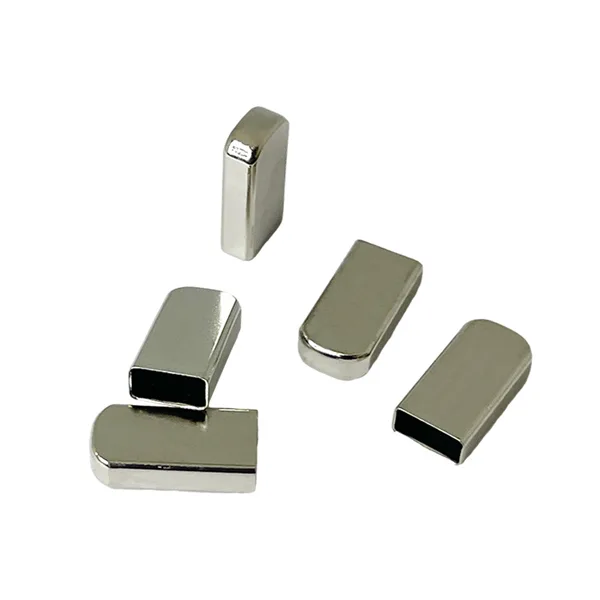
In the modern manufacturing landscape, sustainability and material efficiency are not just buzzwords; they are cost drivers.
Scrap Rates in Deep Drawing
Deep drawing is generally very material-efficient, especially when using coil-fed transfer presses. We nest the circular blanks (for round cans) or rectangular layouts to minimize the “web” (the leftover skeleton strip). However, there is inevitably some scrap generated from the trimming process. After a deep drawn box is formed, the top edge is usually uneven (due to planar anisotropy in the material) and must be trimmed flat.
Waste in Fabrication
Fabrication can be efficient with nesting software on laser cutters, but the secondary processes are wasteful. Welding consumables, grinding discs, and the energy required for manual finishing add to the carbon footprint of the part. Furthermore, if a weld is defective, the entire assembly is often scrapped because reworking a thin-metal weld is difficult. The rejection rate for a deep drawn box line runs in the parts-per-million (PPM) range, whereas fabrication rejection rates are typically in the percentage range.
JUMAI TECH: Your Partner in Precision
At JUMAI TECH, we do not simply sell parts; we sell solutions. Our background in Precision Copper Busbars and Stamping Dies gives us a unique perspective on the deep drawn box. We understand that this component is often just one part of a larger assembly—perhaps a housing for a busbar connector or a shield for a sensor we also help design.
Our Technical Capabilities
We utilize advanced simulation software (FEA) to simulate the deep draw process before we cut a single piece of steel for the tooling. This allows us to predict thinning, tearing, or wrinkling and adjust the tool design virtually. This capability significantly reduces the lead time for our customers, ensuring that the first physical deep drawn box off the line is within tolerance.
Hybrid Solutions
Sometimes, the answer isn’t black and white. For complex assemblies, we often combine methods. We might deep draw the base tub for integrity and leak protection, and then laser-weld a precision stamped flange or bracket onto it. Because we handle both Deep-Drawn Components and Precision Stamping Dies in-house, we can integrate these processes seamlessly, offering you a “best of both worlds” solution.
Making the Right Choice
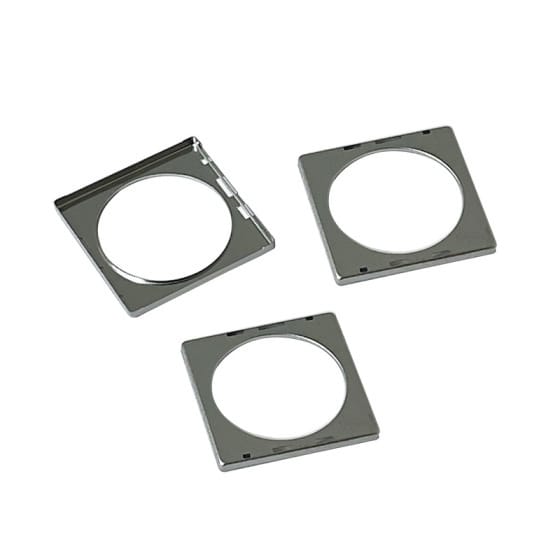
The decision between a deep drawn box and a fabricated shell is a balance of volume, budget, and application requirements.
Choose a Deep Drawn Box if:
- Your annual volume exceeds 500-1000 units.
- You require a hermetic, leak-proof seal.
- You need high structural integrity and work-hardened strength.
- You require consistent, high-quality surface finishes without manual rework.
- You want the lowest possible unit cost over the product’s lifecycle.
Choose a Fabricated Shell if:
- You need fewer than 100 units (prototyping or low-volume custom runs).
- You have zero budget for upfront tooling (NRE).
- Your design requires perfectly sharp, zero-radius internal corners.
- The design is subject to frequent changes that would require expensive tool modifications.
At JUMAI TECH, we are committed to guiding you through this analysis. Whether you need a standard shielding can or a complex, custom-engineered deep drawn box, our team of engineers is ready to optimize your design for manufacturability. We invite you to send us your 3D models and requirements. Let us prove how our precision deep drawing technology can enhance the performance of your product while optimizing your supply chain costs.
Visit us at www.deepdrawtech.com to learn more about our Precision Copper Busbars and Deep-Drawn manufacturing capabilities.
FAQ
What is a deep drawn box?
A deep drawn box is a container made from a single piece of metal. The metal is formed into shape using a special method called deep drawing, which means that the metal is stretched to create a hollow form without any seams. This makes it very strong and reliable, as there are no weak spots where it could break or leak.
How is a fabricated shell made?
A fabricated shell is created by cutting and bending flat sheets of metal. The process starts with cutting the metal into a shape, and then bending it to form the walls of a box. The corners need to be welded to hold everything together. This method offers flexibility for design but can introduce some weak points at the welds.
What are the cost differences between deep drawn boxes and fabricated shells?
The cost for making deep drawn boxes can be high upfront because it requires special tools. However, if you need a lot of boxes, deep drawn boxes become cheaper per unit. Fabricated shells are easier to start with for small quantities, but their costs do not decrease much when making more, since the same amount of labor is needed regardless of quantity.
Which is stronger: deep drawn boxes or fabricated shells?
Deep drawn boxes are generally stronger because they are made from a single metal piece, so there are no joints that can break. In contrast, fabricated shells have welded corners, which can be weaker points and might lead to leaks or damage in tough conditions.
When should I choose a deep drawn box?
Choosing a deep drawn box is best when you need large quantities, a very secure and leak-proof design, and overall strong structure. It’s also a good option if you need a smooth and consistent surface finish for your product.
Are deep drawn boxes environmentally friendly?
Deep drawing is considered environmentally friendly because it minimizes material waste. While some scrap metal is created during the process, the method is highly efficient. On the other hand, fabricated shells can lead to more waste through grinding and reworking the welds.
Can I get a custom design for my project?
Yes! At JUMAI TECH, we can help you design a deep drawn box that meets your project’s specific needs. You can send us your ideas or 3D models, and our engineers will work to make your vision a reality, ensuring it is both manufacturable and cost-effective.
What if I only need a few units?
If you only need a small number of boxes, like under 100, a fabricated shell may be a better option. This method allows for quick production without a large upfront investment in tools. It’s great for prototyping and smaller projects.
What are the advantages of deep drawn boxes over fabricated shells?
Deep drawn boxes offer better strength, no seams that could lead to leaks, and lower costs per unit when producing large quantities. Additionally, the finish is usually better because it requires less manual rework, making them a great choice for high-quality applications.