In the high-stakes world of electrical engineering and power distribution manufacturing, time is not just money—it is the defining metric of competitiveness. For decades, I have walked the floors of assembly plants, from massive industrial switchgear facilities to the surgical precision of cleanrooms for EV battery pack assembly. I have seen firsthand how a single design choice can either bottleneck an entire production line or streamline it into a marvel of efficiency. The component at the center of this pivotal choice is often the humble conductor. While rigid copper bars and heavy-gauge cables have served us well, the modern era demands a solution that adapts to complex geometries and tight spaces. This is where the flexible copper busbar revolutionizes the assembly process.
At JUMAI TECH, we specialize in Precision Copper Busbars and Deep-Drawn Components, and we have observed a significant shift in the global market. Engineers are moving away from the labor-intensive installation of traditional cabling and rigid bars in favor of flexible solutions. But why is this shift happening? It isn’t just about aesthetics or novelty; it is about a fundamental improvement in assembly efficiency. This article will dissect the technical and operational mechanics of how flexible copper busbars reduce installation time, minimize errors, and lower the Total Cost of Ownership (TCO) for manufacturers worldwide.
Table of Contents
The Anatomy of Flexibility: What Makes It Different?
To understand the efficiency gains, we must first understand the material science behind the component. A flexible copper busbar is not merely a piece of copper that bends; it is a sophisticated composite structure designed for electromechanical optimization.
Structure and Composition
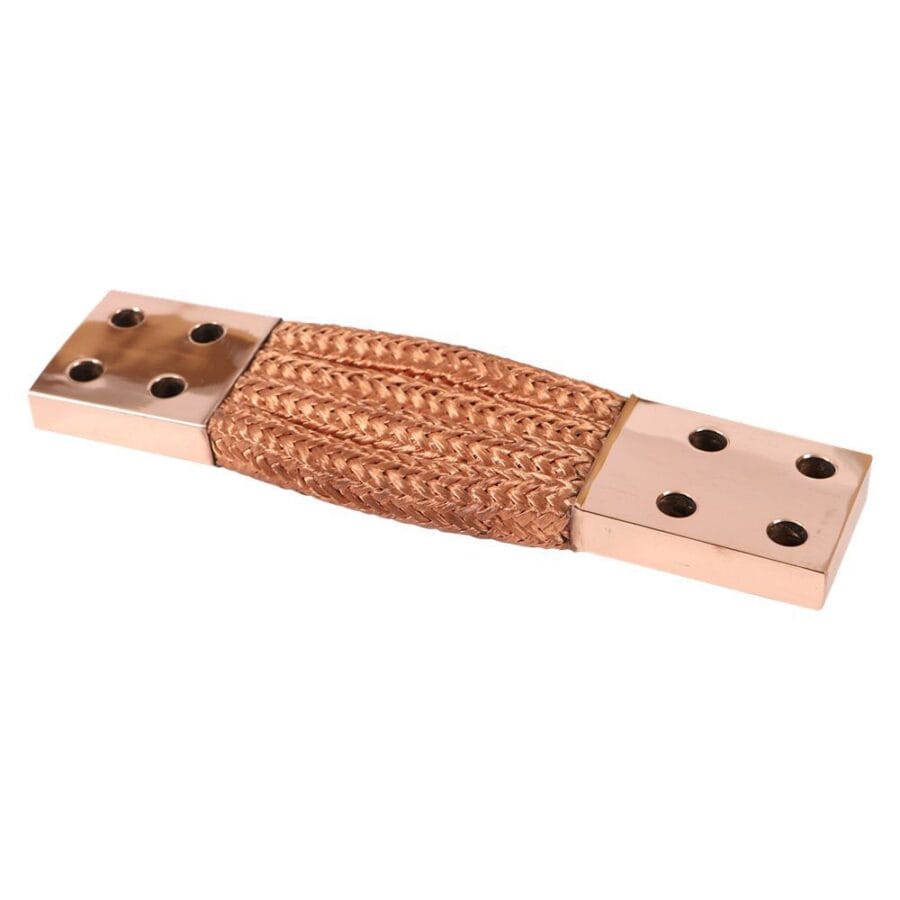
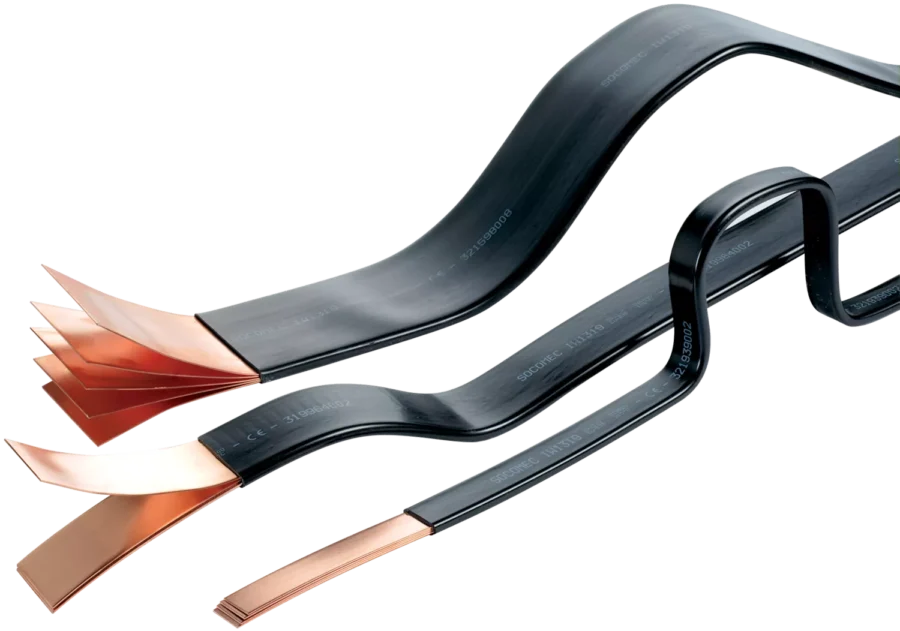
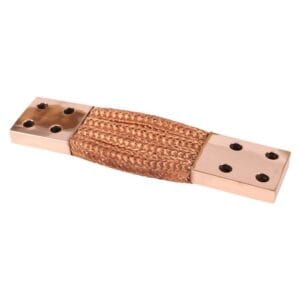
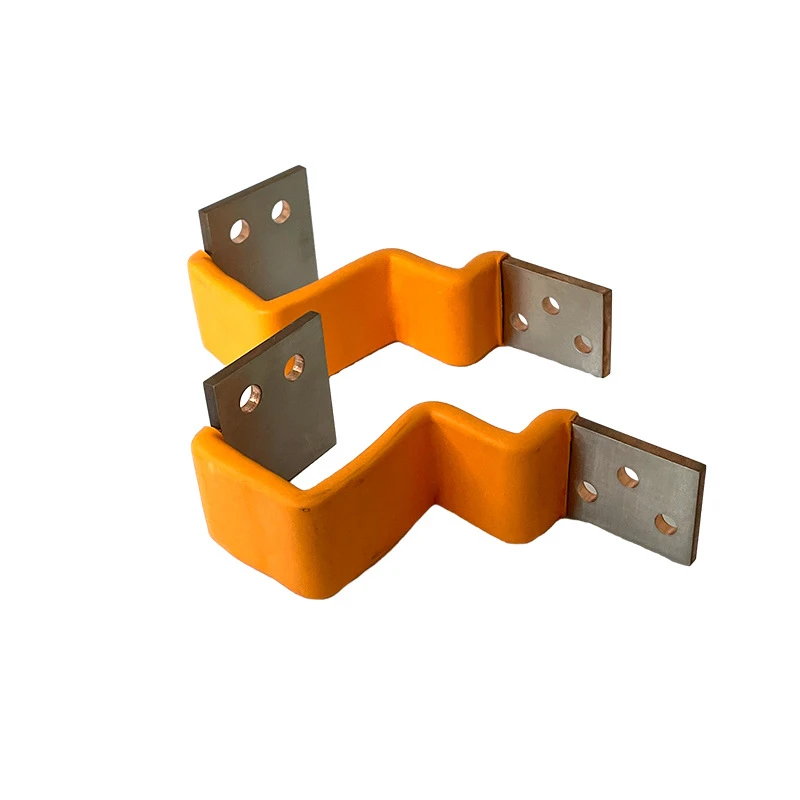
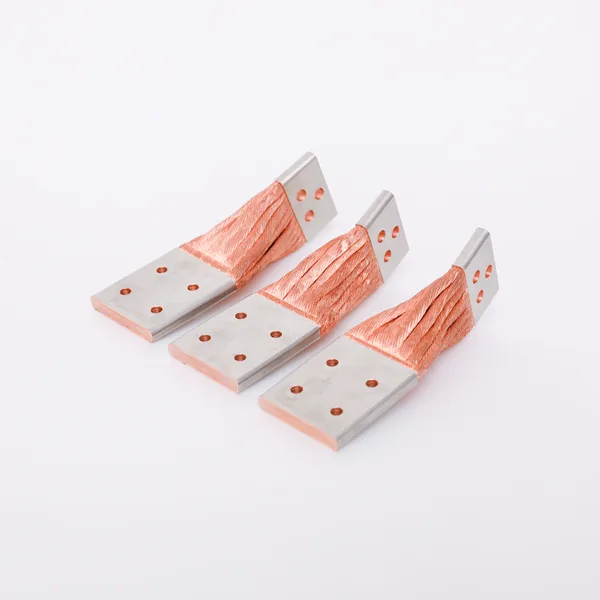
Unlike a solid rigid bar, a flexible copper busbar consists of multiple layers of thin, electrolytic copper foils (lamellas). These foils are stacked and then encased in a high-insulation compound, typically PVC, TPE, or silicone. The layers are free to slide against one another within the insulation, which allows the busbar to bend, twist, and fold without work-hardening or cracking.
The manufacturing process usually involves either press welding or diffusion welding at the contact areas (the mounting ends), creating a solid block for drilling and connection, while leaving the intermediate length flexible. This unique “solid-ends, flexible-center” anatomy is the secret weapon for assembly technicians. It combines the rigidity needed for a secure electrical connection with the pliability required for routing.
Electrical Superiority
From a physics standpoint, the multi-layered design also combats the “skin effect”—the tendency of alternating current (AC) to flow near the surface of a conductor. By increasing the surface area through multiple laminations, flexible busbars can often carry higher currents than a single rigid bar of equivalent cross-section, all while maintaining a cooler operating temperature. This allows designers to use smaller, lighter conductors for the same power rating, making them easier to handle during assembly.
Overcoming the Tolerance Stack-Up Nightmare
One of the most frequent complaints I hear from assembly line supervisors involves “tolerance stack-up.” In any mechanical assembly, the manufacturing tolerances of individual parts accumulate. By the time you are bolting a rigid busbar between a transformer and a switchgear terminal, a millimeter of offset here and a millimeter there can result in a gap that a rigid bar simply cannot bridge without force.
The Problem with Rigid Connections
Forcing a rigid busbar into place to compensate for misalignment introduces mechanical stress. This stress is transferred to the insulators and the terminals of expensive equipment (like circuit breakers or IGBTs). Over time, this static load can cause micro-cracking in insulators or terminal loosening. During the assembly phase, technicians often waste valuable minutes shimming connections or, worse, sending the part back to the machine shop for re-bending.
The Flexible Solution
Flexible copper busbars eliminate this issue entirely. Because they can be adjusted by hand on the Z, Y, and Z axes, they absorb the tolerance variations of the enclosure and the components.
- Correction of Misalignment: A technician can easily manipulate the busbar to align perfectly with the mounting holes.
- Stress Elimination: There is no residual mechanical stress placed on the connection points, protecting sensitive components.
- Zero Rework: The need to modify or re-bend bars during final assembly is effectively reduced to zero.
Editor’s Note: At JUMAI TECH, we have seen assembly rejection rates drop by over 40% when clients switch from rigid to flexible connections in complex control panels, simply because the “fitment” issues vanish.
Eliminating Lugs and Crimping: A Time-Motion Study

When comparing flexible busbars to traditional heavy-gauge cabling, the efficiency gains are even more quantifiable. Cables require a termination process that is both labor-intensive and prone to operator error.
The Hidden Costs of Cabling
Preparing a 4/0 AWG cable for connection involves several steps:
- Measuring and cutting the cable.
- Stripping the insulation (without nicking the strands).
- Inserting the cable into a lug.
- Using a heavy hydraulic crimping tool to secure the lug.
- Applying heat shrink tubing for insulation safety.
Each of these steps takes time and requires specific tooling. Furthermore, a poor crimp is a leading cause of “hot spots” and electrical fires. According to IEEE standards for electrical connections, contact resistance caused by improper crimping is a critical failure mode in power distribution.
The Direct-Connect Advantage
Flexible copper busbars are ready to install right out of the box. The ends are pre-processed (punched or drilled) into solid contact plates. There are no lugs to buy, inventory, or crimp.
Table 1: Time Comparison – Cable vs. Flexible Busbar (Per Connection)
| Process Step | Traditional Cable (Minutes) | Flexible Copper Busbar (Minutes) |
| Measuring/Cutting | 2.0 | 0 (Pre-fabricated) |
| Stripping/Peeling | 1.5 | 0.5 (Stripping tool usage) |
| Lug Placement & Crimping | 3.0 | 0 (Integrated palms) |
| Heat Shrinking | 2.0 | 0 (Pre-insulated) |
| Bolting/Torquing | 1.5 | 1.5 |
| Total Time | 10.0 Minutes | 2.0 Minutes |
As the data shows, utilizing flexible busbars can reduce installation time by up to 80%. In a production run of 1,000 units, this translates to hundreds of man-hours saved, significantly boosting the throughput of the factory floor.
Optimization of Space and 3D Routing
Modern industrial design is shrinking. Whether it is an inverter for a solar farm or a traction drive for a high-speed train, engineers are being asked to put more power into smaller boxes. Space is a premium commodity, and flexible copper busbars are the ultimate space-savers.
Tighter Bending Radii
Cables have a “minimum bend radius”—usually 4 to 8 times the cable diameter—to prevent damage to the insulation and internal strands. Rigid busbars require specialized bending tools and precise calculation of bend allowances.
Flexible busbars, however, can be folded tightly upon themselves. High-quality flexible bars from JUMAI TECH can achieve a bending radius that is nearly equal to the thickness of the bar itself. This allows for sharp 90-degree turns immediately after the connection point, drastically reducing the “clearance space” needed inside an enclosure.
Improving Airflow
In power electronics, heat dissipation is critical. Large bundles of round cables can act as “air dams,” blocking the flow of cooling air from fans. Flexible busbars have a low profile and a rectangular cross-section. They can be routed along the chassis walls or stacked flat against each other, leaving the central volume of the cabinet open for airflow. This aerodynamic profile aids in thermal management, potentially allowing for smaller cooling fans and further energy efficiency.
Vibration Resistance and Dynamic Environments
Assembly efficiency isn’t just about the speed of the initial install; it is also about the longevity of the assembly and the reduction of maintenance. In environments subject to high vibration—such as Electric Vehicles (EVs), wind turbines, or marine applications—rigid connections are liabilities.
The Dampening Effect
Vibration causes rigid metals to fatigue. A rigid busbar connected between a vibrating engine and a stationary frame acts as a lever, amplifying the stress at the connection point. This often necessitates the installation of expensive vibration dampers or braided shunts, adding steps to the assembly process.
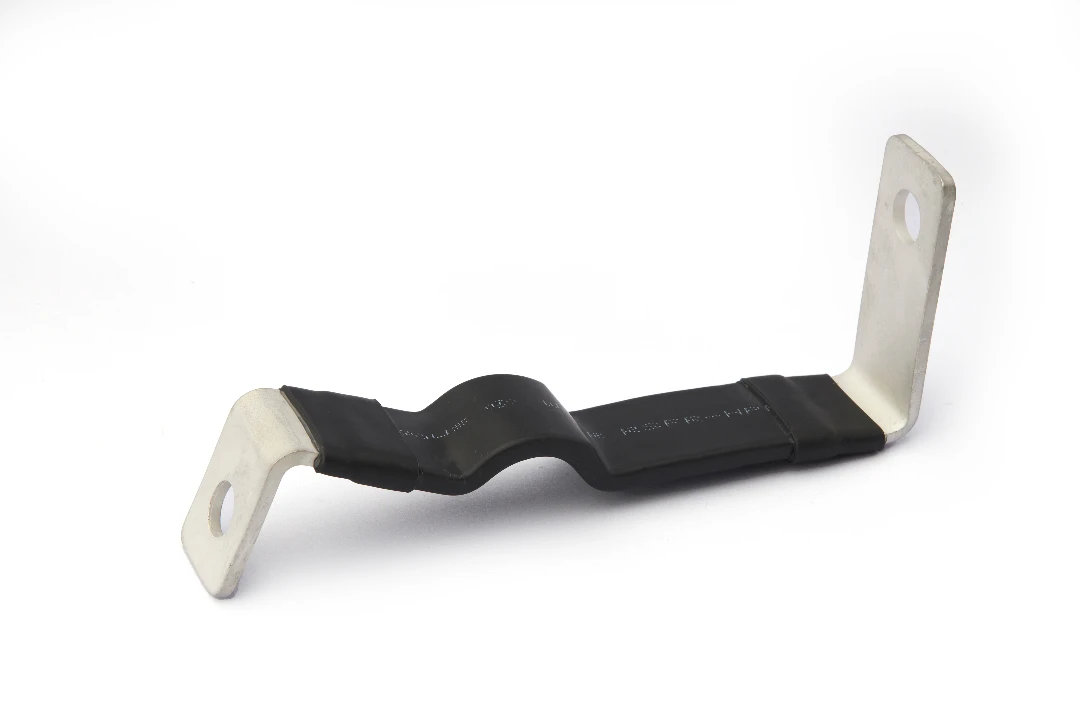
Flexible copper busbars naturally act as shock absorbers. The laminated structure dampens mechanical vibrations, preventing them from transferring between components. This “install and forget” reliability means assembly teams do not need to install secondary support brackets or anti-vibration mounts for short conductor runs.
Application in EV Battery Packs
The Electric Vehicle sector is perhaps the largest driver of flexible busbar adoption. Inside a battery pack, hundreds of cells must be connected. The battery pack chassis flexes as the vehicle moves.
- Thermal Expansion: Battery cells swell and contract during charge cycles.
- Road Vibration: The vehicle is constantly moving.
Flexible busbars accommodate this dynamic movement without straining the delicate battery terminals. For JUMAI TECH clients in the EV sector, using flexible busbars means they can automate the connection process more easily, as the component is forgiving enough to be handled by robotic assembly arms.
Technical Data: Ampacity and Thermal Performance
It is a common misconception that flexible busbars, being composed of layers, might handle less current than solid bars. In reality, the opposite is often true due to the increased surface area for heat dissipation.
Current Rating Factors
According to the International Copper Association, the current-carrying capacity (ampacity) is largely determined by the allowable temperature rise. Flexible busbars typically feature high-grade insulation (like PVC) that can withstand operating temperatures of 105°C to 125°C.
Table 2: Ampacity Comparison (Based on 35°C Ambient Temp, 50°C Rise)
| Cross Section (mm²) | Solid Copper Bar (Amps) | Flexible Copper Busbar (Amps) | Difference |
| 100 mm² | 280 A | 330 A | +17% |
| 200 mm² | 490 A | 560 A | +14% |
| 400 mm² | 850 A | 940 A | +10% |
| 600 mm² | 1150 A | 1280 A | +11% |
Note: Data is approximate and depends on specific manufacturer insulation properties and installation layout.
This thermal efficiency allows design engineers to specify a smaller flexible busbar to do the job of a larger rigid one. Smaller components are lighter and easier for assembly workers to manipulate, reducing fatigue and improving ergonomic safety on the line.
JUMAI TECH’s Approach: Customization as a Standard
At www.deepdrawtech.com, we do not view flexible busbars as a “commodity” product. We view them as engineered solutions. The efficiency of your assembly line dictates how we manufacture our products.
Pre-Formed Solutions
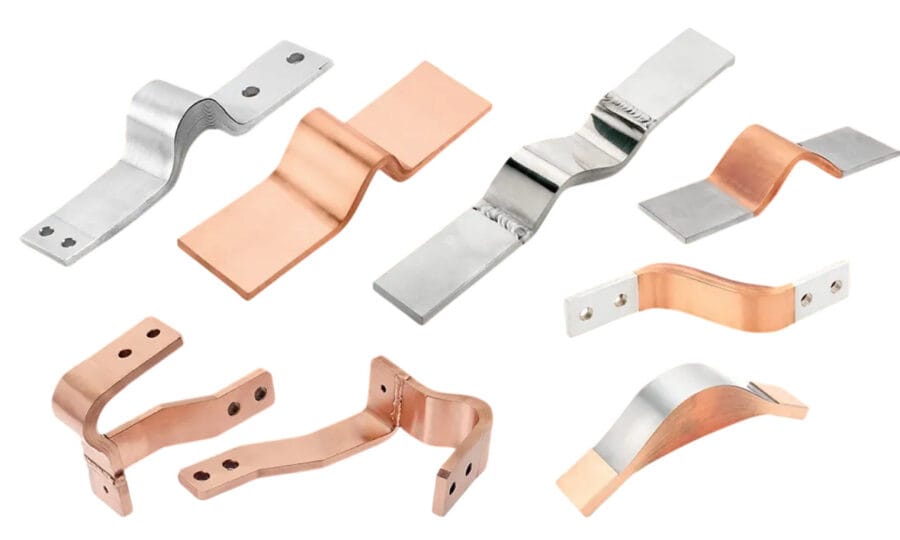
While standard flexible busbars are sold straight (to be bent by the user), JUMAI TECH offers pre-formed flexible busbars. We use 3D modeling to determine the exact path the busbar must take in your equipment. We then cut, strip, bend, and twist the busbars in our factory before shipping.
- Benefit: Your assembly team receives a part that fits like a puzzle piece. No measuring, no bending on site. Just bolt it on.
Specialized Insulation
We offer insulation options tailored to your assembly environment:
- Halogen-Free: For data centers and public transport where fire safety is paramount.
- High-Temp Silicone: For environments exceeding 150°C.
- Color-Coded Insulation: We can provide phase identification (Red, Yellow, Blue) directly on the insulation, removing the need for workers to apply colored tape or markers during assembly. This simple visual cue prevents catastrophic cross-wiring errors.
Reducing Total Cost of Ownership (TCO)
When procurement managers look at the price of flexible copper busbar per meter, it may appear more expensive than raw rigid copper bar. However, this is a “sticker price” fallacy. To understand the true value, one must look at the Total Cost of Ownership.
The Formula for Savings
$TCO = Material Cost + Processing Cost + Installation Labor + Tooling Cost + Quality Failure Cost$
- Processing Cost: Flexible busbars eliminate the need for cutting, punching, and bending machinery on your floor.
- Installation Labor: As proven in the time-motion study, labor is cut by up to 80%.
- Tooling Cost: No need for expensive hydraulic crimpers or bending jigs.
- Quality Failure: Reduced risk of loose connections or insulation damage reduces warranty claims.
When these factors are aggregated, the flexible copper busbar is frequently the cheaper option for complex assemblies. Leading industry analysts at Gartner Supply Chain often highlight that component modularity and ease of assembly are the primary drivers for cost reduction in modern manufacturing, far outweighing raw material costs.
Conclusion: The Future of Assembly is Flexible
The days of wrestling with rigid copper bars and wrestling with heavy cables are numbered in the sector of precision manufacturing. As equipment becomes more compact, more powerful, and more sensitive, the “veins” of these systems—the busbars—must evolve.
The flexible copper busbar represents a paradigm shift. It transforms the electrical connection from a rigid structural constraint into a flexible, adaptive element. It empowers assembly technicians to work faster, safer, and with greater precision. It allows engineers to design without fear of tolerance stack-ups or thermal bottlenecks.
At JUMAI TECH, we are proud to drive this innovation. Our deep expertise in Precision Copper Busbars, combined with our Deep-Drawn Component capabilities, positions us to be your strategic partner. We don’t just sell you copper; we sell you the time you save on the assembly line and the reliability you deliver to your customers.
If you are ready to optimize your production line and reduce your assembly costs, explore our range of flexible solutions at www.deepdrawtech.com. Let us help you bend the rules of what is possible in power distribution.