In the complex landscape of precision manufacturing, selecting the correct metal forming process is rarely a simple binary choice. It is a strategic decision that impacts your product’s structural integrity, production speed, material utilization, and ultimately, your bottom line. At JUMAI TECH, we have spent years specializing in the intricate worlds of deep drawn stamping, precision copper busbars, and complex die manufacturing. We have seen firsthand how engineers often default to familiar methods like CNC machining or welding, unaware that deep drawing could revolutionize their production efficiency.
This guide is not just a definition of terms; it is a deep dive into the engineering and economic rationale behind deep drawn stamping. Whether you are sourcing components for aerospace avionics, electric vehicle battery enclosures, or industrial HVAC systems, understanding the “when” and “why” of deep drawing is essential. We will explore the technical mechanics, compare them rigorously against traditional methods, and provide the data you need to make an informed manufacturing decision.
Table of Contents
The Mechanics of Deep Drawn Stamping: What Actually Happens?
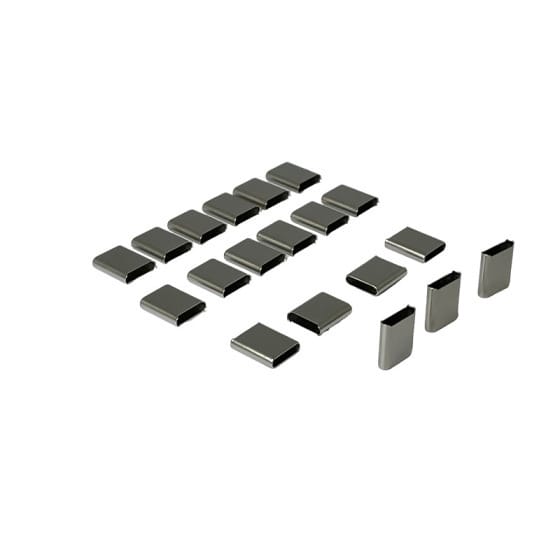
To understand when to choose this method, we must first appreciate what happens to the metal at a microscopic level. Deep drawn stamping is a cold forming process where a flat sheet metal blank is drawn into a forming die by a mechanical punch. The process is considered “deep” drawing when the depth of the drawn part exceeds its diameter. This is not merely bending; it is a radical transformation of the material’s geometry through plastic deformation.
Radial Tension and Tangential Compression
When the punch strikes the blank, the metal is not cut; it is forced to flow. The material experiences radial tension as it is pulled into the die cavity, and simultaneously, it undergoes tangential compression as the outer circumference of the blank is reduced to form the wall of the cylinder or box. This unique combination of forces aligns the grain structure of the metal, often resulting in a finished part that is stronger than the original raw material. This phenomenon, known as work hardening, is a critical advantage for components requiring high durability without increased wall thickness.
The Limiting Draw Ratio (LDR)
A key concept in our industry is the Limiting Draw Ratio (LDR). This ratio determines how much a material can be drawn in a single operation before it fails (tears). For standard steel, the LDR is roughly 2.0 to 2.2. This means if you have a blank with a diameter of 100mm, the smallest punch diameter you can use in a single draw is roughly 50mm. Understanding LDR is vital because it dictates whether a part can be made in a single strike or requires multiple “reduction” stations in a transfer press. At JUMAI TECH, our expertise lies in optimizing these ratios to reduce the number of operations, thereby lowering tooling costs for our global clients.
Deep Drawn Stamping vs. CNC Machining: The Battle for Efficiency
One of the most common dilemmas our clients face is choosing between deep drawn stamping and CNC machining (turning or milling). While machining offers incredible precision without the need for expensive dies, it is fundamentally a subtractive process. Deep drawing, conversely, is a near-net-shape or net-shape additive workflow regarding material utility.
Material Utilization and Scrap Rates
The most compelling argument for deep drawing over machining is material conservation. Imagine you need to produce a cylindrical housing for a sensor, made from Oxygen-Free Electronic (OFE) Copper—a material we frequently handle at JUMAI TECH for our busbar clients.
If you machine this part from a solid copper rod, you are effectively turning 60% to 80% of that expensive raw material into scrap chips. You are paying for the whole rod but only keeping a fraction of it. In deep drawing, we start with a flat blank calculated to match the final surface area of the part. The scrap is limited to the skeleton of the strip (the carrier web), resulting in material utilization rates often exceeding 85%.
Table 1: Material Utilization Comparison (Copper C11000 Housing)
| Metric | CNC Machining (Turning) | Deep Drawn Stamping |
| Raw Material Form | Solid Bar Stock / Rod | Coiled Sheet / Strip |
| Material Waste | High (Chip generation) | Low (Skeleton scrap only) |
| Utilization Rate | 20% – 40% | 80% – 90% |
| Cycle Time | Minutes per part | Seconds per part |
| Grain Structure | Interrupted (Cut) | Flowed (Continuous) |
Cycle Times and Volume Scalability
CNC machining is sequential; the tool moves point-to-point. Even the fastest Swiss-style lathes have cycle times measured in minutes for complex geometries. Deep drawn stamping is simultaneous. When the press cycles, the part is formed instantly. For high-volume production—typically defined as 5,000 units or more annually—the speed of deep drawing creates an insurmountable cost advantage. While a CNC machine produces one part, a transfer press at JUMAI TECH can produce hundreds.
Deep Drawn Stamping vs. Metal Spinning: Precision and Repeatability
Metal spinning is an artisanal and effective method for creating round, axis-symmetric parts, particularly for low-volume production or very large architectural features. However, when tolerances tighten and volumes rise, deep drawing proves superior.
Wall Thickness Consistency
In metal spinning, a blank is rotated, and a tool presses against it to form the metal over a mandrel. This process relies heavily on the skill of the operator or the programming of the CNC spinning lathe. It often results in significant thinning of the material, which can be inconsistent from batch to batch.
Deep drawn stamping, utilizing precision dies, controls the material flow with exactitude. By managing the clearance between the punch and the die, we can maintain consistent wall thickness throughout the part or intentionally iron the walls to a specific dimension. For critical components like precision copper busbar connectors or battery cans, this consistency is non-negotiable for electrical conductivity and structural safety.
Geometry Limitations
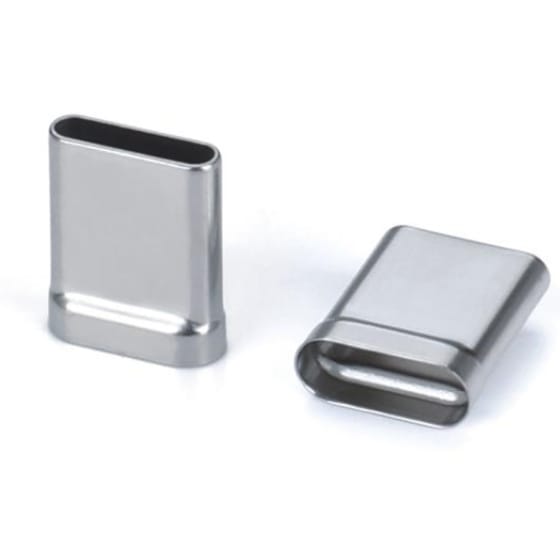
Metal spinning is strictly limited to concentric, round shapes. You cannot spin a square box or a complex rectangular cover. Deep drawing faces no such limitation. We regularly deep draw rectangular automotive relay covers, complex sensor housings with irregular flanges, and asymmetric medical components. If your design deviates from a perfect circle, deep drawing is often the only viable high-volume metal forming solution.
When to Switch from Progressive Die Stamping to Deep Draw
This is a nuanced distinction, as both processes use power presses and dies. Progressive die stamping is excellent for bending, cutting, and shallow forming. However, as the depth of the part increases, the progressive approach hits a wall.
The Depth-to-Diameter Ratio Rule
A general rule of thumb in the industry is that when the depth of the part exceeds half its diameter (0.5:1 ratio), you are entering the territory of deep drawing. Progressive dies utilize a “carrier strip” to move the part from station to station. When you attempt to draw a part too deeply in a progressive die, the material required for the draw distorts the carrier strip, leading to positioning errors and part failure.
Transfer Press Technology
For these deeper parts, we utilize Transfer Press technology. Unlike a progressive die, where the part stays attached to the strip, in deep drawing (specifically, transfer die stamping), the part is cut free from the strip early in the process. Mechanical fingers “transfer” the individual part from one die station to the next. This allows the material to flow freely from all directions without being constrained by a carrier strip, enabling significantly deeper draws—sometimes achieving length-to-diameter ratios of 20:1 or higher with multiple redraws.
For detailed insights on metal forming capabilities, resources like The Precision Metalforming Association (PMA) provide excellent technical benchmarks that align with the capabilities we offer at JUMAI TECH.
Economic Analysis: The Tooling Investment vs. Unit Cost

The “elephant in the room” regarding deep drawn stamping is the upfront cost. We believe in transparency at JUMAI TECH: deep draw tooling is expensive. It involves precision-machined punches, dies, blank holders, and often complex transfer systems. However, looking at the sticker price of the tooling in isolation is a mistake. You must calculate the Total Cost of Ownership (TCO).
The Break-Even Point
Let’s analyze a theoretical production run for a stainless steel sensor housing.
- CNC Machining: Tooling cost is negligible ($0 – $500), but the unit cost is $15.00 due to machine time and labor.
- Deep Drawing: Tooling cost is high ($15,000), but the unit cost is $0.85 due to speed and material efficiency.
If you only need 500 parts, machining costs $7,500 total, while deep drawing costs $15,425. Machining wins.
However, if you need 5,000 parts:
- Machining: $75,000
- Deep Drawing: $19,250 ($15k tooling + $4,250 parts)
At 5,000 units, deep drawing saves you over $55,000. The break-even point in this scenario is roughly 1,060 units. Any production run extending beyond this quantity yields pure profit relative to the machining alternative. This is why deep drawing is the standard for automotive, electronics, and consumer goods sectors.
Material Suitability: It’s Not Just for Steel
While steel is common, JUMAI TECH specializes in a wide array of metals, with a specific focus on high-performance alloys required for modern technology.
Precision Copper Busbars and Components
Copper (specifically grades like C10100 and C11000) offers excellent ductility, making it ideal for deep drawing. However, it also works hard rapidly. This requires deep technical knowledge of annealing processes. In-process annealing involves heating the partially drawn part to reset its grain structure, making it soft again for further drawing.
For the electric vehicle (EV) industry, deep drawn copper cups and caps are essential for thermal management and electrical connectivity. Unlike machined copper, which can have micro-burrs and interrupted grain flow that impedes conductivity, deep drawn copper surfaces are smooth and dense.
Stainless Steel (300 and 400 Series)
Stainless steel is notoriously difficult to form due to its high strength and tendency to “gall” (adhere to the tooling). Deep drawing stainless steel requires specialized lubricants and high-performance tool steels (like Carbide or CPM grades) coated with Titanium Nitride (TiN) or Titanium Carbonitride (TiCN). Our proficiency in Precision Stamping Dies allows us to maintain tight tolerances with stainless steel, providing components that are corrosion-resistant and incredibly robust.
Aluminum Alloys
Aluminum is favored for its weight-to-strength ratio. Deep drawing aluminum (such as 3003 or 5052 series) is standard in the beverage industry (cans) and aerospace. It requires careful control of clearances, as aluminum does not have the same tensile strength as steel and can tear easily if the draw speed is too aggressive.
Design Considerations: Optimizing for Deep Draw

To fully leverage the benefits of deep drawn stamping, the product design must often be adapted for the process. At JUMAI TECH, we offer Design for Manufacturing (DFM) services to help clients optimize their prints before we cut a single piece of steel.
Corner Radii are Critical
In machining, you can cut a sharp 90-degree internal corner. In deep drawing, this is physically impossible without secondary operations. The metal needs a radius to flow over.
- Punch Radius: If the punch radius is too sharp, it acts like a knife, cutting the material instead of drawing it.
- Die Radius: If the die radius is too tight, the material cannot flow into the cavity smoothly, leading to fractures.
- Recommendation: Generally, we recommend a floor radius of at least 3x the material thickness. Larger radii facilitate easier drawing and lower tooling costs.
Taper and Draft Angles
While straight walls are possible, incorporating a slight taper (draft angle) to the side walls of a deep drawn part can significantly reduce tooling wear and stripping force (the force required to remove the part from the punch). Even a 1-degree taper can extend the life of the die assembly by thousands of cycles.
Wall Thickness Variations
It is important to understand that deep drawing results in some natural variation in wall thickness. The bottom of the cup typically retains the original blank thickness. The lower wall section may thin slightly due to tension, while the upper wall section (near the flange) may actually thicken due to compression. Design engineers should specify critical dimensions where they matter most and allow for loose tolerances in non-critical areas to reduce manufacturing costs.
The Role of Lubrication and Friction Management
One aspect of the process often overlooked by buyers but obsessed over by manufacturers is lubrication. In deep drawn stamping, the friction between the blank, the blank holder, and the die is the variable that makes or breaks the part.
We utilize advanced, often water-soluble, lubricants that sustain a high-pressure film between the metal and the tooling. If this film breaks, metal-to-metal contact occurs, leading to scoring, galling, and part failure. Different metals require different tribological approaches. For example, drawing Titanium requires entirely different lubrication chemistry compared to drawing mild steel. This chemical engineering expertise is part of the package when you partner with a high-end manufacturer.
For further reading on tribology in manufacturing, STLE (Society of Tribologists and Lubrication Engineers) offers in-depth resources that validate the critical nature of fluid dynamics in our processes.
Case Studies: Industries Thriving with Deep Draw
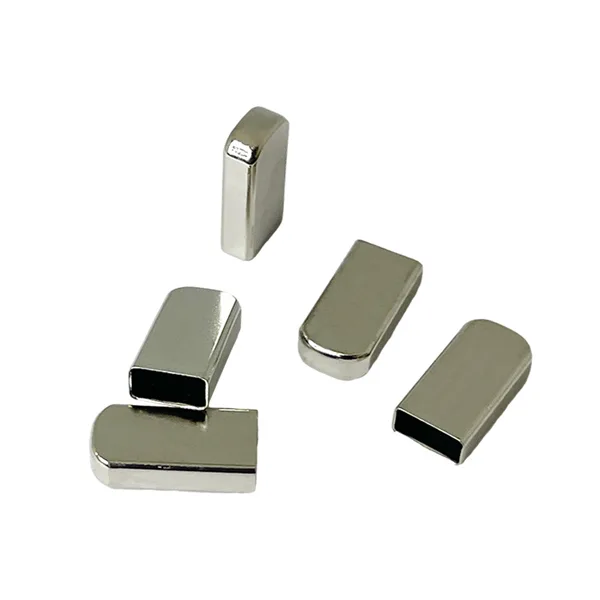
The versatility of deep drawn stamping means it permeates almost every sector of the global economy. Here is where JUMAI TECH sees the highest demand and greatest success.
Automotive and Electric Vehicles (EV)
The shift to electrification has caused an explosion in demand for deep-drawn components. Battery cans (cylindrical cells like the 4680), sensor housings, airbag initiators, and fuel injection cups are all classic deep-drawn parts. The requirement here is high volume and zero defects—a perfect match for our process capabilities.
Aerospace and Defense
Weight reduction is the primary goal in aerospace. Deep-drawn components can replace heavier cast or machined parts. We produce deep-drawn housings for avionics and relays that must withstand extreme vibrations and temperature fluctuations. The seamless nature of a deep drawn part—having no welds to fail—is a massive safety advantage.
Renewable Energy and Power Distribution
As experts in Precision Copper Busbars, we see a hybrid approach in this sector. While busbars are often stamped or bent, the protective caps, connectors, and shielding cans associated with power inverters are deep drawn. The ability to produce EMI/RFI shielding cans from Mu-metal or copper through deep drawing ensures that sensitive electronics are protected from interference.
Defects and Quality Control: How We Ensure Perfection
Despite its advantages, deep drawing is a volatile process if not controlled. Understanding common defects helps in diagnosing issues and establishing quality criteria.
- Wrinkling (Flange and Wall): This occurs when the compressive forces on the flange are too high, causing the metal to buckle. It is prevented by increasing the pressure on the blank holder.
- Tearing: The opposite of wrinkling. Tearing happens when the tensile stress exceeds the material’s strength, usually at the bottom radius of the cup. It implies the punch is pushing too hard, or the material isn’t flowing (perhaps due to poor lubrication or a too-tight die radius).
- Earing: If you look at the top edge of a drawn cup, it is rarely perfectly flat; it often has wavy edges known as “ears.” This is caused by planar anisotropy in the sheet metal—meaning the material stretches differently in the rolling direction compared to the transverse direction. At JUMAI TECH, we plan for earning by adding a final trimming operation to ensure a perfectly flat edge.
Table 2: Troubleshooting Common Deep Draw Defects
| Defect | Likely Cause | Corrective Action |
| Wrinkling in Flange | Low Blank Holder Force | Increase pressure on the blank holder. |
| Fracture at Bottom | High Blank Holder Force | Reduce pressure; improve lubrication. |
| Surface Scratches | Dirty Tooling / Galling | Polish dies; check lubricant cleanliness. |
| Wall Thinning | Clearance too tight | Increase die-to-punch clearance. |
| Orange Peel | Grain size too large | Use material with finer grain structure. |
The JUMAI TECH Advantage: Why Partner With Us?
At www.deepdrawtech.com, we are not just a job shop; we are a solution provider. Our brand, JUMAI TECH, represents a synthesis of traditional craftsmanship and modern automation.
Integrated Tool & Die Capabilities
Many stamping houses outsource their tooling. We do not. We design and build our Precision Stamping Dies in-house. This gives us total control over the timeline and the quality. If a die needs a micro-adjustment during a production run, we don’t wait weeks for an external vendor; we fix it immediately in our tool room.
Expertise in Complex Assemblies
We don’t just stamp parts; we understand how they fit into the larger assembly. Whether it is a deep-drawn shield that needs to fit over a PCB or a copper busbar that requires complex bending after drawing, our engineering team looks at the holistic picture. We offer secondary operations including cleaning, plating, heat treating, and sub-assembly, delivering a component that is ready for your production line.
Global Reach, Local Service
We understand the anxieties of international sourcing. We bridge the gap with transparent communication, rigorous ISO-standard quality documentation, and logistics support. When you choose JUMAI TECH, you are choosing a partner who understands that a delay in our shipment means a line-down situation in your factory—and we take that responsibility seriously.
Making the Strategic Choice
The choice between deep-drawn stamping and traditional methods such as machining, casting, or fabrication ultimately comes down to scalability and quality.
If you are prototyping a dozen parts, stick to machining. It is fast and flexible.
If you need a complex shape with varying wall thicknesses that cannot be formed, consider casting.
But if your project demands high volumes, consistent tolerances, superior material strength, and cost efficiency, deep-drawn stamping is the superior technology.
The seamless, integral structure of a deep-drawn part offers performance reliability that welded or assembled alternatives simply cannot match. When combined with the electrical advantages of materials like copper for busbar applications or the durability of stainless steel, the value proposition becomes undeniable.
At JUMAI TECH, we are ready to guide you through this transition. We invite you to send us your CAD files, your challenges, and your production goals. Let us show you how deep-drawn technology can optimize your manufacturing strategy.
Ready to optimize your production with Deep Drawn Stamping?
Contact the JUMAI TECH engineering team today at www.deepdrawtech.com for a comprehensive DFM review and quotation. Let’s build the future, one precise draw at a time.
FAQ: Deep Drawn Stamping vs. Traditional Methods
What is the primary difference between deep-drawn stamping and traditional metal stamping?
The main difference lies in the complexity and depth of the parts produced. Traditional stamping is typically used for flat or shallow-contoured parts involving simple cutting or bending. In contrast, deep drawn stamping is a specialized process that transforms flat sheet metal into seamless, hollow, and deep-shaped components (where the depth often exceeds the diameter), such as cylinders, cups, or domes.
Is deep-drawn stamping more cost-effective than other traditional methods like screw machining?
Yes, especially for high-volume production. Deep drawn stamping often results in significant material savings because it generates less scrap compared to traditional subtractive methods like screw machining. Additionally, the process can often eliminate the need for secondary operations (like welding or finishing), further reducing the total cost per part.
Does the deep drawing process weaken the metal material?
Actually, the opposite is true. While it might seem that stretching the metal would weaken it, the deep drawing process involves “cold working.” As the metal is formed under high pressure, its grain structure is rearranged, which typically increases the overall strength and durability of the finished part compared to the original raw material.
What types of materials are best suited for deep-drawn stamping versus traditional methods?
Deep drawn stamping requires materials with high ductility and malleability (often designated as Deep Draw Quality or DDQ) to prevent tearing during the intense forming process; common choices include aluminum, stainless steel, and copper. Traditional stamping is more versatile in terms of material hardness and can handle a wider range of metals since the material undergoes less extreme deformation.
When should I choose deep-drawn stamping over traditional fabrication?
You should choose deep drawn stamping if your project requires seamless, one-piece hollow components that need to be lightweight yet strong. It is ideal for complex geometries and medium-to-high production volumes where precision and material efficiency are priorities. If your part is relatively flat or requires simple bends, traditional stamping may be a more economical choice due to lower initial tooling costs.