
The global push toward electrification, renewable energy, and massive data processing has fundamentally transformed the way industries manage and distribute electrical power. At the heart of this revolution lies a critical, yet often underappreciated component: Precision Copper Busbars.
Welcome to JUMAI (deepdrawtech.com), your premier global partner for bespoke electrical conduction solutions. As an industry-leading manufacturer specializing in custom flexible, rigid, and braided copper busbars, as well as precision deep drawing molds and accessories, we understand that standard, off-the-shelf solutions are no longer sufficient for modern engineering challenges. From high-voltage electric vehicle (EV) battery packs to hyper-scale data centers and sprawling renewable energy transmission grids, the demand for highly customized, fault-tolerant, and exceptionally conductive busbars has never been higher.
In this comprehensive guide, we will explore the intricate engineering, rigorous manufacturing processes, and uncompromising quality standards that enable JUMAI to deliver world-class Precision Copper Busbars to our global clientele. Whether you are seeking OEM (Original Equipment Manufacturer) or ODM (Original Design Manufacturer) services, this article will illuminate why JUMAI stands at the forefront of the power distribution industry.
Table of Contents
The Critical Role of Precision Copper Busbars in Modern Engineering
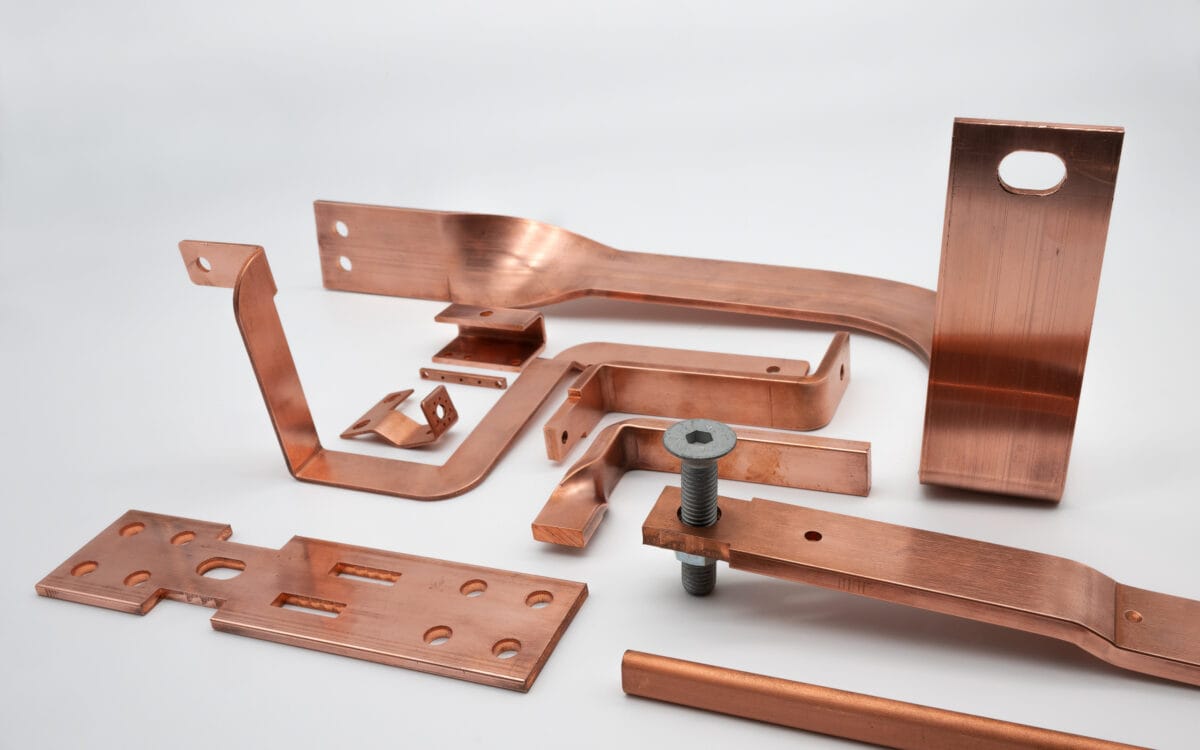
A busbar is fundamentally a metallic strip or bar—typically housed inside switchgear, panel boards, and busway enclosures—that conducts a substantial current of electricity for local high-current power distribution. However, when we add the word “Precision,” the definition shifts from a simple metal bar to a highly engineered component designed to meet exacting tolerances, specific thermal dynamics, and complex spatial constraints.
Precision Copper Busbars are the arteries of any high-power electrical system. They are responsible for transmitting power safely, efficiently, and reliably over decades of continuous use. The shift from traditional wire harnessing to precision busbars is driven by the need for better heat dissipation, structural rigidity, reduced space consumption, and lower inductance.
According to research published by the Copper Development Association, pure copper (such as the C11000 Electrolytic Tough Pitch copper we frequently utilize at JUMAI) offers a conductivity rating of 100% IACS (International Annealed Copper Standard), making it the gold standard for high-efficiency power transmission.
The JUMAI Advantage in Material Science
At JUMAI, our manufacturing process begins long before a piece of metal is cut or bent. It begins with material science. We source only the highest-grade raw copper, ensuring a minimum purity of 99.9%. This strict adherence to material quality minimizes electrical resistance, thereby reducing energy loss in the form of heat—a critical factor for applications like data centers and energy storage systems where thermal management is paramount.
Table 1: Standard Copper Grades Utilized in JUMAI Busbars
| Copper Grade | Purity (%) | Electrical Conductivity (IACS) | Key Characteristics | Common JUMAI Applications |
|---|---|---|---|---|
| C11000 (ETP) | 99.90% Min | 100% – 101% | Excellent conductivity, highly formable, cost-effective. | Standard Rigid Busbars, Switchgears, Power Panels |
| C10200 (OFHC) | 99.95% Min | 101% | Oxygen-free, immune to hydrogen embrittlement, high thermal conductivity. | EV Battery Packs, Aerospace, High-Frequency Systems |
| C12200 (DHP) | 99.90% Min | 85% | Phosphorus deoxidized, excellent welding and brazing properties. | Complex Deep Drawn Enclosures, Plumbing/HVAC |
Categorizing Our Expertise: Rigid, Flexible, and Braided Copper Busbars
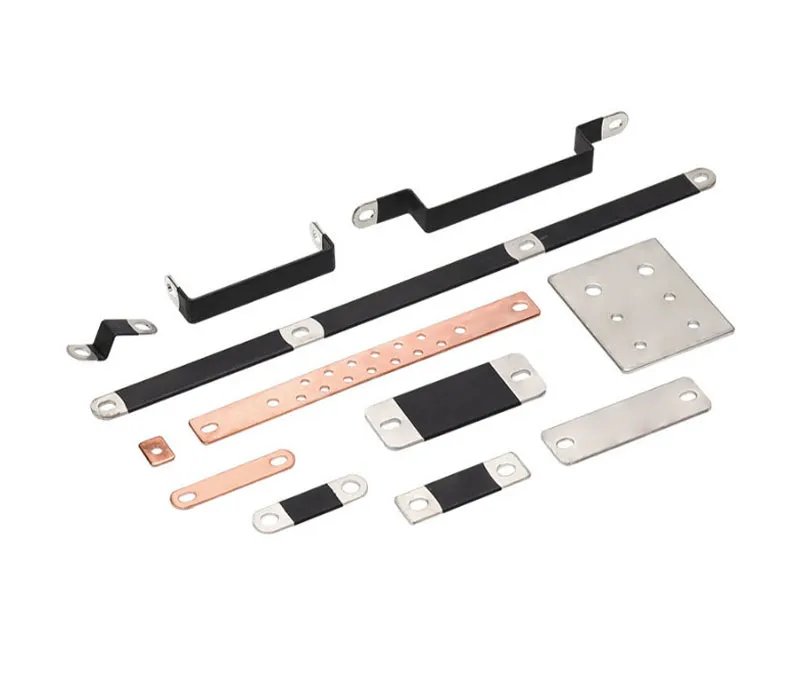
The diverse requirements of our global clients mean that a “one-size-fits-all” approach is entirely unfeasible. Vibration, thermal expansion, spatial limitations, and current capacity all dictate the physical form the busbar must take. JUMAI designs, processes, and manufactures three primary categories of Precision Copper Busbars.
1. Rigid Copper Busbars
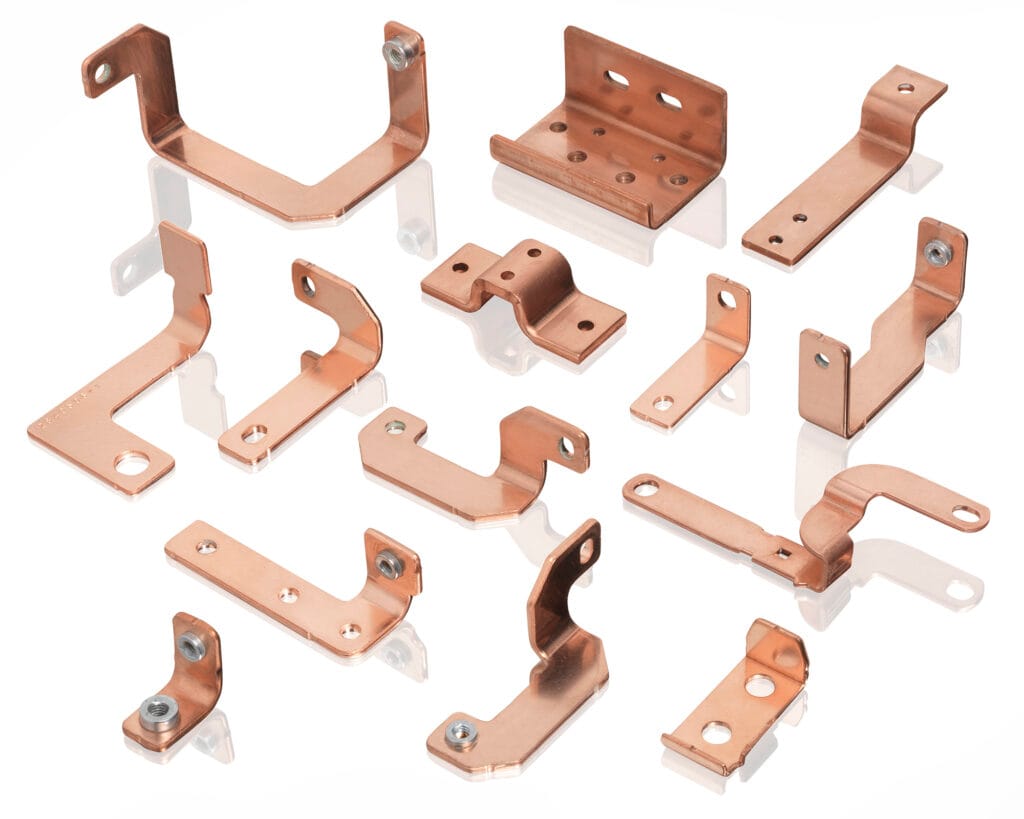
Rigid copper busbars are solid, unyielding conductors manufactured from extruded or drawn copper bars. They are the backbone of stationary power distribution systems.
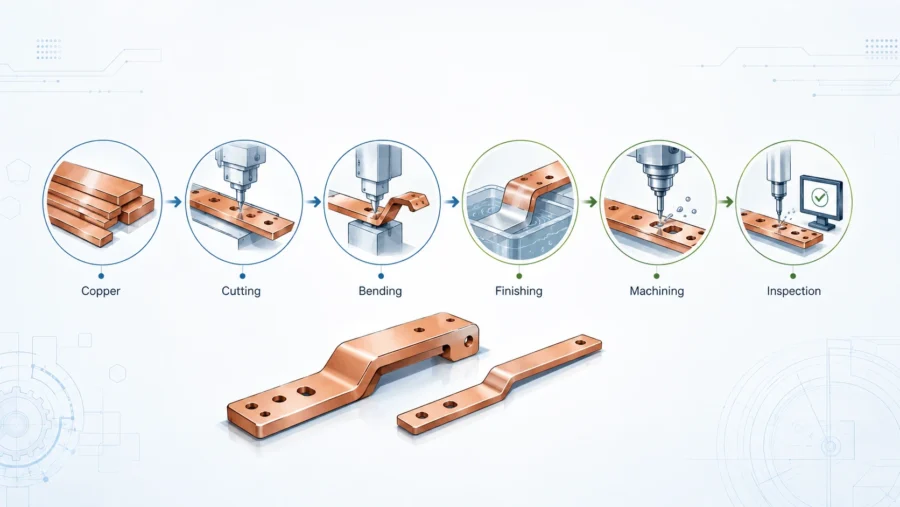
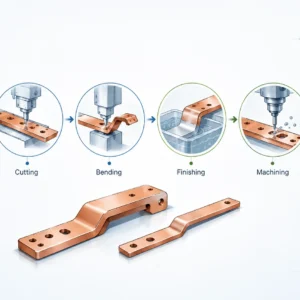
Manufacturing Precision: Producing rigid busbars is not merely about cutting metal to length. At JUMAI, we utilize advanced CNC (Computer Numerical Control) punching and bending machinery to ensure that every mounting hole, chamfer, and bend angle is accurate to within fractions of a millimeter. This precision is crucial for large-scale switchgear assemblies where multiple busbars must align perfectly to prevent mechanical stress on electrical insulators.
Ideal Applications:
- Power distribution units (PDUs) in data centers.
- Industrial motor control centers (MCCs).
- Large-scale renewable energy inverters.
2. Flexible Copper Busbars (Laminated Busbars)
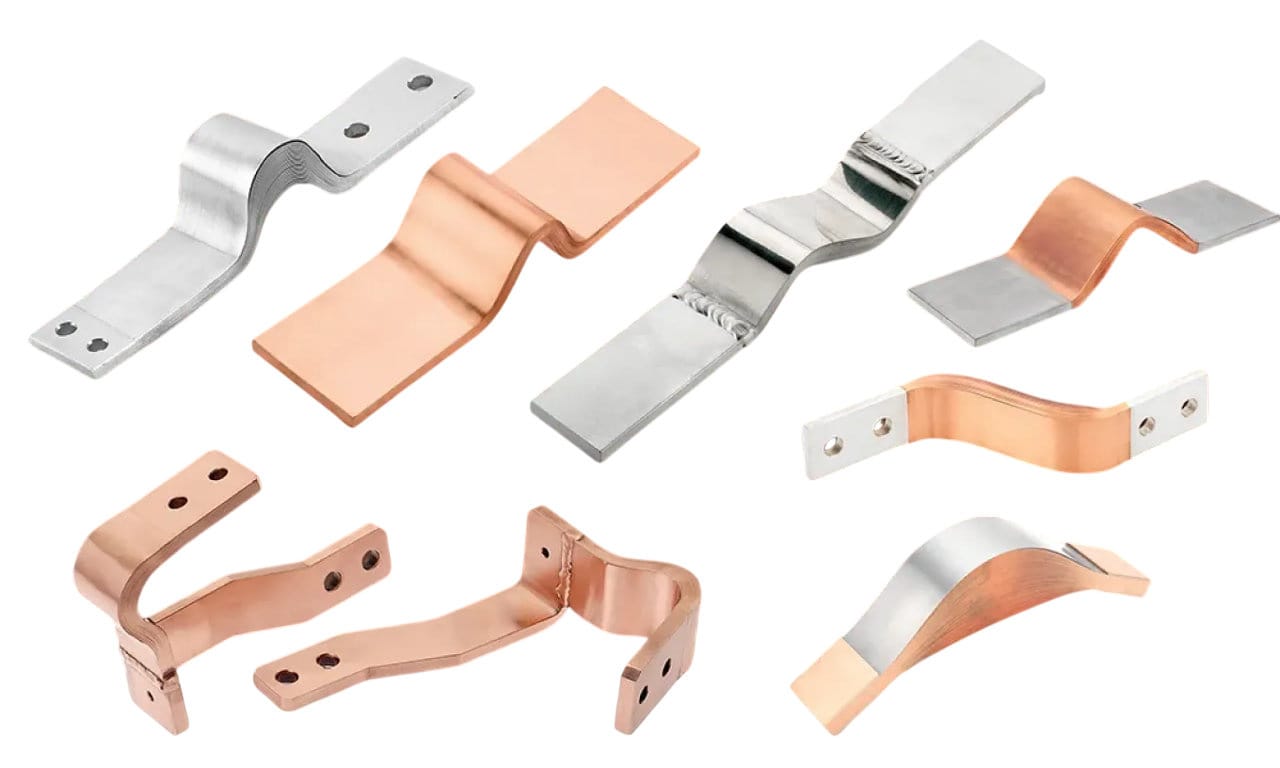
Flexible copper busbars are engineered to solve a specific problem: mechanical stress caused by thermal expansion or dynamic vibration. They are constructed by stacking multiple layers of highly conductive, ultra-thin copper foils (typically 0.1mm to 0.3mm thick). The ends of these stacked foils are solidly fused together—usually through a process called diffusion welding or electron beam welding—while the middle section remains un-fused and flexible.
Manufacturing Precision: The diffusion welding process at JUMAI is highly controlled. By applying exact amounts of heat and pressure, the copper molecules at the ends of the foils fuse together without the need for filler metals or brazing alloys. This creates a solid, homogenous connection point that retains 100% of the copper’s original conductivity, while the center of the busbar can flex, twist, and bend to absorb shock.
Ideal Applications:
- Electric Vehicle (EV) battery module interconnections (absorbing road vibration).
- Transformers and large generator connections (absorbing low-frequency acoustic vibrations).
- Thermal expansion joints in massive power transmission lines.
3. Braided Copper Busbars
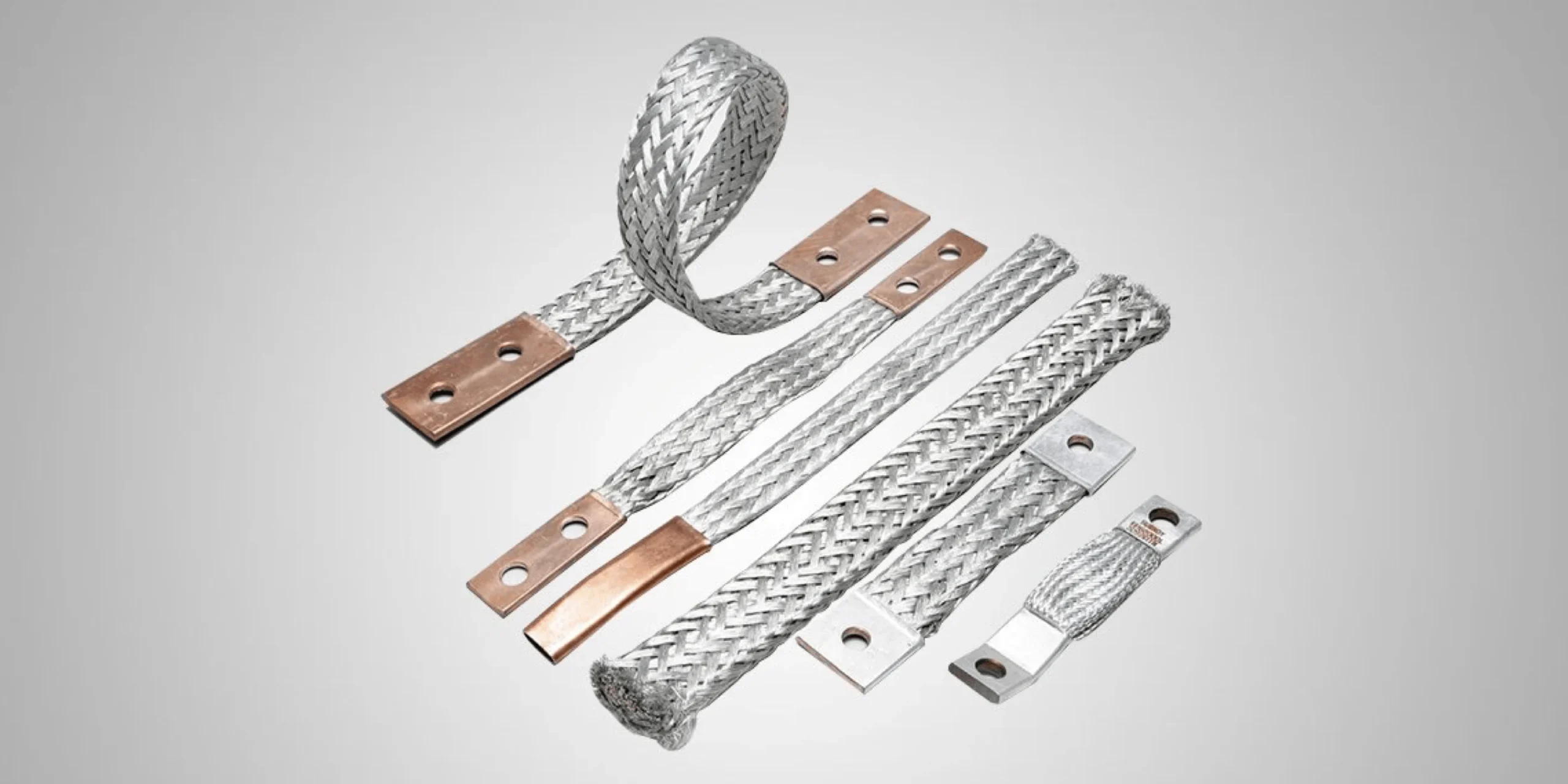
When maximum flexibility across multiple axes is required, braided copper busbars are the optimal solution. These are manufactured by weaving together thousands of fine, individually tinned or bare copper wires into a dense, flat, or tubular braid. The ends are then swaged or press-welded into solid terminals for easy installation.
Manufacturing Precision: JUMAI’s braided busbars are characterized by their tight, uniform weave. A loose weave can lead to increased electrical resistance and localized “hot spots” during operation. We meticulously control the tension of the wire drawing and braiding machines to ensure a dense, highly conductive, and incredibly supple final product. We often apply tin plating to the individual wires before braiding to enhance corrosion resistance, particularly in harsh environments.
Ideal Applications:
- Grounding straps for heavy machinery and aircraft.
- Connections within highly compact, moving components (e.g., robotic arms).
- Marine electrical systems subject to constant pitching and rolling.
Table 2: Comparative Analysis of JUMAI Busbar Types
| Feature / Busbar Type | Rigid Copper Busbars | Flexible (Laminated) Busbars | Braided Copper Busbars |
|---|---|---|---|
| Primary Advantage | Highest ampacity per volume, structural support. | Vibration dampening, high-current directional flexibility. | Maximum multi-axis flexibility, excellent grounding. |
| Vibration Tolerance | Low (Stationary applications only) | High (Ideal for EVs and heavy machinery) | Very High (Ideal for constant motion) |
| Space Efficiency | High (Can be tightly packed with insulation) | Medium (Requires space to flex) | Low (Braid requires clearance to avoid fraying) |
| Manufacturing Complexity | Medium (CNC machining, bending) | High (Diffusion welding, precision foil stacking) | High (Wire drawing, tension-controlled braiding) |
The JUMAI Manufacturing Ecosystem: From Raw Concept to Finished Product
What sets JUMAI apart in the global marketplace is our end-to-end manufacturing capability. When a client approaches us via deepdrawtech.com with a complex power distribution problem, our engineering team manages the entire lifecycle of the product.
Step 1: Collaborative Engineering and CAD/CAM Design
Every custom Precision Copper Busbar begins in our design department. Our veteran engineers, possessing decades of experience in the new energy and data center sectors, collaborate directly with the client’s engineering team. We utilize advanced 3D CAD (Computer-Aided Design) and CAM (Computer-Aided Manufacturing) software to model the busbars within the exact spatial constraints of the client’s final assembly.
Furthermore, we employ specialized simulation software to conduct FEA (Finite Element Analysis) and thermal modeling. This allows us to predict how the busbar will perform under maximum electrical load, identifying potential thermal bottlenecks or areas of excessive electromagnetic interference (EMI) before a single piece of copper is cut.
Step 2: Precision Cutting, Punching, and CNC Machining
For rigid busbars, the manufacturing process moves to our state-of-the-art CNC machining floor. JUMAI utilizes high-tonnage precision punching machines that can cleanly stamp holes, slots, and complex geometries into thick copper bars without causing micro-fractures or burrs.
Waterjet cutting and laser cutting technologies are also deployed for highly complex 2D profiles. Our CNC press brakes ensure that any bends in the copper are executed with pinpoint accuracy, accounting for the natural “spring-back” of the metal to ensure the final angle is exactly as specified in the technical drawings.
Step 3: The Synergy of Deep Drawing Technology
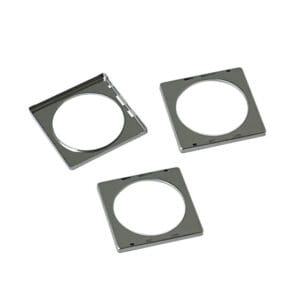
As our domain name (deepdrawtech.com) implies, JUMAI possesses world-class expertise in deep drawing molds and processing. While busbars themselves are generally flat or bent, the ecosystem surrounding them often requires deep-drawn components.
Deep drawing is a metal forming process where a flat sheet of metal is drawn into a forming die by a mechanical punch, creating complex, seamless, three-dimensional shapes.
How Deep Drawing Complements Busbar Manufacturing:
- Custom Terminal Housings: We manufacture seamless, deep-drawn copper or aluminum housings to protect delicate busbar connection points.
- Shielding Cans: For data centers and telecommunications, EMI (Electromagnetic Interference) is a major concern. JUMAI designs deep-drawn EMI shielding enclosures that integrate directly with our precision busbars.
- Integrated Cooling Channels: As power densities increase, liquid cooling is becoming mandatory. JUMAI uses deep drawing technology to create custom cold plates and liquid-cooling channels that can be directly brazed or welded onto our high-current copper busbars.
Step 4: Advanced Surface Treatments and Plating
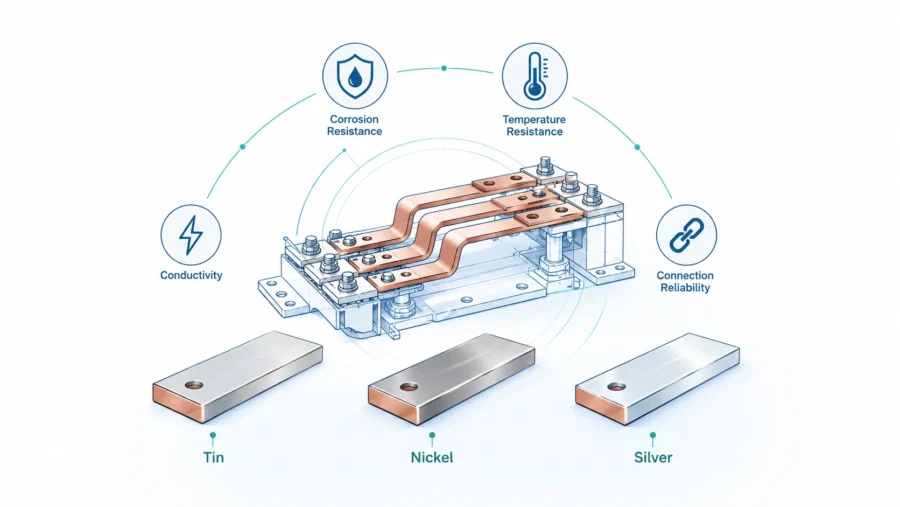
Bare copper is highly susceptible to oxidation, which creates a non-conductive patina on the surface, increasing contact resistance over time. To guarantee the longevity and reliability of our Precision Copper Busbars, JUMAI operates an in-house surface treatment and electroplating facility.
Depending on the client’s operating environment, we offer several plating options:
- Tin Plating: The most common and cost-effective solution. Tin prevents oxidation, improves solderability, and provides an excellent surface for mechanical bolting. It is standard for most industrial and EV applications.
- Silver Plating: Silver boasts the highest electrical conductivity of any metal. We apply micron-level silver plating to the contact areas of busbars utilized in ultra-high-current or high-frequency applications, such as large power transmission centers and radar systems, to minimize contact resistance.
- Nickel Plating: For extreme environments involving high temperatures or corrosive chemicals (such as offshore wind farms or chemical processing plants), nickel plating provides a hard, highly durable protective barrier over the copper.
Table 3: Surface Treatment Technical Specifications
| Plating Material | Typical Thickness | Key Benefit | Ideal Environment | Cost Profile |
|---|---|---|---|---|
| Tin (Sn) | 3 – 15 microns | Anti-oxidation, good lubricity for mating parts. | General industrial, automotive, indoor power enclosures. | Economical |
| Silver (Ag) | 1 – 5 microns | Lowest possible contact resistance. | High-frequency data centers, critical switchgears. | Premium |
| Nickel (Ni) | 2 – 10 microns | High wear resistance, excellent chemical defense. | Marine environments, high-temperature battery systems. | Moderate |
Step 5: Insulation and Dielectric Protection
In tightly packed modern electronics, bare busbars present a severe short-circuit and arc-flash hazard. JUMAI applies robust, high-dielectric insulation to our busbars, ensuring compliance with global safety standards such as UL94V-0 for flame retardancy.
- Heat Shrink Tubing: High-grade cross-linked polyolefin or fluoropolymer tubing is sleeved over the busbar and shrunk to fit tightly, providing excellent electrical insulation and mechanical protection.
- Epoxy Powder Coating (Fluidized Bed Dipping): For complex busbar geometries where heat shrink tubing is impossible to apply smoothly, we utilize an electrostatic epoxy powder coating process. The pre-heated busbar is dipped into a fluidized bed of epoxy powder, which melts and bonds to the copper, creating a seamless, uniform, and highly durable insulating layer.
- PVC Dipping: A flexible, cost-effective insulation method ideal for complex, multi-bend busbars operating in lower temperature environments.
Powering the Future: Key Industries Relying on JUMAI Copper Busbars
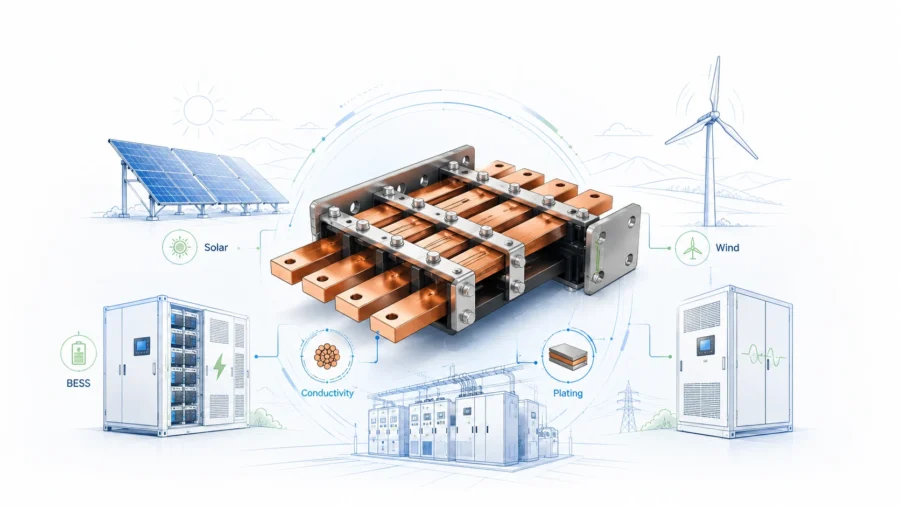
The expertise we have cultivated at JUMAI is not isolated to theoretical engineering; it is actively powering the most crucial infrastructure projects and technological advancements across the globe. Our custom OEM and ODM services cater specifically to the strict demands of several key sectors.
1. The Eco-Friendly New Energy Vehicle (NEV) Sector
The automotive industry is undergoing its most significant transition in a century. According to the International Energy Agency (IEA), global sales of electric vehicles continue to break records annually. This surge requires a fundamental redesign of automotive power systems.
Traditional wire harnesses are too heavy, too bulky, and too inefficient to handle the massive currents required to drive EV motors. JUMAI’s Precision Copper Busbars are integral to modern EV architecture.
- Battery Pack Interconnects: We manufacture laser-welded, flexible laminated busbars that connect individual battery cells and modules. These busbars must handle rapid surges of current during acceleration and regenerative braking, while simultaneously flexing to absorb the constant vibration of the road, preventing the battery terminals from cracking.
- Motor Controllers & Inverters: The “brain” of the EV requires complex, multi-layer rigid busbars to distribute power seamlessly from the DC battery to the AC motor. Our space-saving designs allow automotive engineers to shrink the overall footprint of the powertrain.
- High-Voltage Architectures (800V and Beyond): As the industry shifts from 400V to 800V architectures to facilitate ultra-fast charging, the dielectric requirements of busbar insulation have skyrocketed. JUMAI’s epoxy-coated busbars are tested to withstand these extreme voltage environments without creeping or arcing.
2. Hyperscale Data Centers and AI Computing
The explosive growth of Artificial Intelligence (AI) and cloud computing has resulted in data centers consuming unprecedented amounts of electricity. The Uptime Institute notes that server rack power densities have escalated from a historical average of 5 kW per rack to upwards of 30 kW to 50 kW per rack for AI-focused infrastructure.
Distributing this massive amount of power safely within a confined space is a monumental engineering challenge.
- Uninterruptible Power Supplies (UPS): JUMAI manufactures the heavy-duty rigid busbars that form the backbone of UPS systems, ensuring that if grid power fails, battery backup power is distributed instantaneously and without bottlenecking.
- Server Rack Power Distribution: We design custom, low-profile busbars that run vertically down the back of server racks, delivering clean, stable power to individual servers while taking up minimal space, thereby allowing for maximum airflow and cooling efficiency.
3. Large-Scale Renewable Power Transmission
Wind turbines and solar farms generate immense amounts of raw electrical power that must be efficiently funneled into the grid.
- Solar Inverters: Photovoltaic arrays generate Direct Current (DC), which must be converted to Alternating Current (AC) by massive inverters. JUMAI supplies the high-capacity copper busbars that handle this punishing conversion process, designed to operate reliably in harsh outdoor environments with fluctuating temperatures.
- Wind Turbine Nacelles: The space inside a wind turbine nacelle (the housing at the top of the tower) is incredibly tight, yet it must house the massive generators and transformers required to capture wind energy. Our custom flexible and braided busbars are used to connect these moving, vibrating components securely, preventing catastrophic electrical failures high above the ground.
Quality Assurance: The JUMAI Promise to Global Clients
In the realm of high-voltage electrical engineering, a failure rate of even 0.1% is unacceptable. A single faulty busbar can lead to system downtime, catastrophic equipment damage, or severe safety hazards. JUMAI’s entire manufacturing philosophy is built upon an uncompromising foundation of Quality Assurance (QA) and Quality Control (QC).
As a supplier serving a global clientele, our facilities and processes comply with the most stringent international standards, including ISO 9001 (Quality Management), ISO 14001 (Environmental Management), and IATF 16949 (Automotive Quality Management). Our products are fully compliant with the RoHS (Restriction of Hazardous Substances) directive.
Rigorous Testing Protocols
Every batch of Precision Copper Busbars that leaves the JUMAI facility undergoes a battery of exhaustive tests to verify electrical, mechanical, and thermal performance.
- Conductivity Testing: We utilize highly sensitive micro-ohmmeters to measure the precise electrical resistance of the finished busbar. Any deviation from the theoretical CAD model indicates a flaw in material purity or a microscopic defect in a weld, and the part is rejected.
- Dielectric Withstand Testing (Hi-Pot Testing): To ensure the safety of our insulated busbars, we subject them to High Potential (Hi-Pot) testing. We apply a voltage far higher than the busbar’s rated operating voltage (e.g., applying 5000V to a busbar rated for 1000V) to verify that the epoxy coating or heat shrink tubing does not break down or allow current to leak.
- Tensile and Flexural Testing: For our flexible laminated and braided busbars, mechanical endurance is just as important as electrical conductivity. We utilize dynamic testing machines to physically bend, twist, and pull the busbars thousands of times to simulate years of mechanical stress and vibration, ensuring the diffusion welds and braided connections remain fully intact.
- Salt Spray and Environmental Testing: To guarantee longevity in harsh environments (such as marine applications or automotive undercarriages), we subject plated busbars to accelerated aging tests in salt spray chambers, verifying the integrity of our tin, silver, or nickel plating against aggressive corrosion.
- Coordinate Measuring Machine (CMM) Inspection: The dimensional accuracy of our rigid busbars and deep-drawn accessories is verified using CMM technology. A robotic probe maps the physical dimensions of the manufactured part and compares it directly against the original 3D CAD file, ensuring tolerances are met down to the micron level.
Why Global Enterprises Choose JUMAI for OEM/ODM Partnerships
Navigating the complexities of international supply chains while demanding precision engineering is a daunting task for any procurement or engineering department. The deepdrawtech.com platform was built to streamline this process. JUMAI is not merely a vendor; we are an extension of our clients’ engineering and manufacturing capabilities.
1. Unmatched Customization and Engineering Support
We do not force our clients to adapt their cutting-edge designs to fit standard busbar catalogs. Instead, we adapt our manufacturing to fit their exact needs. Our engineers speak the language of power distribution. Whether you are designing a liquid-cooled 1000V EV powertrain or a compact high-frequency radar system, we provide the technical consultation necessary to optimize the busbar design for manufacturability (DFM), thereby reducing costs and lead times.
2. The Power of Integrated Manufacturing
Because JUMAI handles everything in-house—from material sourcing and CNC machining to diffusion welding, deep drawing of accessories, plating, and insulation—we maintain total control over the production timeline and quality. This integration eliminates the delays and miscommunications associated with subcontracting different stages of the manufacturing process to third-party vendors.
3. Scalability from Prototype to Mass Production
Innovation moves fast. Our clients often require rapid prototyping to test new concepts quickly. JUMAI is equipped with dedicated prototyping cells that can turn a CAD file into a physical, fully functional Precision Copper Busbar in a matter of days. Once the prototype is validated, we seamlessly transition the project to our automated mass-production lines, capable of producing hundreds of thousands of units with zero degradation in quality or consistency.
4. Transparent Global Logistics
Operating out of top-tier manufacturing hubs, JUMAI has established a robust global logistics network. We understand that a delayed shipment can halt an entire automotive assembly line or delay the launch of a critical data center. Our supply chain management team works closely with international freight forwarders to ensure customs compliance, optimal routing, and on-time delivery to any port or facility in the world.
Future Trends in Copper Busbar Technology
As industry veterans, the team at JUMAI is constantly looking ahead to anticipate the needs of tomorrow’s electrical systems. We are actively investing in R&D to stay ahead of several emerging trends:
- Liquid-Cooled Busbars: As power densities reach their physical limits, passive air cooling is no longer sufficient. JUMAI is pioneering the integration of hollow copper busbars and attached cold plates that allow dielectric coolant to flow directly through or alongside the conductor, exponentially increasing its ampacity.
- Advanced Composite Insulations: We are exploring nano-composite epoxy coatings that offer higher dielectric strength while simultaneously improving thermal conductivity, allowing the busbar to shed heat more effectively through its insulation layer.
- Sustainable Manufacturing: Copper is infinitely recyclable. JUMAI is continually optimizing our supply chain to incorporate highly refined recycled copper and implementing zero-waste-water protocols in our plating facilities to reduce the environmental footprint of our manufacturing processes.
Frequently Asked Questions (FAQ) About Custom Busbars
To further assist our global clients in their procurement journey, we have compiled a list of the most common technical inquiries our engineering team receives at deepdrawtech.com.
Q1: How do I choose between a rigid, flexible, or braided copper busbar for my application?
Answer: The choice depends entirely on motion and space. If the connection points are stationary and structural support is needed, a rigid busbar is best. If the components experience thermal expansion or vibration (like in an EV battery), a flexible laminated busbar is required. If extreme, multi-axis movement is present (like a grounding strap on a moving door), a braided busbar is the only safe option. Our engineers at JUMAI can help you analyze your specific mechanical constraints to make the right choice.
Q2: What information does JUMAI need to provide an accurate OEM/ODM quote?
Answer: To provide the fastest and most accurate quotation, please provide a 2D/3D CAD drawing (STEP, IGES, or DWG formats are preferred), the required copper grade (e.g., C11000), specific plating requirements (Tin, Silver, Nickel), insulation type (Epoxy, Heat Shrink), expected current load (Amps), and the estimated annual production volume.
Q3: Can JUMAI handle complex deep-drawn components alongside busbar manufacturing?
Answer: Absolutely. This is our unique core competency. As deepdrawtech.com indicates, our deep drawing mold design and processing capabilities allow us to manufacture complete sub-assemblies. If your busbar requires a custom deep-drawn copper shield, an aluminum enclosure, or complex stamped terminal brackets, we manufacture all of it in-house, ensuring perfect fitment and drastically reducing your vendor management overhead.
Q4: How does JUMAI ensure the quality of flexible laminated busbars?
Answer: The most critical failure point of a flexible busbar is the welded terminal ends. We utilize advanced diffusion welding, which fuses the copper foils at a molecular level without filler metals. We test these welds rigorously using electrical resistance testing, destructive pull-testing, and ultrasonic inspection to guarantee they will never delaminate under operational stress.
Q5: What is the typical lead time for custom busbar projects?
Answer: Lead times vary based on the complexity of the design and the required tooling. Generally, rapid prototypes can be delivered in 7 to 14 days. Once the design is approved, mass production tooling (like progressive stamping dies or deep drawing molds) may take 3 to 5 weeks, after which continuous mass production begins. We pride ourselves on transparent communication and will provide a strict timeline during the initial quotation phase.
Partner with JUMAI for Uncompromising Precision
The modern world runs on electricity, and that electricity runs through copper. As the demands placed on power systems become increasingly extreme, the components that distribute that power must evolve.
At JUMAI, we do not simply manufacture metal parts; we engineer critical conductive solutions. Our deep-rooted expertise in eco-friendly new energy, massive data centers, and heavy industrial power transmission allows us to anticipate your engineering challenges and solve them through precision manufacturing, advanced deep drawing techniques, and uncompromising quality control.
When your project demands absolute reliability, superior thermal management, and exact dimensional accuracy, standard solutions will fail. You need Precision Copper Busbars designed specifically for your application.
We invite engineers, procurement managers, and technical directors from around the globe to experience the JUMAI difference. Visit us at https://www.deepdrawtech.com/ to explore our full range of capabilities, review our technical specifications, and submit your CAD designs for a comprehensive, confidential consultation and quotation. Let JUMAI be the conductive force behind your next major technological breakthrough.