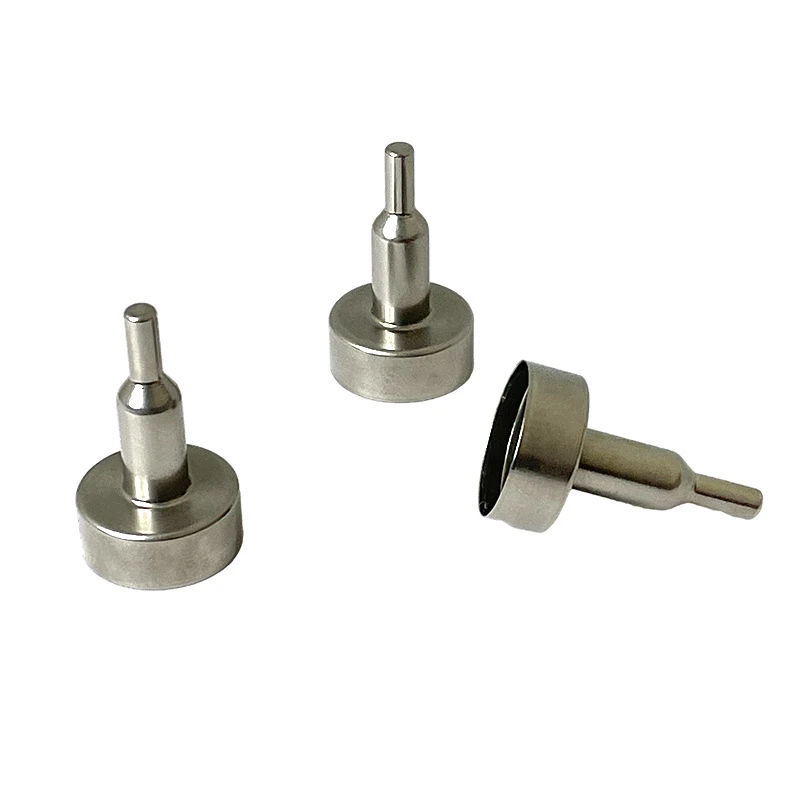

In high-density, high-frequency electronics, the humble enclosure is no longer “just a box.” It becomes an active part of your EMC strategy. A well-engineered deep drawn box can function as a compact Faraday cage, protecting sensitive circuits from electromagnetic interference (EMI) while meeting aggressive cost and volume targets.
This article explains how to design a deep drawn box specifically for EMI-shielded electronics housings — from material selection and deep drawing constraints to shielding performance, surface finishes, and quality validation. The goal is to help design engineers and sourcing teams choose the right geometry, process, and manufacturing partner for their next project.
Table of Contents
What Is a Deep Drawn Box?
Deep drawing in simple terms
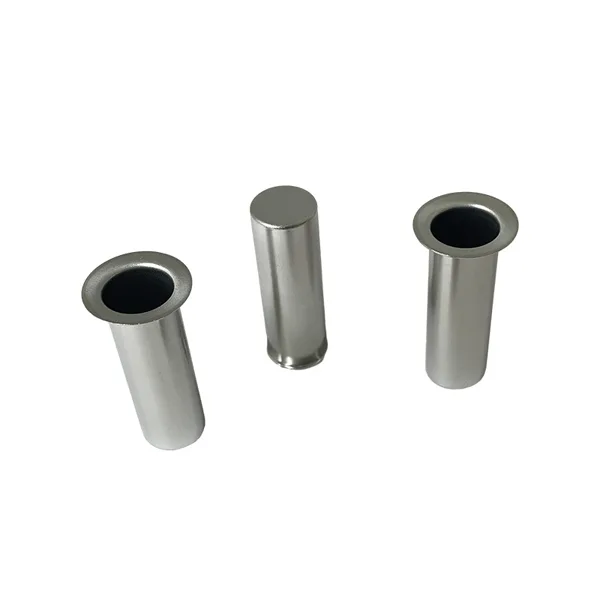
Deep drawing is a sheet-metal forming process where a flat metal blank is pushed into a die cavity by a punch to create a hollow shape. The process becomes “deep drawing” when the depth of the part exceeds at least one characteristic dimension (often the diameter or width). It is widely used to produce cups, cans, and box-like components such as electronics housings. Wikipedia+1
For a deep drawn box, the blank is usually circular or rectangular. Under the action of the punch, the material flows radially into the die while the wall is stretched and thinned. With the right process control, you get a one-piece enclosure with continuous walls, smooth radii and minimal seams — exactly what you want for EMI shielding. dawnbreezemetal.com+1
For a more detailed overview of the deep drawing process, you can refer to this general deep drawing process description. Wikipedia
Deep drawn box vs. bent or machined housings
Compared with housings made from brake-formed sheet, die-castings, or machined billet, a deep drawn box offers several advantages for EMI-sensitive applications:
- Fewer seams and joints – The side walls are formed from a single piece of metal, improving continuity and reducing potential leakage paths. TTI Europe
- Consistent wall thickness and radii – Good process control yields predictable electrical and mechanical behavior. MetalForming Magazine+1
- High-volume efficiency – Once the tooling is built, each stroke of the press produces a near-net-shape housing at low cycle time, ideal for automotive or consumer electronics volumes. Wiley Metal
That’s why you see deep drawn boxes used for RF modules, sensor housings, power electronics cans, and other compact electronic assemblies.
Why EMI Shielding Matters in Modern Electronics
What is EMI and why should your box care?
Electromagnetic interference (EMI) is unwanted disturbance caused by electromagnetic fields and currents. It can originate from switching power supplies, RF transmitters, motor drives, or even fast digital edges on high-speed buses. If not controlled, EMI can:
- Degrade RF and analog signal quality
- Increase bit error rates in digital communication
- Cause unstable operation or intermittent failures
- Interfere with nearby devices or safety-critical systems gowanda.com+1
A properly designed metal enclosure acts as a Faraday cage, attenuating unwanted fields entering or leaving the device. At enclosure level, EMI shielding is essentially about providing a low-impedance, continuous conductive barrier around the electronics. TTI Europe+1
For a more in-depth discussion, see this application note on EMI shielding in RF and power circuit design. gowanda.com
Regulatory and EMC standards to consider
Most products must comply with regional EMC (electromagnetic compatibility) regulations before they can be sold:
- FCC Part 15 in the U.S. (covers emissions from most digital and RF devices) IB-Lenhardt AG+1
- IEC 61000 series for immunity and emissions tests used globally and in the EU incompliancemag.com+1
- CISPR standards for specific product categories such as multimedia equipment resources.system-analysis.cadence.com
These standards define test methods and allowable limits. If your housing does not provide sufficient shielding, your device may fail radiated or conducted emissions tests, delaying certification and market launch. An overview of commonly used EMC standards can be found in this EMC standards guide. resources.system-analysis.cadence.com+1
The enclosure is not the only factor, but deep drawn EMI boxes are a key tool to meet these EMC targets, especially for compact modules and sub-assemblies.
Why Choose a Deep Drawn Box for EMI-Shielded Housings?
Seamless Faraday cage behavior
A deep drawn box is formed from a single blank without welded corners or long through-seams. This continuous geometry helps:
- Minimize gaps that can behave as slots or antennas
- Maintain consistent contact paths for return currents
- Reduce the amount of gasketing, welding, or secondary joining you need
Enclosure-level shielding is often described as creating a Faraday cage around the electronics. A one-piece deep drawn enclosure is naturally well suited to this concept. TTI Europe+1
Mechanical robustness and dimensional stability
Deep drawing work-hardens the material in the walls, providing high strength and stiffness even with relatively thin gauges. This allows a deep drawn box to withstand:
- Vibration and shock in automotive or industrial applications
- Handling loads during assembly and field service
- Clamping forces from connectors or fasteners
In many cases, you can reduce material thickness compared with machined or bent housings and still meet mechanical requirements, lowering both weight and cost. Wiley Metal+1
Cost and scalability in volume production
Once the tooling is in place, deep drawing is extremely efficient for medium-to-high volume runs:
- High stroke rates and automatic feeding
- Short cycle times per part
- Low scrap ratios compared with machining
This is why deep drawn EMI cans and housings are widely used in consumer electronics, automotive ECUs, and telecom modules where production runs can reach hundreds of thousands or millions of pieces. HARSLE+1
Material Selection for EMI-Shielded Deep Drawn Boxes
Copper and copper alloys – premium shielding performance
For EMI shielding, electrical conductivity is a key property. Among common metals, copper stands out with one of the highest conductivities, which translates into excellent shielding effectiveness over a wide frequency range. Wiley Online Library+1
Advantages of copper and copper alloys for a deep drawn box:
- Very high shielding for both electric and magnetic fields
- Good formability for demanding draw ratios
- Excellent thermal conductivity to spread heat from power components
Copper is used extensively in EMI shields for medical equipment, telecom base stations, and consumer electronics. A useful overview of EMI shielding materials, including copper and copper alloys, can be found in this article on common EMI shielding materials. Strouse
The trade-off is cost: copper is more expensive than mild steel or aluminum. For cost-sensitive projects, we often evaluate hybrid solutions such as steel bodies with copper-based plating in critical areas.
Steel, stainless steel, and aluminum
Depending on your application and regulatory requirements, other materials can also work well:
- Low-carbon steel – Lower conductivity than copper but good magnetic shielding and mechanical strength. Works well when combined with conductive coatings or plating. ASTESJ+1
- Stainless steel – Corrosion-resistant and robust; useful in harsh environments or for medical and food-grade applications. Some grades have lower magnetic permeability, so shielding behavior must be verified. Nature
- Aluminum alloys – Lightweight, good conductivity, but less effective for low-frequency magnetic fields. Often used where weight savings are critical, e.g., aerospace and portable electronics. Nature+1
For an excellent high-level comparison of shielding metals (including copper, steel, and alloys), see this overview of popular shielding metals. Leader Tech Inc
Plating, coatings, and multi-layer concepts
Often the best solution is a deep drawn box in one material plus a surface finish tailored for EMI and corrosion:
- Tin or tin-lead plating for solderability and decent conductivity
- Nickel plating for hardness and corrosion resistance
- Silver or gold plating for premium RF performance on high-frequency modules
Conductive coatings and composite layers can also be used to fine-tune shielding performance, but metals remain the dominant option due to their high conductivity and structural strength. PMC+1
Key Design Parameters for an EMI-Optimized Deep Drawn Box
Draw ratio, corner radii, and wall thickness
Mechanical feasibility and cost of a deep drawn box are strongly influenced by:
- Draw ratio (D/d or depth vs. blank size) – Higher draw ratios require more forming stages and can increase the risk of splitting or excessive thinning. MetalForming Magazine+1
- Corner and bottom radii – Generous radii reduce stress peaks and improve material flow, enabling deeper draws with fewer defects.
- Wall thickness distribution – The wall typically thins compared with the starting blank. Critical areas (e.g., connector zones) may require local reinforcement or conservative thickness choices. dawnbreezemetal.com+1
When you share a 3D model with us, we usually run a deep draw feasibility review to check these ratios and suggest adjustments before tooling.
Openings, cutouts, and embossing
Your EMI-shielded enclosure usually needs practical features:
- Cable and connector cutouts
- Ventilation slots
- Mounting holes or bosses
- Embossed features for stiffness or component clearance
Each feature can affect shielding by changing current paths or creating apertures. As a rule of thumb:
- Keep slots and openings as small as practical relative to the highest frequency of concern.
- Use overlapping covers, finger-stock contacts, or conductive gaskets around large apertures. TTI Europe+1
Careful placement of beads and embosses can increase rigidity without significantly degrading shielding, especially if they do not break the conductive path around the box.
Interfaces: lids, covers, and gaskets
Most deep drawn boxes are used with a separate lid or PCB shield cover. The joint between lid and box is often the weakest point in the Faraday cage:
- Provide wide, flat land areas to support EMI gaskets or spring fingers.
- Design for even contact pressure along the entire seam.
- Avoid long unsprung segments where gaps can open due to tolerances or vibration. TTI Europe+1
Where possible, design the lid as another deep drawn part or a precision-stamped cover that nests tightly into the box.
Process Capabilities and Tolerances
(At JUMAI TECH, we tailor the deep drawing route to your specific EMI enclosure design.)
Multi-stage deep drawing, redrawing, and ironing
High aspect-ratio EMI cans often require several forming stages:
- First draw from flat blank to shallow cup or box
- One or more redraw operations to increase depth
- Possible ironing to control wall thickness and improve surface finish HARSLE+1
By optimizing blank shape, lubrication, and die design, we keep thinning within safe limits while meeting the dimensional requirements of your electronics housing.
Typical tolerances for electronics housings
Realistic tolerances depend on material, size, and the number of forming stages, but for a deep drawn EMI box we typically discuss:
- Wall thickness tolerances based on starting gauge and draw ratio
- Positional and dimensional tolerances for critical interfaces (connector windows, screw holes, gasket lands)
- Flatness and parallelism of lid and PCB mounting surfaces
In many cases, secondary operations such as restrike, coining, or machining of specific features can tighten tolerances where needed, without making the entire part more expensive.
Prototyping vs. mass production
For new projects, we often use a phased approach:
- Soft tooling or simplified dies for initial samples and EMC evaluation
- Iteration on geometry and material based on test results
- Investment in full progressive or transfer tooling for mass production once the design is frozen
This approach reduces early risk and lets you validate EMI performance before committing to full-scale tooling.
Surface Treatments and Secondary Operations
Plating and finishing for EMI and corrosion
After forming, a deep drawn box can receive various surface treatments:
- Tin or tin-nickel plating to balance conductivity, solderability, and corrosion resistance
- Nickel or nickel-phosphorus for wear resistance and good conductivity
- Silver plating where very low contact resistance and high-frequency performance are required
Shielding effectiveness is influenced by conductivity, permeability, and thickness of the conductive layer. For example, studies show that increasing metal thickness can significantly improve attenuation up to a certain point, especially for high-frequency RF applications. ASTESJ+1
We also offer passivation, painting, and marking options — always checking that any coating on critical contact areas remains conductive or is masked appropriately.
Piercing, tapping, welding, and insertion
A typical EMI-shielded electronics housing needs more than just a box shape. Depending on your design, we can add:
- Precision-pierced holes and slots for connectors or screws
- Tapped holes or welded studs for mounting PCBs or covers
- Laser welding or resistance welding for attaching brackets and partitions
These operations are planned together with the deep drawing stages to maintain structural integrity and shielding continuity.
Branding and traceability
For OEM customers, we can integrate branding and traceability into the deep drawn box design:
- Laser-etched logos and QR codes
- Embossed or debossed brand marks
- Date codes or batch IDs for quality tracking
All of these can be positioned on non-critical surfaces so they do not interfere with EMI performance.
Quality Assurance and EMI Validation
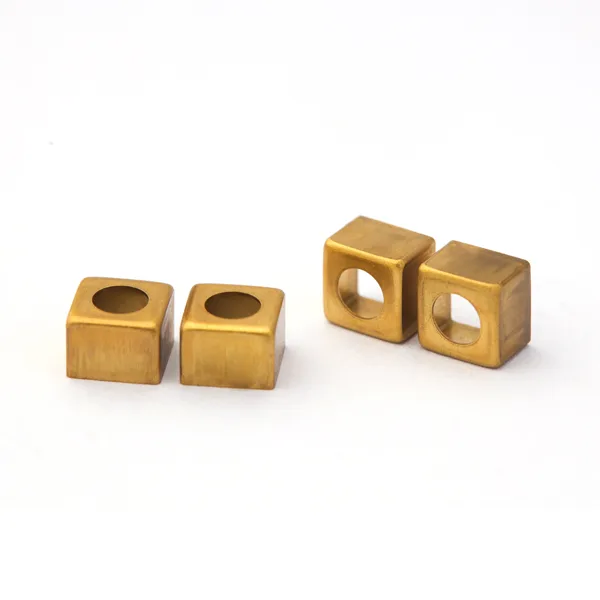
Dimensional and cosmetic quality control
To ensure each deep drawn box meets your specifications, we typically apply:
- 3D coordinate measuring (CMM) or optical scanning for critical dimensions
- Go/no-go gauges for key interfaces
- Visual inspection for surface defects, scratches, or cracks
For high-volume projects, we implement statistical process control (SPC) on key characteristics to maintain consistency over time.
Shielding effectiveness and EMC testing
While the enclosure design is crucial, actual EMI performance must be validated at product level:
- Pre-compliance testing in a semi-anechoic chamber or reverberation chamber
- Near-field scanning to identify hotspots on PCBs and around apertures
- Full compliance testing to standards such as FCC Part 15 or IEC 61000-4 series, performed at accredited labs IB-Lenhardt AG+1
Research in EMI shielding shows that factors such as material conductivity, thickness, and surface integrity strongly influence shielding effectiveness across different frequencies. Wiley Online Library+1
We work closely with your EMC team and test labs to interpret results and adjust the enclosure design if needed.
Typical Applications for Deep Drawn EMI Boxes
Automotive and e-mobility electronics
In vehicles, electronics must survive wide temperature ranges, vibration, and strict EMC regulations. Deep drawn boxes are widely used for:
- Sensor modules (ABS, ADAS, radar front ends)
- Power electronics for inverters and DC-DC converters
- Battery management system (BMS) sub-modules
Copper or steel deep drawn housings with appropriate plating provide robust shielding and mechanical strength in these demanding environments. resources.system-analysis.cadence.com+1
Telecom, RF, and IoT modules
For telecom base stations, 5G equipment, and IoT gateways, space is tight and frequencies are high. Deep drawn enclosures help:
- Reduce cross-talk between RF stages
- Protect sensitive front-end components
- Maintain shielding performance over long service life
These housings often use high-conductivity materials and premium finishes such as silver plating to stabilize RF performance. Wiley Online Library+1
Industrial, medical, and instrumentation devices
Industrial controllers, medical instruments, and precision measurement devices all require reliable EMI control to avoid false readings or unsafe behavior. A deep drawn box enclosure offers:
- Stable shielding over time, even in harsh environments
- Compatibility with sterilization or cleaning chemicals (with the right material/finish)
- Clean, compact packaging that integrates easily into system-level housings
Regulatory expectations in these sectors are typically strict, making a robust enclosure strategy essential. www.emcnoordin.com+1
How to Start a Deep Drawn Box Project with JUMAI TECH
What information to prepare for RFQ
To quickly evaluate and quote your deep drawn box for EMI-shielded electronics housings, it helps to provide:
- 2D drawings and/or 3D models (STEP, IGES, etc.)
- Material preferences and any mandatory standards (e.g., RoHS, REACH, specific EMC norms)
- Target shielding performance or EMC test requirements
- Expected annual volume and lifecycle
- Special requirements such as leak-tightness, cleanliness, or surface finish
The more detail you share up front, the faster we can propose an optimized, manufacturable design.
Our typical project workflow
When you work with JUMAI TECH, a typical project follows these steps:
- Design & DFM review
- Feasibility check on draw ratio, radii, and wall thickness
- Suggestions for EMI-friendly lid interfaces and gasket lands
- Prototyping & initial EMC tests
- Sample deep drawn boxes produced using prototype tooling
- Customer performs pre-compliance EMI testing and mechanical validation
- Tooling optimization & ramp-up
- Final tooling design for serial production
- Establishment of process parameters and quality control plans
- Mass production & continuous improvement
- Stable batch production with traceability
- Ongoing engineering support for design updates or cost-down activities
Throughout the process, our engineering team combines deep drawing expertise with EMI-oriented enclosure design experience, helping you reduce risk and time-to-market.
Ready to Develop Your Next EMI-Shielded Deep Drawn Box?
A deep drawn box is more than a mechanical shell — it is a core part of your EMI strategy and regulatory compliance. By choosing the right material, geometry, and forming process, you can achieve:
- Reliable EMI performance that meets global standards
- Robust, lightweight housings for harsh environments
- Competitive piece-price and scalability for volume production
If you’re planning a new EMI-sensitive module or looking to cost-optimize an existing housing, our team at JUMAI TECH can support you from concept and DFM through tooling, validation, and mass production.
Get in touch with our engineering team to discuss your drawings, EMC requirements, and target volumes — and let’s turn your next deep drawn box design into a high-performance, production-ready solution.
FAQ
What is a Deep Drawn Box?
A deep drawn box is a type of enclosure made using a special sheet metal forming process called deep drawing. In this technique, a flat piece of metal is pushed into a mold to create a hollow shape. This method allows for creating boxes with smooth walls and fewer seams, making them ideal for protecting sensitive electronics from electromagnetic interference (EMI). For example, you can find deep drawn boxes in devices like radios, computers, and other electronic gadgets.
Why do we need EMI Shielding?
EMI shielding is essential to protect electronic devices from unwanted disturbances caused by electromagnetic fields. These interferences can lead to problems such as poor signal quality or even failures in your devices. Imagine trying to listen to your favorite radio station, but static noises keep interrupting — that’s what EMI can do. A well-designed metal enclosure acts like a safety shield, blocking these unwanted signals and helping your device work properly.
What materials are used for Deep Drawn Boxes?
Deep drawn boxes can be made from various metals, such as copper, steel, stainless steel, or aluminum. Each material has its own strengths. For instance, copper is great for blocking signals and is often used in medical equipment, while aluminum is lighter and ideal for portable devices. Choosing the right material depends on the requirements of your project, like cost and the environment in which the box will be used.
How do I start a project for a Deep Drawn Box?
Starting a project for a deep drawn box is simple! First, gather some important information, like design drawings and what materials you’re thinking of using. It’s also helpful to know how many boxes you will need and any special requirements. Once you have this information ready, contact a company that specializes in deep drawn boxes. They will help you through the design and manufacturing process!
What are some applications for Deep Drawn EMI Boxes?
Deep drawn EMI boxes are used in many places! They’re found in cars to protect electronic parts during bumpy rides, in medical devices to ensure safe and accurate readings, and even in communication equipment like cell towers. These boxes are designed to keep the electronics safe from interference so they can work well in all kinds of conditions.
Can I customize the design of a Deep Drawn Box?
Yes, you can customize the design of a deep drawn box! Design engineers will work with you to ensure that it meets your specific needs, such as size, shape, and material. You can even add features like cutouts for cables and special surface coatings. The aim is to make the enclosure fit perfectly for what you need it for.
How does the manufacturing process work?
The manufacturing process for a deep drawn box involves several steps. First, a flat sheet of metal is placed in a machine that forms it into the shape you want. Depending on how deep you need the box, there may be multiple forming stages. Precision is essential, and each step ensures that the box is made just right to protect the electronics inside.
What quality controls are in place for Deep Drawn Boxes?
Quality control is a key part of making sure deep drawn boxes meet high standards. This includes checking the dimensions, material quality, and making sure there are no defects. There may also be testing for EMI shielding performance. This guarantees that the boxes will protect the devices they enclose effectively.
Are Deep Drawn Boxes cost-effective for production?
Yes, deep drawn boxes can be very cost-effective, especially for large production runs. Once the initial tools are made, creating each box can be quick and efficient. This results in lower costs per unit. So, if you need a lot of boxes, deep drawing is often a smart choice!
What should I know before choosing a manufacturing partner?
Before selecting a manufacturing partner for deep drawn boxes, you should check their experience, quality of work, and whether they understand your needs. Ask about their capabilities, past projects, and how they ensure product quality. It’s also helpful to see if they can provide support throughout the design and production process.