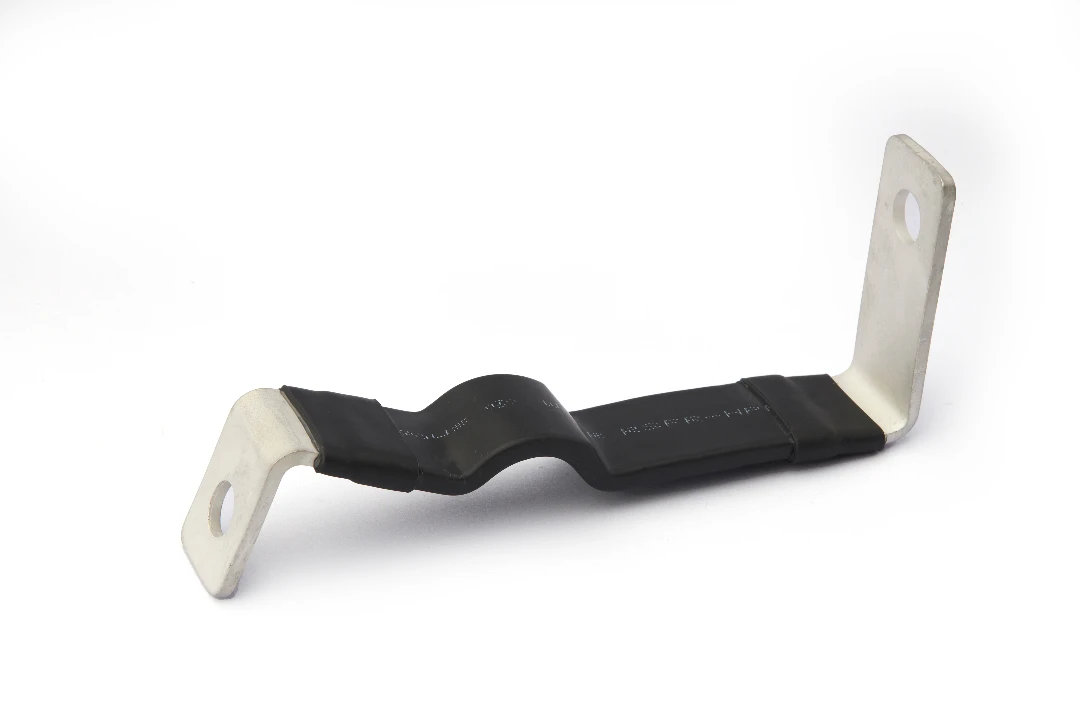

In vibration-prone electrical systems, rigid copper busbars alone are often not enough. Motors start and stop, compressors ramp up, generators vibrate on their skids, and busduct runs move with building expansion. Every small movement is transmitted to your connections. Over time, that mechanical stress can crack rigid conductors, loosen joints, and eventually cause overheating, arcing, or unplanned shutdowns.
Flexible copper busbar is designed to absorb this movement instead of fighting it. Built from thin copper laminations, braided strands, or foil stacks, these connectors combine high current-carrying capacity with mechanical compliance. They act as the “shock absorbers” in your power distribution system, protecting both equipment and connections in dynamic environments.rhielectric.com
As a precision copper busbar manufacturer, JUMAI TECH works with customers worldwide who are upgrading from rigid links or oversized cables to flexible copper busbars. This guide will walk you through the basics, with a special focus on systems exposed to vibration, thermal movement, and mechanical shock.
Table of Contents
1. Why Vibration-Prone Systems Need Flexible Copper Busbars
1.1 Typical Vibration Sources in Power Systems
Many industrial and energy applications operate in environments where vibration is unavoidable. Large motors in pump stations, compressor packages in chemical plants, and engine-generator sets in data centers all introduce continuous mechanical movement into the structure. Even when mounted on anti-vibration skids, they still transmit residual motion to connected busbar systems and switchgear panels.
On top of that, outdoor busduct runs crossing building expansion joints or mounted high on steel structures are constantly moving due to wind, thermal expansion, and structural deflection. Over years of operation, these small repetitive displacements accumulate into significant fatigue cycles at the electrical joints.
1.2 The Risks of Using Only Rigid Busbars
Rigid copper busbars are excellent for carrying high current with low losses, but they are not designed to flex repeatedly. Under dynamic mechanical loading, solid copper conductors experience high localized stresses at fixed points such as bolted joints, corners, or clamp locations. Over time this can cause metal fatigue, micro-cracks, and eventual fracture.
Comparative tests show that flexible “soft” copper busbars can survive up to 100,000 bending cycles with minimal fatigue damage, while solid rigid busbars under the same conditions show a dramatically higher risk of cracking.busbarmanufacturer.com In real installations this translates into fewer unexpected failures, less hot-spot formation, and lower maintenance costs.
1.3 Where Flexible Copper Busbar Fits in the System
Flexible copper busbar is not a complete replacement for rigid busbars. Instead, it is strategically placed wherever movement needs to be absorbed. Typical locations include the interface between rigid busway and vibrating equipment, between transformers and switchgear, and across expansion joints in long busduct runs.ABB Electrification
By adding flexible links at these points, you decouple mechanical movement from rigid conductors. The flexible busbar takes up the displacement while preserving the electrical performance of the system. Done correctly, this approach maximizes reliability without increasing system complexity.
2. What Is a Flexible Copper Busbar?
2.1 Basic Construction and Materials
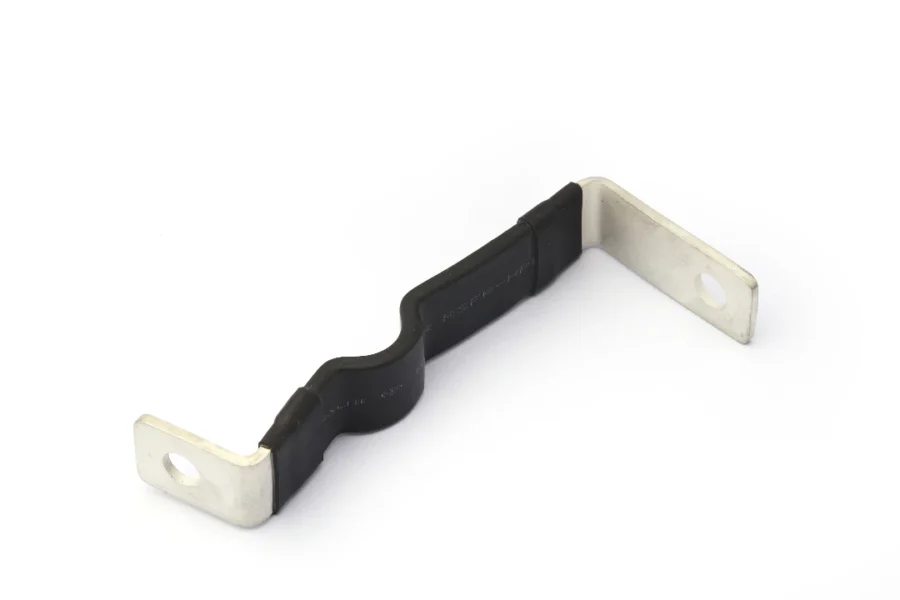
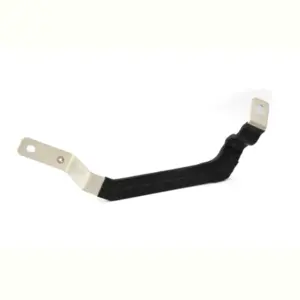
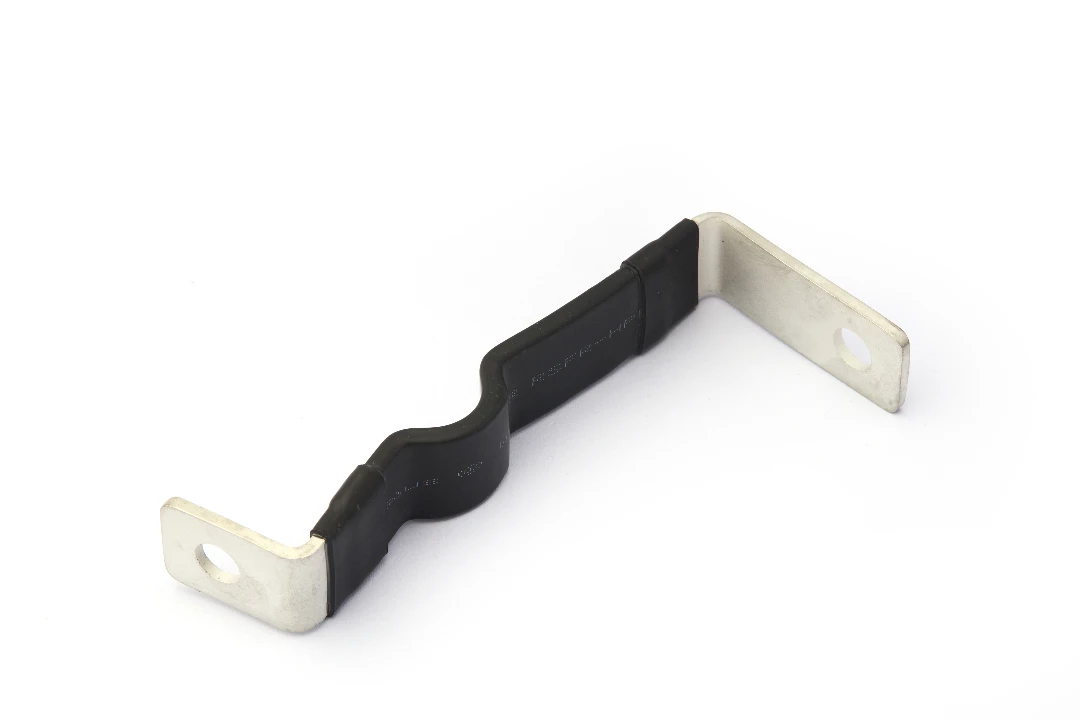
A flexible copper busbar is an electrical connector made from multiple thin copper elements combined to create a high-current, mechanically compliant conductor. Common constructions include stacks of copper laminations, braided copper wire bundles, or copper foil packs that are welded or pressed together at the ends to create solid termination pads.rhielectric.com
The conductor is usually electrolytic tough pitch copper (ETP, typically >99.9% Cu) or oxygen-free copper when better conductivity and weldability are required. The flexible section may be bare or fully insulated with PVC, TPE, silicone, or high-temperature materials, depending on the environment and voltage rating.sps-standard.com
2.2 Main Types: Laminated, Braided, and Foil Flexibles
From a design perspective, flexible copper busbars can be grouped into several main types:
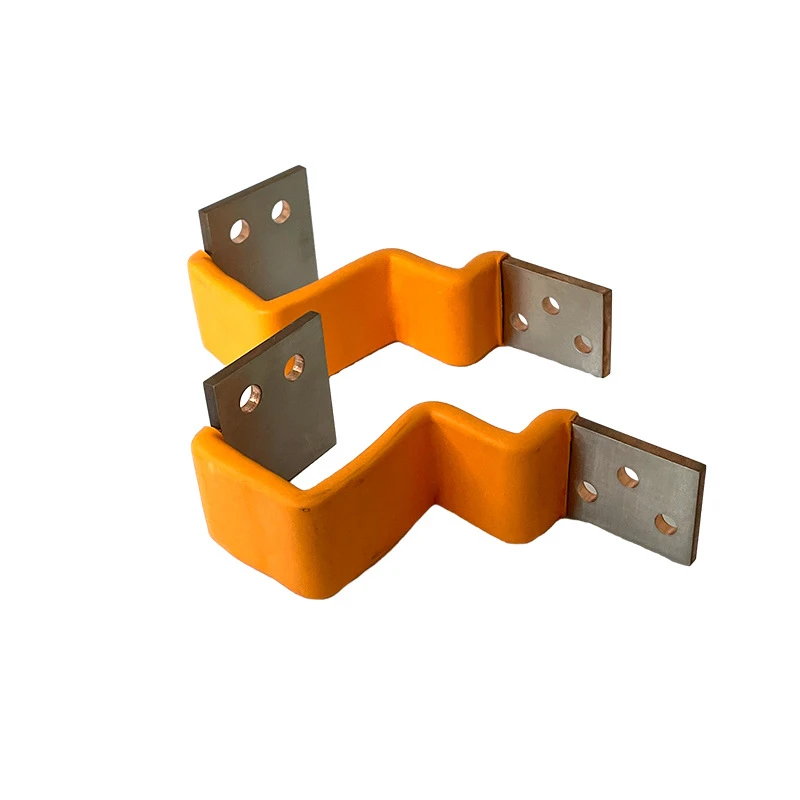
- Laminated flexible busbars – Made from stacked copper strips press-welded or riveted at the ends, often encased in flexible insulation. These are common in switchgear and power electronics where a flat profile is needed.rhielectric.com
- Braided flexible connectors – Produced from braided copper wire and terminated with welded or crimped end fittings. These are ideal for absorbing high-frequency vibration and for earthing or bonding applications.EMS
- Foil or mesh flex busbars – Built from copper foil or mesh designed to absorb both vibration and switching surges, frequently used in compact power modules and high-current devices.sps-standard.com
Each type has different stiffness, bending radius, and cost. In vibration-prone systems, the choice is typically driven by required current rating, available space, and expected movement amplitude.
2.3 Flexible vs Rigid Copper Busbar: Key Differences
At first glance, both flexible and rigid copper busbars perform the same basic function: they conduct current between two points. However, their behavior under dynamic loads is very different. Rigid busbars provide high mechanical strength and are optimized for fixed installations with minimal movement. Flexible busbars, by contrast, are specifically designed to tolerate repeated bending and vibration without cracking.
A flexible copper busbar usually has slightly lower tensile strength than a rigid one, but its multi-strand or multi-layer construction distributes stress over a larger volume. This reduces local stress peaks and significantly improves fatigue life.rhielectric.com In practice, this means flexible busbars can “move with” equipment, while rigid bars tend to resist movement and concentrate stress at joints.
3. Mechanical and Electrical Advantages in Vibration-Prone Systems
3.1 Vibration and Fatigue Resistance
The core benefit of flexible copper busbar in vibration-prone systems is fatigue resistance. Instead of forcing the entire mechanical displacement into a rigid joint, the flexible section deflects slightly with each vibration cycle. Over thousands or millions of cycles, this dramatically reduces stress in critical areas.
Highly flexible busbars built from copper mesh or braid are specifically marketed as solutions to absorb vibration and switching shocks in low-voltage assemblies.sps-standard.com For equipment such as switchgear, UPS systems, and large drives operating under frequent load changes, this ability to cushion dynamic forces is a major reliability advantage.
3.2 Thermal Expansion and Misalignment Compensation
Vibration is rarely the only source of movement in a power system. Thermal expansion also causes conductors, enclosures, and support structures to grow and shrink as load and ambient temperature change. Long busduct runs can experience several millimeters of expansion, especially when carrying high current.ABB Library
Flexible copper busbars provide a convenient way to take up this movement. They can be formed into curves, S-shapes, or loops that naturally accommodate expansion without overstressing terminals. This is especially useful in connections between transformers and switchgear, or between modular busway sections and vibrating machines.
3.3 Space Saving, Assembly, and Safety Benefits
Compared to bundles of parallel power cables, flexible copper busbars allow higher current density in the same or smaller cross-section. Insulated flexible busbar systems are designed to be compact, allowing reduced phase spacing while maintaining dielectric strength and creepage distances.nVent
From an assembly perspective, flexible busbars reduce the need for complex three-dimensional bending of rigid bars. They can be cut and formed to fit tight, irregular spaces, simplifying panel design and reducing installation time.busbarmanufacturer.com Full insulation further improves safety by reducing the risk of accidental contact and simplifying compliance with arc-flash mitigation strategies.
4. Key Design Parameters for Flexible Copper Busbars
4.1 Current Rating, Temperature Rise, and Insulation Class
Just like rigid busbars, flexible copper busbars must be sized to carry the required continuous current with an acceptable temperature rise. The final temperature is a function of current, cross-section area, conductor material, insulation thermal class, and cooling conditions within the enclosure.
Industry standards such as IEC 61439 specify maximum temperature rises for busbars and conductors based on the type of insulation and rated current.Tuling When evaluating flexible busbars, always check manufacturer data for continuous current rating, permissible temperature rise, and ambient conditions for which the rating is valid.
4.2 Cross Section, Layer Count, and Bending Radius
Flexible busbars achieve their flexibility by splitting the cross section into many thin layers or strands. When you specify current and temperature requirements, the manufacturer translates this into a combination of strip thickness, strip width, and number of layers. For example, a design may use 10 layers of 1 × 40 mm copper strips instead of one massive bar.rhielectric.com
Minimum bending radius is another critical parameter. Flexible laminated busbars can generally be bent more tightly than rigid bars, but bending should still remain above the manufacturer’s specified radius to avoid damaging insulation or inducing permanent deformation. A smaller bending radius allows more compact layouts, but it must be balanced against mechanical life and thermal performance.
4.3 Short-Circuit Withstand and Standards Compliance
In vibration-prone systems, it is easy to focus on mechanical movement and forget about fault currents. However, flexible busbars must still withstand the electrodynamic forces generated during short-circuit events. IEC 61439-1 and related parts require verification of short-circuit withstand strength, typically expressed as rated short-time withstand current (Icw) and peak withstand current (Ipk).
For busway and busduct systems, UL 857 and IEC 61439-6 provide additional requirements for busbar trunking assemblies, including the use of expansion and flexible fittings to manage thermal and mechanical movement.UL Solutions When you select flexible copper busbars, ensure that both the connectors and the overall system design meet the relevant IEC and UL standards for your market.
5. Installation Best Practices in Vibration-Prone Systems
5.1 Locating Flexible Sections and Anchoring Rigid Parts
A flexible copper busbar only delivers its full benefit when it is placed correctly in the power path. Typically, the rigid sections of busbar or busduct should be firmly anchored to stable structures, while the flexible section is positioned between the rigid part and the vibrating or moving equipment.
The goal is to provide a “movement window” where the flexible section can deflect without transferring significant forces to the terminals. Carefully evaluate the direction and amplitude of movement from the machine or structure, and orient the flexible busbar to flex primarily in that direction.
5.2 Hole Patterns, Surface Finish, and Contact Pressure
Good electrical performance in flexible busbars depends heavily on joint quality. Machined or punched termination pads should have flat, burr-free surfaces and matching hole patterns to the mating equipment. Use appropriate high-strength fasteners, washers, and—where recommended—spring washers or Belleville washers to maintain contact pressure under vibration.
The use of conductive joint compounds can further reduce contact resistance and mitigate the risk of fretting corrosion at the interface. Torque all fasteners to the values specified by the equipment manufacturer, and re-check critical joints after initial thermal cycling to ensure they remain tight.
5.3 Common Installation Mistakes to Avoid
Several recurring mistakes reduce the effectiveness of flexible busbars in vibration-prone systems:
- Over-constraining the flexible section – If both ends are rigidly clamped and no movement allowance is provided, the flexible busbar cannot actually flex and may still transmit excessive forces to terminals.
- Ignoring bending radius limits – Bending too close to the termination or below the rated radius can damage insulation and concentrate stress at a single point.
- Mismatched hardware or hole patterns – Oversized holes, incorrect bolt grades, or missing washers can lead to uneven contact pressure and early loosening under vibration.
By addressing these points during design and installation, you can significantly extend the service life of your flexible copper busbar system.
6. Typical Applications for Flexible Copper Busbar
6.1 Low-Voltage Switchgear and Motor Control Centers
In low-voltage switchgear and motor control centers (MCCs), flexible copper busbars are widely used to connect busbar trunking to feeder breakers, motor starters, and power distribution modules. This is especially common in high-current MCCs directly connected to busway lines in large industrial facilities.Eaton
Flexible links simplify alignment between the busway tap box and the MCC, absorb vibration from motors and switch operations, and allow for easier maintenance or module replacement. Because they can be insulated and shaped to fit the panel geometry, they also support compact, high-density layouts.
6.2 Renewable Energy, ESS, and Power Electronics
Renewable energy systems such as solar farms and wind turbine converters, as well as battery energy storage systems (ESS), rely heavily on power electronics. These systems often pack high current into very tight enclosures, and they are exposed to both vibration and temperature cycling.
Insulated flexible copper busbars are used here to connect inverters, DC combiner boxes, and battery racks. They enable short, low-inductance connections between devices while accommodating thermal expansion and cabinet vibration. Several manufacturers provide flexible busbar systems specifically designed for low-voltage DC applications in this sector.nVent
6.3 Rail, EV, and Industrial Machinery
In transportation and mobile equipment—such as rail traction systems, electric buses, and large industrial machines mounted on frames—vibration, shock, and frequent acceleration are everyday conditions. In these environments, flexible copper busbars are used to interconnect converters, power modules, and distribution boxes while withstanding constant movement.
Solutions such as flat copper mesh busbars and laminated flexibles are specifically marketed for absorbing vibrations and switching surges in these dynamic applications.sps-standard.com When properly specified, they ensure long-term electrical reliability even under challenging operating profiles.
7. How JUMAI TECH Supports Your Flexible Copper Busbar Projects

7.1 Custom Design and Co-Engineering Support
Every vibration-prone system is unique, so off-the-shelf rigid busbars rarely provide an optimal solution. At JUMAI TECH, we work closely with your engineering team to understand load profiles, vibration sources, and mechanical constraints. Our team supports you from the earliest concept stage, helping to define conductor cross-sections, flexible lengths, bend profiles, and termination geometries.
By combining our experience in precision copper busbars and deep-drawn components, we can integrate flexible links into your complete power distribution system, not just as isolated parts. This co-engineering approach shortens your development cycle and reduces the risk of costly redesigns.
7.2 Precision Manufacturing: Laminated, Braided, and Hybrid Solutions
JUMAI TECH manufactures a full range of flexible copper busbar constructions, including laminated strip busbars, braided shunts, and hybrid solutions that combine rigid and flexible sections in a single component. Our production processes include precision stamping, lamination, press-welding, and custom insulation overmolding to meet demanding mechanical and electrical specifications.
For vibration-prone systems, we select materials and processes specifically tuned for fatigue resistance, such as soft-annealed copper, optimized weld geometry, and stress-relieved bend zones. Where needed, we can also integrate deep-drawn copper or aluminum components—such as housings and shields—into the same assembly to simplify your BOM.
7.3 Quality Control, Testing, and Global Supply
To ensure long-term performance, we combine in-process quality checks with final inspection of dimensions, insulation coverage, and surface finish. For high-criticality applications, we can support life-cycle and accelerated fatigue testing to verify design assumptions, leveraging industry references on busbar fatigue and vibration mitigation.ScienceDirect
JUMAI TECH supplies flexible copper busbars to customers worldwide, offering batch production for OEMs and tailored small-series runs for specialized equipment. Our logistics team works with you to define packaging, labeling, and regional standards compliance so that flexible busbars arrive ready for installation.
8. FAQ: Getting Started with Flexible Copper Busbar
8.1 When should I switch from cable lugs to flexible copper busbar?
Cable lugs are simple and widely available, but they can become bulky and difficult to manage as current levels increase. When you are dealing with high currents, tight spaces, or significant vibration, flexible copper busbars usually provide better thermal performance, lower resistance, and more predictable mechanical behavior than multiple parallel cables.
If you already use rigid busbars and are experiencing fatigue cracks, hot joints, or alignment issues, adding flexible sections is often the most efficient path to improvement. When designing new equipment, considering flexible busbars from the beginning allows a cleaner layout and helps future-proof your system against higher currents or harsher operating conditions.
8.2 How do I specify a flexible busbar in an RFQ?
A clear RFQ (Request for Quotation) should include both electrical and mechanical requirements so the manufacturer can propose an optimized solution. At minimum, you should define:
- Rated current, duty cycle, and maximum permitted temperature rise
- System voltage and insulation requirements, including clearance and creepage constraints
- Expected short-circuit levels and fault durations (Icw and Ipk) to ensure standards compliance
- Overall length, hole pattern, and termination types for each end
- Required flexibility, expected movement amplitude, and installation geometry (e.g., S-bend, loop, offset)
The more complete your data, the more precisely we can match conductor cross section, layer count, and construction type to your real-world conditions.
8.3 What data do I need to share with JUMAI TECH?
When you work with JUMAI TECH, we typically request:
- Single-line diagrams or 3D models of the relevant part of your system
- Vibration or movement information (frequency, amplitude, direction, and location)
- Applicable standards (e.g., IEC 61439, UL 857, or internal company specifications)
- Environmental data such as ambient temperature, altitude, pollution degree, and cooling conditions
Based on this information, we can propose one or more flexible busbar concepts, complete with cross sections, materials, coating or tin-plating options, and estimated service life under your operating profile.
9. Turning Vibration from a Threat into a Design Parameter
In any vibration-prone electrical system, mechanical movement is a fact of life. You cannot eliminate it entirely, but you can decide how your power distribution system responds. Rigid busbars alone tend to concentrate stress at joints and supports, which over time increases the risk of fatigue, loose connections, and unexpected downtime.
Flexible copper busbars give you another option. By deliberately incorporating flexible sections at strategic points, you turn vibration and thermal expansion into manageable design parameters rather than unpredictable threats. Modern flexible busbar technologies—including laminated, braided, and mesh constructions—are well-documented by standards such as IEC 61439 and UL 857, and supported by extensive manufacturer data on fatigue and short-circuit performance.Tuling
If you are planning a new project or retrofitting an existing installation, JUMAI TECH can help you evaluate where flexible copper busbars will deliver the greatest benefit. From initial concept and simulation support to precision manufacturing and global logistics, we are ready to help you build vibration-tolerant, high-reliability power distribution systems that perform for decades.