
In the intricate world of power distribution and electrical engineering, the components that carry the current are often the unsung heroes of system reliability. At JUMAI TECH (www.deepdrawtech.com), we have spent years perfecting the art of metal fabrication, ranging from Precision Stamping Dies to Deep-Drawn Components. However, few components represent the intersection of material science and mechanical precision quite like the MT copper busbar.
Whether you are designing a battery management system for a new Electric Vehicle (EV), configuring a switchgear cabinet for a data center, or engineering industrial machinery, the stability of your electrical connection is paramount. Long-term stability isn’t just about whether the system turns on today; it is about how it performs five, ten, or twenty years from now under thermal stress, vibration, and oxidative attack.
In this comprehensive guide, we will dissect exactly how the quality of an MT copper busbar dictates the longevity of your projects, drawing on our extensive experience in precision copper processing.
Table of Contents
The Foundation of Stability: Raw Material Purity and Composition
The journey of a high-quality MT copper busbar begins long before the metal hits our stamping dies. It begins at the molecular level. The most common cause of long-term failure in busbar systems is not mechanical breakage, but electrical degradation caused by impurities in the raw copper.
Understanding IACS and Conductivity Standards
The International Annealed Copper Standard (IACS) is the benchmark for electrical conductivity. For an MT copper busbar to maintain stability over decades, it must utilize high-grade electrolytic copper, typically C11000 (Electrolytic Tough Pitch) or C10100 (Oxygen-Free Electronic).
If a manufacturer cuts corners and uses recycled copper with lower purity (e.g., 97% or 98% copper), the resistance increases. According to ASTM International standards, even a 1% drop in purity can lead to significant heat generation. Over time, this excess heat degrades insulation and loosens connections.
At JUMAI TECH, we strictly adhere to materials that meet or exceed 101% IACS for specific applications. High conductivity ensures that the busbar remains cool under load, preventing the thermal cycles that lead to material fatigue.
The Role of Oxygen Content in Electrical Integrity
Oxygen content in copper is a silent killer of stability. In C11000 copper, there is a small amount of oxygen, which is generally acceptable for standard applications. However, for high-performance MT copper busbar applications involving welding or brazing, or environments with hydrogen presence, oxygen can lead to “hydrogen embrittlement.”
When copper containing oxygen is heated in a hydrogen atmosphere, steam pockets form inside the metal, creating internal micro-cracks. These cracks propagate over years of vibration, eventually leading to catastrophic structural failure. For critical applications, we recommend Oxygen-Free (OF) grades to ensure the internal structure remains solid indefinitely.
Precision Manufacturing: The Intersection of Stamping and Deep Drawing
At JUMAI TECH, we pride ourselves on our Precision Stamping Dies and Deep-Drawn Components capabilities. You might wonder, how does the manufacturing method affect the electrical stability of a busbar? The answer lies in the grain structure of the metal.
Tolerance Control in MT Copper Busbar Fabrication
An MT copper busbar is often part of a complex assembly. If the dimensional tolerance is off by even a fraction of a millimeter, it creates mechanical stress on the connection points.
When a busbar is forced into position due to poor manufacturing tolerances, it sits under constant “pre-load” stress. Over time, combined with thermal expansion and contraction, this stress causes the metal to creep (slowly deform). This eventually leads to increased contact resistance and arcing.
Table 1: Tolerance Impact on Contact Resistance
| Tolerance Deviation (mm) | Installation Stress | Projected Resistance Increase (5 Years) | Risk Level |
| ± 0.05 (Precision) | Negligible | < 1% | Low |
| ± 0.20 (Standard) | Moderate | 5-10% | Medium |
| ± 0.50 (Poor) | High | > 25% | Critical |
Our use of high-precision progressive dies ensures that every MT copper busbar we produce fits perfectly without mechanical coercion, preserving the physical integrity of the system.
Mitigating Micro-Fractures During the Stamping Process
The stamping process involves shearing metal at high speeds. If the cutting clearance of the die is not perfectly calculated, or if the tool is dull, the edges of the busbar will suffer from “rollover” and micro-fractures.
These microscopic cracks on the edge of the MT copper busbar act as stress concentrators. In applications involving vibration (like automotive or heavy machinery), these cracks can grow, reducing the effective cross-sectional area of the conductor. This creates a bottleneck for current, leading to localized hotspots. Our expertise in die maintenance ensures a clean shear every time, maintaining the structural continuity of the copper.
Thermal Management and Heat Dissipation Properties

Heat is the enemy of electronics. A high-quality MT copper busbar acts not just as a conductor, but as a thermal management device, sinking heat away from sensitive components like IGBTs or breakers.
Avoiding Thermal Runaway in High-Voltage Systems
Thermal runaway occurs when an increase in temperature causes an increase in resistance, which in turn causes a further increase in temperature. This cycle continues until the component melts or catches fire.
The surface area and geometry of the MT copper busbar are critical here. Poorly designed busbars with uneven surfaces or inconsistent thickness creates bottlenecks. We utilize advanced simulation software to optimize the shape of our busbars, ensuring that current density is distributed evenly. This prevents the formation of localized hotspots that trigger thermal runaway.
Editor’s Note: We often see clients requesting thinner busbars to save weight. However, reducing the cross-section below the ampacity requirement is a false economy. It creates a “fuse” effect that compromises the entire system’s lifespan.
Expansion Coefficients and Mechanical Stress
Copper has a coefficient of thermal expansion of approximately $16.5 \times 10^{-6} / K$. While this is standard, the stability of the system depends on how the MT copper busbar interacts with connected materials, such as steel bolts or ceramic insulators.
If the busbar quality is low (e.g., inconsistent alloy mix), the expansion may be unpredictable. High-quality manufacturing allows engineers to predict exactly how much the busbar will expand at operating temperature (e.g., $80^{\circ}C$). This allows for the design of appropriate flexible links or expansion joints, ensuring the busbar doesn’t crack its mounting points during thermal cycling.
Surface Treatment and Plating Technologies
Raw copper is reactive. When exposed to air, it forms copper oxide, which is a semiconductor (poor conductor). To maintain long-term stability, the surface treatment of the MT copper busbar is as important as the core material.
Tin vs. Silver Plating: Choosing the Right Protection
At JUMAI TECH, we offer various plating options depending on the application environment. The choice between Tin and Silver dramatically impacts long-term maintenance needs.
- Tin Plating:
- Pros: Excellent protection against corrosion; cost-effective; prevents oxidation effectively in standard environments.
- Cons: Susceptible to “fretting corrosion” under vibration.
- Stability Verdict: Ideal for static, humid environments.
- Silver Plating:
- Pros: Highest conductivity; silver oxide is actually conductive (unlike copper oxide), meaning even if it tarnishes, it works.
- Cons: More expensive; susceptible to sulfur tarnish.
- Stability Verdict: Essential for high-voltage, high-efficiency applications where voltage drop must be minimized over decades.
- Nickel Plating:
- Pros: Extreme hardness and heat resistance.
- Stability Verdict: Best for extreme temperature environments (up to $600^{\circ}C$).
Combating Oxidation in Harsh Environments
For our MT copper busbar products deployed in marine or chemical industries, simple plating isn’t enough. We utilize a multi-layer approach or specific passivation processes. A low-quality busbar with porous plating will allow moisture to penetrate to the copper underneath. This causes “blistering” of the plating, which subsequently flakes off and shorts out nearby components.
Our stringent salt-spray testing protocols ensure that the plating on JUMAI TECH busbars remains impermeable, sealing the copper core from the environment for the operational life of the equipment.
Insulation Quality and Dielectric Strength
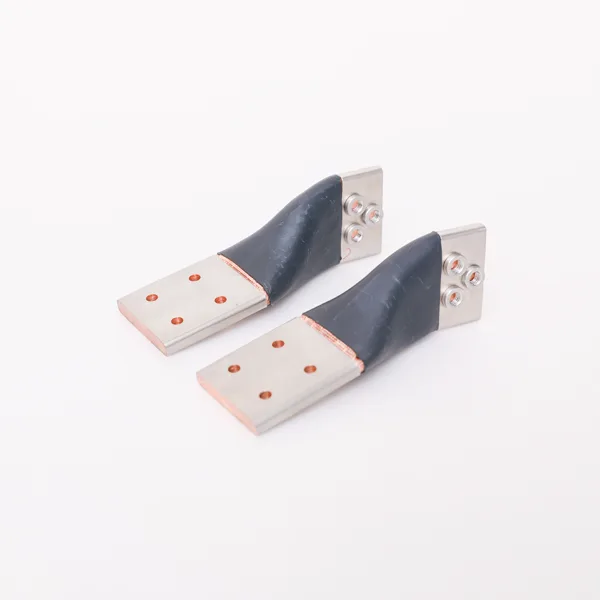
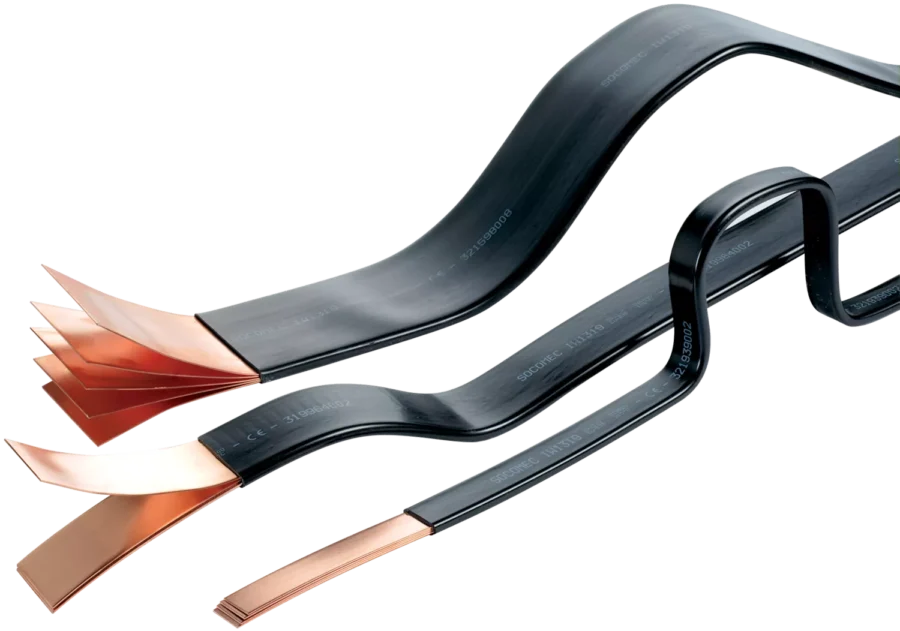
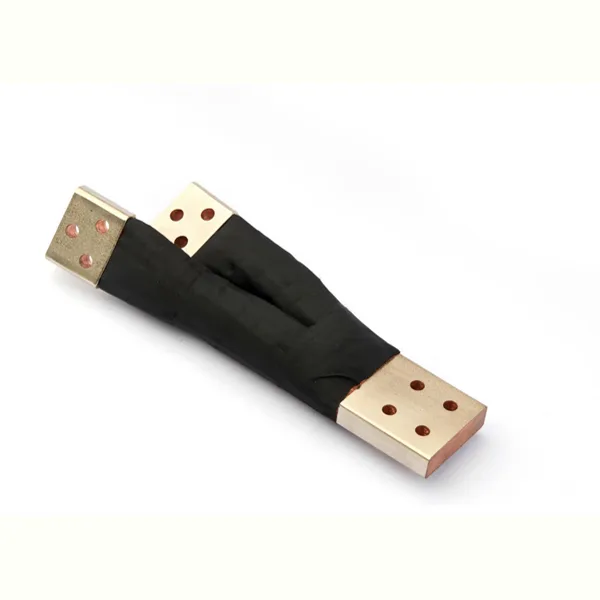
Many MT copper busbar applications require insulation to prevent short circuits in tight spaces. The application of insulation (dipping, heat shrink, or powder coating) is a critical quality vector.
The Importance of Uniform Coating
In Deep-Drawn Components and complex busbar shapes, achieving uniform insulation thickness is difficult. If the insulation is 0.5mm thick on one side and 0.1mm on the corner, that corner becomes a weak point for dielectric breakdown.
Voltage spikes are common in industrial grids. A high-quality insulated MT copper busbar must withstand these transient voltages without arcing. At JUMAI TECH, we utilize fluidized bed dipping and electrostatic powder coating to ensure that even sharp edges and complex 3D geometries have a uniform dielectric barrier. This prevents the “pinhole” failures that often plague cheaper, hand-dipped alternatives.
Resistance to Environmental Contaminants
Over time, dust, oil, and chemicals accumulate on busbars. If the insulation material is porous or chemically reactive, it will degrade. We use high-grade Epoxy and PVC compounds that are resistant to industrial lubricants and cleaning solvents. This ensures that the MT copper busbar insulation doesn’t become brittle or conductive after years of exposure to a factory floor environment.
Application-Specific Stability Analysis
Different industries define “stability” differently. Here is how MT copper busbar quality affects specific sectors we serve.
Electric Vehicles (EV) and Vibration Resistance
In the EV sector, the battery pack is subjected to constant road vibration. A standard busbar might function well on a test bench, but fail after 50,000 miles of driving.
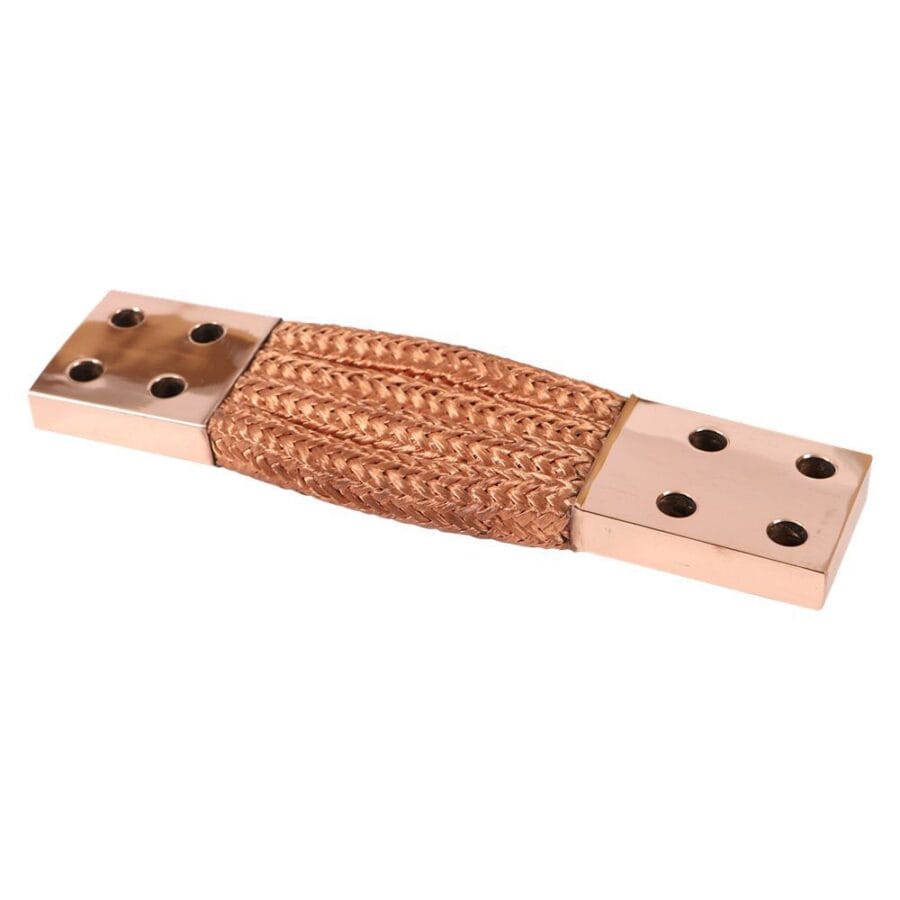
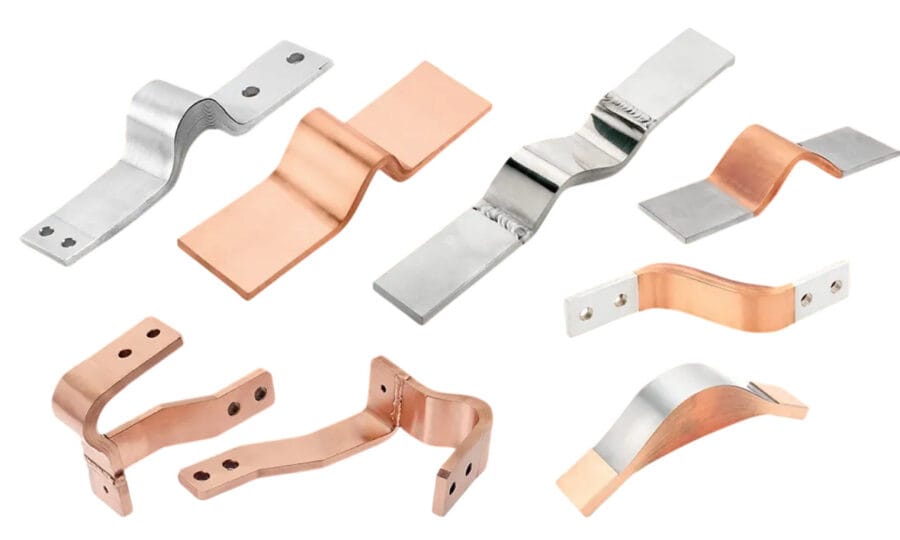
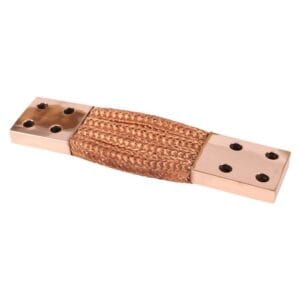
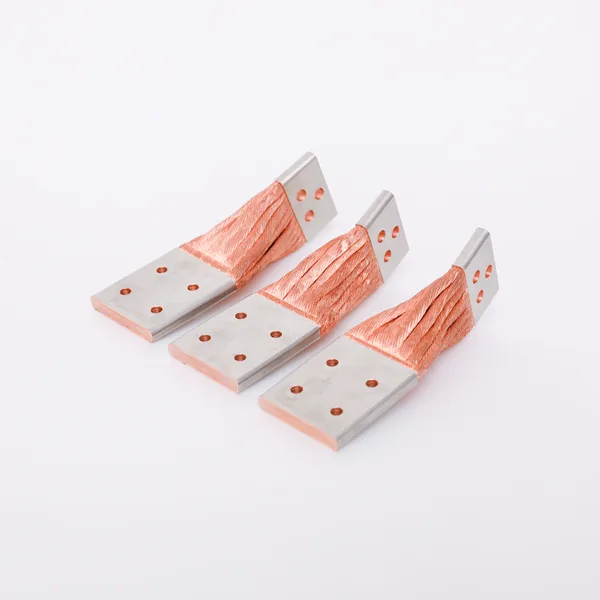
For EVs, we often recommend flexible or laminated MT copper busbars. These allow for movement between battery modules without transferring stress to the battery terminals. High-quality diffusion welding techniques are used to fuse the ends of these flexible bars, ensuring that the connection point is solid copper while the body absorbs vibration. This prevents fatigue fractures that could lead to a vehicle fire.
Data Centers and Continuous Load Stability
Data centers operate 24/7/365. They do not have “downtime” for maintenance. Here, the primary stability factor is creep resistance.
Under constant bolted pressure and heat, copper can slowly flow away from the pressure point (cold flow). This loosens the bolt. High-quality MT copper busbar manufacturing involves using half-hard or hard-temper copper where appropriate to resist this deformation. Furthermore, we ensure flatness tolerances so that the contact patch is maximized, reducing the initial heat that drives the creep process.
Table 2: Industry Impact Matrix
| Industry | Primary Stress Factor | MT Copper Busbar Solution | Resulting Benefit |
| EV / Automotive | Vibration & Shock | Flexible/Laminated Busbars | Prevents fatigue cracks; extends battery safety. |
| Data Centers | Heat & Continuous Load | High-Conductivity Silver Plating | Reduces cooling costs; maintains uptime. |
| Renewable Energy | UV & Weathering | UV-Stable Insulation & Tin Plating | Resists outdoor corrosion for 20+ years. |
The JUMAI TECH Difference: Engineering for the Future
Why do global clients trust Deep Draw Tech (JUMAI TECH) with their most critical power components? It comes down to our holistic approach to manufacturing. We don’t just stamp metal; we engineer stability.
Non-Destructive Testing (NDT) Methods
We don’t guess about quality. We verify it. Our quality control process for MT copper busbar production includes:
- Conductivity Testing: Using Eddy Current probes to verify %IACS.
- Plating Thickness X-Ray: Verifying that plating meets micron specifications without damaging the part.
- Dimensional Laser Scanning: Comparing the physical part to the CAD model to ensure stamping precision.
Customization and Consultation
Stability starts with design. Our engineering team works with clients during the prototyping phase. We analyze your current density requirements and suggest the optimal width, thickness, and alloy for your specific MT copper busbar. Whether you need a complex bent shape that requires our Deep-Drawn Components expertise or a simple flat bar, we optimize the design for manufacturability and longevity.
Conclusion
The stability of your electrical system is only as good as its weakest link. While the MT copper busbar may seem like a simple piece of metal, it is a complex component defined by its material purity, manufacturing precision, surface treatment, and thermal characteristics.
Compromising on busbar quality to save a small percentage on upfront costs is a strategy that often results in expensive downtime, safety hazards, and equipment replacement down the road. By choosing high-quality, precision-engineered busbars, you are investing in the long-term reliability and safety of your brand.
At JUMAI TECH, we are dedicated to providing the world’s best Precision Copper Busbars, Deep-Drawn Components, and Precision Stamping Dies. We invite you to contact our engineering team today to discuss how we can enhance the stability of your next project.
Ready to secure your power systems? Contact Us Today for a quote on high-performance MT copper busbar solutions.