
Today, optimizing power distribution is no longer just an operational goal; it is a critical mandate for survival. The unsung heroes in this high-stakes arena are Precision Copper Busbars. Whether rigid, flexible, or braided, these highly engineered conduits are the vital arteries of modern data centers, ensuring that immense electrical currents are delivered with maximum efficiency, minimal thermal loss, and uncompromising reliability.
In this comprehensive guide, we will explore the critical role of Precision Copper Busbars in modern power architecture, the underlying physics of high conductivity, and how JUMAI’s advanced manufacturing capabilities—including deep drawing dies, customized soft/hard/braided busbars, and OEM/ODM services—are empowering global clients to build the data centers of tomorrow.
Table of Contents
The Escalating Power Density Crisis in Modern Data Centers
To understand why Precision Copper Busbars are indispensable, we must first examine the evolving power metrics of data centers. Historically, a standard server rack consumed between 3kW to 5kW of power. Traditional copper cabling, despite its bulk and inefficiency, was sufficient to manage these loads. However, the advent of AI supercomputing clusters has fundamentally rewritten the rules of electrical engineering within the white space of data centers.
According to global infrastructure authorities like the Uptime Institute, rack power densities are skyrocketing. High-performance computing (HPC) racks routinely exceed 30kW, and specialized AI clusters utilizing next-generation GPUs are now pushing past the 50kW to 100kW threshold per rack.
Table 1: The Evolution of Data Center Rack Power Density (2010 – 2025+)
| Era | Primary Workload | Average Power per Rack | Power Distribution Preference |
|---|---|---|---|
| 2010 – 2015 | Standard Web Hosting, Basic Cloud | 3 kW – 5 kW | Heavy Gauge Copper Cabling |
| 2016 – 2020 | Big Data, Enterprise Cloud SaaS | 7 kW – 15 kW | Hybrid Cabling & Standard Busways |
| 2021 – 2023 | Early AI, Machine Learning, HPC | 15 kW – 30 kW | Standard Busbars, Rack PDUs |
| 2024 – 2025+ | Generative AI, LLM Training (e.g., NVIDIA DGX) | 50 kW – 120 kW+ | Precision Copper Busbars, 48V DC Architecture |
When you transmit 50kW to 100kW of power into a single 42U or 48U rack, standard cabling introduces massive problems. Cables are inherently round, meaning they stack poorly and create “cable spaghetti.” This chaotic arrangement obstructs critical airflow from HVAC or CRAC units, drastically increasing the Power Usage Effectiveness (PUE) of the facility. Furthermore, standard cables suffer from significant electrical resistance at high amperages.
This is where the transition to Precision Copper Busbars becomes a mathematical and operational necessity. By replacing thick bundles of cables with geometrically optimized, highly conductive solid or laminated copper profiles, data center operators can reclaim physical space, drastically improve thermal management, and reduce catastrophic points of failure.
The Physics of Power Loss: Why Precision Matters
In the realm of large-scale power transmission, efficiency is governed by unyielding laws of physics. As an engineer who has designed systems for massive wind farms and data centers alike, I can attest that even a fraction of a milliohm of resistance can result in thousands of dollars in wasted electricity and dangerous heat generation over a year.
The primary enemy of efficient power distribution is Joule Heating, which is the process by which the passage of an electric current through a conductor produces heat. This is mathematically expressed by the formula:
$$P = I^2R$$
Where:
- $P$ is the power loss in Watts (heat generated).
- $I$ is the current in Amperes.
- $R$ is the electrical resistance in Ohms.
Because the power loss scales with the square of the current ($I^2$), high-density data centers operating at massive amperages are exceptionally vulnerable to thermal losses. If a facility transitions from a 12V architecture to a high-density AI architecture drawing massive amps, the heat generated by substandard conductors will melt standard insulation.
Furthermore, the voltage drop across a power distribution line must be strictly minimized to ensure servers receive stable power. The voltage drop is calculated as:
$$\Delta V = I \cdot \rho \cdot \frac{L}{A}$$
Where $\rho$ is the resistivity of the material, $L$ is the length, and $A$ is the cross-sectional area.
Precision Copper Busbars solve these physics challenges in three distinct ways:
- Optimized Cross-Sectional Area ($A$): Unlike round cables, rectangular or custom-profile busbars offer a significantly larger surface area and cross-sectional density within the same spatial footprint, reducing resistance (R) and minimizing voltage drop ($\Delta V$).
- Superior Material Resistivity ($\rho$): By utilizing ultra-pure copper (which we will detail in the material science section), the inherent resistivity is kept to the absolute minimum physically possible at room temperature.
- Skin Effect Mitigation: In alternating current (AC) systems, high-frequency currents tend to travel along the surface of a conductor rather than through its core—a phenomenon known as the “skin effect.”
By engineering flat, rectangular Precision Copper Busbars, we maximize the surface area relative to the total volume, ensuring that even under AC loads, the current flows with minimal impedance. For even higher frequency demands, JUMAI’s custom-engineered braided copper busbars provide immense surface area via thousands of individual microwires, virtually eliminating skin effect losses.
Material Excellence: The Heart of JUMAI’s Busbars
Not all copper is created equal. In the consumer electronics sector, lower-grade copper alloys are acceptable. However, in the mission-critical environments of data centers and environmental new energy projects, material purity is the defining factor of success. At JUMAI, our production of Precision Copper Busbars relies exclusively on the highest international grades of electrolytic copper.
To achieve maximum electrical conductivity—often measured against the International Annealed Copper Standard (IACS)—we must utilize copper that is virtually free of impurities. Even a 0.05% inclusion of elements like iron, phosphorus, or oxygen can drastically degrade the electron flow, leading to increased $I^2R$ losses.
Table 2: Copper Grades Used in High-Performance Power Distribution
| Copper Grade | Nomenclature | Purity | Conductivity (% IACS) | Primary JUMAI Application |
|---|---|---|---|---|
| C11000 | Electrolytic Tough Pitch (ETP) | 99.90% | 100% – 101% | Standard Rigid Busbars, Main Switchgear, Power Distribution Units (PDUs). |
| C10200 | Oxygen-Free Copper (OFHC) | 99.95% | 101% – 102%+ | High-end Data Center racks, EV battery interconnects, Deep Drawn custom components. |
| C10100 | Oxygen-Free Electronic (OFE) | 99.99% | 101% – 102.5% | Ultra-precision components, aerospace, specialized high-frequency braided busbars. |
For our global OEM/ODM clients, we predominantly recommend and process C11000 ETP and C10200 OFHC copper. Oxygen-Free High Thermal Conductivity (OFHC) copper is particularly crucial when busbars require extensive welding, brazing, or deep drawing during the manufacturing process. The absence of oxygen prevents “hydrogen embrittlement,” a structural failure that occurs when copper is heated, ensuring the busbar remains structurally sound for decades inside a continuously operating data center.
By adhering to rigorous standards set by organizations like the American Society for Testing and Materials (ASTM), JUMAI ensures that every piece of copper we process delivers uncompromised performance.
The Triad of Precision Copper Busbars: Rigid, Flexible, and Braided
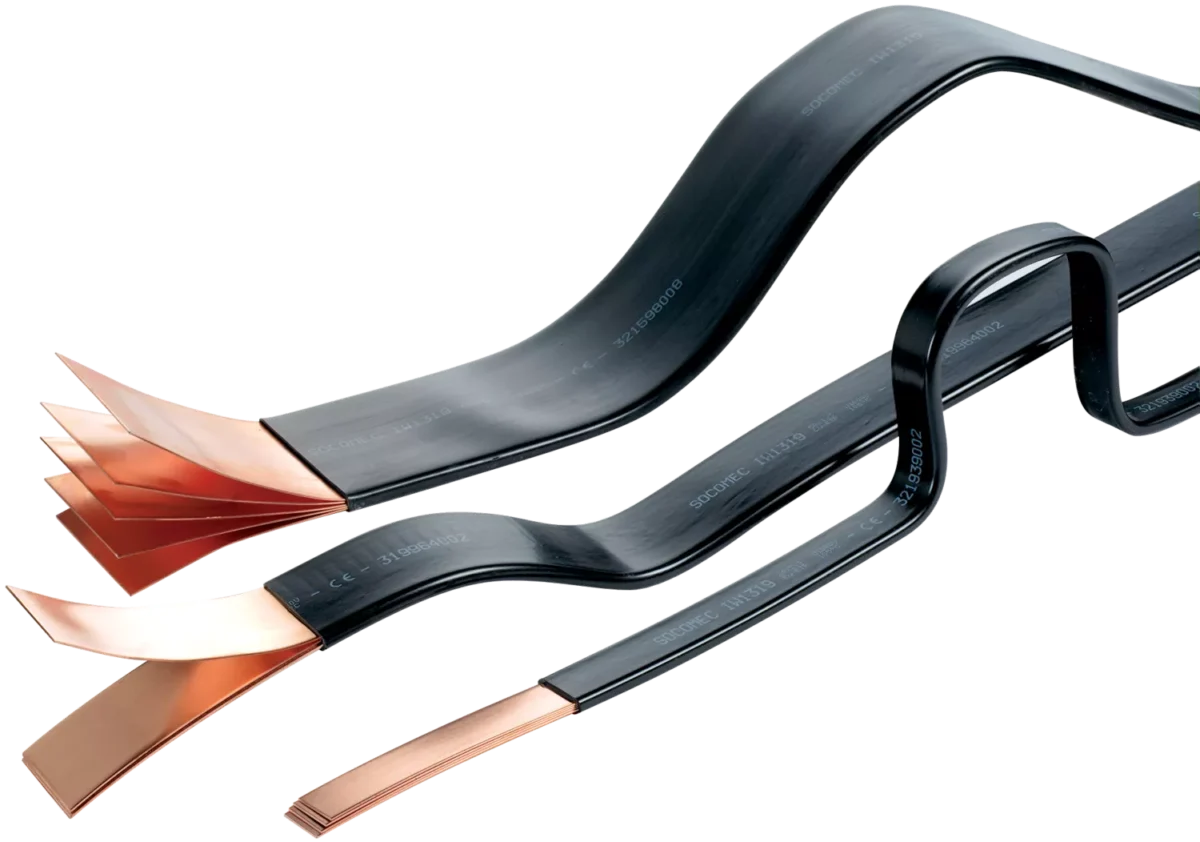
The architecture of a modern data center or a large-scale power transmission center is incredibly complex, subject to thermal expansion, mechanical vibrations from massive cooling fans, and strict spatial constraints. A “one-size-fits-all” approach to power transmission is guaranteed to fail.
As a premier supplier, JUMAI specializes in the R&D, design, and manufacturing of three distinct categories of Precision Copper Busbars, each serving a unique, critical function within the facility.
1. Rigid Copper Busbars (Hard Busbars)
Rigid busbars are the structural backbone of power distribution. Extruded and machined from solid billets of high-purity copper, these are typically rectangular bars designed to carry massive amperages (often exceeding 5000A in main switchgears).
- Application in Data Centers: Rigid busbars are predominantly used in the main electrical rooms. They connect the external grid transformers to the Uninterruptible Power Supply (UPS) systems, and route power from the UPS to the main distribution boards. They are also used in overhead busway systems running above the server racks.
- The JUMAI Advantage: Our CNC machining and precision stamping capabilities ensure that the contact surfaces of our rigid busbars are perfectly flat. In an electrical joint, surface roughness creates microscopic air gaps, which act as insulators and cause joint heating. JUMAI utilizes advanced surface finishing and proprietary deep-drawn connecting accessories to ensure 100% surface-to-surface contact, drastically reducing joint resistance.
2. Flexible Laminated Copper Busbars (Soft Busbars)
Data centers are not static environments. The continuous operation of massive CRAC (Computer Room Air Conditioning) units, liquid cooling pumps, and server fans generates constant micro-vibrations. If rigid busbars were used to connect directly to vibrating equipment, the metal would eventually suffer from fatigue and fracture.
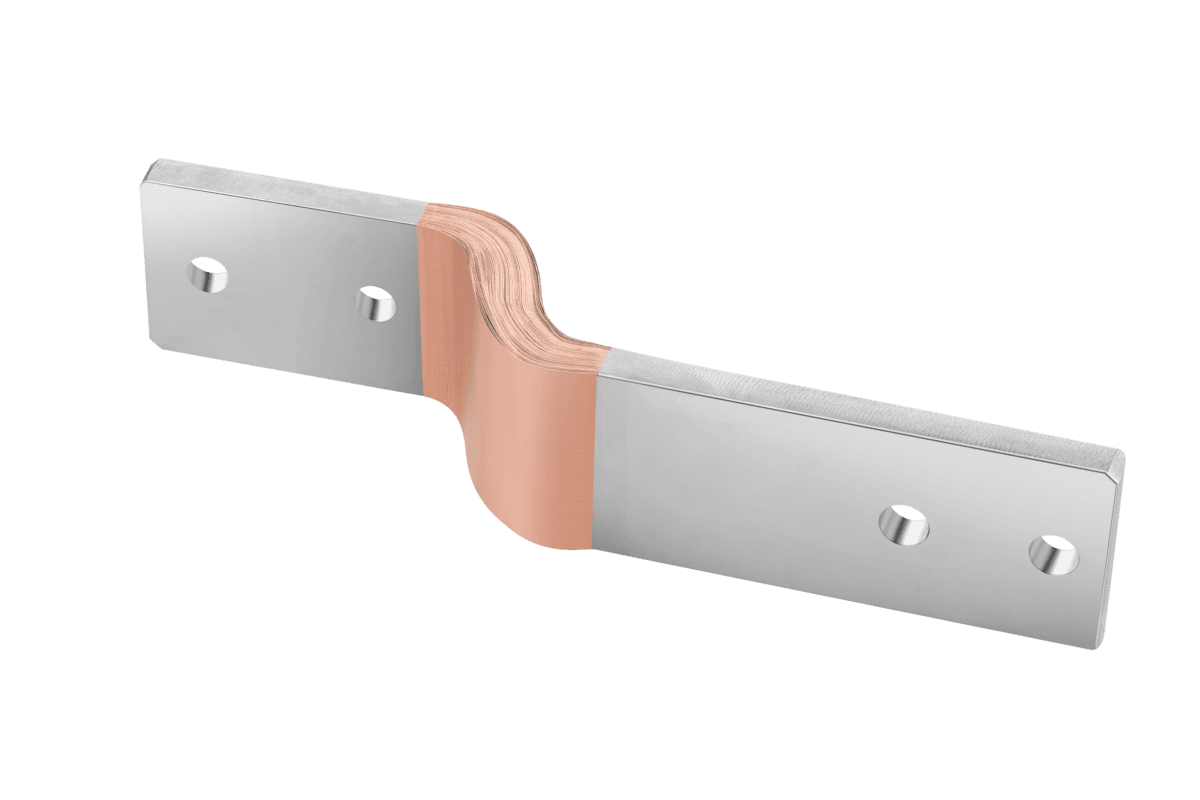
Flexible laminated busbars are manufactured by stacking multiple layers of ultra-thin, highly pure copper foils (often 0.1mm to 1mm thick), which are then fused at the mounting terminals using molecular diffusion welding.
- Application in Data Centers: These are critical for connecting rigid overhead busways to the individual rack Power Distribution Units (PDUs). They are also essential inside the UPS systems and battery backup cabinets, where tight bending radii are required to navigate confined spaces without compromising the cross-sectional area.
- The JUMAI Advantage: Our molecular diffusion welding process ensures that the terminal ends act as a single, solid piece of copper, offering zero electrical resistance at the bonding point. The middle section remains highly flexible, absorbing up to 100% of mechanical vibrations and compensating for thermal expansion and contraction.
3. Braided Copper Busbars
When extreme flexibility in multiple axes is required, or when dealing with high-frequency grounding, braided copper busbars are the ultimate solution. These are woven from thousands of individual tinned or bare copper micro-wires.
- Application in Data Centers: Braided busbars are the gold standard for data center grounding and bonding. Proper grounding is critical in data centers to protect sensitive IT equipment from electrostatic discharge (ESD) and fault currents. Because they consist of thousands of individual wires, their surface area is immense, making them highly effective at safely dissipating high-frequency electrical noise and fault surges to the ground.
- The JUMAI Advantage: JUMAI offers bespoke braided busbars with custom-designed, deep-drawn terminal lugs. We provide options for tinned copper braiding, which offers superior resistance to oxidation and corrosion—a vital feature for data centers located in humid climates or near coastal areas where salt-laden air can degrade standard copper.
Advanced Manufacturing: Elevating Busbars Beyond Standard Extrusion
The journey from a raw copper billet to a mission-critical power distribution component is fraught with engineering challenges. Standard extrusion—forcing heated copper through a die to create a long, straight bar—is only the first step. For a modern, high-density AI data center, standard extruded bars are grossly insufficient. They lack the specific geometries, mounting points, and protective characteristics required for seamless integration into complex server racks and Battery Energy Storage Systems (BESS).
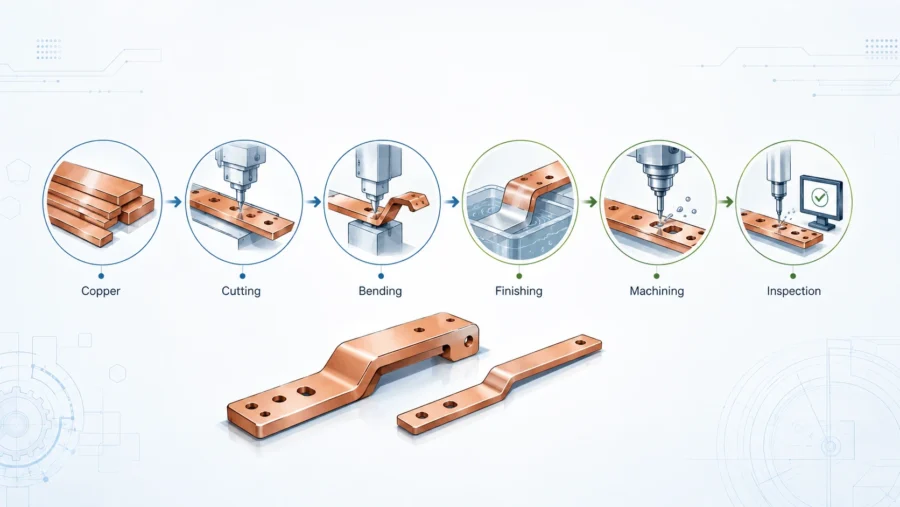
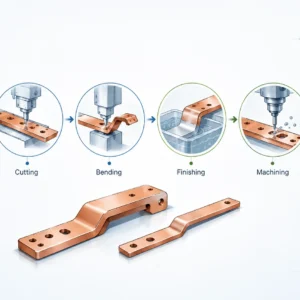
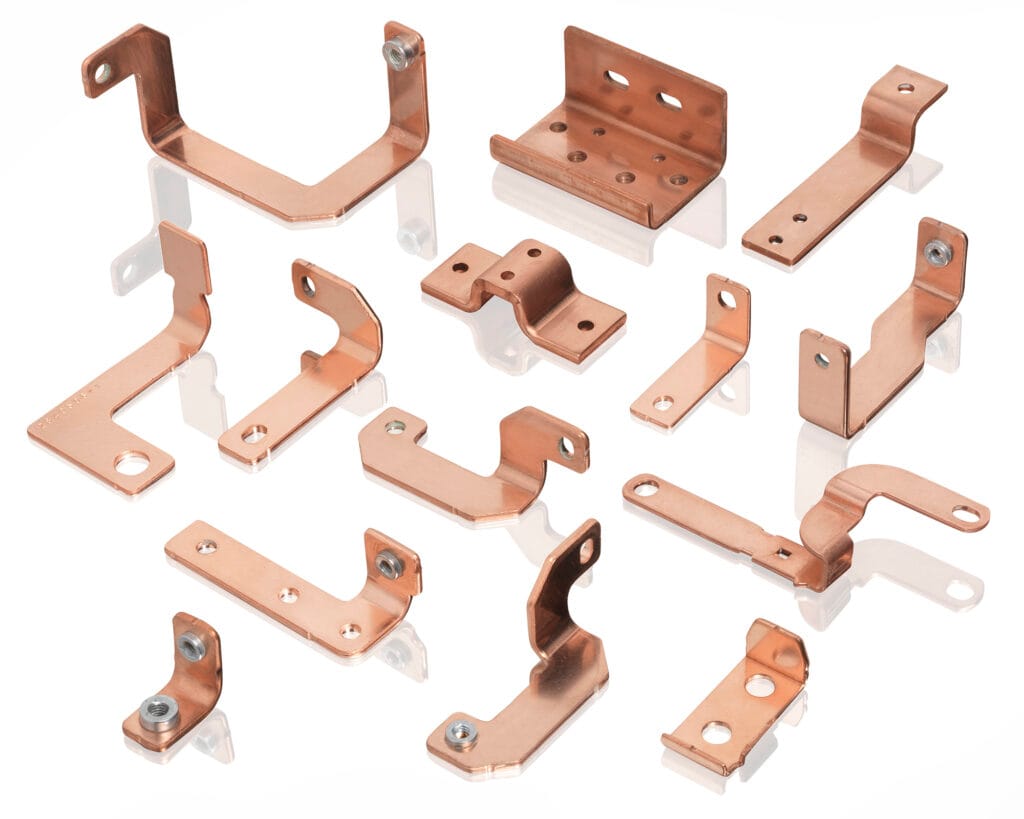
At JUMAI (DeepDrawTech), our legacy is built on mastering the subsequent, highly complex stages of fabrication. Our expertise in deep drawing, precision stamping, and automated CNC bending allows us to transform standard copper profiles into bespoke Precision Copper Busbars tailored for exacting OEM and ODM specifications.
The Role of Deep Drawing in Power Connectivity
Deep drawing is a specialized metal forming process where a flat sheet of metal is drawn into a forming die by a mechanical punch. As a company that built its reputation on deep drawing technology, JUMAI leverages this process to manufacture seamless, high-strength copper end-caps, custom terminal lugs, and specialized connecting accessories for our busbar systems.
Why is deep drawing critical for high-amperage connections?
- Structural Integrity: Deep drawing creates components from a single piece of copper without the need for welding or brazing seams. Seams are inherent weak points that increase electrical resistance and are susceptible to thermal fatigue.
- Space Optimization: In the densely packed white space of a data center, every millimeter matters. Deep-drawn, multi-angled connectors allow Precision Copper Busbars to navigate around cooling pipes, server chassis, and structural pillars with zero loss in conductivity.
- Consistent Microstructure: Unlike casting, which can introduce microscopic air voids (porosity) into the metal, the high-pressure deep drawing process aligns the grain structure of the copper, actively enhancing both its mechanical strength and electrical conductivity.
Precision Bending and Dimensional Tolerance
When routing power through a 50kW server rack, the busbar must fit perfectly. If a busbar is bent with inaccurate tolerances, the installation technicians are forced to apply mechanical stress to force the connections into place. Over time, this constant mechanical tension, combined with the thermal expansion of the operating server, will cause the bolted joints to loosen, resulting in catastrophic electrical arcing.
JUMAI utilizes state-of-the-art multi-axis CNC bending machines. We calculate the exact “spring-back” factor of different copper grades (such as C11000 and C10200) to ensure that every bend in our Precision Copper Busbars is accurate to within fractions of a millimeter, ensuring stress-free installation and long-term joint stability.
Surface Engineering: Shielding Precision Copper Busbars from Environmental Degradation
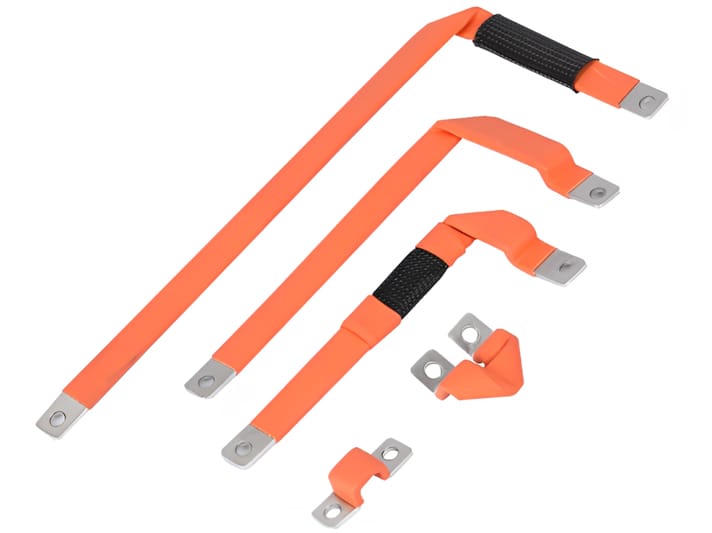
While high-purity oxygen-free copper offers unparalleled electrical conductivity, raw copper possesses a significant vulnerability: it is highly reactive to oxygen, humidity, and atmospheric pollutants. When exposed to the air inside a data center—especially facilities utilizing outside-air economizers for free cooling—raw copper quickly develops a layer of copper oxide ($Cu_2O$ or $CuO$).
Unlike aluminum oxide, which can be somewhat protective, copper oxide is a semiconductor. It introduces significant electrical contact resistance at every bolted joint or connection point. To guarantee decades of flawless operation, Precision Copper Busbars must undergo rigorous surface engineering.
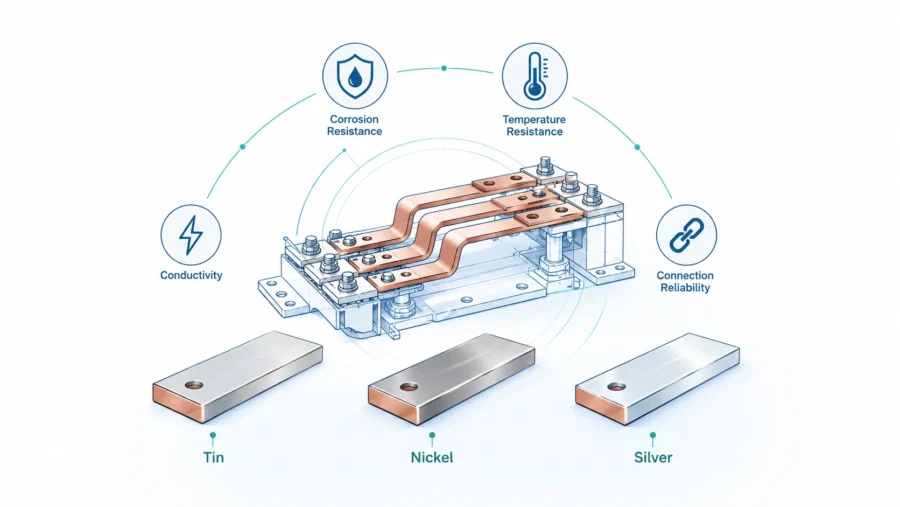
Depending on the specific application within the data center, telecom tower, or green energy grid, JUMAI applies highly controlled electroplating and insulation coatings to our busbars. These treatments are guided by the rigorous standards of the International Electrotechnical Commission (IEC), ensuring global compliance.
Table 3: Comparative Analysis of Busbar Surface Treatments
| Surface Treatment | Primary Benefit | Electrical Conductivity Impact | Typical Application in Data Centers & Energy |
|---|---|---|---|
| Bare Copper (Untreated) | Maximum baseline conductivity, lowest initial cost. | 100% (Baseline) | Internal, hermetically sealed environments; welded connections where oxidation is impossible. |
| Tin Plating (Sn) | Excellent corrosion resistance, prevents oxidation, cost-effective. | Negligible decrease at joints. | Standard PDU connections, battery interconnects, high-humidity environments. |
| Nickel Plating (Ni) | Superior wear resistance, high-temperature stability, prevents “fretting” corrosion. | Slight decrease; requires higher clamping force. | Environments with high vibration or frequent plugging/unplugging of modules. |
| Silver Plating (Ag) | Absolute lowest contact resistance, prevents high-frequency skin effect losses. | Enhances joint conductivity. | Ultra-high current main switchgears, RF/High-frequency telecom applications. |
| Epoxy Powder Coating / Heat Shrink | High dielectric strength (insulation), prevents accidental short circuits, flashover protection. | N/A (Insulator) | Routing densely packed busbars close to grounded metal chassis; operator safety. |
For the majority of our data center and large-scale power transmission clients, Tin-Plated Precision Copper Busbars represent the optimal balance of cost, corrosion resistance, and electrical performance. However, for specialized AI clusters drawing unprecedented amperages, we often recommend selective Silver Plating exclusively at the contact pads. This hybrid approach minimizes contact resistance exactly where it matters most, without inflating the overall cost of the component.
Mathematical Precision: Sizing Busbars for High-Density AI Workloads
Designing a power distribution network is an exercise in applied mathematics and thermal dynamics. You cannot simply select a copper bar based on its physical size; you must engineer it based on its “Ampacity”—the maximum continuous electrical current a conductor can carry before its temperature exceeds a defined safety limit.
The fundamental formula used by electrical engineers to determine the required cross-sectional area of a busbar is based on the target Current Density ($J$):
$$A = \frac{I}{J}$$
Where:
- $A$ is the required cross-sectional area (typically in $mm^2$).
- $I$ is the total continuous current in Amperes (A).
- $J$ is the maximum allowable current density (typically expressed in $A/mm^2$).
In standard commercial applications, a current density of 1.5 to 2.0 $\ A/mm^2$ is generally acceptable. However, in the high-stakes environment of an AI data center, where ambient temperatures are elevated and cooling costs are astronomical, engineers often design for a much more conservative current density of 1.0 to 1.2 $\ A/mm^2$. This conservative approach significantly lowers the operational temperature of the busbar, extending the lifespan of the surrounding insulation and reducing the cooling load on the facility’s CRAC units.
Table 4: Typical Ampacity Ratings for Flat Precision Copper Busbars (at 30°C Ambient)
Note: These are baseline theoretical values for bare copper. Real-world ampacity depends heavily on airflow, orientation (vertical vs. horizontal), and proximity to other heat-generating conductors.
| Busbar Dimensions (Thickness x Width) | Cross-Sectional Area ($mm^2$) | Approx. Ampacity (DC / 50Hz AC) | Weight per Meter (kg/m) |
|---|---|---|---|
| 3mm x 15mm | 45 | 160 A | 0.40 |
| 5mm x 20mm | 100 | 320 A | 0.89 |
| 5mm x 50mm | 250 | 700 A | 2.23 |
| 10mm x 50mm | 500 | 1050 A | 4.45 |
| 10mm x 100mm | 1000 | 1800 A | 8.90 |
When data centers require capacities exceeding 2000 Amps, relying on a single, massive block of copper becomes inefficient due to the aforementioned skin effect and poor heat dissipation. In these scenarios, JUMAI designs laminated configurations—stacking multiple Precision Copper Busbars with precise air gaps between them. This significantly increases the total surface area exposed to the facility’s cooling airflow, allowing the system to carry massive currents while remaining safely within thermal limits.
Bridging the Gap: Precision Copper Busbars in Green Energy and BESS
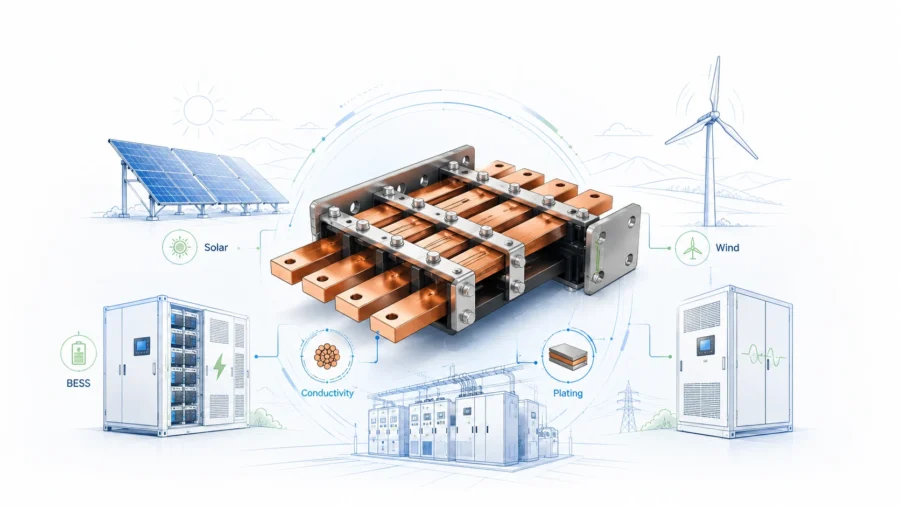
Data centers are notorious for their massive energy consumption. As the global push towards carbon neutrality accelerates, hyper-scale operators are increasingly integrating their facilities directly with renewable energy sources. This transition has given rise to a parallel industry where JUMAI holds extensive expertise: Battery Energy Storage Systems (BESS) and green energy integration.
Wind turbines, massive solar photovoltaic (PV) arrays, and the lithium-ion BESS units that store their energy operate on entirely different electrical paradigms than the traditional grid. They require the conversion of Direct Current (DC) to Alternating Current (AC) through massive inverters.
The electrical bridging between these volatile, high-voltage renewable sources and the stable data center grid relies entirely on Precision Copper Busbars.
- Battery Interconnects: Inside a BESS container, hundreds of battery cells must be wired in series and parallel to achieve the necessary voltage and capacity. Standard cables are too bulky and pose a severe fire risk if they chafe. JUMAI manufactures custom-engineered, highly flexible, epoxy-coated braided busbars specifically for BESS applications. These components absorb the thermal expansion of the battery cells while providing a low-profile, high-amperage connection.
- Inverter and Transformer Connections: Solar and wind inverters handle massive power spikes. The rigid Precision Copper Busbars designed by JUMAI for these applications are built to withstand immense electromagnetic forces (short-circuit forces) that occur during power grid faults, ensuring that the physical structure of the power station is never compromised.
By standardizing the quality of power transmission from the solar field, through the energy storage systems, and directly into the server racks, JUMAI provides a complete, end-to-end power connectivity solution that makes sustainable, hyper-scale data centers a reality.
Fail-Safe Architectures: Designing for Zero Downtime and High-Fault Tolerance
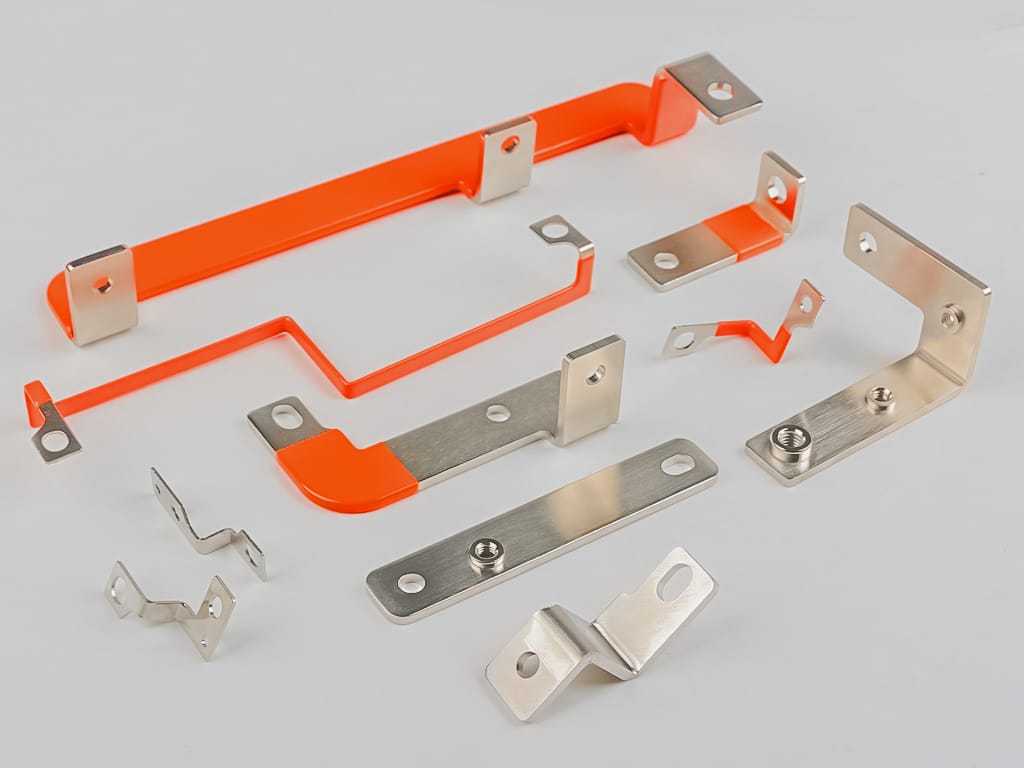
In the realm of hyper-scale digital infrastructure, downtime is not merely an inconvenience; it is an economic catastrophe. According to the ITIC (Information Technology Intelligence Consulting), a single hour of downtime can cost enterprise organizations upwards of $300,000, with specialized financial or AI-driven platforms facing losses in the millions. Achieving the coveted Uptime Institute Tier IV certification—which guarantees 99.995% availability—requires power systems that are entirely fault-tolerant.
Precision Copper Busbars are fundamental to achieving this level of resilience. Unlike cables, which can sway, chafe, and melt under extreme fault conditions, solidly engineered busbar systems are designed to withstand massive electromechanical forces.
The Physics of Short-Circuit Forces
When a severe electrical fault (short circuit) occurs in a data center or a large-scale power transmission center, the current can instantaneously spike to tens of thousands of Amperes before the protective circuit breakers can trip. This immense surge creates violent magnetic fields around the conductors. If two conductors are running parallel (as they do in three-phase power systems), these magnetic fields generate extreme mechanical forces that try to violently push the busbars apart or smash them together.
The electromagnetic force ($F$) exerted between two parallel busbars during a short circuit is calculated using Ampère’s force law:
$$F = 2 \times 10^{-7} \cdot \frac{I_{sc}^2}{d} \cdot L$$
Where:
- $F$ is the force in Newtons ($N$).
- $I_{sc}$ is the peak short-circuit current in Amperes ($A$).
- $d$ is the distance between the centerlines of the busbars in meters ($m$).
- $L$ is the length of the parallel run in meters ($m$).
Because the force increases with the square of the short-circuit current ($I_{sc}^2$), a 50kA fault will generate hundreds of kilograms of force per meter of busbar. Traditional cabling systems will violently whip, potentially destroying adjacent server racks and causing catastrophic arc flashes.
At JUMAI, our engineering team mitigates these explosive forces through rigorous mechanical design. We utilize advanced 3D CAD modeling and Finite Element Analysis (FEA) to design high-strength, deep-drawn support brackets and insulating standoffs. By securely anchoring our Precision Copper Busbars at mathematically optimized intervals, we ensure that even under maximum short-circuit conditions, the structural integrity of the power distribution network remains absolutely uncompromised.
The Economics of Upgrading: Total Cost of Ownership (TCO) Analysis
When data center architects and CTOs evaluate infrastructure upgrades, the initial Capital Expenditure (CapEx) is only a fraction of the equation. In power distribution, the Operational Expenditure (OpEx)—specifically, electricity waste and cooling costs—dominates the lifecycle budget.
Transitioning from legacy cable bundles to Precision Copper Busbars yields a profound return on investment (ROI) when evaluated through a Total Cost of Ownership (TCO) lens. The financial benefits fall into three primary categories:
- Direct Electrical Savings (I^2R Reduction): As discussed in Part 1, the superior cross-sectional area and 99.99% purity of JUMAI’s copper drastically reduce electrical resistance. Over a 10-year facility lifespan, salvaging just a 2% power loss in a 50MW data center translates to millions of dollars in recovered electricity costs.
- Cooling Infrastructure Optimization: Cables generate radiant heat and block the critical under-floor or overhead airflow required to cool server racks. By adopting a low-profile, flat busbar architecture, the facility’s Power Usage Effectiveness (PUE) drops significantly. CRAC (Computer Room Air Conditioning) units do not have to work as hard, reducing HVAC power consumption by up to 15%.
- Space Utilization and Rack Density: Real estate in a Tier III or Tier IV data center is astronomically expensive. Bulky power cables require thick containment trays, eating up valuable vertical space. Compact busbars allow facility managers to add an additional 1U or 2U of revenue-generating servers per rack, multiplying the overall profitability of the data floor.
Table 5: 10-Year TCO Comparison (Traditional Cabling vs. Precision Copper Busbars)
| Cost Center | Traditional Copper Cabling (High Gauge) | Precision Copper Busbars (JUMAI Solutions) | Long-Term Financial Impact |
|---|---|---|---|
| Initial CapEx (Material & Labor) | Moderate | Higher (Precision Engineering & Custom Routing) | Initial premium offset by rapid installation times. |
| Energy Waste (Heat Loss) | High (Due to higher resistance and skin effect) | Extremely Low (Optimized geometry, 99.99% purity) | Massive OpEx savings over a 10-year lifecycle. |
| Cooling Overhead (HVAC Strain) | High (Airflow obstruction, high radiant heat) | Low (Streamlined profile, low heat generation) | Improved PUE, extending the lifespan of cooling pumps. |
| Maintenance & Inspection | Difficult (Hidden degradation, difficult to IR scan) | Seamless (Exposed joints easy to scan via thermal imaging) | Reduces emergency maintenance costs and downtime risks. |
| End-of-Life Salvage Value | Low (Difficult to strip and recycle insulation) | High (Solid, high-purity copper is easily recycled) | Strong capital recovery at facility decommissioning. |
By analyzing the numbers, it becomes evident that Precision Copper Busbars are not merely a structural component; they are a strategic financial asset that actively drives down the operational overhead of a modern data center.
Synergizing with Future Trends: 48V DC Architectures and Liquid Cooling
The data center industry is currently undergoing a radical transition driven by the Open Compute Project (OCP). Traditional data centers bring high-voltage AC power to the rack, where multiple inefficient power supplies convert it to 12V DC for the servers. The OCP standard advocates for transitioning directly to 48V DC Rack Power Architecture.
Transmitting power at 48V DC instead of 12V DC reduces the required current by a factor of four ($I = \frac{P}{V}$). Because power loss is calculated as $P = I^2R$, reducing the current by a factor of 4 reduces distribution losses by a staggering factor of 16.
However, delivering 48V DC to demanding AI supercomputers like the NVIDIA DGX SuperPOD still requires massive amperages at the rack level.
- The JUMAI 48V DC Solution: We specialize in manufacturing ultra-precise, modular DC busbars that run vertically down the back of OCP-compliant racks. These busbars allow servers to “blind-mate” directly into the power stream, eliminating individual server power cables entirely. Our deep drawing technology allows us to create perfectly customized, highly resilient contact clips that ensure a flawless, zero-arcing connection every time a server is plugged in.
Compatibility with Advanced Liquid Cooling
As AI processors exceed 1000 watts per chip, air cooling is rapidly becoming obsolete. The industry is shifting toward Direct-to-Chip (D2C) liquid cooling and full Immersion Cooling, where entire servers are submerged in engineered dielectric fluids.
Precision Copper Busbars are the only viable power distribution method in these extreme environments. Standard cable insulation degrades, swells, or dissolves when exposed to synthetic dielectric cooling fluids over long periods. In contrast, JUMAI’s bare or specially coated rigid copper busbars are chemically inert to these fluids. Our custom-engineered busbars can be routed directly through the cooling manifolds, ensuring maximum power delivery without compromising the chemical integrity of the liquid cooling ecosystem.
Installation Best Practices: Ensuring Decades of Reliability
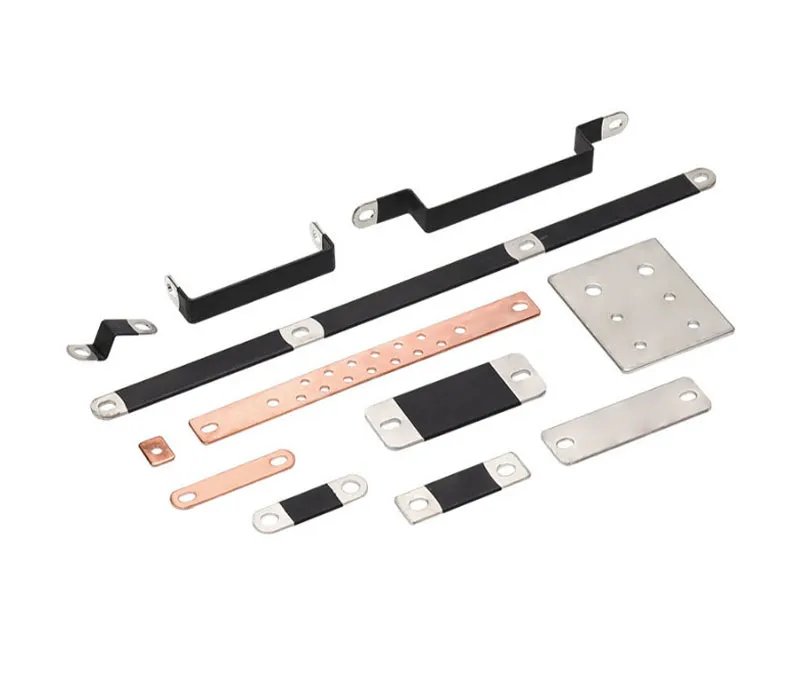
Even the most meticulously engineered copper busbar will fail if it is installed incorrectly. The integrity of the entire electrical network relies entirely on the quality of the mechanical joints where busbars are bolted together. As an expert in large-scale power transmission, I mandate rigorous installation protocols for our clients.
1. The Criticality of Clamping Pressure
When two flat copper surfaces are bolted together, microscopic peaks and valleys on the metal exist. If the bolting pressure is too low, the actual contact area is minimal, leading to severe joint resistance, extreme localized heating, and eventual thermal runaway. If the pressure is too high, the copper will “cold flow” or permanently deform, eventually leading to a loose connection over time.
Installation technicians must strictly adhere to engineered torque specifications, utilizing calibrated torque wrenches.
Table 6: Standard Torque Specifications for Copper Busbar Joints (Grade 8.8 Hardware)
| Bolt Size (Metric) | Recommended Torque (Nm) | Recommended Torque (lb-ft) | Application |
|---|---|---|---|
| M6 | 8 – 10 Nm | 6 – 7 lb-ft | Small flexible busbars, grounding straps. |
| M8 | 20 – 25 Nm | 15 – 18 lb-ft | Medium rack PDUs, secondary distribution. |
| M10 | 40 – 50 Nm | 30 – 37 lb-ft | Primary rack feeds, standard BESS interconnects. |
| M12 | 70 – 85 Nm | 52 – 63 lb-ft | Main switchgears, heavy-duty UPS systems. |
| M16 | 170 – 200 Nm | 125 – 147 lb-ft | Massive generator feeds, grid-level transformers. |
2. Utilizing Belleville Washers
Because copper expands and contracts with temperature fluctuations, standard flat washers and lock washers are insufficient. JUMAI highly recommends the use of Belleville washers (conical spring washers) on all bolted busbar joints. These washers act as heavy-duty springs, maintaining constant clamping pressure on the joint regardless of thermal expansion or the natural “creep” of the copper over decades of use.
3. Predictive Maintenance via Thermal Imaging
The ultimate advantage of a busbar architecture over standard cabling is visibility. Because the joints are exposed (or covered by easily removable insulated boots), facility managers can implement proactive safety protocols. By utilizing Infrared (IR) Thermography during routine inspections, technicians can easily spot a joint that is operating even a few degrees hotter than its neighbors—a clear indication of a loosening bolt or micro-oxidation—allowing them to correct the issue long before a catastrophic failure occurs.
The JUMAI OEM/ODM Framework: From Blueprint to Global Deployment
At JUMAI, we do not simply sell copper bars; we engineer comprehensive power connectivity solutions. For global equipment manufacturers, energy grid developers, and hyper-scale data center operators, off-the-shelf components are rarely sufficient. This is where our elite OEM (Original Equipment Manufacturer) and ODM (Original Design Manufacturer) services become your greatest strategic advantage.
Our collaborative manufacturing framework is designed to seamlessly integrate with your engineering teams:
- Phase 1: Deep Technical Consultation & DFM (Design for Manufacturing):When you bring us a CAD model or a complex power routing problem, our veteran engineers conduct a thorough DFM analysis. We analyze the required ampacity, spatial constraints, and thermal dynamics. We often suggest utilizing our proprietary deep-drawn accessories to eliminate unnecessary welds, thereby reducing your costs while increasing the component’s structural integrity.
- Phase 2: Rapid Prototyping & Material Selection:Based on the environment—whether it is a highly corrosive offshore wind farm or a sterile data center white space—we select the optimal copper grade (e.g., C10200 OFHC) and the ideal surface treatment (Tin, Nickel, or Silver plating). We rapidly produce high-fidelity prototypes for your internal testing and validation.
- Phase 3: Rigorous Quality Assurance & Compliance Testing:Before any design moves to mass production, it is subjected to intense scrutiny. JUMAI conducts Hi-Pot (High Potential) dielectric testing to verify insulation integrity, micro-ohm resistance testing across all joints, and thermal cycling tests to ensure the busbars perform flawlessly under peak load conditions. Our processes align with rigorous international standards, including IEEE, IEC, and UL certifications.
- Phase 4: Scalable, High-Precision Mass Production:Once validated, the design moves to our automated production lines. Utilizing state-of-the-art CNC punching, multi-axis bending, and automated deep drawing presses, we scale production from hundreds to hundreds of thousands of units, ensuring absolute dimensional consistency across the entire production run. We deliver perfectly engineered Precision Copper Busbars, fully pre-fabricated, insulated, and ready for immediate drop-in installation at your facility.
Empowering the Future of High-Density Technology
The evolution of technology waits for no one. As AI models grow exponentially more complex, as environmental new energy sources push deeper into the global grid, and as data centers become the unquestioned backbone of the modern economy, the demands on power distribution will only intensify. The era of bulky, inefficient copper cabling has officially ended.
To build the infrastructure of tomorrow, engineers must embrace the science of high-conductivity connectivity today. Precision Copper Busbars—whether intricately deep-drawn, highly flexible, or solidly rigid—are the definitive solution to the escalating crises of power density, thermal management, and space constraints.
By leveraging optimized cross-sectional geometries, ultra-pure electrolytic copper, and advanced surface engineering, these vital components ensure that every watt of electricity is delivered exactly where it is needed, safely, efficiently, and without fail.
As a global leader in custom metal processing, deep-drawn die manufacturing, and high-amperage connectivity solutions, JUMAI (DeepDrawTech) stands ready to be your most vital engineering partner. From bespoke OEM designs for next-generation AI server racks to massive power distribution conduits for clean energy mega-projects, we possess the heritage, the technology, and the uncompromising dedication to excellence required to power your vision.
Stop allowing substandard power transmission to bottleneck your innovation. Elevate your infrastructure, optimize your energy efficiency, and secure your competitive advantage in the high-density era.
Contact JUMAI today to schedule a comprehensive technical consultation with our power distribution engineering team, and let us custom-build the arteries of your next great technological achievement.
FAQ
What are Precision Copper Busbars?
Precision Copper Busbars are specialized metal strips designed to efficiently transport electrical power in data centers and other facilities. They come in different forms, such as rigid, flexible, and braided, allowing for effective power distribution with minimal loss and maximum reliability.
Why are Precision Copper Busbars important?
These busbars are crucial as they help manage the growing power demands in modern data centers. With racks using more power than before, traditional cabling is often not enough. Precision Copper Busbars provide better performance, reduce electrical resistance, and help prevent overheating.
How do Precision Copper Busbars reduce power loss?
They have a larger surface area and superior conductivity compared to regular cables, which helps minimize electrical losses as power travels through them. This efficiency means that less energy is wasted as heat, making the system safer and more cost-effective.
What are the different types of Precision Copper Busbars?
There are three main types: Rigid Busbars, which are solid and durable; Flexible Busbars, which can bend and twist to fit tight spaces; and Braided Busbars, made from many small wires which allow for great flexibility and efficiency, especially in grounding applications.
How is the quality of the copper used in busbars ensured?
The copper used in JUMAI’s busbars comes from high-grade, nearly pure sources. This means it contains very few impurities, which is important for maintaining strong electrical performance. A higher purity leads to less energy being lost as heat.
What should I know about the installation of busbars?
Proper installation is key to ensuring the effectiveness of busbars. It’s important to follow torque specifications when tightening connections to prevent overheating and joint failure. Regular maintenance can help spot problems before they lead to failures.
How do busbars contribute to energy efficiency?
Using busbars instead of traditional wiring can significantly lower energy waste. This is because they have a lower electrical resistance, which reduces heat generation and allows equipment to run cooler—leading to lower cooling costs overall.
Are Precision Copper Busbars suitable for renewable energy applications?
Yes, they are especially effective in renewable energy setups. For instance, they can connect battery storage systems to the grid, providing a reliable way to transmit large amounts of power generated from sources like solar and wind energy.
What benefits do I get from using advanced manufacturing techniques for busbars?
Advanced manufacturing ensures that each busbar meets precise specifications, which helps maintain consistent quality and performance. Techniques like deep drawing create strong, seamless connectors that improve overall power distribution reliability in complex systems.
What is the expected lifespan of Precision Copper Busbars?
When properly installed and maintained, Precision Copper Busbars have a long lifespan, often lasting decades. Their durability makes them well-suited for high-demand environments, such as data centers and large energy grids.