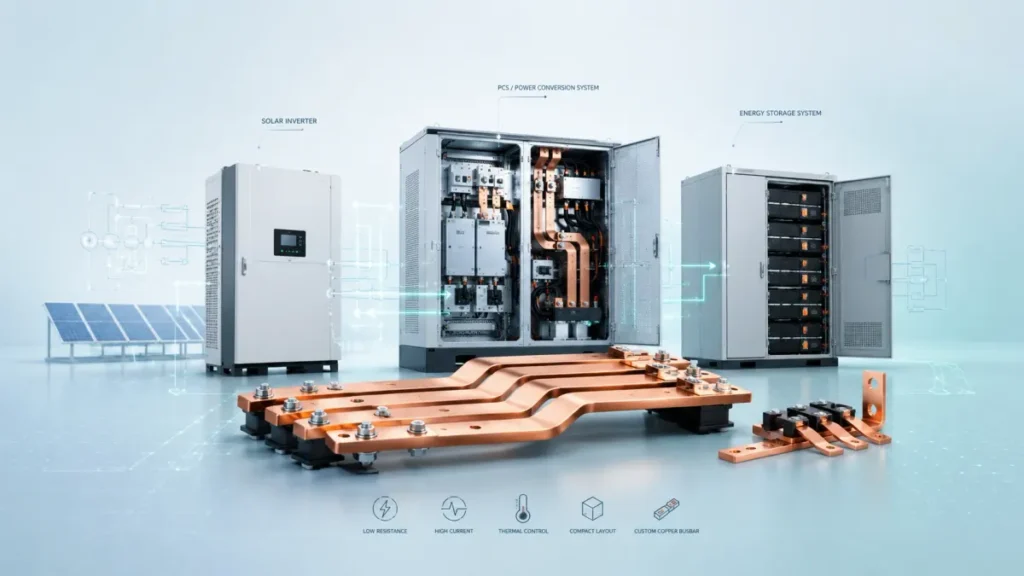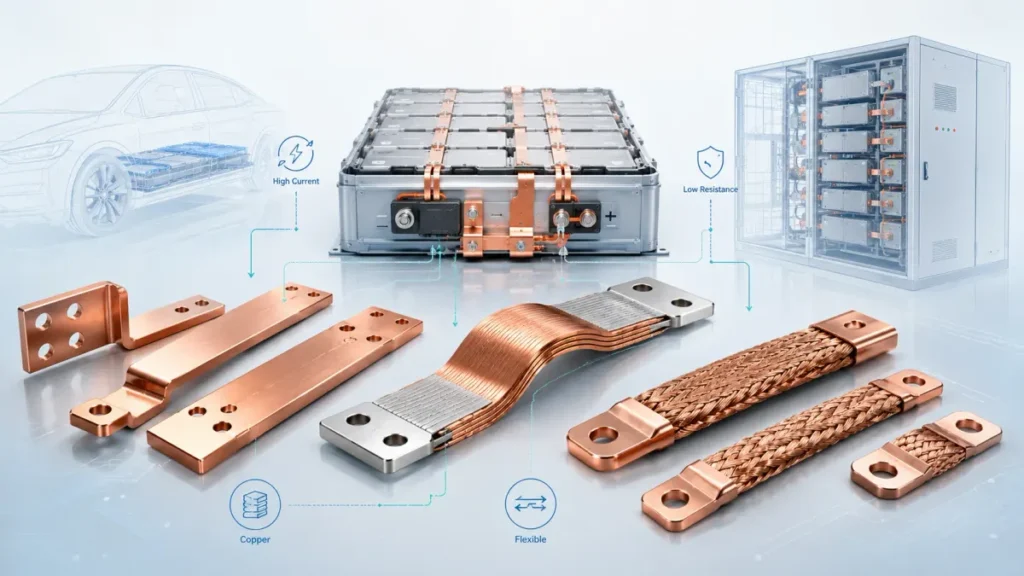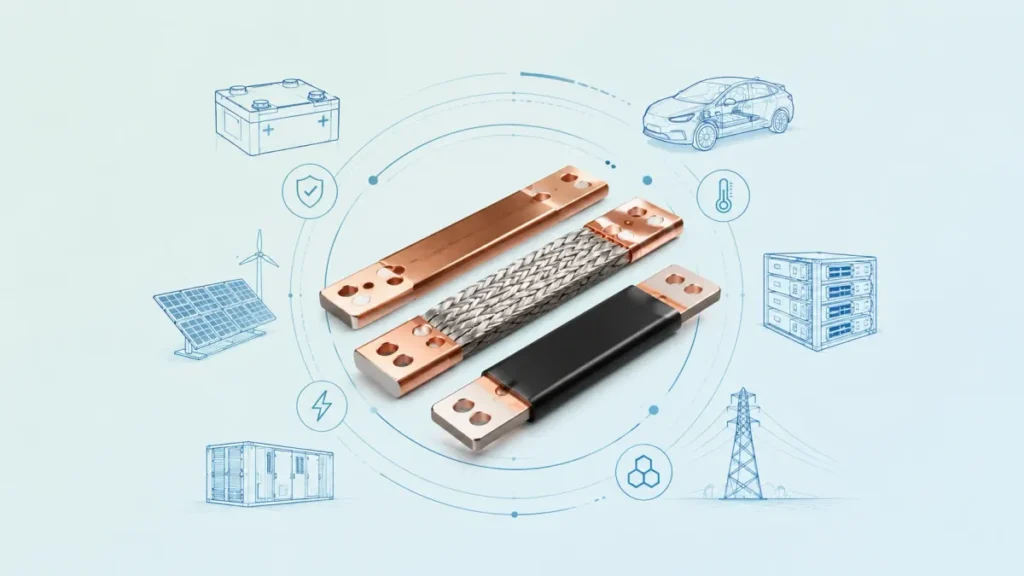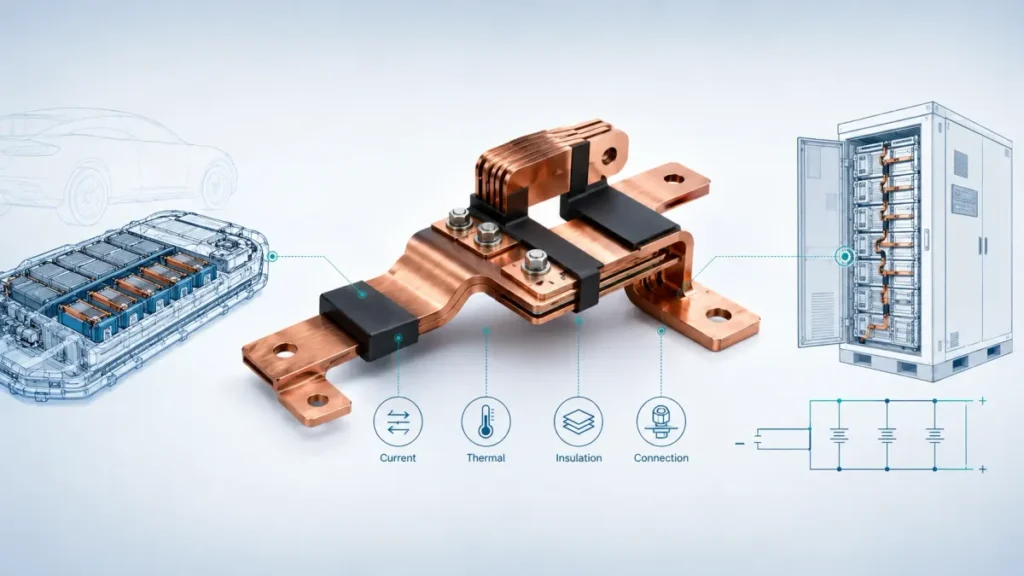
June 12, 2026 Busbar Copper: Why Copper Is Still the Preferred Material for High-Current Conductors In high-current electrical systems, the conductor is not a background component. It decides how efficiently power moves, how much heat is generated, how stable the voltage remains, how compact the assembly can be, and how confidently the equipment can operate through years of thermal cycling, vibration, installation stress, and maintenance. This is why busbar copper … Read more Read full article →
June 11, 2026 Tin Plated Copper Bus Bar: Benefits, Applications and Custom Manufacturing Tips A tin plated copper bus bar is a copper conductor finished with a thin layer of tin to improve the stability of the contact surface, slow oxidation, support solderability when required, and make the part easier to integrate into real electrical assemblies. In a drawing, it may look like a simple strip of copper with … Read more Read full article →
June 10, 2026 Bus Bar for Server Rack Power Distribution: What Data Center Buyers Should Know Modern data centers are no longer built around low-density racks filled with ordinary enterprise servers. AI training clusters, GPU inference systems, cloud platforms, high-performance computing, edge computing, and telecom workloads are pushing more power into each cabinet. As rack power rises, the electrical path inside the server rack becomes more important. A bus bar for … Read more Read full article →
June 9, 2026 Battery Bus Bars: Copper, Flexible and Insulated Options for OEM Projects Battery bus bars are no longer simple pieces of copper cut into a rectangular shape. In modern battery packs, energy storage cabinets, power conversion units and high-current industrial assemblies, the bus bar has become a designed electrical, thermal and mechanical component. It carries current, controls voltage drop, helps manage heat, saves space, improves assembly repeatability … Read more Read full article →
June 8, 2026 Battery Busbar Design Guide for EV Battery Packs and Energy Storage Systems A battery busbar looks simple when it is shown as a copper strip on a drawing. In a real EV battery pack or battery energy storage system, however, it is one of the parts that decides whether the whole power path is efficient, compact, serviceable, safe and repeatable in production. It connects cells, modules, fuses, … Read more Read full article →
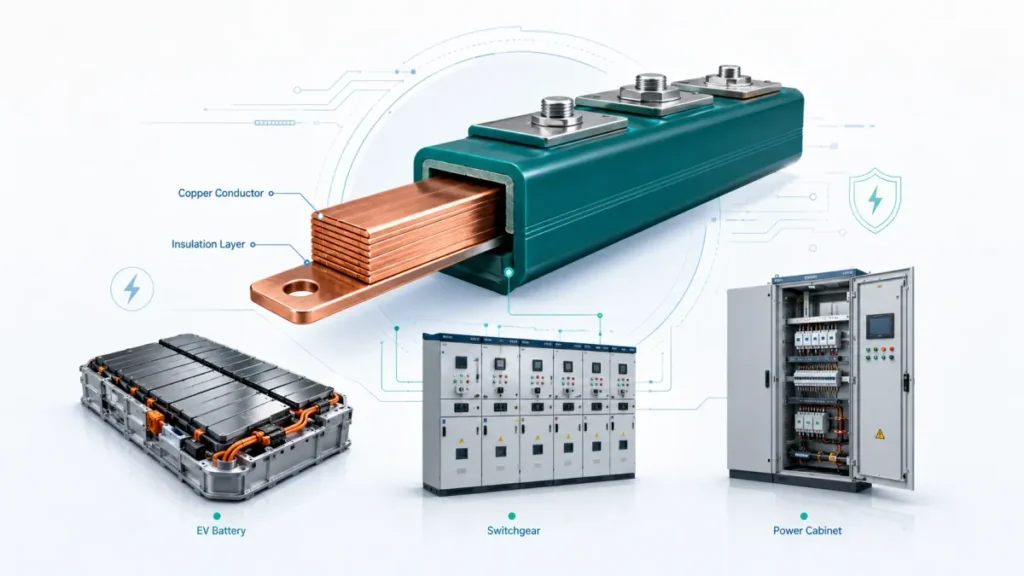
June 7, 2026 Insulated Bus Bars for Battery Packs, Switchgear and Power Cabinets Electrification is changing the way engineers design power distribution inside equipment. Battery packs are becoming denser. Switchgear is expected to carry higher current in smaller cabinets. Renewable energy systems, EV charging equipment, industrial automation lines, data center power cabinets, and battery energy storage systems all need conductors that can transfer power safely without consuming too … Read more Read full article →
June 6, 2026 Insulated Busbar Guide: When Copper Busbars Need Extra Electrical Protection In a high-current electrical system, a copper busbar is not just a metal strip. It is a controlled power path that must carry current, release heat, fit into a limited space, survive vibration, and remain safe during years of operation. When the system voltage is low, the layout is open, and the busbar is well … Read more Read full article →
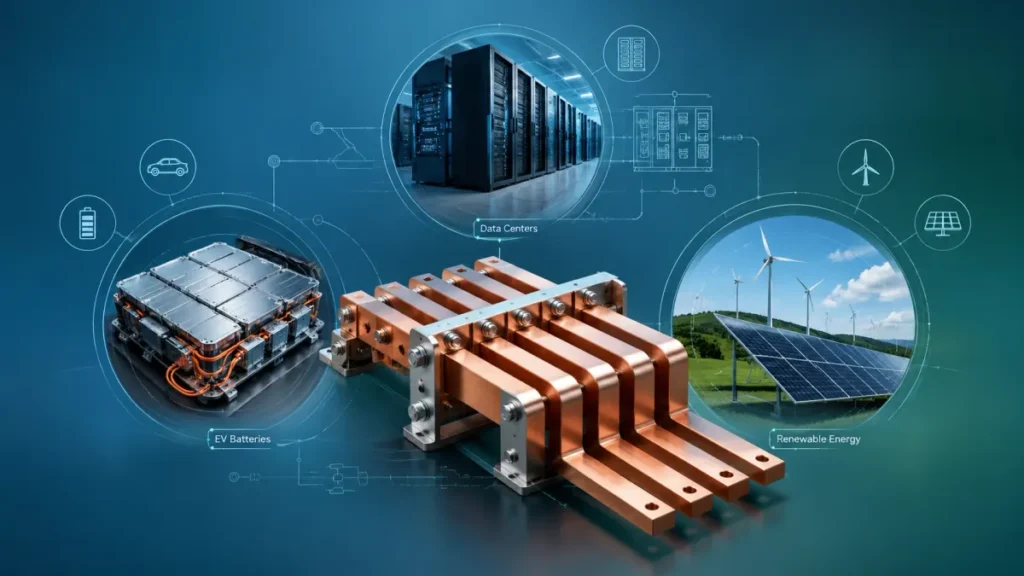
June 5, 2026 Copper Bus Bars for Power Distribution: How to Choose the Right Design In modern power distribution equipment, a copper bus bar is much more than a piece of conductive metal. It is a current path, a thermal path, a mechanical support, an assembly reference point, and often a safety-critical component. When the design is correct, copper bus bars help switchgear, battery systems, inverters, control cabinets, charging equipment, … Read more Read full article →
June 4, 2026 Copper Busbar Guide: Materials, Types, Manufacturing and Custom Options A copper busbar is one of the simplest-looking but most performance-critical parts inside a high-current electrical system. It may look like a flat copper strip with holes, bends or insulation, but in real equipment it controls how current moves, how heat spreads, how short-circuit forces are resisted, how much space the assembly needs, and how … Read more Read full article →
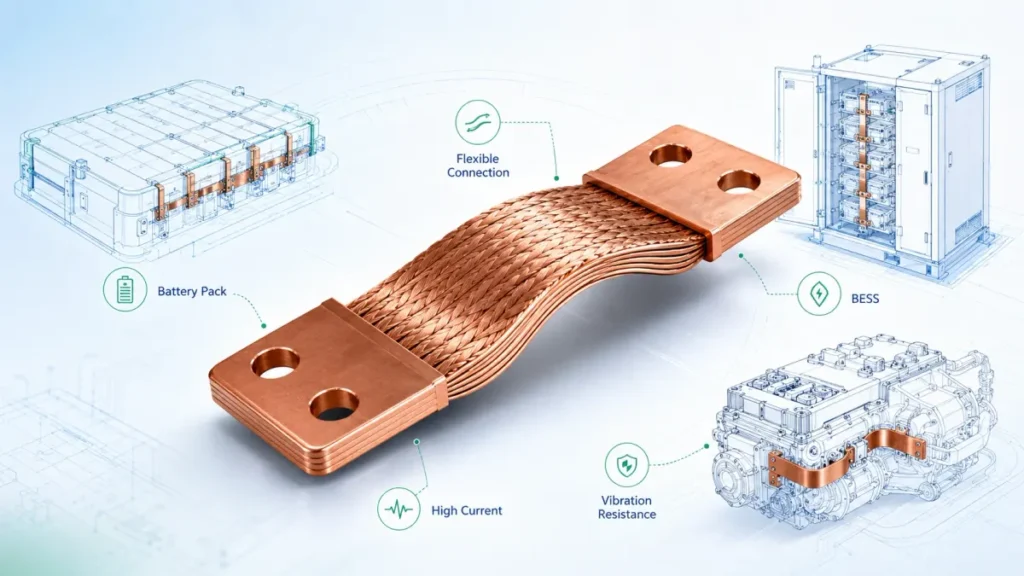
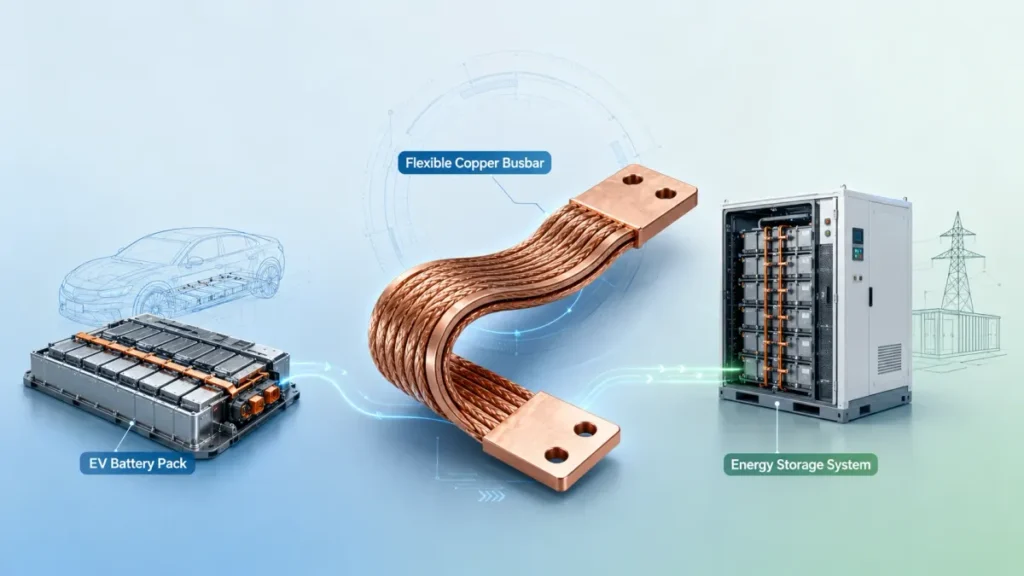
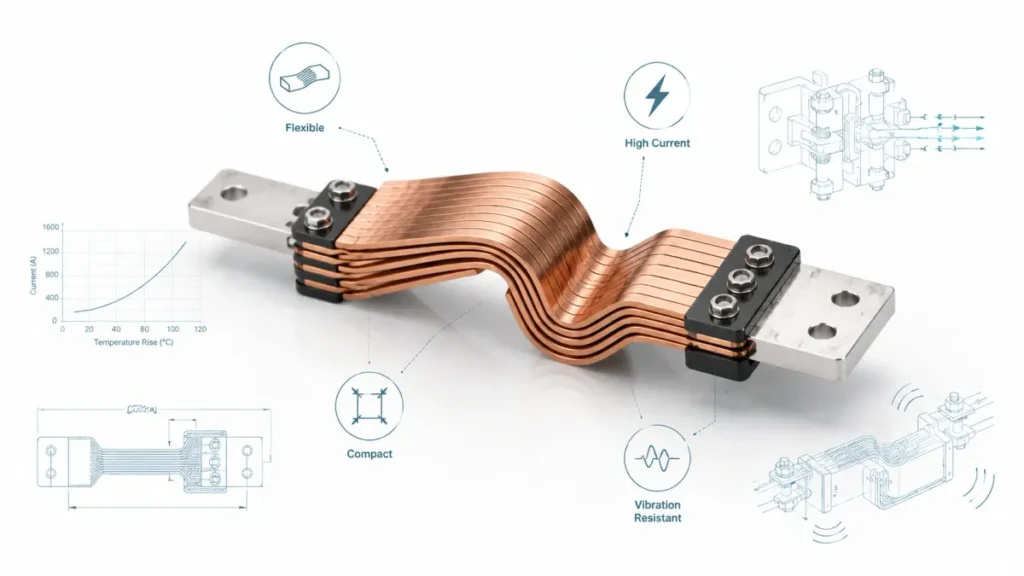
June 3, 2026 What Is a Flexible Busbar and Why Is It Used in High-Current Electrical Systems? A flexible busbar is a specially engineered conductor used to carry high current between electrical components while allowing controlled bending, twisting, vibration absorption, thermal expansion, and compact routing. In simple terms, it is a copper power path that can move slightly with the equipment instead of forcing the equipment to adapt to a stiff metal … Read more Read full article →
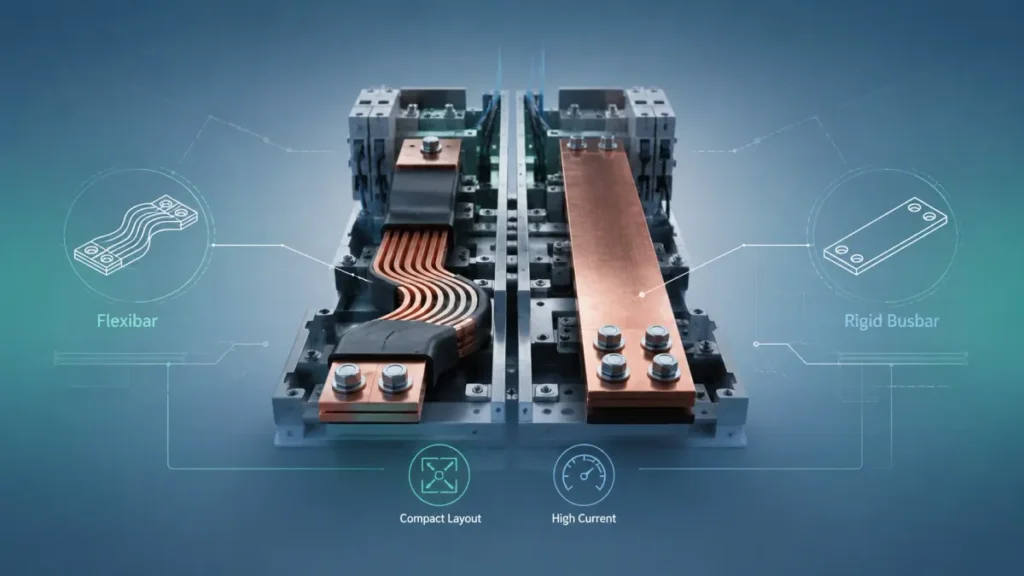
June 2, 2026 Flexible Copper Busbar: A Practical Guide for EV Batteries, BESS and Power Distribution A flexible copper busbar is no longer a special-purpose conductor used only when cables are difficult to route. In electric vehicle battery packs, battery energy storage systems (BESS), renewable energy inverters, charging equipment, data center power cabinets and industrial power distribution units, flexible busbars have become a practical way to move high current through compact … Read more Read full article →
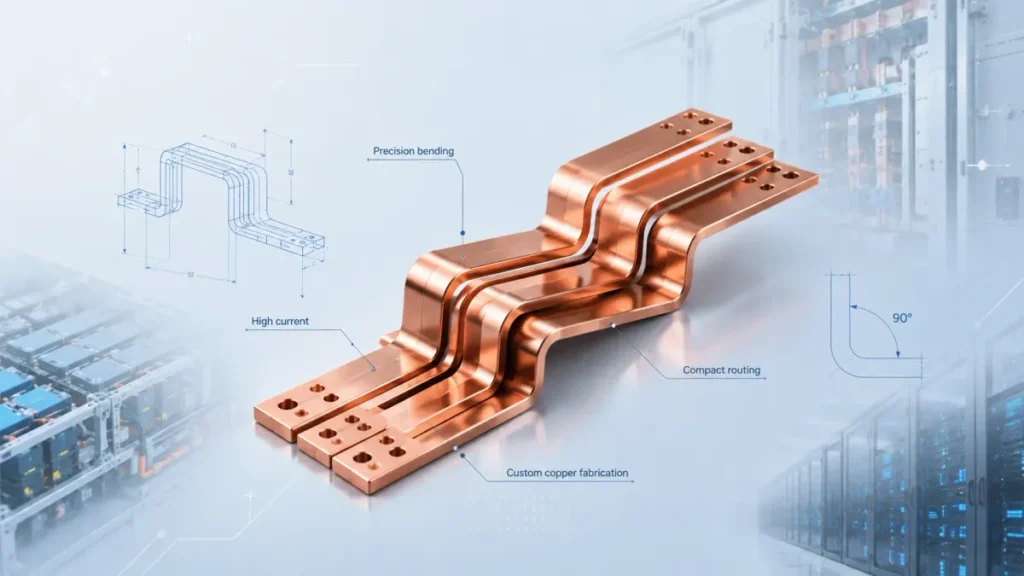
May 6, 2026 Rigid Busbars Manufacturing Process: From Copper Material to Precision Finishing Rigid Busbars are not simply pieces of copper cut into convenient shapes. In modern electrical equipment, they are engineered current paths that must carry high current, control temperature rise, fit within tight mechanical envelopes, maintain stable contact resistance, and survive years of thermal cycling, vibration, installation stress, and maintenance handling. A small error in hole … Read more Read full article →